

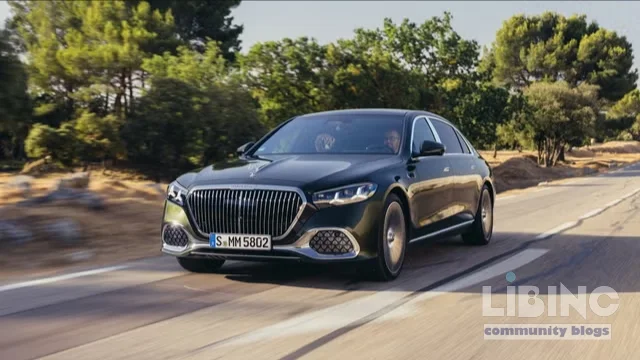
Mercedes-Maybach S-Class in 2027: An Analytical Assessment of the Pinnacle of Ultra-Luxury
The Maybach S-Class sits at the apex of Mercedes' lineup, operating in a rarified space where engineering discipline meets bespoke comfort. It must outshine stand-alone marques like Bentley and Rolls-Royce while leveraging the parent brand's scale and investment. The 2027 refresh sharpens the formula with more technology, more rear-seat indulgence, and a price tag that still positions it as a relative bargain within the segment. The challenge is not just speed or luxury; it's the perception of exclusivity when the badge sits under a broader corporate umbrella.
In the ultra-luxury sedan space, the Maybach S-Class stakes out a posture that blends Mercedes' engineering discipline with a bespoke ambience. The rear-seat luxury is non-negotiable here, and the refreshed car doubles down by turning the back cabin into a private lounge with adjustable lighting, massage options, and 13.1-inch displays on some variants. The front is equally important, delivering a serene ride quality and a tech halo built around the Superscreen. In this balance of front-seat clarity and back-seat pampering, the Maybach aims to be both driver’s tool and passenger sanctuary.
Power choices reflect a segmented strategy: the U.S. market continues to receive a twin-turbo 6.0-liter V-12 in the S680, delivering 621 hp and 664 lb-ft of torque, while Europe leans into a high-torque 4.0-liter V-8. A 48-volt starter-generator can supply fleeting boosts up to 23 hp and 151 lb-ft, but that assistance is transient and not reflected in official numbers. The result is a limo-like acceleration profile—gentle at launch and serene in normal operation—with the car's hallmark being refinement rather than raw pace. The S580 claims a 0-60 time around 3.9 seconds, the S680 around 4.3 seconds, with a top speed electronically limited to 130 mph.
Inside, the Superscreen anchors a new interior paradigm: a 14.4-inch central touchscreen pairs with a 12.3-inch passenger display under a single sheet of glass, while a 12.3-inch digital gauge cluster stays ahead of the driver. The rear cabin gains 13.1-inch displays as standard, plus remote controls for climate and massage, and dedicated champagne-flute cupholders. The cabin materials and finish remain the defining feature, delivering a solidity that resists the creeping trend toward gimmickry and keeps the Maybach experience anchored in quiet luxury.
Analytics: Where the Maybach S-Class sits in the ultra-luxury hierarchy
The Maybach S-Class operates under a simple, high-stakes equation: leverage the scale and technology of Mercedes while delivering an experience that can rival standalone luxury marques. From a product perspective, the refresh aligns with the broader S-Class strategy, but the value proposition hinges on the rear-seat experience as much as front-seat performance. In the analytics of luxury, the back seat matters because ownership is as much about being chauffeured as about driving. The updated interior, larger grille, and subtle design cues reinforce a perception of exclusivity without severing the link to Mercedes' mass-market strengths.
From a feature-density standpoint, the S-Class Maybach ups the ante with enhanced climate control zones for rear passengers, more extensive massage programs, and a suite of rear-seat controls that blur the line between car and private salon. The powertrain pairing remains purposeful: a V-8 in Europe and a V-12 in the U.S., both connected to a nine-speed automatic and standard all-wheel drive. This ensures that the car can deliver both the quiet, comfortable ride expected in a chauffeured setting and the reserve to handle spirited-but-subtle performance when required. The numbers matter, but the perception of power is more subtle and enduring in this segment.
Technologically, the Maybach S-Class uses the updated Superscreen as a central brand statement, and the system's integration with the navigation, driver assist, and occupant comfort features is critical to long-term ownership satisfaction. The question for the analytics is whether this tech stack remains stable as software cycles accelerate and the ecosystem of connected car services expands. The early signals suggest Mercedes is prioritizing reliability and a cohesive user experience over flashy novelty, which aligns with the expectations of an ultra-luxury audience seeking consistency and control.
Contrast: S580 vs S680, powertrains, and market positioning
Compared to its non-Maybach siblings, the S-Class refresh for Maybach amplifies rear-seat-centric luxury while preserving Mercedes' hallmark ride quality. The S580 remains the more practical choice in many markets, thanks to its 4.0-liter V-8 and 48V mild-hybrid system that provide a balanced blend of performance and efficiency. The S680, with its 6.0-liter V-12, targets customers who equate exclusivity with the old-school sense of power—silky, oozing torque rather than outright sprint speed. In real-world terms, the S580 can feel quicker off the line due to its lighter weight and the immediate responsiveness of the telegraphed power curve, while the S680 excels in long, uninterrupted highway miles where refinement dominates the drive experience. The 130 mph top speed and the nine-speed automatic on both variants ensure a smooth, inexorable glide rather than a brutish shove.
The interior is the most obvious contrast point. The S-Class Maybach emphasizes rear-seat comfort to an extent that makes Bentley’s Flying Spur feel comparatively lean in its emphasis on front-seat sport and driver engagement. Rolls-Royce, by contrast, anchors its entire appeal in bespoke mystique and bespoke communications that go far beyond the standard feature set. The Maybach leverages its Mercedes provenance to deliver a similar sense of opulence with a different value proposition: more tech-driven convenience, more standardized luxury appointments, and better integration with the rest of the Mercedes lineup and service network. In terms of price positioning, the base S580 starts around $220,000, while the S680 hovers near $270,000, placing the Maybach beneath the Bentley Flying Spur but well below the Rolls-Royce Ghost in most explicit configurations. The math is not just about sticker price; it’s about ownership experience, service reach, and the luxury narrative that travels with the badge.
The market positioning is also about how this car signals the willingness of Mercedes to invest in a prestige line that remains connected to the broader brand universe. European buyers often lean toward V8 power with slightly different emissions and performance expectations, while U.S. customers show enduring appetite for V-12s in flagship models—at least for now. This regional divergence in powertrains highlights a broader strategy: maintain a dual-speed luxury engine lineup while investing in rear-seat technology and ride quality that define the Maybach identity across markets.
Cause and Effect: How tech and design choices shape ownership value
The shift to a Superscreen-based cockpit and a digital-dominated interface changes the ownership value proposition in tangible ways. A centralized 14.4-inch display paired with a 12.3-inch passenger screen creates an immersive, single-glass experience that reduces tactile fragmentation yet increases the criticality of software stability. In practice, this means service and updates become central to ownership costs and perceived value. If software reliability holds, the interior experiences—navigation, climate, massage programs, and rear-seat entertainment—become a durable differentiator that helps maintain resale value in a crowded ultra-luxury field. Conversely, a fragile software stack or laggy updates could erode the Maybach’s premium aura and push buyers toward alternatives with longer service contracts or more established digital ecosystems.
The air suspension, a hallmark of Mercedes ride quality, plays a direct role in longevity and cost of ownership. The system delivers a buttery ride across uneven pavement and potholes, a key selling point for buyers who expect to glide on imperfect roads. However, the complexity of active ride control and electronic dampers can translate into higher maintenance costs if components wear prematurely or require frequent recalibration. In the long run, the value of the Maybach’s ride comfort hinges on a balance between initial refinement and the durability of the suspension architecture under high-mileage ownership scenarios.
The rear-seat ecosystem—massaging seats, climate zones, 13.1-inch displays, and champagne-service readiness—shapes a unique ownership narrative. Buyers in this segment prize experiences that feel tailor-made, not just bundled features. The real-world effect is a higher expectation for personalized options and a more robust aftersales ecosystem, including dedicated Maybach service channels and extensive customization programs. This alignment between product experience and service architecture is where the Maybach earns long-term credibility and, ultimately, customer loyalty.
From a signaling perspective, the design cues—rose-gold accents, a substantially larger grille, and an optional light-up hood ornament—reinforce exclusivity without alienating the broader Mercedes audience. These signals affect perceived value, influencing resale trajectories and the willingness of buyers to pay a premium for a Maybach badge that still feels connected to the corporate family. The causal chain here is straightforward: aesthetic differentiation and technological depth create a sustained premium, which supports both initial pricing and eventual resale value.
- Signaling exclusivity through design and tech depth reinforces premium pricing.
- Rear-seat luxury and tech integration drive ownership satisfaction and loyalty.
- Reliability of the digital cockpit and air suspension influences long-term costs and resale value.
Expert Reconstruction: What the refresh signals for Mercedes and the luxury market
From an expert perspective, the 2027 Maybach S-Class refresh is less about a single feature and more about a reset of the brand's ultra-luxury calculus. Mercedes uses the Maybach badge to sharpen the distinction between mainstream engineering excellence and bespoke luxury seduction, ensuring the S-Class remains a credible flagship for chauffeured and self-driven ownership alike. This strategy protects the health of the broader Mercedes lineup by expanding the halo effect of prestige while leveraging the S-Class platform to keep development costs rationalized across the family. In doing so, Mercedes can sustain a narrative of enduring refinement over time, a critical advantage in a market that prizes legacy and consistency as much as novelty.
The market reconstruction implied by this refresh is subtle but meaningful. The Maybach emphasizes rear-seat privilege without sacrificing the S-Class’ core strengths in ride quality and technology. It also demonstrates a robust integration strategy: design language, powertrain options, and interior tech all align with a shared Mercedes ecosystem, minimizing the risk of over-segmentation that could dilute service quality and resale appeal. In sum, Maybach becomes the fusion point where Mercedes’ engineering credibility meets the boutique expectations of ultra-luxury buyers, and that fusion is increasingly critical in an era of premium electrification and evolving ownership models.
Looking ahead, a prudent path for Maybach could involve a measured electrified expansion alongside the existing V-8 and V-12 lineup. The framework established by the 2027 refresh—tech depth, rear-seat immersion, and a refined ride—sets a baseline that any future electric variants would need to exceed in both range and interior experience. The luxury market rewards systems that offer not just instantaneous luxury, but a durable, service-forward promise that makes ownership predictable and desirable across generations of clients.
Ultimately, the Mercedes-Maybach S-Class reinforces the principle that in the ultra-luxury sedan segment, the value proposition rests on a cohesive blend of power, serenity, technology, and personalizable comfort. The Maybach badge remains a beacon for buyers who want a car that behaves like a chauffeured retreat and a sophisticated machine, all in one cohesive package. The road ahead will test how well the brand can sustain that balance as competition evolves and mobility preferences shift, but the 2027 refresh gives Maybach a compelling foundation to defend its throne.
Key takeaways
- The S-Class Maybach leverages Mercedes' scale to deliver exclusive luxury with a strong tech backbone.
- Rear-seat luxury remains central to its value proposition, supported by advanced displays and massage systems.
- Powertrain choices reflect regional preferences, with V-12 in the US and V-8 in Europe, paired to a refined ride system.
Conclusion: In the ultra-luxury sedan segment, the Mercedes-Maybach S-Class demonstrates that true exclusivity comes from a well-orchestrated blend of engineering discipline, bespoke comfort, and a forward-looking tech ecosystem. The result is a premium ownership experience that endures beyond the latest gadgetry, anchored in a carefully managed brand narrative and a robust service framework.
Ownership value and aftersales ecosystem
Beyond the showroom shine, the Maybach S‑Class builds enduring value through a predictable ownership experience supported by Mercedes’ global service network and deep customization programs. This isn’t just about the initial price; it’s about how maintenance, software updates, and bespoke appointments are managed over years of ownership.
Mercedes offers dedicated Maybach service channels, including concierge access, scheduled pick‑up and drop‑off, and lounge access at flagship centers. Extended service plans that cover routine maintenance, parts, and software updates help stabilize ownership costs and preserve cabin ambience, which matters as interior tech cycles advance.
Three practical scenarios illustrate how this translates to real value. A corporate chauffeur swipe plan ensures routine maintenance windows don’t disrupt executive schedules; a long‑haul owner can leverage remote diagnostics to minimize downtime on trips; a client seeking personalization can select unique leathers, stitching, and ambient lighting through Maybach customization programs that keep the cabin aligned with personal branding. These touchpoints reinforce exclusivity while maintaining Mercedes’ reliability backbone.
| Variant | Engine | Power (hp) | Torque (lb-ft) | 0-60 (s) | Top speed (mph) |
|---|---|---|---|---|---|
| S580 | 4.0L V-8 | N/A | N/A | 3.9 | 130 |
| S680 | 6.0L V-12 | 621 | 664 | 4.3 | 130 |
| S580 Maybach | 4.0L V-8 | N/A | N/A | 3.9 | 130 |
| S680 Maybach | 6.0L V-12 | 621 | 664 | 4.3 | 130 |
Notes: official numbers vary by market; the Maybach lineup prioritizes refinement and rear-seat luxury over outright sprint pace. All variants share Mercedes’ ride philosophy and a comprehensive warranty ecosystem.
Why this matters in ownership
The real value comes from how often service is convenient, how smoothly software updates install, and how easily interior customization can be executed without interrupting daily life. Buyers begin to perceive the Maybach as a long‑term partner for travel, meetings, and personal moments, not merely a car purchase.
Frequently asked questions
How does the 2027 Maybach S-Class differ from rivals in practice?
The Maybach emphasizes rear‑seat luxury, tech integration, and a service ecosystem rather than focusing on speed alone. It blends Mercedes engineering with bespoke comfort, creating a chauffeured environment that rivals Bentley and Rolls‑Royce through a cohesive ecosystem, not merely extravagance. In practice, buyers evaluate ride quality, interior materials, and the availability of Maybach‑specific support, including customization and service channels.
What powertrains are available in the Maybach S-Class in different markets?
In the U.S., buyers typically get the 6.0‑liter twin‑turbo V‑12, delivering refined torque and quiet operation; in Europe, the lineup leans toward a 4.0‑liter V‑8 with strong torque. A 48‑volt starter generator adds fleeting boosts to both, but official numbers remain as described by market documentation. The result is a gentle, progressive acceleration rather than a sprint.
What rear-seat features define the luxury experience?
Massaging seats, multi‑zone climate control, and 13.1‑inch rear displays with remote controls for climate and massage create a private salon vibe. Champagne flutes and ambient lighting enhance atmosphere, while high‑grade materials preserve serenity. These features drive long‑term satisfaction in the ultra‑luxury segment.
How important is the Superscreen and software reliability?
The Superscreen anchors the interior and integrates navigation, climate, and occupant comfort. Reliability matters because frequent software updates or laggy performance can erode perceived value. Mercedes’ strategy emphasizes a cohesive, stable user experience, reducing friction that could push buyers toward rivals with more established digital ecosystems.
What about aftersales support and customization?
Maybach buyers benefit from dedicated service channels, extended maintenance plans, and customization programs that enable bespoke trims, lighting, and seating configurations. A strong service network reduces ownership friction and sustains resale value through a consistent brand experience across markets.
Should a buyer prefer S580 or S680 for best balance?
Choose S580 if prioritizing efficiency, lower running costs, and everyday usability; pick S680 for ultimate long‑distance refinement and flagship badge equity. The decision hinges on regional power preferences and the desire for rear-seat opulence versus front-seat dynamics.





Add a comment
To comment, you need to register and authorize
Comments
The powertrain choices reflect a careful regional tuning rather than a single global script. In the United States a high torque twelve cylinder whispers along with aristocratic steadiness, while in Europe a V eight remains the practical choice with the mild hybrid light touch. The quietness of the ride, the pillow like suspension calibration, and the forgiveness of imperfect pavement all become core signals of luxury that do more to sustain value than a sprint into speed. The car’s character is a study in restraint: acceleration that feels almost ceremonial, top line refinement that remains undisturbed by harsh engine notes even at the edge of open road speeds. The late stage digital companion in the cabin—maps, climate, seating massages, and even champagne service controls—emerges as the day to day differentiator, assigning meaning to the carriage that is both a personal sanctuary and a demonstration of engineering discipline. In this sense Maybach is less a static badge and more a continuous conversation with ownership that spans service, software updates, and the evolving expectations of a luxury audience that increasingly values predictability as a form of luxury.
This suggests a path forward for Mercedes toward future electrified variants: maintain the deep physical calm of the interior, expand the rear seat still further with personalization options, and ensure the digital cockpit ages gracefully with a predictable update cadence. The challenge lies in keeping the Maybach promise credible as the wider luxury sector undergoes electrification and new forms of mobility. The category itself could be reshaped by subtle shifts in ownership models, such as more standardized customization programs and a greater emphasis on aftersales partnerships rather than one off bespoke experiences. For Mercedes, the test is whether the Maybach brand can continue to carry the weight of long term prestige without slipping into mere gadgetry, while still using the technology stack to protect resale value and the perception of enduring refinement.
Key takeaways point toward a simple truth: a strong balance between power and serenity, between a driver oriented chassis and an environment designed for personal pampering, remains the backbone of the Maybach promise. The 2027 refresh does not just refresh the hardware; it renews the brand narrative around what true ultra luxury can feel like when a company with broad engineering depth commits to a single, highly curated customer experience. The road ahead will test whether this approach remains compelling as competition evolves and mobility preferences shift, but the blueprint laid out here gives Maybach a formidable starting point for the next era of luxury seduction.