

Table of contents
Analytics: rethinking value and waste through visible mending
Visible mending reframes repair as a deliberate, value-adding practice rather than a retreat into frugality. It shifts the unit of analysis from single garments to a repair-driven life cycle that can alter waste trajectories and resource use across supply chains. In this frame, the environmental burden of clothing hinges less on new purchases and more on the durability and repairability of existing items. The central question becomes: how much environmental impact can repair-augmented lifetimes actually reduce when consumers choose to mend with purpose?
Textile waste remains one of the most stubborn signals of fast fashion’s externalities. Global estimates indicate hundreds of millions of tonnes of discarded textiles annually, with a substantial portion diverted to landfills or incineration. When we measure impact through a life cycle lens, extending a garment’s life by nine months can reduce carbon, water and waste footprints by up to 20%. That delta is not a marginal gain; it changes the calculus of household consumption, retailer disposition strategies, and policy framing around circularity. This is where visible mending enters as a data-anchored behavior shift rather than a niche craft.
To understand the dynamics, we must track consumer decision-making in the repair domain. Repair doesn't just delay disposal; it alters perceived garment value by attaching stories of resilience and skill. When repair becomes part of a garment’s narrative, households revalue the asset, not simply the aesthetic. This revaluation interacts with price signals, access to repair tools, and perceived competence, creating a feedback loop that can lower replacement rates. The consequence is a potential decoupling of fashion cycles from consumption velocity, a critical lever for decarbonizing clothing systems.
LSI: textile waste, life cycle assessment, consumer behavior, durable goods, circular fashion. The data suggest that behavioral shifts in repair extend beyond individual garments, shaping community norms and informal repair economies. This new data-informed repair culture can feed into corporate sustainability reporting and supply-chain resilience planning, where the objective is not merely to reduce waste but to optimize asset longevity and system flexibility.
Even without centralized industry-wide metrics, early adopters show a measurable impact. For instance, brands and repair-oriented retailers report higher engagement, stronger loyalty signals, and lower churn when repair services and repair education are bundled with products. The mechanism is simple: repairability lowers perceived risk of ownership, while repair services increase perceived value, leading to a more stable demand base. In that sense, visible mending operates as a qualitative and quantitative signal of a brand’s commitment to sustainability and product stewardship.
From a methodological standpoint, the analytics of visible mending require an integrated approach. We need product-level data (material composition, seam durability, repair frequency), consumer-level data (motivation, time spent mending, willingness to pay for kits or services), and system-level data (waste streams, landfill diversion rates, resale values of patched garments). When stitched together, these data streams reveal a coherent picture: repairing with visible techniques can unlock higher usable life and stronger ecological and social narratives around clothing. This analytic clarity is what makes visible mending more than a trend; it is a measurable strategy with potential to recalibrate industry incentives toward repair-first outcomes.
In practice, the economic logic supports repair-first strategies, especially in premium or durable segments. Consumers facing the decision between a costly repair and a new garment weigh immediate expenditure against long-term value, often undervaluing intangible benefits like heritage, skill, and a garment’s storied repair. Visible mending reframes those intangible benefits into visible signals of sustainability and personal identity. This reframing can reduce the perceived stigma of repair and turn repairs into social currency within fashion communities. The result is a market dynamic where repair services, kits, and guidance become revenue streams aligned with environmental goals and brand trust. LSI: sustainable fashion, repair services, consumer engagement, value proposition, repair economy.
Key takeaways from Analytics
- Repair lifetimes matter: extending wear by months reduces multi-factor environmental footprints more than marginal changes in material choice.
- Value amplification: visible repairs convert repair actions into reputational and relational assets for brands and consumers alike.
- Data-informed choices: integrated metrics across product, consumer, and system levels maximize the efficacy of repair strategies.
Contrast: from stigma to celebration—how the public views repair evolves
The social history of repair in Western fashion repeatedly tied repair to financial hardship or frugality. The visible mend challenges this stigma by making the repair itself the focal point of style, narrative, and identity. The shift is not merely aesthetic; it is a restructuring of what counts as fashion value. Historically, repairs were meant to be discrete, convincing others that the garment had not failed; today, repairs are staged, celebrated, and displayed as evidence of care, skill, and values. This reclamation of repair as a positive statement reframes consumer expectations and retailer strategies alike.
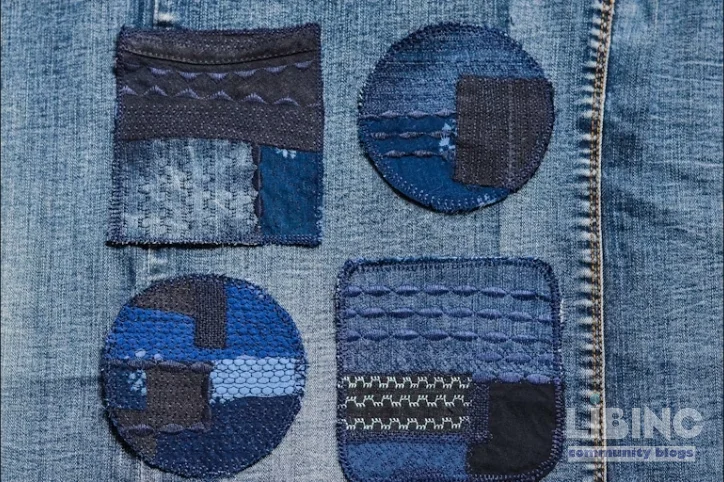
The cultural evolution toward visible mending draws on centuries of craft and identity formation. The Japanese kintsugi approach to broken pottery — fixing with lacquer and gold to highlight damage — offers a powerful metaphor for how damage can be made meaningful rather than end-of-life. The visual language of kintsugi has inspired contemporary brands and DIY communities to elevate mended garments as pieces with a history and a narrative. Similarly, sashiko—long celebrated as a practical reinforcement technique—has evolved into decorative geometric patterns that transform repair into textile art. The effect is a democratization of repair as both craft and commentary, accessible to amateurs and professionals alike. LSI: kintsugi, sashiko, cultural shifts, repair culture, DIY communities.
Retail examples illustrate this shift. Patagonia’s worn wear program invites customers to view repairs as part of the garment’s story, while encouraging DIY fixes through repair guides and spare parts. Second Cashmere, a Scottish brand, extends its philosophy by selling mending kits and offering repair services that can be invisible or visible, depending on customer preference. These initiatives do more than fix items; they cultivate a narrative around responsibility, durability, and customer empowerment. In social media ecosystems, repaired garments move from afterthought to star content, with repair videos and visible stitches becoming focal points of consumer engagement. The hashtag #VisibleMending has captured the attention of millions, signaling a broad cultural acceptance that repair glory can coexist with personal style. LSI: repair programs, brand engagement, consumer empowerment, repair guides, social media discourse.
From a strategic standpoint, the contrast between stigma and celebration matters because it directly influences adoption rates. When repairs are perceived as fashionable, they attract non-traditional repair participants who previously avoided sewing or patching. This expands the potential repair market beyond skilled hobbyists to general consumers who want to express creativity while contributing to sustainability. The pricing implications are non-trivial: visible mending creates new demand for high-visibility repair artistry and for repair services that can deliver both quality and aesthetic satisfaction. The net effect is a healthier repair economy, where repairs become a norm rather than an exception, enabling a slower fashion cycle that aligns with climate goals. LSI: consumer adoption, fashion norm, repair economy, sustainability goals, market expansion.
Contrasts in practice
- Hidden repairs prioritize discretion; visible repairs prioritize dialogue and shared learning.
- Repair cost can be offset by kit ecosystems, repair-as-service models, and resale value of patched garments.
- Cultural capital shifts toward skill-sharing, community workshops, and online showcases.
Cause and effect: how visible repair echoes through waste, trust, and the bottom line
The causal logic behind visible mending begins with repair as a lever for extending garment life. When a repair reduces the probability of disposal, it simultaneously lowers the demand for new production, reducing material extraction, energy use, and emissions. This causal chain expands through consumer behavior: visible mending strengthens attachment to clothing, increases the perceived value of repairs, and motivates participation in repair ecosystems. These dynamics propagate upward to retailers and brands that invest in repair platforms, spurring product stewardship and higher customer lifetime value.
At the consumer level, the decision to mend is influenced by time constraints, skill availability, and cost barriers. Visible mending reduces two of these barriers by offering accessible kits, clear guides, and aesthetically pleasing outcomes that double as social signals. When a repair is both functional and visually striking, the consumer receives feedback that repair is worthwhile, not something to hide. This feedback improves repair uptake, which then lowers turnover and enables households to reallocate budgets toward maintenance rather than replacement. The resulting savings accumulate across millions of garments, compounding environmental benefits across the textile life cycle. LSI: consumer behavior, repair ecosystem, lifetime value, maintenance, emissions reduction.
Brand implications follow a similar logic. Companies that institutionalize repair—through replacement parts, repair guides, and transparent repair policies—build trust and reduce perceived risk, especially in markets where durability is valued as a quality signal. Repair initiatives can reshape product strategy by incentivizing modular designs, standardized components, and upgradable trims. They can also bolster resilience by stabilizing demand against rapid fashion cycles. The broader effect is a more circular fashion system where the boundary between product and service blurs, and where the repair experience is integral to the brand promise. LSI: customer trust, durability signals, sustainability branding, modular design, product resilience.
However, the causal path is not automatic. Without concurrent investments in repair education, fair pricing, and accessible tools, visible mending can fail to scale. The phenomenon requires a supportive ecosystem: retailers must offer repair services or affordable kits, communities must share skills, and policy frameworks should encourage longer garment lifespans. In this sense, the sustainability payoff hinges on coordinating actions across producers, retailers, and consumers. LSI: repair education, affordable kits, ecosystem coordination, policy support, consumer empowerment.
In practice, a few concrete mechanisms drive the cause-and-effect chain:
- Repair-friendly design: garments designed with durable seams, removable trims, and standardized parts simplify repairs and increase success rates.
- Repair accessibility: offering bite-sized repair kits, online tutorials, and in-store drop-off points lowers time and skill barriers.
- Repair narrative: embracing visible repairs as cultural artifacts reinforces positive perceptions around repair.
These mechanisms collectively reduce the likelihood of premature garment disposal and increase the chance that a consumer will invest in repair rather than replacement. The environmental dividend scales with the adoption rate, and the social dividend scales with the visibility of repair as a legitimate and desirable form of fashion expression. LSI: repair-friendly design, repair accessibility, visible repairs as culture, environmental dividend, adoption rate.
Expert reconstruction: the future of repair in fashion — models and collaborations
- Co-created repair ecosystems: brands partner with community makers, repair cafés, and NGOs to provide scalable repair infrastructure.
- Open repair guides: transparent tutorials and downloadable templates accelerate skill acquisition and replicate success across contexts.
- Repair as a service: retail repair centers and mobile repair units convert repairs from a cost center to a value proposition.
- Data-driven repair metrics: tracking repair frequency, patch longevity, and resale values informs product design and sustainability reporting.
In this expert reconstruction, visible mending becomes a structural feature of fashion systems rather than a fringe practice. It aligns environmental concerns with consumer autonomy, brand trust, and economic incentives. The future of repair relies on a mosaic of activities: designers who prioritize repairability, retailers who champion repair ecosystems, and communities that celebrate the artistry of repair as a form of sustainable self-expression. LSI: repair ecosystems, open repair guides, repair-as-service, data-driven metrics, design for repairability.
From a strategic perspective, we should expect a shift in KPI frameworks. Traditional metrics focused on production efficiency may yield to repair-centric indicators: repair rate, average time to repair, part availability, and the resale uplift of repaired garments. Brands that align product development with repair capabilities will likely see higher consumer retention, stronger loyalty scores, and more robust circular economy credentials. The integration of visible mending into core business models signals a long-term commitment to sustainable value creation beyond quarterly performance flits. LSI: KPI shift, circular economy metrics, resale uplift, repair rate, customer retention.
Conclusion
Visible mending is more than a craft revival; it is a strategic response to the environmental and social costs of fast fashion. By reframing repair as a creative and socially valued act, it unlocks economic, cultural, and ecological benefits across the fashion system. The path forward demands coordinated design, education, and policy support that push repair from peripheral activity to central practice. The result could be a fashion industry where durable garments, repairable by design, become the baseline, not the exception, and where every stitch tells a story of responsibility, skill, and shared purpose.
Practical playbook for brands: turning visible mending into a scalable strategy
Brands face a gap between concept and execution. The following actionable framework translates visible mending into design, service, and measurement actions you can implement now, with concrete examples.
To illustrate outcomes, consider this compact scenario table:
| Scenario | Lifespan extension | Emissions reduction | Water use reduction | Notes |
|---|---|---|---|---|
| Baseline | 0 months | 0% | 0% | Current usage patterns |
| Repair +3m | 3 months | 5% | 4% | Early-stage mending programs |
| Repair +6m | 6 months | 10% | 8% | Improved patching techniques |
| Repair +9m | 9 months | 20% | 15% | Visible mending mainstream |
| Repair +12m | 12 months | 25% | 20% | Scaled repair ecosystems |
Key actions for immediate rollout
- Repair-friendly design: garments with modular seams, removable trims, and standardized components simplify repairs; example: a denim jacket with detachable patches.
- Repair infrastructure: in-store repair points, online spare-parts libraries, and clear guidance; example: DIY patch tutorials paired with a parts catalog.
- Economics and access: price repair as a service, sell repair kits, offer a repair subscription; example: annual repair pass for multiple items.
- Metrics and dashboards: monitor repair rate, time to repair, and resale uplift; example: quarterly KPI board showing churn reduction and repair uptake.
- Partnerships and culture: collaborate with community labs and NGOs; example: co-hosted repair weekends and open workshops.
- Communication: publish repair stories and before/after showcases; example: video series highlighting artisan techniques.
Impact snapshot
20%
Potential reduction in life-cycle impacts from nine-month life extension.
Implementation flow
Rollout plan
- Phase 1: Design for repairability with modular components and standardized fasteners.
- Phase 2: Build repair infrastructure—parts libraries, in-store hubs, and online tutorials.
- Phase 3: Launch market education—repair guides, community events, and social storytelling.
- Phase 4: Measure and iterate—track repair rate, time to repair, and resale uplift; refine products accordingly.
Governance and cadence
- Cross-functional repair guilds meet quarterly to review metrics.
- Design teams integrate repairability targets into product briefs.
With disciplined execution, visible repair becomes central to product stewardship and consumer trust, turning repair into a strategic capability rather than a niche craft.
What is visible mending and how does it help sustainability?
Visible mending is an approach to repair that intentionally shows stitches and patches, transforming a past fault into a design feature and a story of care. This practice extends garment life, reduces turnover, and lowers waste by keeping items usable longer. It also communicates a culture of quality and durability to customers. In practice, it combines craft with accessibility, encouraging more people to repair rather than replace. This blend supports circular fashion by aligning consumer behavior with resource stewardship.
Analytically, the method shifts value perception, influencing purchase decisions and brand loyalty as repairs become a visible quality signal.
How can brands implement repair-friendly design?
Brands can start with repair-friendly design by using modular components, standardized seams, removable trims, and easily replaceable parts. This reduces repair complexity and increases success rates. For example, a jacket with removable sleeves and a set of color-matched patches allows consumers to repair and customize without specialized tools. Pair design changes with repair guides and kits to lower barriers and create a repeatable repair funnel that scales across product lines.
Practically, align with suppliers on standardized threads and fasteners, and test repairability during pre-production with simple durability tests and patch longevity assessments.
What are practical revenue models for repair services?
Successful models blend services with product value: in-store repair centers, mobile repair units, and repair-kits sold alongside garments. Brands can offer a repair subscription or an annual repair pass covering a fixed number of items, plus paid per-repair options for premium fabrics or complex fixes. Bundling repairs with warranties or resale platforms boosts perceived value and reduces perceived risk, encouraging repeat purchases and longer asset lifecycles.
Consider partnerships with local makerspaces to extend reach and offset costs while maintaining high service standards.
What metrics track success of repair programs?
Key metrics include repair rate (percent of items repaired rather than discarded), average time to repair, replacement parts availability, and resale uplift for repaired items. Customer lifetime value, repeat purchase rate, and net promoter score can reveal shifts in loyalty linked to repair experiences. A dashboard combining product-level data (material, seam durability) with consumer behavior (mending time, kit usage) provides a holistic view of impact.
Regular audits ensure data quality and guide design iterations toward higher repairability and value.
How do consumer attitudes influence repair adoption?
Consumers grow more open to repair when repairs are visible, expressive, and connected to personal identity. Social sharing of repaired looks, tutorials, and repair journeys normalize repair as a fashion choice rather than a fallback. Education, storytelling, and accessible tools reduce time costs and skill barriers, expanding participation beyond seasoned hobbyists. In practice, communities and brands co-create repair narratives that celebrate skill and heritage.
Adoption is amplified when repair outcomes meet style and quality expectations, while price signals reflect the long-term value of repairs.
What policies support repair ecosystems?
Policy actions such as extended producer responsibility, garment take-back programs, and subsidies for repair tools foster longer garment lifespans. Supporting repair cafes, community workshops, and open repair guides accelerates skill-building and access. Regulations that require design for durability and repairability also push brands toward more modular, upgradable products, reinforcing a market shift toward repair-first consumption.





Add a comment
To comment, you need to register and authorize
Comments