

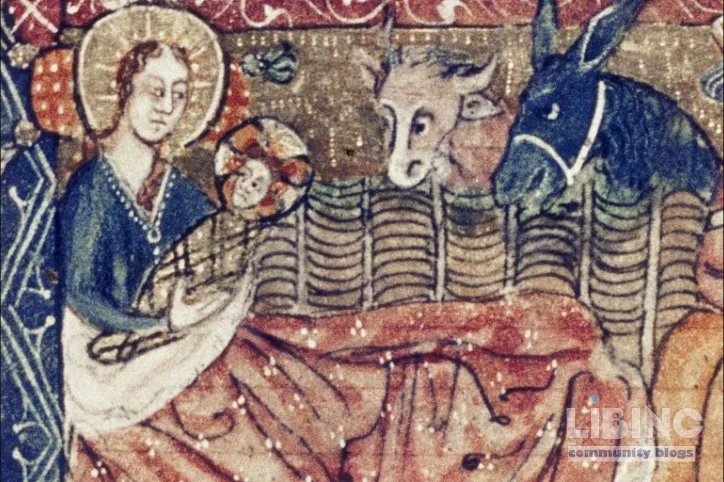
The Infancy of Jesus in Apocrypha reshapes a familiar Christmas tableau by showing how non-canonical narratives expanded a newborn's world far beyond the Gospel of Luke’s brief Bethlehem scene. This inquiry asks why medieval Christians embraced such tales, how they circulated, and what they reveal about early Christian imagination, iconography, and polemics. The stakes are both interpretive and political: apocryphal legends provided a framework for understanding Jesus’s identity at a time when the boundaries between piety, spectacle, and social rhetoric mattered as much as doctrine. The hidden conflict lies in the tension between the child’s vulnerability and the adult claim to divinity—a tension amplified when animals, prophets, and prodigies accompany the swaddled Christ. What follows is a focused reconstruction of how these legends traveled from text to tsar, scriptorium, and sculpted image.
Infancy of Jesus in Apocrypha: Analytical Perspective
The canonical Gospels provide the frame—birth narratives, flight to Egypt, and a later retrieval of a temple crisis—yet they leave many questions about Jesus’s childhood unresolved. In contrast, the body of apocryphal material—especially the Gospel of Pseudo-Matthew and the Infancy Gospel of Thomas—fills gaps with miracles, moral tests, and scenes that cast Jesus as a child who already bears the authority of the Messiah. This analytical angle treats the infancy stories not as curiosities but as deliberate narrative strategies that reframe the Nativity’s meaning for believers and viewers alike. The repeated motifs—miraculous restraint, divine power in youth, and animals recognizing sanctity—function as interpretive signals that the child before us is no ordinary boy.
To grasp the internal logic of these legends, scholars examine their sources and transmission. The apocrypha that most influenced medieval perception did not simply copy one another; they iterated and aggregated earlier materials, weaving in elements from older apocryphal gospels and local devotional practices. The result is a braided tradition in which the Christ child exercises control over creation, tames hazards, and reveals a plan that would later be fully proclaimed in the adult ministry. The net effect in art and liturgy is a Christ who commands awe from the outset, while his humanity remains a point of intimate, childlike accessibility for pious audiences.
Among the central textual traditions, the Gospel of Pseudo-Matthew emerges as a pivotal conduit. This seventh-century compilation—likely the work of a single anonymous monk—recasts the nativity in ways that foreground miraculous deeds and cosmic sovereignty. The presence of dragons, palm trees bending to feed Mary, and the claim that Jesus can tame wild beasts all work to intensify the sense that the infant Jesus embodies both divine authority and intimate protection. In this framework, the manger scene gains an expanded drama, serving as an inaugural stage for later Christian miracle narratives.
Beyond Pseudo-Matthew, the Infancy Gospel of Thomas contributes a more unruly, almost playful, portrait of Jesus as a boy who tests boundaries with precocious wit and supernatural power. The juxtaposition of whimsical episodes—a boy’s death and resurrection after a sharp rebuke, or the boy who makes a coat slip into a sunbeam so others can imitate him but meet a perilous fate—targets the tensions between childhood autonomy and divine vocation. These tales are not mere sensationalism; they encode a theology in which divine prerogative intersects play, risk, and social order. The apocryphal corpus thus reframes infancy as a crucible in which Jesus’s future identity is already legible to the reader or observer.
The transmission pattern matters as much as the content. Early Christian art and devotional culture repeatedly echoed the apocryphal frame: beasts bow, trees bend, and the child’s gaze signals recognition of a sacred order. The ox and ass at the manger become an index of a broader recognition—the animals perceive truth before some human witnesses do. This dynamic helps readers understand why medieval piety could fuse natural creation with theological revelation, presenting a world in which the divine breaks into ordinary life with astonishing force.
Contrast with Canonical Gospels: What the Apocrypha Adds
The canonical Gospels deliver a sober, restrained infancy narrative that centers on modest origins and a restrained public ministry. The apocrypha, by contrast, fills in the gaps with extraordinary events and a child-world where power, wisdom, and danger mingle with innocence. This contrast matters because it explains why medieval Christians gravitated toward non-canonical narratives when shaping Christmas art, liturgy, and popular imagination. The apocryphal infancy stories shift the focus from a quiet birth to a dramatic entry into a world in need of rescue, a move that reframes the Christ-child as a problem solver and a cosmic agent from the earliest moments of life.
To illustrate the difference, consider the following contrasts:
- Canonical infancy emphasizes humility and human vulnerability; apocryphal infancy foregrounds divine sovereignty and extraordinary intervention.
- Temple-only knowledge in the canonical account contrasts with early demonstrations of wisdom and power in Pseudo-Matthew and the Infancy Gospel of Thomas.
- Mary’s contemplative silence in Luke is set against the bustling, dramatic episodes of miracles and admonitions in apocryphal texts.
These distinctions matter because they shape iconography and devotional practice. Where canonical texts leave room for trust in providence through quiet observation, the apocrypha invites believers to witness and interpret signs—dragons acknowledging the infant, palm-trees yielding fruit, or beasts bowing in reverence. The visual renderings of these narratives become didactic tools that teach both reverence and a sense of Jesus’s extraordinary identity before his public ministry begins.
In the medieval imagination, the contrast between canonical restraint and apocryphal exuberance also serves a social and polemical function. The animals’ recognition of Jesus—often deemed superior to the human observers in the surrounding crowd—feeds a narrative in which the true nature of Jesus is evident even to creatures. This motif can unintentionally amplify antisemitic stereotypes by implying that Jewish spectators fail to perceive what animals instantly acknowledge. The tension is not merely aesthetic; it becomes a site where theology, art, and social memory intersect in powerful ways.
Yet the apocryphal corpus also offers a space for wonder that complements canonical teaching. While Luke preserves the humility of the incarnation, Pseudo-Matthew and Thomas interpret childhood as a theater of divine self-disclosure. In this sense, the contrast is not zero-sum; together they provide a more complex, if contentious, map of early Christian belief about Jesus’s identity and mission.
From Legend to Lore: Cause and Effect in Medieval Culture
Legends about the young Jesus did not arise in a vacuum. They traveled through monastic scriptoria, hagiographies, and devotional images, becoming a familiar component of Christmas narratives. The cause-and-effect logic is clear: apocryphal tales expanded the infancy story, which in turn enriched nativity imagery, which then fed a broader culture of wonder and moral instruction. The effect was a richer, more contested memory of Jesus’s childhood that could accommodate miracles, moral tests, and even challenges to social norms. The apocrypha offered a toolkit for shaping both piety and public ritual around the birth of Christ.
One decisive channel of influence was liturgical and artistic communities that preferred vivid, narratively dense episodes to a sparse canonical account. The presence of miraculous scenes, animal reverence, and seemingly audacious demonstrations of power made the infant Jesus a figure capable of immediate and unmistakable authority. The visual arts, in particular, absorbed these motifs and translated textual elements into iconographic programs that allowed congregants to encounter the divine through image as well as word. In this way, non-canonical infancy narratives became instrumental in directing devotion, teaching theology through narrative spectacle, and shaping the emotional climate of Christmas celebrations.
Another consequence concerns the social reach of these legends. By presenting Jesus as a child who can command lions or bend palm trees, apocryphal stories cultivate a sense of awe that resonates with lay audiences, while simultaneously pushing readers to recognize the divine in unconventional forms. The legends also function as allegories for human learning and obedience: even the most gifted child can be misread, while the world itself bears witness to the Messiah’s presence. In short, the cause-and-effect pattern reveals a feedback loop between narrative invention and public reception that sustained these tales across centuries.
Historically, the Gospel of Pseudo-Matthew’s popularity in certain periods amplified the apocryphal voice, while the Infancy Gospel of Thomas offered a counterpoint that emphasized precocious mastery over the natural order. Together, these texts provided a multi-voiced backdrop against which medieval artists and theologians could explore the paradox of a child who is both fully human and fully divine. The result is a culturally robust framework in which the infancy scene becomes a laboratory for exploring identity, authority, and the boundaries of religious imagination.
Expert Reconstruction: Reading the Legends Today
Scholars approach the infancy legends as a composite cultural artifact rather than a straightforward historical report. Their reconstruction of how these texts function in medieval life emphasizes two core functions. First, they serve as a means of teaching the church’s Christology to diverse audiences—monks, craftsmen, and lay worshippers—by translating abstract doctrine into recognizable, often spectacular, narrative forms. Second, they operate as instruments of social memory, embedding theological claims within everyday experiences of birth, family, and community celebration. This dual function helps explain why the apocrypha remains a persistent, though contested, part of the Christmas story in art and devotion.
The expert view also highlights a crucial interpretive tension: the apocryphal legends reveal how medieval Christians negotiated the boundary between reverence for the holy child and the social realities of antisemitism and religious difference. The animals’ reverence, the dragon-slaying imagery, and the child’s early demonstrations of power all contribute to a narrative that both sanctifies and unsettles, inviting viewers to contemplate the hidden power of the infant while also grappling with the moral and political implications of belief. In other words, the infancy legends are not neutral lore; they are active agents in shaping communal memory and identity.
From a methodological standpoint, experts stress reading these stories alongside contemporary artworks, sermons, and devotional manuals. When viewed as part of a larger media ecosystem—text, image, and ritual—the legends reveal how medieval communities used narrative to negotiate uncertainty about Jesus’s person and mission. The result is a more nuanced understanding of how early Christian imagination operated across diverse social spaces, producing a rich, sometimes paradoxical iconography of the Christ child that persisted well into the modern era.
In this light, the infant Jesus in apocrypha becomes a test case for how religious communities deploy storytelling to stabilize belief, instruct virtue, and challenge spectatorship. The remarkable thing is not only what these tales claim about Jesus but how they teach believers to think about power, humility, and revelation from the moment of birth. The legacies linger in the way we imagine the Nativity today, reminding us that sacred narratives are living conversations between text, image, and community memory.
Ultimately, the Infancy of Jesus in Apocrypha demonstrates that historical accuracy and devotional richness can coexist in complex ways. The apocryphal infancy legends did not merely embellish a canonical story; they reframed the entire nativity discursive field, inviting ongoing interpretation and reimagining across centuries. The result is a durable, though contested, facet of Christian meditative life—one that continues to shape how believers perceive the dawn of salvation and the signs by which the world recognizes the Messiah.
Audience and Transmission: Reaching Monks, Makers, and Believers
Expanding on how these infancy legends circulated helps explain their persistence in art and ritual across centuries. They saturated not only texts but also workshops, churches, and festival processions, shaping a shared visual language that could be read by illiterate spectators and clerical readers alike.
To ground these ideas in concrete contexts, consider three representative settings where the narratives circulated.
Iconographic motifs in practice
These motifs travel and adapt, signaling a child who already commands the world and inviting viewers to read power into the newborn.
In a northern monastery, a scribe’s marginal note often pairs Luke’s nativity with a panel where animals respond to the infant, reinforcing a communal sense of recognition. In a parish church, a palm-tree motif might feed Mary’s meal in a sculpted relief, linking creation’s generosity to divine favor. In a secular context, workshop engravings and diptychs reuse the same figures to remind buyers that history has turned sacredly at the moment of birth.
Comparative motifs across texts
A compact comparison helps readers see how canonical and apocryphal narrations shaped meaning. The canonical account emphasizes humble beginnings and quiet revelation, while apocrypha foregrounds immediate displays of authority and cosmic sign. The same visuals appear but with different emphasis: beasts acknowledge the child in apocrypha, whereas angels and shepherds foreground shepherd-like obedience in canonical scenes. This divergence mattered for medieval preaching and for the way people encountered the Nativity in art.
| Motif | Canonical Gospel | Apocryphal | Medieval Reading | Visual Example |
|---|---|---|---|---|
| Beasts bowing | Present in nativity iconography | Explicit acknowledgment by animals | Divine authority announced in nature | Carved manger relief |
| Palm trees | Symbolic generosity | Fruit feeding Mary | World aiding the divine plan | Relief panel with fruit-bearing palms |
| Dragons/cosmology | Absent | Symbolizes order and protection | Birth as cosmic event | Fresco cycle with mythic beasts |
Across contexts, the child’s dignity and the world’s astonishment anchor devotion and teach that sacred presence arrives in everyday encounter.
Transmission paths: from text to image to ritual
- Textual diffusion through monastic networks seeds shared narratives.
- Artistic cycles translate stories into accessible devotion for communal spaces.
- Sermons, festivals, and pilgrimages embed the legends in everyday memory.
In sum, audiences across social strata encountered these tales as a blend of doctrine and wonder, shaping Nativity imagination for centuries.
What is the significance of apocryphal infancy narratives in medieval nativity art?
The apocryphal infancy narratives matter because they enrich the Nativity story with vivid scenes of authoritative childhood, miraculous power, and universal recognition. They provided a flexible framework for teaching Christology to varied audiences, from monks to lay worshippers, by translating abstract doctrine into tangible, visible acts on pages, walls, and altars. This deeper narrative layer helped believers connect the mystery of Incarnation to everyday life and devotion. The result is a Nativity that feels present and watchable from youth onward, not merely as a distant birth event.
Analytically, these stories function as didactic tools that bridge textual interpretation and sensory experience. They offer a way to discuss divine identity without relying solely on doctrinal prose, making complex ideas accessible through imagery and storytelling. For researchers, the legends illuminate how medieval communities used narrative to shape belief and practice in diverse social contexts.
How do motifs like beasts bowing and palm trees bending function in art and liturgy?
These motifs operate as shorthand for the newborn’s authority and the world’s readiness to witness sacred revelation. In visual cycles, they cue viewers to recognize the divine presence before human witnesses do, reinforcing piety and awe. In liturgical contexts, such imagery supported sermons and hymns that framed birth as cosmic event rather than private moment. The motifs also offered a universal, cross-cultural vocabulary for discussing miraculous power, making the Nativity legible across languages and regions.
From a scholarly angle, the motifs reveal how medieval communities negotiated access to mystery. They show how devotion could cohere around a single iconographic language and how art could carry theology beyond textual limits, shaping everyday worship and iconography for generations.
How did apocryphal infancy legends influence iconography and teaching in churches?
The legends guided the design of sculpted nativity scenes, stained glass, and frescoes. Carved animals, bending trees, and tame beasts appeared in paneling that paired with sermons and feast days to instantiate theological ideas about Jesus’s early authority. In teaching, artists used these images to illustrate the claim that the divine presence is discernible in nature and human life, reinforcing moral lessons of humility and obedience alongside awe. The combined textual and visual approach made doctrine palpable for communities with varied literacy levels.
In historical terms, the visual adaptation of apocryphal narratives also reflects the role of workshop culture and patronage. Artists and patrons negotiated which motifs to emphasize, often aligning them with local devotional needs and political contexts. The result is a dynamic, regional mosaic of Nativity imagery that still informs modern museology and church art today.
What social tensions do these legends reveal, including antisemitism and doctrinal debates?
The legends reveal a complex social field where belief, identity, and power intersect. While they celebrate divine recognition of Jesus, some motifs could unintentionally echo antisemitic assumptions by privileging witnesses that accept the sacred sign, including animals and non-Jewish audiences, over others. This tension invites careful, critical reading of historical contexts, with attention to how imagery could reinforce or challenge social hierarchies. Doctors of the Church and monasteries often navigated these tensions by re-siting meanings within broader creedal frameworks and local devotional traditions.
Scholars emphasize that modern readers should balance appreciation for devotional richness with ethical reflection about historical injuries. Understanding this dynamic helps readers appreciate the complexity of medieval religiosity while recognizing the lasting responsibility to contextualize religious imagery with sensitivity.
What does expert reconstruction say about the function of these legends today?
Experts view these legends as living artifacts that illuminate how communities taught and remembered beliefs about Jesus. They help explain why Nativity scenes remain emotionally powerful, offering a template for engaging audiences with a blend of wonder and theological clarity. Today, reconstruction focuses on textual history, artistic programs, and social memory, highlighting how narratives travel across media and centuries. The aim is not merely to catalog tales but to understand how they shaped communal identity and practice then and now.
Analytically, this approach shows the value of interdisciplinary study—text, image, and ritual— for a fuller picture of early Christian imagination. The legends are not relics of a distant past but a source of insight into how communities negotiate mystery, power, and care for the vulnerable at the dawn of salvation.
How did transmission pathways shape reception across regions?
Transmission pathways—from monastic copies to parish altars and public festivals—produced a shared yet varied reception. Texts circulated in scriptsoria, images circulated in churches and workshops, and devotional practices embedded the stories in everyday life. This network enabled a common vocabulary of motifs while allowing local adaptations. The regional diversity—Latin West, Greek East, and later medieval Europe—created a durable, if contested, memory of Jesus’s infancy that persisted through art, liturgy, and pedagogy.
In practice, modern readers gain from studying these pathways because they reveal how beliefs travel and stick. The result is a richer understanding of how sacred narratives anchor culture, influence art, and shape the way communities perceive the dawn of salvation.





Add a comment
To comment, you need to register and authorize
Comments