

Valencia Horchata: An Analytical Deep Dive into the White Gold of the City
Table of contents
- Through analytics: decoding the horchata ecosystem
- Through contrast: real experiences vs. expectations
- Through cause-and-effect relationships
- Through expert reconstruction
The following analysis treats horchata not as a mere beverage but as a cultural manufacture with ecological roots, market dynamics, and sensory theory. It foregrounds the main idea that horchata’s value rests on provenance, technique, and time-honored craftsmanship rather than on quick, commodified sweetness. The aim is to move beyond touristy stereotypes toward an evidence-based understanding of what makes a horchata ritual worthwhile. By examining production, place, and palate, this piece offers a framework for choosing where and how to drink horchata while honoring its origins and actors, from Alboraya to the city streets of Valencia.
Through analytics: decoding the horchata ecosystem
Horchata in Valencia arises from a geography that rewards patient cultivation and precise processing. It is simultaneously a beverage, a local economy, and a memory device that carries the weight of centuries of practice. The analysis begins with the plant that fuels it: the chufa, known in English as tiger nuts. The tuber’s role is not incidental; it is the core differentiator between a regional drink and a generic nut drink. Horchata’s identity thus hinges on a single agricultural input, executed within a distinctive Valencian ritual economy.
In the fields surrounding Alboraya, chufa thrives because the soils and microclimate favor its tuberous growth. The town is widely acknowledged as horchata’s birthplace and global capital, a positioning reinforced by the scale of its harvest. Valencia’s agricultural zone north of the city yields between 5.3 million and 8 million kilograms of dried tiger nuts per year. This production envelope sets a ceiling on quality, flavor stability, and seasonal flavor profiles, because tiger nut maturity and dryness influence sweetness, creaminess, and aroma. The tiger nuts thus anchor price signals, texture, and texture-coded expectations across markets and horchaterías.
To transform the wrinkled tubers into horchata, chufas are cleaned, soaked, and crushed before being mixed with water. The basic chemistry is simple: starches and natural sugars released from the tubers blend with the water to yield a creamy, milky suspension. The modern palate often asks for cinnamon, citrus zest, and sugar, which heighten aroma and sweetness but can mask the intrinsic mouthfeel of the chufa if overapplied. The balance between authentic nutty depth and added flavors becomes a key signal of quality in a given horchatería.
The horchata market in Valencia offers three main versions: líquida (the traditional liquid), granizada (semi-frozen slush), and mixta (a blend of liquid and slush). The choice is not a mere preference; it encodes how a reader perceives temperature, texture, and intensity. Liquida preserves a smoother, more direct chufa-forward profile, while granizada enhances refreshment under the Valencian heat, occasionally at the cost of mid-palate creaminess. The mixta option, by contrast, is a compromise between both experiences and can reveal the producer’s ambition for versatility in a single glass.
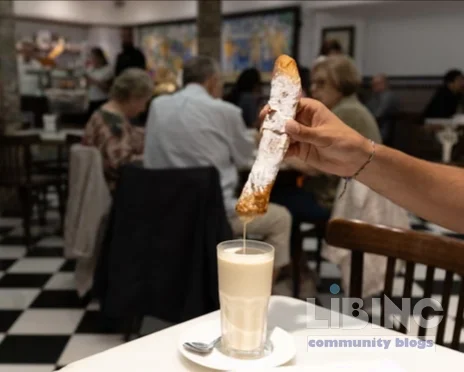
The supply chain and the craft of horchata overlap with a parallel pastry culture. Alboraya’s identity is not only about the drink but also about the fartón, a long, sugary pastry designed to mop up every last drop. This pastry’s invention in the 1960s by the Polo family marks a turning point in horchata consumption: it linked the drink to an entire ritual of tasting, dunking, and savoring. Rosquilletas—dry, salty anise-flavored breadsticks—offer a more austere counterpoint to the sweeter pairing, illustrating how complementary textures shape overall hedonic experience. The pairing logic matters as much as the drink’s intrinsic sweetness in defining a memorable set-piece around horchata.
In contemporary Valencia, horchaterías widely separate their production identity from generic cafés or ice-cream parlours. Some family-run houses adhere to a purist approach, dedicating their rooms to horchata creation and service; others expand menus, risking dilution of quality. The distinction matters because a high-quality horchata exhibits a delicate balance of roasted sweetness, nutty depth, and light-bodied creaminess that is quickly lost when the drink is treated as a convenience. The historical seriousness of the craft thus remains a dividing line between authentic experiences and tourist-focused overlays.
Within this ecosystem, Món Orxata embodies a notable counterpoint. Across central plazas in Valencia, street carts offer unpasteurized horchata that emphasizes crisp, clean flavors and a bite of freshness that pasteurized versions often smother. This approach foregrounds purity and a direct chufa sensation, inviting a different sensory rhythm than sweeter, more homogenized renditions. The choice of method—unpasteurized versus pasteurized, sugar level, and pastry pairing—becomes a diagnostic criterion for evaluating quality in real-world horchaterías.
Ultimately, the analytics of horchata reveal a trade-off between authenticity, accessibility, and taste. The drink’s value is anchored in its ability to deliver a legible sense of place—the soil, the harvest cycle, and the artisanal labor that transforms tubers into a silky, aromatic liquid. The more a horchatería preserves the distinctiveness of its chufa, the more reliably it communicates the Valencia spirit on the palate. The result is a texture-rich, sensory narrative that travels from Alboraya to the city squares and back again through each sip.
Through contrast: real experiences vs. expectations
Expectations often outpace the reality of horchata in dense tourist corridors. A first encounter at Horchatería Fabián, established in 1975, illustrates a pitfall: the room feels empty, the staff appear distracted, and the horchata tastes excessively sweet, almost artificially so. The fartón is dry and crumbly, failing to convey the drink’s potential to moisten every bite. In short, the experience reads as a misalignment between historical prestige and current execution. The result is a memory of disappointment that colors future visits and creates a skewed baseline for quality assessment.
The corrective against that misalignment comes quickly at Horchatería Daniel, a family business dating back to 1949 with three locations. The original Alboraya outpost anchors production with a baseline of early-morning work. In its central venue near the Plaza, the horchata is creamy and moderately sweet, a harmony that supports the farton rather than overpowering it. The rhythm of service, the warmth of staff, and the consistent texture create a different kind of credibility—one grounded in the daily ritual rather than a single, isolated tasting. This contrast underscores that taste is inseparable from context and people.
Moving toward the grandest rooms in Valencia, Horchatería de Santa Catalina sits under the watchful gaze of a 17th-century baroque bell tower. The room feels ceremonial: marble tables, ceramic tiles, and a glass that glints with expectation. The horchata here is darker and creamier, a result of deeper extraction and perhaps longer mixing, while the fartón remains a fixture of indulgence. The environment itself—architecture, lighting, and crowd energy—amplifies perception, complicating the claim that taste alone carries the experience. The environment becomes an active participant in quality judgment.
North of the river, Horchatería Mari Toñi functions as a neighborhood anchor, especially for early-morning or late-evening rituals. It opens at 6:15 a.m., and its freshly made fartons reveal a soft, porous crumb that welcomes the crema-like horchata with balance. The drink’s sweetness sits within a disciplined range, and the pastry’s texture confirms a craft-oriented approach. The takeaway from this chain of contrasts is simple: value emerges when a horchatería respects the drink’s historical balance while accommodating contemporary preferences rather than chasing trend-driven sweetness.
Across these venues, a persistent thread appears: the best horchatas are not simply sweeter or thicker, but truer to the chufa character. The difference between a convincing glass and a disappointing one often rests on the producer’s restraint, the sugar clock, and the pastry’s ability to carry the sip. The result is a broader lesson about tasting in culinary heritage: quality is a function of provenance, technique, and the social ritual surrounding the glass as much as the liquid itself.
From the vantage of a careful taster, the city’s horchatería map demonstrates that value accrues in places where tradition is actively practiced rather than marketed as nostalgia. The contrast between venues reveals a spectrum: from the lean, craft-focused rooms to the ornate, experience-driven spaces that foreground spectacle. A responsible approach to horchata thus emphasizes consistent quality, transparent handling of chufa, and a respect for the unspoken rules of the craft—rules that travelers and locals alike should learn before ordering.
Through cause-and-effect relationships
The sweetness level in horchata is a primary driver of perception, and the distinction between a bright, clean sip and a cloying aftertaste is a direct result of formulation choices. When sugar dominates the recipe, the palate loses the subtle almond-like notes and the chufa’s intrinsic creaminess becomes masked. This is not merely a matter of taste; it affects how the drink pairs with the fartón and how long the memory of the tasting lingers in the mouth. In other words, sweetness is a design choice that determines value over time, not just in the moment of sipping.
Technique governs texture and balance. The chemical release of sugars, starches, and fats during soaking and grinding determines mouthfeel, creaminess, and the ease with which the draught coats the tongue. The traditional sequence—clean chufa, soak, grind, dilute with water—sets a baseline that modern producers can respect or subvert. The decision to supplement with cinnamon or citrus zest changes aroma and perception, but misapplied notes can disrupt the expected body and persistence of the drink, revealing a fine line between refinement and distraction.
The timing and setting of horchata consumption exert measurable effects on taste perception. A cooler, quieter setting can amplify the drink’s expressiveness, while a crowded, noisy room can mask delicate aromas and encourage hurried tasting. The environment thus becomes a force multiplier for quality, testing whether a horchatería can maintain consistency under social pressure. In Valencia, the best venues manage this dynamic by calibrating service pace, glass temperature, and pastry cadence to sustain a multi-sensory rhythm that mirrors the drink’s complexity.
Within the supply chain, unpasteurized horchata presents a distinct causal path. The street-cart model of Món Orxata, which often serves unpasteurized varieties, emphasizes a crispness and brightness that pasteurized versions may dull. This difference matters because it affects the drink’s shelf-life, texture, and the perceived freshness of chufa. The cause-and-effect chain here is explicit: processing choices shape flavor stability, which in turn shapes consumer loyalty and the geographic diffusion of Horchata’s authentic profile across Valencia and beyond.
Chufa origin matters; the tiger nut’s terroir influences flavor, aroma, and sweetness. Tiger nuts grown in different microclimates yield subtle variations—some batch notes lean nutty and mellow, others lean sweet and bright. The effect is cumulative: a consistently high-quality horchata depends on reliable chufa supply, precise processing, and disciplined sugar management. In sum, the geographic and technical conditions that cradle chufa cultivation directly drive the character of the drink that lands in a glass, a pastry, or a conversation in Valencia’s horchaterías.
Through expert reconstruction
To translate the analysis into practice, the expert’s reconstruction begins with a deliberate itinerary anchored in Alboraya and the historic heart of Valencia. Start by tracing the chufa’s origin in the fertile fields north of the city, then move to a traditional horchatería in the old town that treats horchata as a first-order product rather than an add-on. This sequence foregrounds provenance and technique and minimizes the risk of encountering a product that has drifted from its roots. The core lesson is that a genuine horchata experience requires patience and an eye for quality control at every stage of the production line.
In practice, the recommended pattern is to sample the líquido first, then consider the granizada or mixta only if heat and thirst demand it. The original pairing—horchata with fartón—remains the most revealing combination because it places emphasis on the drink’s texture, sweetness, and aroma while testing the pastry’s ability to lift rather than mask the liquid. The recommendation is not to chase novelty but to savor harmony: a balanced horchata with a crust of airy, slightly porous fartón that clears the palate without overpowering the drink’s core character.
Quality cues live in the details. Look for a pale, creamy color with a smooth, even texture and a scent that hints at toasted nuts and citrus. The fartón should be soft and slightly chewy rather than dry or crumbly; it should dissolve gradually without turning chalky. Regions with well-regulated chufa supply will tend to deliver consistent color, aroma, and texture across days, turning a simple drink into a reliable barometer of a horchatería’s craft. These are the signs of a place that understands horchata as a delicate, living tradition rather than a disposable pleasure.
For the serious enthusiast, a deliberate cross-town circuit offers the richest picture of Valencia’s horchata ecosystem. Begin in Alboraya to witness the chufa fields and the early-morning grind, then move to a central horchatería with a long lineage to observe how tradition adapts to city pressure. Along the way, compare the liquid textures, the degree of sweetness, and the fidelity of the fartón’s texture to traditional standards. The end goal is not a single perfect glass but a nuanced map of where quality endures and where it yields to convenience, and how to recognize each phenomenon without sacrificing the drink’s core identity.
In sum, the reconstruction emphasizes a disciplined, evidence-based approach to horchata tasting in Valencia. It values provenance, technique, and ritual as a coherent system rather than three separate debates. The robust horchata experience emerges when a venue treats chufa as a final product with integrity, respects the dunking ritual, and maintains the patience necessary to let the drink reveal itself gradually. The craft thus survives not by catering to trends but by preserving the quiet authority of centuries of practice.
Valencia’s horchata remains a living tradition that rewards observant visiting with a deeper comprehension of soil, harvest, and craft. The city’s most meaningful experiences arise when a glass of horchata is not merely consumed, but read—its color, aroma, and texture telling a story about land and labor, and the people who keep a centuries-old method in daily use.
Through analytics: decoding the horchata ecosystem
Horchata in Valencia arises from a geography that rewards patient cultivation and precise processing. It is simultaneously a beverage, a local economy, and a memory device that carries the weight of centuries of practice. The analysis begins with the plant that fuels it: the chufa, known in English as tiger nuts. The tuber’s role is not incidental; it is the core differentiator between a regional drink and a generic nut drink. Horchata’s identity thus hinges on a single agricultural input, executed within a distinctive Valencian ritual economy.
| Version | Texture | Temperature | Flavor Focus | Best Pairing | Notes |
|---|---|---|---|---|---|
| Líquida | Silky, chufa-forward | Cool to ambient | Nutty depth, subtle sweetness | Fartón ligero | Pure chufa expression |
| Granizada | Crystalized, icy texture | Very cold | Refreshed mouthfeel, brighter aroma | Fartón crujiente | Best in heat; moderates richness |
| Mixta | Balanced between both | Variable | Hybrid sweetness and body | Any pastry | Versatile, producer-dependent |
The tiger nuts thus anchor price signals, texture, and texture-coded expectations across markets and horchaterías.
The horchata market in Valencia offers three main versions: líquida (the traditional liquid), granizada (semi-frozen slush), and mixta (a blend of liquid and slush). The choice is not a mere preference; it encodes how a reader perceives temperature, texture, and intensity. Liquida preserves a smoother, more direct chufa-forward profile, while granizada enhances refreshment under the Valencian heat, occasionally at the cost of mid-palate creaminess. The mixta option, by contrast, is a compromise between both experiences and can reveal the producer’s ambition for versatility in a single glass.
The supply chain and the craft of horchata overlap with a parallel pastry culture. Alboraya’s identity is not only about the drink but also about the fartón, a long, sugary pastry designed to mop up every last drop. This pastry’s invention in the 1960s by the Polo family marks a turning point in horchata consumption: it linked the drink to an entire ritual of tasting, dunking, and savoring. Rosquilletas—dry, salty anise-flavored breadsticks—offer a more austere counterpoint to the sweeter pairing, illustrating how complementary textures shape overall hedonic experience. The pairing logic matters as much as the drink’s intrinsic sweetness in defining a memorable set-piece around horchata.
In contemporary Valencia, horchaterías widely separate their production identity from generic cafés or ice-cream parlours. Some family-run houses adhere to a purist approach, dedicating their rooms to horchata creation and service; others expand menus, risking dilution of quality. The distinction matters because a high-quality horchata exhibits a delicate balance of roasted sweetness, nutty depth, and light-bodied creaminess that is quickly lost when the drink is treated as a convenience. The historical seriousness of the craft thus remains a dividing line between authentic experiences and tourist-focused overlays.
Within this ecosystem, Món Orxata embodies a notable counterpoint. Across central plazas in Valencia, street carts offer unpasteurized horchata that emphasizes crisp, clean flavors and a bite of freshness that pasteurized versions often smother. This approach foregrounds purity and a direct chufa sensation, inviting a different sensory rhythm than sweeter, more homogenized renditions. The choice of method—unpasteurized versus pasteurized, sugar level, and pastry pairing—becomes a diagnostic criterion for evaluating quality in real-world horchaterías.
Ultimately, the analytics of horchata reveal a trade-off between authenticity, accessibility, and taste. The drink’s value is anchored in its ability to deliver a legible sense of place—the soil, the harvest cycle, and the artisanal labor that transforms tubers into a silky, aromatic liquid. The more a horchatería preserves the distinctiveness of its chufa, the more reliably it communicates the Valencia spirit on the palate. The result is a texture-rich, sensory narrative that travels from Alboraya to the city squares and back again through each sip.
A practical tasting protocol closes the gap
Across venues, a repeatable method reveals true quality. Here is a concise protocol you can use on any visit: set a quiet table, use a clean glass (8–12 oz) and a fresh fartón, and pre-chill the liquid to about 6–8 C for líquido (cooler for granizada). Inspect color and texture (pale ivory, satin smooth). Inhale restrained notes of roasted chufa and citrus; take a measured sip and evaluate weight, coating, and mid-palate development. Track sweetness with restraint: the best horchatas balance chufa depth with subtle sugar rather than overwhelming it. Note aftertaste length and cleanliness. Dunk the fartón; it should hydrate the drink without masking it. If heat demands it, compare líquido with granizada or mixta to observe texture shifts. Finally, document provenance questions (chufa origin, harvest timing, pasteurized vs unpasteurized) and assign a simple score across aroma, texture, sweetness, and overall impact. This routine makes evaluation uniform across visits and reveals subtle differences that casual tastings miss.
Through contrast: real experiences vs. expectations
Expectations often outpace the reality of horchata in dense tourist corridors. A first encounter at Horchatería Fabián, established in 1975, illustrates a pitfall: the room feels empty, the staff appear distracted, and the horchata tastes excessively sweet, almost artificially so. The fartón is dry and crumbly, failing to convey the drink’s potential to moisten every bite. In short, the experience reads as a misalignment between historical prestige and current execution. The result is a memory of disappointment that colors future visits and creates a skewed baseline for quality assessment.
The corrective against that misalignment comes quickly at Horchatería Daniel, a family business dating back to 1949 with three locations. The original Alboraya outpost anchors production with a baseline of early-morning work. In its central venue near the Plaza, the horchata is creamy and moderately sweet, a harmony that supports the fartón rather than overpowering it. The rhythm of service, the warmth of staff, and the consistent texture create a different kind of credibility—one grounded in the daily ritual rather than a single, isolated tasting. This contrast underscores that taste is inseparable from context and people.
Moving toward the grandest rooms in Valencia, Horchatería de Santa Catalina sits under the watchful gaze of a 17th-century baroque bell tower. The room feels ceremonial: marble tables, ceramic tiles, and a glass that glints with expectation. The horchata here is darker and creamier, a result of deeper extraction and perhaps longer mixing, while the fartón remains a fixture of indulgence. The environment itself—architecture, lighting, and crowd energy—amplifies perception, complicating the claim that taste alone carries the experience. The environment becomes an active participant in quality judgment.
North of the river, Horchatería Mari Toñi functions as a neighborhood anchor, especially for early-morning or late-evening rituals. It opens at 6:15 a.m., and its freshly made fartons reveal a soft, porous crumb that welcomes the crema-like horchata with balance. The drink’s sweetness sits within a disciplined range, and the pastry’s texture confirms a craft-oriented approach. The takeaway from this chain of contrasts is simple: value emerges when a horchatería respects the drink’s historical balance while accommodating contemporary preferences rather than chasing trend-driven sweetness.
Across these venues, a persistent thread appears: the best horchatas are not simply sweeter or thicker, but truer to the chufa character. The difference between a convincing glass and a disappointing one often rests on the producer’s restraint, the sugar clock, and the pastry’s ability to carry the sip. The result is a broader lesson about tasting in culinary heritage: quality is a function of provenance, technique, and the social ritual surrounding the glass as much as the liquid itself.
From the vantage of a careful taster, the city’s horchatería map demonstrates that value accrues in places where tradition is actively practiced rather than marketed as nostalgia. The contrast between venues reveals a spectrum: from the lean, craft-focused rooms to the ornate, experience-driven spaces that foreground spectacle. A responsible approach to horchata thus emphasizes consistent quality, transparent handling of chufa, and a respect for the unspoken rules of the craft—rules that travelers and locals alike should learn before ordering.
- Color: pale, creamy, uniform
- Aroma: toasted chufa with citrus hint
- Texture: smooth, not gritty or sticky
Through expert reconstruction
To translate the analysis into practice, the expert’s reconstruction begins with a deliberate itinerary anchored in Alboraya and the historic heart of Valencia. Start by tracing the chufa’s origin in the fertile fields north of the city, then move to a traditional horchatería in the old town that treats horchata as a first-order product rather than an add-on. This sequence foregrounds provenance and technique and minimizes the risk of encountering a product that has drifted from its roots. The core lesson is that a genuine horchata experience requires patience and an eye for quality control at every stage of the production line.
In practice, the recommended pattern is to sample the líquido first, then consider the granizada or mixta only if heat and thirst demand it. The original pairing—horchata with fartón—remains the most revealing combination because it places emphasis on the drink’s texture, sweetness, and aroma while testing the pastry’s ability to lift rather than mask the liquid. The recommendation is not to chase novelty but to savor harmony: a balanced horchata with a crust of airy, slightly porous fartón that clears the palate without overpowering the drink’s core character.
Quality cues live in the details. Look for a pale, creamy color with a smooth, even texture and a scent that hints at toasted nuts and citrus. The fartón should be soft and slightly chewy rather than dry or crumbly; it should dissolve gradually without turning chalky. Regions with well-regulated chufa supply will tend to deliver consistent color, aroma, and texture across days, turning a simple drink into a reliable barometer of a horchatería’s craft. These are the signs of a place that understands horchata as a delicate, living tradition rather than a disposable pleasure.
For the serious enthusiast, a deliberate cross-town circuit offers the richest picture of Valencia’s horchata ecosystem. Begin in Alboraya to witness the chufa fields and the early-morning grind, then move to a central horchatería with a long lineage to observe how tradition adapts to city pressure. Along the way, compare the liquid textures, the degree of sweetness, and the fidelity of the fartón’s texture to traditional standards. The end goal is not a single perfect glass but a nuanced map of where quality endures and where it yields to convenience, and how to recognize each phenomenon without sacrificing the drink’s core identity.
In sum, the reconstruction emphasizes a disciplined, evidence-based approach to horchata tasting in Valencia. It values provenance, technique, and ritual as a coherent system rather than three separate debates. The robust horchata experience emerges when a venue treats chufa as a final product with integrity, respects the dunking ritual, and maintains the patience necessary to let the drink reveal itself gradually. The craft thus survives not by catering to trends but by preserving the quiet authority of centuries of practice.
Valencia’s horchata remains a living tradition that rewards observant visiting with a deeper comprehension of soil, harvest, and craft. The city’s most meaningful experiences arise when a glass of horchata is not merely consumed, but read—its color, aroma, and texture telling a story about land and labor, and the people who keep a centuries-old method in daily use.
FAQ
What makes Valencia horchata authentic?
Valencia horchata authenticity rests on chufa terroir, traditional processing steps from chufa to liquid, and a respectful serving ritual that pairs the drink with fartón in a way that preserves the chufa’s nutty depth; authenticity is also tied to provenance and avoidance of over-sweetening, especially in liquid forms. This combination keeps the drink tethered to place and practice rather than a generic sweet beverage. The result is a memory that travels from Alboraya to the city and back, with a clear sense of origin in every sip.
Analytically, terroir, technique, and ritual form a triad that distinguishes a genuine horchata from a generic nut drink. In practice, ask about chufa origin, whether the horchata is unpasteurized, and how the sugar level is set relative to the chufa’s natural sweetness. These signals collectively predict consistency across visits and a more faithful sensory profile.
How do líquido, granizada, and mixta differ in experience?
Líquida is a smooth, chufa-forward liquid that emphasizes creaminess; granizada adds a refreshing ice texture suited to heat but can dilute mid-palate depth; mixta blends both, offering versatility but depending on the producer may compromise on texture or aroma. A practical takeaway is to choose líquidos for a true chufa impression, especially when evaluating a venue’s craft, and reserve granizada or mixta for times when temperature or mood demands a stronger refreshment.
Analytically, the choice encodes how temperature and texture influence aroma perception and mouthfeel, which in turn shape overall satisfaction and perceived value. In sum, try all three forms if possible, then compare how the same chufa batch behaves under different serving styles.
Which horchatería in Valencia best preserves tradition?
Preservation of tradition often shows in small, family-run horchaterías that keep early-morning grinding, pasteurization control, and production rooms dedicated to horchata; these venues typically resist quick-service trends and prioritize a balanced, enduring crema-like texture. The best experiences are those with consistent texture, restrained sweetness, and a transparent pastry pairing that complements rather than competes with the drink. When you find such a place, you’ll feel the heritage in both flavor and service pace.
What should I look for in chufa quality and terroir?
High-quality chufa is characterized by uniform sizing, a clean, nutty aroma, and a moisture profile that yields consistent sweetness and creaminess after soaking and grinding. Terroir effects can manifest as subtle differences in sweetness, aroma, and color across harvests; a reliable horchatería will source chufa from farms with known microclimates and documented harvest windows, reducing variability across days and seasons.
How can I evaluate horchata with pastry pairing?
Effective pairing hinges on pastry texture and sweetness balance: the fartón should be airy, slightly chewy, and able to dissolve gradually in the drink without turning chalky; it should lift the crema rather than smother it. In analysis, assess whether the pastry acts as a palate reset, carrying the crema to a fresh finish, or whether it overwhelms the drink with sweetness or texture. This reveals whether a venue respects the ritual more than chasing novelty.





Add a comment
To comment, you need to register and authorize
Comments