

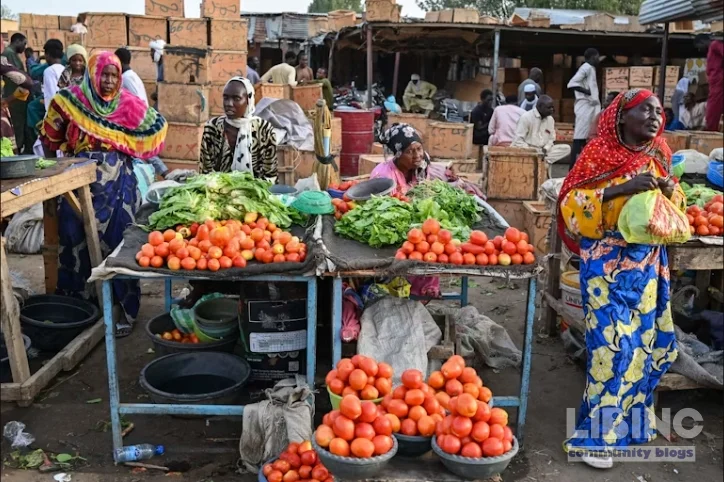
A Food Choice Questionnaire for Africans: Designing Context-Sensitive Tools to Understand Eating Habits in Emerging Economies
Table of contents
- Analytics-driven construction
- Contrasts with conventional instruments
- Cause-and-effect implications
- Expert reconstruction and future directions
In everyday shopping, people decide what to buy for tomorrow under a complex set of constraints. This is not just a matter of prices or health halos; it involves social norms, cultural aspirations, resource limits, and local environments. The problem is particularly acute in emerging economies where the dominant research tools often come from the global north and may misread local determinants of food choice. If policy makers and product developers rely on mismatched instruments, they risk misallocating resources and failing to address the real barriers to healthy eating. The stakes extend beyond individual diets: scaled interventions depend on understanding what people actually value when they shop—and why those values differ across income groups and geographies. This article traces the development of a food choice questionnaire for Africans, a context-sensitive instrument designed to illuminate the drivers most relevant in urban South Africa and related markets. It examines how a seven-factor framework emerged from bottom-up data and how the tool can inform policy, education, and industry alike.
What follows is a structured analysis of how researchers moved from qualitative insight to a quantitative instrument, why the resulting tool matters beyond academic novelty, and how its use could reshape health messaging and product design in emerging economies. The discussion unfolds through four thematic lenses: analytics, contrasts, causal relationships, and expert reconstruction. Together, they reveal why a context-specific approach matters and how to translate evidence into action. The core idea is straightforward: a food choice questionnaire for Africans yields more relevant data, more targeted interventions, and, ultimately, better public health outcomes in settings where traditional measures fall short.
Analytics-driven construction
The journey toward a context-sensitive instrument began with a commitment to ground truth. Researchers conducted focus group discussions with urban residents spanning low, middle, and high income brackets, each group consisting of four to six participants. This small-group format ensured that voices could be heard, while the setting encouraged interaction that surfaces tacit beliefs and everyday practices. The qualitative stage yielded hundreds of statements about why people eat or buy certain foods. The challenge was to translate those statements into a survey that could be administered to wider populations and analyzed statistically with rigor. The answer lay in a seven-factor model that captured dimensions previously underrepresented in conventional tools.
Crucially, this instrument sits at the intersection of theory and practice. It operationalizes determinants of food choice into measurable constructs, each with clear implications for behavior and policy. The seven factors are: Healthy eating constraints, Emotional eating, Meat appeal, Frugality (being money savvy), Quality seeking, Cooking constraints, and Weather. The factor structure is not a mere replication of existing questionnaires; several factors are distinctive to the context, reflecting local priorities, cultural meanings, and material realities. For instance, Healthy eating constraints foreground perceived barriers to healthy change, rather than simply emphasizing nutrition knowledge. This reframing helps researchers quantify obstacles that matter most in the everyday lives of people living with resource constraints.
From hundreds of qualitative statements, the researchers distilled 31 statements that adequately map onto the seven factors. The move from qualitative to quantitative data hinges on an explicit link between interview-derived themes and survey items. This connection makes the instrument more than a list of questions; it becomes a structured diagnostic tool that can identify which barriers are most salient for different demographic groups, and how those barriers shift with income, education, or neighborhood context. The approach also strengthens cross-population comparability by anchoring items to common constructs while preserving local salience.
Why this matters: the food choice determinants of people in emerging economies are not simply smaller versions of those found in developed nations. The instrument’s development acknowledges this reality and leverages it. By foregrounding context-specific constraints and meanings, the questionnaire becomes more than a data collection device—it becomes a mechanism for targeted intervention. The seven factors offer a concise yet rich frame for researchers to test hypotheses about how households navigate daily food decisions under budgetary pressures and environmental variability. In turn, this enables more precise evaluations of policies and programs intended to improve dietary health across diverse urban populations.
In the analysis phase, researchers deployed the instrument online to broader populations and subjected responses to robust statistical examination. The resulting data allow for factor-level interpretation and cross-cultural comparisons. The learning is twofold: first, the seven-factor structure appears to capture dimensions that standard tools often overlook; second, the instrument demonstrates robust applicability across urban centers with differing income strata. The process of validation, while ongoing, shows promising internal consistency and construct validity, suggesting that the questionnaire can function as a reliable barometer of food choice determinants in emerging economies.
LSI: determinants of eating behavior, nutrition transitions in urban Africa, instrument validation in emerging economies.
Contrasts with conventional instruments
One of the most striking outcomes of this research is not merely what the seven factors are, but what they reveal about the limits of conventional food choice instruments. In established questionnaires, health-positive language often dominates items such as “It’s important that the food I eat on a typical day is nutritious.” That framing presupposes health as a universal driver, which may not align with local decision-making processes when resources are tight and daily survival looms large. By contrast, the African-focused instrument foregrounds constraints to healthy eating. It asks about real-world obstacles like price, access, and competing daily demands, not only abstract health benefits.
The contrasts extend to social and cultural dimensions of food. The instrument identifies a distinct Meat appeal factor, reflecting meat’s aspirational and social-signaling role in many African contexts. In many developed markets, meat is increasingly constrained by sustainability concerns and shifting dietary norms. Here, meat maintains cultural significance and social meaning, shaping meal composition around both everyday consumption and special occasions. A frank assessment of meat as a driver helps researchers and policymakers recognize that reduction narratives may need retraining or reframing, not simply blanket discouragement.
Similarly, Weather as a driver is novel in this context. In wealthier countries with strong infrastructure and cold-chain protections, weather rarely appears as a direct driver of food choice. In many South African environments, however, climate and seasonality interact with limited refrigeration and inconsistent utility services. People may turn to foods that help regulate body temperature or cope with temperature swings. This insight demonstrates how infrastructure and ecological context reshape dietary patterns, validating the need for locally tailored assessment tools rather than a one-size-fits-all instrument.
These contrasts are not mere curiosities. They expose why generic questionnaires risk misrepresenting consumer motivations, leading to misguided product development and policy messaging. A contextualized instrument like the food choice questionnaire for Africans captures the subtle, practical factors that actually guide purchases. It reveals where health targets, sustainability goals, and cultural expectations intersect—and where they collide. As a result, researchers, health educators, and industry players can align their strategies with lived realities rather than theoretical ideals.
LSI: cross-cultural validation, local relevance in survey design, sustainability considerations in consumer research.
Cause-and-effect implications
The ultimate value of the instrument lies in its potential to drive evidence-based action, not merely to generate data. When governments and agencies measure barriers to healthy eating with a context-relevant tool, they can design policies and campaigns that address the actual bottlenecks that households face. For example, if Frugality emerges as a predominant constraint, interventions might focus on price stabilization, subsidies for healthy staples, or nutrition education tied to value-for-money messaging. If Weather is a salient driver, programs could emphasize climate-resilient crops, seasonal menus, or improved access to temperature-controlled storage in low-resource neighborhoods.
The instrument’s cross-cultural extension within the InnoFood Africa project amplifies its practical reach. Administered to urban dwellers in seven countries—South Africa, Ethiopia, Kenya, Uganda, France, Finland, and Norway—the questionnaire enables a comparative lens on how urbanization, globalization, and local contexts shape food choice determinants. Although the data analysis is pending, the design anticipates clear, actionable differences that policymakers can exploit. The cross-cultural dimension also helps researchers identify which constructs are universally relevant and which require local adaptation, a crucial step for scaling interventions across varied settings.
From a public health perspective, the seven-factor model informs diet intervention design. Rather than a generic, nutrition-centric campaign, authorities can tailor messages to address identified constraints and social values. For instance, a campaign to promote fruit and vegetable intake could pair affordability measures with taste-friendly, culturally resonant recipes that fit within the frugality framework. Likewise, meat-avoidance messages might need to acknowledge the social significance of meat and propose sustainable alternatives that preserve cultural meaning while reducing environmental impact. Through such precise alignment, policy effectiveness improves and resources are deployed where they matter most.
The instrument also supports industry and product development. Food manufacturers can use it to identify consumer segments with distinct barriers and preferences. A product line that emphasizes affordability, appetite satisfaction, and convenient cooking options can address Frugality and Cooking constraints simultaneously. Alternatively, packaging and messaging that reinforce quality or sustainability—without oversimplifying the consumer’s budget reality—can bridge gap-seeking motivations with health goals. In short, the tool translates consumer insights into concrete product concepts and clear value propositions for a broader range of urban consumers.
LSI: health messaging optimization, policy targeting based on barriers, consumer segmentation in emerging markets.
Expert reconstruction and future directions
What follows is a practical blueprint for researchers and practitioners seeking to implement a context-sensitive approach to food choice assessment. The framework rests on four pillars: rooted qualitative understanding, precise item construction, rigorous cross-cultural testing, and actionable translation into policy and product design.
Rooted qualitative understanding means the process starts not with a survey template but with listening sessions that capture everyday decision dynamics. Focus groups and interviews should be designed to reveal what people value, what they fear, and what trade-offs they are willing to make. Only after this stage should researchers derive survey items that faithfully represent those insights. The seven-factor structure emerges from this chain of reasoning, ensuring that the instrument reflects lived experience rather than abstract assumptions.
Precise item construction requires balancing respondent burden with measurement fidelity. Each factor should be represented by a compact, clearly worded set of items that map onto real-world behaviors. The 31-item questionnaire achieves this balance, but ongoing validation is essential. Researchers should monitor item performance across subgroups, checking for differential item functioning that might skew comparisons across income levels or cultural groups. This vigilance preserves the instrument’s integrity when deployed in diverse urban contexts.
Rigorous cross-cultural testing entails not just translation but conceptual equivalence. The instrument should retain the same constructs across settings while allowing for culturally meaningful wording. The InnoFood Africa project provides a useful template: administering the tool in multiple countries enables researchers to test measurement invariance and refine items as needed. The cross-country data illuminate both universal patterns and locale-specific nuances, informing the scope and limits of cross-national comparisons.
Actionable translation into policy and product design is the ultimate objective. Governments can use the questionnaire to benchmark barriers to healthy eating, set targeted goals, and measure progress over time. Companies can tailor product innovation and marketing strategies to address the identified determinants most relevant to each demographic segment. Importantly, researchers should accompany findings with clear recommendations and costed options, making it easier for decision-makers to translate insights into concrete actions.
Looking ahead, the continued refinement of the food choice questionnaire for Africans should emphasize longitudinal validation, enabling researchers to capture how determinants evolve with changing economic conditions, policy reforms, and climate-related shocks. The instrument’s adaptability will depend on maintaining a rigorous link between qualitative insight and quantitative measurement, while expanding the scope to include additional contexts as needed. With careful stewardship, this tool can become a standard for understanding food choices in emerging economies, guiding interventions that improve both dietary health and sustainability outcomes.
LSI: longitudinal validation, policy translation, product innovation driven by consumer insight.
Conclusion
The development of a context-sensitive food choice questionnaire for Africans marks more than a methodological achievement. It represents a shift toward research that respects local realities while still enabling cross-context insights. The seven-factor model captures critical dimensions that conventional instruments miss, such as Healthy eating constraints and Weather, while reaffirming the enduring cultural importance of Meat in many African contexts. By linking qualitative origins to quantitative measurement, the instrument provides a reliable basis for targeted public health actions, informed policy, and responsive product development. The ongoing cross-cultural extension within the InnoFood Africa framework promises rich comparisons that can inform both regional strategies and global debates about diet and sustainability.
Ultimately, the value of this approach lies in its practical implications. If governments and industry colleagues adopt and adapt the questionnaire for local needs, they gain a sharper lens on the obstacles and opportunities that shape urban eating habits. In a world where public health hinges on everyday choices, a robust, context-aware tool is not a luxury—it is a necessity for effective, equitable progress.
LSI: context-aware measurement, affordable healthy eating, urban food choices in Africa.
Keywords included in the narrative: the food choice questionnaire for Africans, determinants of food choice, emerging economies nutrition, cross-cultural nutrition research, InnoFood Africa, healthy eating barriers, meat appeal, frugality, weather and food choice, food waste.
Translating findings into practice: a pragmatic blueprint
The practical value of the seven-factor instrument lies not only in measurement but in guiding actions that improve diet quality within budget and climate realities. A missing link in many deployments is a clear, scalable pathway from insight to intervention. This section offers a concise plan to move from determinants to policy and product changes in urban African contexts.
- Step 1 — Segment by determinants: Use seven-factor scores to group households by risk and price sensitivity; tailor messages and subsidies to each group.
- Step 2 — Target dominant barriers: If Frugality or Cooking constraints dominate, deploy price supports or cooking-enabled programs with simple recipes.
- Step 3 — Craft culturally resonant messaging: Address Meat appeal with affordable plant proteins and local recipes that preserve social meaning.
- Step 4 — Improve access and storage: Partner with retailers for visible healthy options and invest in refrigeration where power is uncertain.
- Step 5 — Pilot and measure: Run short pilots; track fruit/vegetable purchase, out-of-pocket spend, and meal quality; iterate quickly.
- Step 6 — Translate to policy: Produce costed blueprints and partner with retailers to scale evidence-based interventions.
- Step 7 — Build feedback loops: Establish quarterly reviews to refine programs based on new data and shifting conditions.
Longer-term, ensure cross-population comparability with invariance checks and plan for longitudinal tracking to capture policy and climate effects. This practical path aligns evidence with scalable, equitable actions.
Table: Seven-factor mapping vs conventional instruments
| Factor | Real-world emphasis | Policy action example | Measurability |
|---|---|---|---|
| Healthy eating constraints | Barriers to healthy change | Subsidies for fruits/veg | Scale of impact |
| Emotional eating | Emotive drivers | Mindful eating prompts | Survey indicators |
| Meat appeal | Aspirational/social signaling | Plant proteins with taste tests | Preference shifts |
| Frugality | Budget priorities | Price-stable healthy staples | Purchase data |
| Quality seeking | Perceived value | Quality labels, tastings | Quality ratings |
| Cooking constraints | Time/skill limits | Simple recipes, ready-to-cook kits | Usage frequency |
| Weather | Climate/storage realities | Seasonal menus, storage solutions | Seasonal uptake |
How does the seven-factor instrument differ from conventional tools?
The seven-factor instrument foregrounds real-world constraints such as price, access, and seasonality over abstract health benefits, making it better aligned with everyday shopping decisions in resource-constrained urban settings, and it clarifies which barriers truly block healthier choices across income groups and geographies; the item set translates tacit local knowledge into measurable constructs that reveal how households trade off nutrition against affordability, time, and cultural preferences; this reframing yields actionable insights for policy, education, and product design that conventional surveys often miss. In practice, it guides segment-specific campaigns, pricing strategies, and product innovations that resonate with local values while staying measurable over time.
What practical steps can policymakers take to use this instrument in emerging economies?
The instrument supports a staged approach: first, collect seven-factor scores in diverse urban groups to identify dominant barriers; second, design targeted, low-cost interventions matched to the main constraints in each subpopulation; third, implement pilots with clear KPIs such as healthy food purchases, out-of-pocket spending, and recipe adoption; fourth, monitor for invariance across income and culture to maintain comparability; fifth, translate findings into policy and program briefs with cost estimates and implementation plans; finally, scale successful pilots with retailer and community partnerships to reach wider segments while preserving equity.
Why is Weather a driver of food choice in these settings, and how can programs address it?
Weather emerges as a driver when infrastructure and storage are inconsistent, affecting refrigeration, energy reliability, and seasonal affordability; programs addressing Weather can offer climate-resilient crops, seasonal meal plans, and community storage solutions that reduce spoilage; support can include subsidies on durable cool storage, seasonal promotions, and educational campaigns about temperature-conscious shopping; by aligning offerings with climate realities, interventions remain relevant year-round and reduce waste, improving both health and value for money.
How can researchers ensure cross-cultural validity and measurement equivalence?
Cross-cultural validity relies on conceptual rather than literal translation, ensuring items measure the same constructs across settings; researchers should test measurement invariance and differential item functioning to confirm that scores are comparable across subgroups such as income, education, and geography; this involves multi-country validation, iterative item refinement, and possibly calibration studies; achieving equivalence strengthens the credibility of cross-national comparisons and supports scalable, context-sensitive policy recommendations rather than country-specific artifacts.
What does adoption look like, and how should success be evaluated?
Adoption means policymakers, retailers, and communities integrate the instrument into routine assessments, using findings to inform budgets, product design, and messaging; success is shown by improved dietary indicators, lower barriers to healthy choices, and sustained implementation with regular updates; evaluation should combine purchase data, self-reported determinants, and program costs to demonstrate net benefits and equity improvements over multiple time points. This ongoing feedback loop ensures programs adapt to changing prices, climates, and consumer tastes.







Add a comment
To comment, you need to register and authorize
Comments
In practice, pilots could test combined strategies that address multiple determinants at once, pairing price relief with ready to cook meal kits, or pairing improved storage with climate resilient crops and nutrition education. The instrument would then serve as a monitoring tool, with outcomes not only on diet quality but on shopping routines, resilience to shocks, and even food waste patterns. A robust evaluation framework would include pre and post measurements, matched comparisons when feasible, and sensitivity analyses that test how results depend on who is surveyed, where, and when. Such analyses demand careful governance around data privacy, consent, and participant benefit, ensuring that communities retain agency over how insights are used and that findings are shared in accessible language and formats.
For industry, the seven factor framework can inspire product lines that align with real constraints. Companies might develop affordable, convenient foods that satisfy frugality and cooking constraints while not compromising quality, and simultaneously invest in labeling that communicates clearly how products fit into a healthy, climate aware diet. Yet industry actors must be mindful of not oversimplifying consumer choice, avoiding manipulative marketing, and respecting cultural meanings embedded in food. Collaboration with researchers and communities can produce designs that reflect desire as well as constraint, a partnership approach that elevates trust and accelerates adoption.
Cross country and cross sector collaboration will be essential to scale. The InnoFood Africa project offers a blueprint, but replication must be pursued with careful adaptation rather than mechanistic copying. Documentation of methods, translation notes, and item performance across settings should be openly shared to accelerate learning and reduce duplication of effort. A central innovation will be to develop open access tools and guidelines for translating the instrument into new languages, with best practices for cognitive testing, back translation, and cultural adaptation documented in accessible formats. Equitable access to the benefits of this work demands that policymakers, practitioners, and communities share ownership of outcomes, and that the data generated be used to guide resource allocation in ways that reduce disparities rather than widen them.
Finally, steering the ethical horizon means acknowledging that determinants reflect people’s valued priorities, not stereotypes about failure or deficit. The instrument should not be used to stigmatize households or to label communities as deficient isolates. Instead, it should illuminate pathways for support, collaboration, and empowerment. If the field can maintain a spirit of humility and reciprocity, the seven factor model could become a durable, globally relevant standard that respects local context while enabling cross regional learning about diet, health, sustainability, and social equity. The real test lies in governance, capacity, and the willingness of diverse actors to align incentives toward healthier, more resilient food systems for all. An additional practical element is the governance of data sharing across borders. Researchers should negotiate data use agreements that honor local sovereignty, ensure consent, and provide clear benefit capture for communities involved. Building a culture of open science while protecting privacy requires thoughtful redaction, tiered access, and contextualized documentation that accompanies datasets with interpretive notes for non specialized readers. Another critical piece is capacity building for policy analysis. Training public health and social protection officials to read determinant profiles, construct simple simulations of how subsidies might alter outcomes, and interpret tradeoffs between affordability and nutritional variety will maximize the return on investment in data collection. The tool should be embedded into regular surveillance cycles rather than treated as a one off dataset, creating a living evidence base that informs yearly budgets and program reviews. In the end, the promise of this context sensitive instrument rests on truth telling: it should reveal where resources truly move the needle, and it should do so with honesty about uncertainty and limitation. If users clearly see both strengths and gaps, they can adapt policies in an iterative, humane manner that strengthens social trust and builds healthier, more sustainable food systems for people across urban Africa and beyond.