

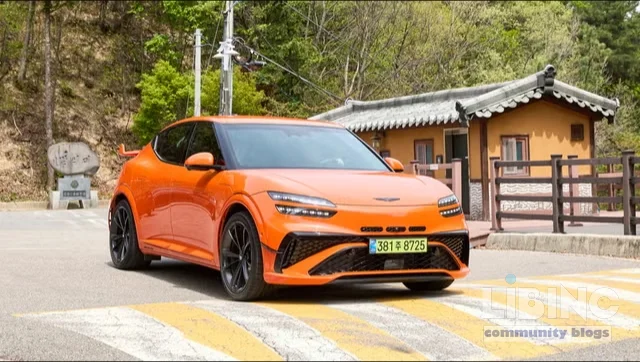
Genesis GV60 Magma: A Thorough Analysis of Performance, Tech, and Market Implications
Table of Contents
Genesis aims to redefine performance with the GV60 Magma. This analysis looks beyond horsepower to the architecture behind its dual-motor power, 800-volt charging, and Magma-specific drive modes. It asks not just how fast it goes, but how its chassis, sound design, and software deliver a genuine sport experience in a luxury EV. We compare the GV60 Magma with the Hyundai Ioniq 5 N and explore what the Magma signals about Genesis’ strategy, its brand promise, and the likely directions for its upcoming GT and racing programs.
To judge the GV60 Magma with credibility, we must dissect how the product achieves its claimed 641 horsepower while balancing weight, traction, and ride–handling balance. We also assess the software-driven experiences—drive modes, VGS (Virtual Gear Shift), and the chassis electronics that aim to mimic traditional internal-combustion cues in a battery-electric format. The ultimate question is whether this car persuades enthusiasts that Genesis can translate luxury into true, track-reasoned performance rather than a purely showroom-oriented speed metric. This article stacks data, test impressions, and strategic context to deliver an evidence-based view of what the GV60 Magma actually represents for the segment and for Genesis as a performance-language brand.
Analytical view of the Genesis GV60 Magma
At its core, the GV60 Magma implements a two-motor, all-wheel-drive architecture built around an 84 kWh liquid-cooled lithium-ion pack. The total system power sits at 641 horsepower and 583 lb-ft of torque, with a peak boost that extends power by about 40 horsepower for limited windows. The result is a straight-line capability on par with a high-end EV hot hatch, but the real story lies in how that power is delivered and controlled through a refined chassis and intelligent software map. The Magma’s dynamic character emerges from a combination of how the drivetrain communicates with the driver, how the chassis tunes damping and steering responsiveness, and how the electronic controls manage grip, heat, and stability through demanding corners.
In the two-motor layout, the GV60 Magma distributes torque with a rear-bias feel that helps rotate the car when exiting corners. The software stack includes a rear electronically controlled limited-slip differential and brake-based torque vectoring, which together sharpen steering inputs and reduce understeer during aggressive throttle application. The result is a car that can be composed in fast bends, while remaining approachable for non-professional drivers who want a more engaged ride than a typical crossover EV offers. This balance matters because fans and buyers eyeing Magma expect sport-oriented handling without sacrificing ride quality or daily usability. The Magma’s drive modes—Sprint, GT, and a customizable My mode—alter throttle response, suspension dampers, and sound presentation to tailor the experience based on road, weather, and personal preference.
- Powertrain architecture: Dual permanent-magnet synchronous motors, front 235 hp and rear 406 hp, 84 kWh battery, 11.0/350 kW charging, 641 hp peak, 583 lb-ft peak torque, direct-drive transmission.
- Chassis and dynamics: 114.2-inch wheelbase, weight near 4,900 lb, electronically controlled dampers, torque vectoring, drift mode, and a tuned steering feel that favors stability under heavy throttle.
- Sound design and driver interface: A motor-simulated soundscape that ranges from a refined cadence to a more aggressive V-6-like soundtrack through a 17-speaker Nappa-leathered Bang & Olufsen system, adjustable for interior and exterior levels.
- Charging and efficiency: 800-volt architecture enabling rapid DC charging up to about 350 kW, 18 minutes from 10–80% on suitable chargers, and notable home charging performance.
The Genesi s architecture leverages a high-voltage platform that serves both performance and efficiency. Although the claimed 84 kWh pack already positions the GV60 Magma as a compact-luxury EV, the weight—approximately 4,900 pounds—poses a natural trade-off. The battery’s mass acts as a major gyroscope in high-speed transitions, demanding careful chassis tuning to keep ride comfort from degrading under dynamic loads. In Magma, Genesis appears to balance this by offering adjustable steering effort, present in My mode, and a suspension system designed to deliver both poise and grip under aggressive manipulation of throttle and steering.
Surprisingly, the Magma’s sound design attempts to recreate the visceral cues of an internal-combustion engine without sacrificing EV acoustics. The Virtual Gear Shift (VGS) and the instrument cluster reconfiguration provide an auditory and visual cue that resembles a traditional performance car when commanded, while still delivering EV torque and instantaneous response. This approach is not merely cosmetic; it’s a deliberate tactic to bridge emotional expectations with electrical performance. In practice, the Magma’s drive sounds and experiences are a calibrated compromise aimed at satisfying enthusiasts who demand engine-like drama without emissions penalties.
From a reliability and durability standpoint, the drivetrain and chassis electronics mirror the sophistication found in Hyundai and Kia performance models, with a focus on a robust all-wheel-drive system, strong front and rear braking hardware, and precision-tuned electronics to minimize torque steer and promote predictable behavior under load. The result is a vehicle that can comfortably handle long stints behind a demanding driver’s wheel while preserving the luxury and refinement expected in Genesis’ lineup.
Contrast with rivals
The GV60 Magma lives in a crowded segment where the Ioniq 5 N serves as the primary benchmark for a truly performance-oriented Korean EV. The Magma shares a platform with the Ioniq 5 and the Kia EV6, but it carves its own identity through a distinct blend of power delivery, weight distribution, and sound design. The Ioniq 5 N offers a similar total output and performance orientation, yet the GV60 Magma emphasizes a more luxurious, comfort-driven married-to-speed experience rather than outright track-focused aggression. The Magma’s nearly four-inch shorter wheelbase compared with the N translates into a tighter turning radius and a different handling character, particularly at high lateral loads where the Magma’s weight requires a steadier, more deliberate chassis tune to avoid oversteer tendencies that can catch the unprepared driver off-guard.
Metric comparisons reveal meaningful differences that go beyond numbers. The GV60 Magma’s boost mode can add roughly 40 horsepower for up to 15 seconds, offering a transient advantage in overtakes or when exiting slow corners. In the Ioniq 5 N, the boost window is shorter, but the inline-four’s turbocharged torque delivery changes the feel of acceleration differently. The Magma’s 0–60 mph time is quoted around 3.0 seconds, with a quarter-mile time in the low 11-second region, numbers that align with high-performance electric hatchbacks. The Ioniq 5 N, while similar in quantifiable performance, channels its energy through a different exhaust-note experience and a different chassis dialect, resulting in a unique blend of speed, stability, and predictability under load.
Charging behavior forms another axis of contrast. Both vehicles ride on an 800-volt system and can leverage rapid DC charging, but the GV60 Magma integrates a charging strategy that aligns with a luxury-EV ethos—paired with an interior that leans toward premium materials, distinctive orange-accented trim, and a broader color palette that includes matte and vivid exterior finishes. The Ioniq 5 N emphasizes raw performance and weight distribution tuned for track-like aggression, paired with a broader interior layout that prioritizes practicality. In everyday driving, the GV60 Magma tends to feel more composed, while the Ioniq 5 N can feel more theater-like in its suspension responses and exhaust-syllable impersonation—an important distinction for buyers weighing comfort against outright track readiness.
From a brand and product-perception standpoint, the Magma signals Genesis’ intent to push the envelope of luxury EV performance without abandoning refinement and interior luxury. This approach differs from the Ioniq 5 N’s more function-forward performance identity, which emphasizes performance parity with a still-distinctive, practical SUV-crossover form. The result is a subtle but meaningful divergence in customer expectations: the GV60 Magma appeals to buyers who want a high-performance feel wrapped in a premium luxury experience, with a focus on chassis tuning, interior ambience, and an engine-like soundtrack that enhances, rather than overwhelms, the driving experience.
Cause-and-effect relationships
The Magma’s technical choices cascade into market implications that extend beyond straight-line numbers. The decision to pair a high output with an airy, adjustable interior experience affects buyer psychology—drivers seeking excitement simultaneously demand comfort, quiet, and a premium ambience. The 84 kWh pack provides respectable range for a vehicle in this class, but weight remains a limiting factor in ultimate efficiency. This tension shapes Genesis’ pricing and feature strategy: to justify a roughly $80,000 starting price, the company must deliver a bouquet of features that feel expensive and technically sophisticated, rather than merely fast. The Magma’s interior details—suede-lined buckets, orange stitching, orange seatbelts, and a limited color palette—are calibrated to reinforce that premium perception while maintaining a practical daily usability equation.
The boost-mode behavior—unlocking higher power for a specified duration—illustrates a broader trend in performance EVs: software-managed performance that must be navigated by the user with explicit control. The countdown timer that activates power boosts is a symbolic and practical device, signaling to the driver that the car has a controllable, scalable performance envelope. In practice, the benefit from a 0.1–0.2 second advantage in a straight line may be modest, but the psychological impact—entering a corner with the accelerator buried and hearing a calibrated soundtrack—can influence driver confidence and perceived performance. This dynamic interplay between software, audio, and real-world performance matters for the Magma’s value proposition and for Genesis’ ability to translate power into driver satisfaction.
Another causal thread concerns the platform and its compatibility with future product expansions. The GV60 Magma sits on a shared architecture with the Ioniq 5 and EV6, which implies a scalable path for future Magma-badged variants or GT-equivalent models using the same underpinnings. If Genesis extends Magma into a mid-engine or GT-class concept next year, the cumulative effect could be a stronger, more coherent high-performance narrative across the brand. This would influence customers’ expectations for future cars and could accelerate the adoption of a performance sub-brand that signals a tangible shift in Genesis’ product strategy toward performance engineering without compromising the brand’s luxury foundations.
From a charging ecosystem perspective, the move to a North American-market-friendly 800V system with NACS compatibility has material market effects. Rapid charging capability reduces long-range anxiety and complements the vehicle’s performance identity by enabling high-speed sessions that support track-day or high-usage scenarios. The synergy between charging speed, powertrain capability, and software-controlled performance proves essential to the GV60 Magma’s real-world appeal. In short, fast charging is not merely a convenience; it acts as a force multiplier for performance electric vehicles by diminishing downtime and expanding potential use cases for enthusiasts and everyday drivers alike.
Expert reconstruction of the value proposition
From an expert standpoint, the GV60 Magma represents a calibrated approach to luxury-EV performance rather than an all-out track weapon. The car achieves speed and poise within a refined cabin and a set of features that appeal to discerning buyers who want emotional engagement without sacrificing quiet luxury. The combination of a high-output dual-motor drivetrain, a sophisticated suspension, a variety of drive modes, and a dramatic, Watson-and-then-silence soundscape creates a distinctive product identity. This identity matters because it positions Genesis as a serious contender in the performance-luxury segment—one that can blend sonic drama with refined comfort, rather than trading one for the other.
Interiors claim a strong premium feel: suede-lined seats with orange stitching and orange seatbelts, a restrained exterior color palette limited to black, white, orange, and matte blue, and a carbon-like finish that reinforces a high-tech aesthetic. The interior choices help justify the price point and create a sense of exclusivity that consumers often associate with performance variants. The Magma’s tech stack, including the Magma-specific drive modes and the VGS, offers a unique blend of haptic feedback and audible cues that deepen the sense of a controllable, engineered performance package rather than a simple thousand-horsepower metric.
However, several practical caveats deserve emphasis. The GV60 Magma weighs roughly 4,900 pounds, which means energy efficiency, rolling resistance, and heat management must be continually optimized to keep real-world range competitive. The car’s 220-mile EPA estimate underscores that this is a performance-first EV that prioritizes speed and feel over maximal range. Buyers must assess whether they are willing to trade some range for a more engaging driving experience, especially given charging infrastructure and the realities of long trips. Additionally, while the Magma’s US-market chassis is tuned to deliver a firmer feel as needed, Genesis could further refine ride quality and steering feedback in certain road surfaces to more consistently meet the expectations of luxury-performance buyers across diverse markets.
Looking forward, the Magma’s strategic implications for Genesis are meaningful. The model sets a precedent for a premium performance sub-brand that inherits the badge’s prestige while introducing a distinctly modern, software-enabled performance philosophy. If Genesis can translate this approach into a coherent portfolio—potential GT variants, racing involvement, and a broader Magma line—the brand could establish a credible, repeatable framework for combining luxury, technology, and performance. The challenge is to sustain the emotional impact of the Magma’s sound and feel while expanding efficiency, network compatibility, and real-world practicality across future products.
In sum, Genesis has crafted a compelling argument for the GV60 Magma as more than a flash in the pan. It fuses high-level engineering with a curated sensory experience, aligning power and refinement in a package that speaks to enthusiasts without sacrificing luxury conventions. If Genesis can sustain this balance and translate the Magma’s strengths into growth across its lineup, the brand could achieve a durable, performance-forward identity in the crowded EV market.
Keywords addressed in this analysis include the GV60 Magma's dual-motor configuration, 84 kWh battery, 800V charging, Magma drive modes, and the strategic interplay between performance and luxury in Genesis' EV roadmap.
Practical usage implications
In real-world ownership, the GV60 Magma balances speed with luxury, delivering a coherent sport experience without sacrificing daily usability. This section translates data into scenarios: a daily commute with adaptive drive modes, highway overtakes, and occasional track sessions that test heat and balance. The car's mass is offset, in part, by torque-vectoring and a rear-biased torque distribution that encourages a clean rotation on exit. The Magma tuning of dampers preserves ride comfort while maintaining chassis poise under aggressive throttle and steering input, a combination essential for a premium performance EV.
Table: Core specifications and performance vectors
| Model | Power (hp) | 0-60 mph | Weight (lb) | Battery | Charge (kW) |
|---|---|---|---|---|---|
| GV60 Magma | 641 | ~3.0 s | ~4900 | 84 kWh | 350 |
| Ioniq 5 N | 641 | ~3.0 s | ~4500 | 72 kWh | ~250 |
Analysis: The table confirms similar peak output across competitors, but Magma emphasizes a refined power delivery with a rear-biased drive and an electronic limited-slip to sharpen exits. This pairing supports a confident cornering feel and predictable throttle behavior, even under heat load.
Drive-mode customization and practical scenarios
- Sprint mode: max throttle mapping for overtakes; scenario: highway merge with a quick pick-up.
- GT mode: track-like stability with stiffer dampers; scenario: winding mountain pass with high lateral load.
- My mode: tailor-suspension and steering; scenario: daily commute where comfort is prioritized but some sportiness is desired.
- VGS and sound design: engine-like cues without emissions; scenario: weekend track day to enhance engagement with audible feedback.
Analysis: Modes let drivers calibrate the balance between speed, steering precision, and sound. The software-driven approach provides repeatable behavior across diverse surfaces, crucial for a premium performance SUV where weight challenges handling.
Key performance indicators at a glance
641 hp peak
0-60 mph: ~3.0 s
350 kW charging peak
Analysis: The compact-luxury profile combines speed with the flexibility of a full-featured interior and high-end electronics, reinforcing Magma’s premium positioning within Genesis’ EV strategy.
How does the GV60 Magma's 800V architecture affect charging in real-world use?
In plain terms, the 800V system enables rapid DC charging up to about 350 kW on compatible stations, allowing 10-80% in roughly 18 minutes under ideal conditions. This reduces downtime on long trips and supports track-day sessions where quick top-ups matter. The higher voltage lowers current for a given power, improving efficiency and thermal management during fast charging. In daily use, the benefit is smaller because most chargers are under 150 kW, but you still gain faster top-offs and less charging fatigue on longer journeys. NACS compatibility broadens access to charging networks in North America.
Analytical depth: The immediate effect is reduced charging downtime, enabling more time on the road and a more compelling performance persona.
What are the differences between Magma drive modes and when should you use them?
In plain terms, Magma offers Sprint, GT, and My modes, each adjusting throttle mapping, suspension damping, steering effort, and sound. Sprint favors instantaneous response for overtakes; GT prioritizes stability and grip for aggressive cornering; My allows personal customization for a blend of comfort and sport. In practice, Sprint is best for overtaking on highways, GT for demanding mountain passes, and My for daily driving where fine-tuned balance matters.
Analytical depth: The modes provide a repeatable framework for matching grip, response, and sound to road conditions and driver intent.
How does weight influence handling and range on the GV60 Magma?
In plain terms, at around 4,900 pounds, weight biases handling toward stability, requiring careful chassis tuning. Torque-vectoring and a rear-bias setup help rotate the car in corners, but energy efficiency and range take a hit compared with lighter competitors. Real-world range depends on wind, speed, and drive mode; aggressive driving can reduce range more noticeably, while efficient cruising and heat management help preserve it.
Analytical depth: The weight penalty is offset by software and chassis strategies that preserve agility and usability, a key dynamic for a premium performance EV.
How does the GV60 Magma compare with the Hyundai Ioniq 5 N in handling and luxury?
In plain terms, both share a common platform and high-output powertrain, but Magma emphasizes luxury refinement and a more composed ride, while Ioniq 5 N leans toward track-ready rawness. Magma’s drive feel benefits from tuned dampers, premium interior, and VGS-driven drama, whereas Ioniq 5 N offers more theatre and sharper turn-in at the cost of some ride comfort.
Analytical depth: The tension between luxury and performance is clear, with Magma favoring a balanced, premium experience over raw track aggression.
What is Virtual Gear Shift (VGS) and how does it affect the driving experience?
In plain terms, VGS provides engine-inspired cog-shift feedback and sounds to simulate traditional gear changes, even though the GV60 Magma uses electric torque delivery. It creates psychological cues that boost engagement and responsiveness, particularly in sport-oriented modes, while preserving the instant torque and smooth acceleration inherent to EVs.
Analytical depth: VGS enhances perceived performance without adding emissions, marrying emotional cues with the efficiency of electric propulsion.





Add a comment
To comment, you need to register and authorize
Comments
Interiors also shape the decision. The Magma leans into a premium cabin with orange accents, suede buckets, and a high-end Bang & Olufsen system, presenting a sense of exclusivity that the Ioniq five N does not rely on as a differentiator. In daily driving, that interior ambience can tilt the balance toward the Genesis, especially for buyers who want both performance and pampering. The price point matters too; loading the Magma with options can push the car into a space where many rivals offer comparable performance with more practical packaging or lower total cost of ownership. The charging strategy remains a shared advantage of both brands, but Genesis’ marketing emphasis on a coherent Magma identity may influence expectations about service, software updates, and future variants. If Genesis uses the Magma as a stepping stone toward a more expansive performance family, the question is whether this foundation can transcend the halo effect and deliver long-term value in terms of reliability, service, and a clear, repeatable brand story.
The sound design, including a motor-driven soundtrack, is not mere theater; it pairs with a virtual gear shift to provide engine-like drama while maintaining EV immediacy. The result is a car that aims to satisfy enthusiasts who crave an emotionally engaging experience without emissions penalties. But the critical question remains: does the Magma offer track-level performance through repeatable behavior, or is it a refined fast cruiser that happens to accelerate hard? The answer hinges on how the software map translates throttle input, brake force, and torque distribution across temperature, tire state, and cornering demand. The stability controls, powertrain calibration, and braking torque-vector strategy must stay predictable as tires heat up and sessions extend; otherwise the car risks becoming blunt at the limit instead of a confident partner. The Magma’s drift mode signals a willingness to entertain discretion and play, but it must be balanced with safety, durability, and real-road behavior.
The focus on architecture rather than pure sprint suggests Genesis intends more than a quick sprint car. The use of a robust electric architecture with heat-managed batteries, distributed torque, and the user-tunable drive modes points toward a long-term platform strategy rather than a one-off halo car. The My mode, in particular, signals that the brand wants customers to tailor the character for different roads and mood, rather than forcing everyone into a single, race-ready setting. If Genesis can maintain predictable, confident handling across surfaces and weather, the Magma could become a recognized reference point for performance luxury EVs. The real-world questions, of course, involve consistency under heat, long-term durability of the battery and control electronics, and how well the car can sustain its demeanor on a hot track after multiple cycles.