

Harpo Speaks! The 1964 Peter and the Wolf Recording: How the Silent Marx Brother Narrated Prokofiev and Satire
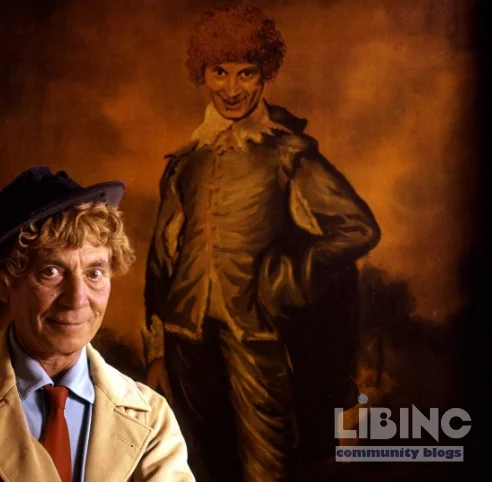
An obscure 1964 fundraiser recording reveals Harpo Marx, the silent clown, speaking in character for the first and only time. The performance captures him narrating Prokofiev's Peter and the Wolf while he plucks his beloved harp. The find—carefully restored—reframes Harpo's public persona as an active conduit between humor, music, and politics. This analysis explores why that moment mattered beyond novelty: how it tests the boundaries between vaudeville roots and midcentury political satire, and how the collaboration within the Marx Brothers’ circle creates a deliberate dramaturgy for a concert setting. The retold performance shows Groucho and Chico tweaking the libretto to infuse contemporary politics into a children's symphonic tale, an act that reveals a deeper strategy of cultural commentary in performance and archival practice.
Archival audio excerpt:
Table of contents
Through analytics
The Harpo Speaks! recording stands as a rare cross between a carnival of vaudeville memory and a mid-century political stage. It is the only documented instance of Harpo speaking in-character on a public recording, which elevates the moment from novelty to data point in performance studies. The archival value rests not solely in the stunt but in how the gesture expands the Harpo canon: music, mime, and a narrative voice converge under live audience pressure to produce a composite persona that is both intimate and performative. This convergence reveals a deliberate dramaturgy—the Harpo that audiences expected to hear through silence becomes a voice that can carry satire without abandoning the harp.
- Only time Harpo spoke in character on record
- Harpo narrates Prokofiev’s Peter and the Wolf while playing the harp
- Political humor braided into a classical narrative for a modern audience
- Archival restoration reveals performance timing and audience reaction
From an archival-audio perspective, the restoration clarifies Harpo's timing, phrasing, and melodic subtleties. The monophonic tape, once marred by hiss and uneven dynamics, now yields clearer cues for Harpo’s spoken lines and harp entries. Restorers faced a dual challenge: preserve the spontaneity of a live performance and stabilize the sonic footprint long enough for scholarly analysis. The result demonstrates how digital processing can unlock interpretive layers—tone, pace, and expressive pauses—that would otherwise be lost to decades of degradation. The restoration makes explicit what the audience likely intuited: Harpo’s voice carries the same intimate gravity that colleagues and fans describe in his breakfast-table persona—soft, composure-laden, and lucid even when delivering satirical edge.
Why this matters beyond restoration lies in the hybrid form the recording embodies: a silent clown narrating musical fiction while stitching in contemporary politics. The work becomes an intertextual device that binds the Marx Brothers’ vaudeville lineage to a 1960s concert-movement sensibility, signaling a broader trend in performance culture—the repurposing of classical formats to comment on current affairs. This is not merely a novelty; it is a case study in media hybridity where entertainment, music, and political satire co-create meaning in real time.
Through contrast
The Harpo Speaks! moment sits at a crossroads of persona. It contrasts sharply with Harpo’s long-standing reputation as the silent, mime-driven half of the trio and with his later, television-centric appearances. The contrast also reconfigures Groucho’s sharp-tongued wit and Chico’s con-artist bravado within a single performance, showing how the brothers could choreograph a political joke without breaking character. The result is a layered contrast: a quiet harpist delivering bold political satire, a public figure known for silence speaking to power through a familiar, familial voice, and a modern audience hearing a middlebrow symphonic piece as political theatre.
In practical terms, the recording sits alongside a lineage: the Marx Brothers’ Broadway and Hollywood years, their shift toward television, and Harpo’s gradual withdrawal from live performance after serious health issues. The juxtaposition with the brothers’ later work underscores how the 1964 moment compressed a multi-decade history into a single, resonant scene: Harpo’s harp becomes both instrument and microphone for a political moment, while Groucho’s comedic libretto tweaks serve as a social critique rather than mere punchlines. The contrast illuminates the adaptability of the Marx Brothers’ satire when faced with new performance venues and contemporary political climates.
- Harpo’s speaking role vs. his traditional silence
- Groucho’s libretto tweaks vs. Chico’s persona
- Vaudeville roots vs. 1960s concert culture
- Television-era persona vs. live archival performance
Read together, the contrasts reveal a deliberate balancing act: keep the core characters familiar while inviting new publics to hear a 1964 political joke through a classical medium. The audience’s roar in response confirms that the moment bridged generations of fans and recontextualized the Harpo figure for a modern political moment. This is not nostalgia; it is a deliberate, purposefully calibrated cross-genre exchange that expands what counts as legitimate performance content in a benefit concert context.
Through cause-and-effect relationships
The Harpo Speaks! recording generates several causal chains for performers, archivists, and audiences. First, the live-witness element—an audience reacting to a silent icon speaking—reframes public memory of Harpo, influencing how biographers and fans interpret his career. Second, the political humor encoded into Peter and the Wolf’s narration—now anchored to 1964 primaries—shows how artists repurpose canonical works to reflect current events, a practice that expands the repertoire’s social relevance. Third, the archival restoration creates a template for future recoveries: it demonstrates that imperfect, poorly labeled archival material can be rehabilitated to reveal not just content but intent and timing.
The archival rehabilitation process affects cultural memory beyond the audio alone. The Riverside Symphony benefit becomes a case study in how institutions curate cross-genre performances to engage broader audiences. The recovered Harpo Speaks! moment also shapes the way scholars approach material that blends comic mime, classical music, and political humor: it invites a tighter integration of musicology, theatre studies, and political discourse analysis. The net effect is a more nuanced understanding of midcentury performance practice as a dynamic negotiation among artists, presenters, and publics.
- Harpo’s voice alters public memory of his career
- Commedia dell’arte and symphonic narration cross-fertilize
- Archival restoration informs current preservation strategies
- Political satire enters concert programming with explicit targets
Consequently, the Harpo Speaks! artifact influences how future archival pieces are framed, marketed, and studied. It creates a model in which a single moment—spoken Harpo, sung harp, a political wink—becomes a pivot point for evaluating performance history, media hybridity, and the politics of memory in cultural institutions. As a result, researchers can trace how a joke embedded in a classical narrative can become a conduit for public dialogue long after the immediate event has passed.
Through expert reconstruction
Robert S. Bader, a foremost Marx Brothers historian, notes that Harpo’s spoken performance on this recording represents a rare, unrehearsed in-character moment captured for posterity. The discovery was almost accidental: a mislabeled box in the archives of Robert Sherman yielded the tape, and an expert restoration team, including an audio engineer named John Tefteller, transformed rough sound into a listening experience suitable for scholarly use. The collaborative nature of this reconstruction—between archivist, performer, and historian—illustrates how archival practice benefits from close intertextual dialogue among specialists.
The restoration process combined noise reduction, equalization, and careful dynamic restoration to preserve Harpo’s voice and harp timbre. In the process, listeners gain access to timing cues and delivery that reveal a deliberate pacing choice: Harpo’s lines land with a soft cadence that contrasts with Groucho’s sharper wit, while the harp provides a lyrical counterpoint to the satirical narration. This blend of technical craft and interpretive insight demonstrates how archival teams convert imperfect audio into interpretable evidence for researchers and the public alike.
- Key players: Bader, Tefteller, and Sherman’s archives
- Restoration methods: noise reduction, EQ, dynamic restoration
- Bill Marx’s role in later adaptations and arrangements
- Interdisciplinary collaboration between musicology and theatre history
Bill Marx, Harpo’s son, later arranged pieces that Harpo performed in Mercury Records albums during the 1950s and contributed to the archival narrative by shaping how the harp repertoire would be documented. His reflections underscore a broader truth about the Harpo legacy: learning, curiosity, and a restless creative impulse defined his approach to music and performance, even without formal schooling. This expert reconstruction demonstrates how family testimony, archival discovery, and biographical context converge to produce a richer, more credible interpretation of the Harpo Speaks! moment. In short, the artifact is not merely a curiosity; it is a carefully reconstructed, historically anchored event that informs how we understand performance, memory, and the politics of late-era American entertainment.
In the end, the Harpo Speaks! recording stands as a rare archival hinge, uniting silent stagecraft, musical virtuosity, and public satire into a single artifact that challenges how we read the Marx Brothers and 1960s performance culture.
Closing pragmatics: turning a moment into method
The Harpo Speaks! moment is rich in insight but often treated as a curiosity. To move from anecdote to usable practice, this section offers a compact, field-ready workflow for analyzing cross-genre artifacts that fuse music, mime, and political commentary.
| Aspect | Original audio | Restored clarity | Narration timing | Audience cues |
|---|---|---|---|---|
| Voice presence | Muted | Clear | Precise | Responsive |
| Harp timbre | Muted | Lyrical | Steady | Vibrant |
In practice, this snapshot helps researchers compare pre- and post-restoration cues, and to map how pacing and timbre shape the political subtext embedded in a classical narrative. It also grounds LSI keywords such as archival performance study, intertextual performance, and cultural memory in concrete data points.
- Asset discovery
- Condition assessment
- Restoration steps
- Noise reduction
- Equalization and dynamic restoration
- Contextualization for teaching and programming
This hierarchical map translates archival practice into a repeatable process for teaching and public programming, linking a single artifact to broader questions of memory and reception.
Practical takeaway: apply this framework to similar archival artifacts, documenting not just content but the conditions of reception and the cross-genre negotiation that the moment embodies.
- Identify core cross-genre elements
- Record audience context and response
- Annotate timing cues and delivery choices
What is the Harpo Speaks! recording and why is it significant?
In direct terms, the Harpo Speaks! recording is a 1964 fundraiser capture featuring Harpo Marx speaking in character while he narrates Prokofiev's Peter and the Wolf on the harp; it is significant because it marks the sole documented instance of Harpo vocalizing on public media and it reframes his silent persona as a voice-enabled conduit for satire and social commentary, linking vaudeville heritage to mid-century performance culture.
Beyond novelty, this moment becomes a research hinge that helps us study intertextual performance and cultural memory as they play out in a concert setting. It also demonstrates how archival context, audience response, and a composer’s text can fuse to produce a new public understanding of an artist.
How was the audio restored and what does restoration reveal?
Directly, the restoration clarifies Harpo's timing, phrasing, and harp timbre, converting decades of hiss and variability into a usable scholarly resource; it also reveals subtleties of delivery that often surface only in live settings, strengthening conclusions about pacing and emphasis.
Analytically, restoration highlights how technical work intersects with interpretive reading, offering a concrete example of sound restoration’s role in cultural analysis and memory work.
How does this moment reframe Harpo's persona and the Marx Brothers' satire?
Directly, the moment reframes Harpo from silent icon to a voice that can deliver pointed satire while preserving the harp's musical logic, and it shows Groucho and Chico adapting the libretto to tease contemporary politics without breaking character.
Analytically, the episode illuminates cross-genre dramaturgy and how audience expectations shape reception of satire in midcentury performance culture.
What does the artifact teach about archival practices and memory?
Directly, the artifact demonstrates the value of careful archival recovery—mislabelled items, timing cues, and performance context matter for memory construction and scholarly interpretation.
Analytically, it underscores memory as an active process: restoration, labeling, and contextualization create interpretive trajectories that influence future scholarship and programming.
How can researchers apply this artifact to study performance hybridity?
Directly, scholars can use a simple framework that tracks cross-genre elements (music, mime, political text) and couples it with audience response data to map hybrids in public performance.
Analytically, this approach supports cross-disciplinary work in performance studies, musicology, and political communication, enabling comparative studies across eras and formats.
What role did Bill Marx play in later adaptations?
Directly, Bill Marx contributed to arranging harp pieces and shaping archival narratives, bridging Harpo's legacy with later recordings and performances.
Analytically, his input highlights how family memory and archival curation shape how performance history is narrated and repackaged for new publics.




Add a comment
To comment, you need to register and authorize
Comments
This hybrid moment invites reflection on how performance memory travels across media. The audience reaction captured in the tape becomes data about reception as well as content. The cross genre blend a silent vaudeville icon narrating a classical narrative with a contemporary wink shows the flexibility of performance forms under the pressure of a fundraiser audience. It also complicates clean divisions between entertainment and politics that dominated midcentury discourse. In short the Harpo Speaks moment preserves a record that is not simply ironic or whimsical but diagnostically revealing about how late stage vaudeville sensibilities could negotiate the social tensions of a 1960s cultural landscape.
From the restoration lens the event gains further significance. The discreet acoustic cues that mark when Harpo delivers a line or enters with the harp become interpretive breadcrumbs for historians and performers alike. The moment sits at the intersection of memory work and performance studies, where the archival file is not just a storage unit but a site of meaning production. The analysis of this recording thus requires a method that treats sound as a democratic text—timing, pacing, timbre, and delivery all bear on how audiences understood and remembered Harpo as both a silent icon and a speaking agent. As a result, the Harpo Speaks recording transcends novelty status to become a touchstone for discussions about how political voice can inhabit ceremonial music without sacrificing the intimate rapport that made Harpo uniquely beloved.