

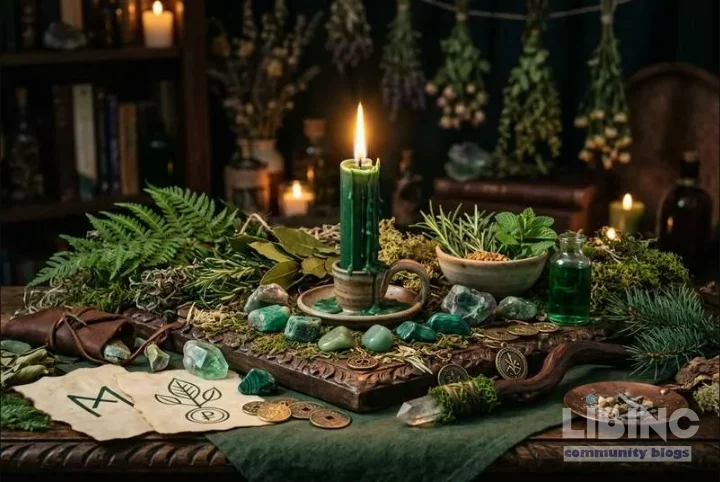
Green Candle Magic: An Analytical Guide to Growth, Healing, and Abundance
Green candle magic speaks to the earth, offering a steady, nurturing path to growth, healing, and tangible abundance. In a world that often values immediacy, its patient cadence invites discipline, alignment, and a recognition that power often grows through consistent action. This article treats green candle magic as a field of practice to analyze rather than a collection of folklore to memorize. We scrutinize the mechanics by which intention translates into experience, the role of earth energy, and how lunar timing, herb associations, and heart centered receptivity shape outcomes. The stakes are clear: improved wealth, health, and harmony, or the frustration of unmet hopes. The hidden conflict is that magic alone rarely works without personal effort, feedback loops, and ethical guardrails. The path ahead is mapped with analytical precision.
Table of contents provide a clear road map to the sections that follow, enabling readers to navigate analytic critique, practical contrasts, causal mapping, and expert refinement of green candle magic.
Analytical view of green candle magic: structure, signal, and outcomes
Analytical examination starts with a hypothesis: a green candle is not a wand but a focused conductor that channels intention through material medium. The candle acts as a physical proxy for energy, and the flame functions as a signal generator that the mind and heart can observe. This framing allows us to isolate variables, measure signals, and compare outcomes across practices.
Ritual mechanics: energy focus and the perceptual bridge
The ritual sequence creates three converging conditions: attention, emotional resonance, and environmental alignment. Attention concentrates cognitive resources on a single focal point; emotional resonance calibrates the amplitude of belief and desire; environmental alignment places the ritual within natural cycles that amplify signal strength. When these elements align, the green candle becomes a stabilizing conduit for intention, not a magical fireworks display. This is why the practice emphasizes calm, repeated ritual rather than dramatic gestures.
- Attention discipline: sustained focus reduces cognitive noise and increases signal-to-noise ratio in the ritual field.
- Emotional calibration: genuine belief in worthiness anchors energy; without this, intention lacks momentum.
- Environmental alignment: lunar phase and seasonal rhythm act as catalysts that modulate energy transfer.
Quantifying impact: what counts as a meaningful result
Quantitative assessment comes down to observable shifts in opportunity flow, emotional regulation, and practical outcomes. While not all effects are immediate or linear, patterns emerge when rituals are repeated with consistent intention and record keeping. The presence of tangible indicators—new opportunities, improved mood, or clearer decision making—signals the ritual is attuned to reality rather than chasing wishful thinking.
- Opportunity indicators: new contacts, unexpected offers, or revived prospects align with the abundance intention.
- Emotional metrics: steadier mood, reduced fear, and greater self worth support sustainable action.
- Decision clarity: sharper choices reduce wasted effort and accelerate progress toward goals.
Variables that influence results
Outcomes hinge on a set of interacting factors, not a single magic trigger. Understanding these variables helps practitioners maintain realism and avoid magical thinking. In addition, acknowledging these factors strengthens ethical practice by ensuring the practitioner remains accountable.
- Intent clarity: vague desires dilute energy; precise, present tense formulations focus the signal.
- Worthiness alignment: underlying beliefs about deserving shape the receptivity of the field.
- Consistency: irregular practice yields inconsistent signals and muddled outcomes.
- Environmental integrity: drafts, unsuited containers, or clutter degrade concentration and energy flow.
Green candle magic vs other candle colors: a contrastive view
Color symbolism in candle magic is not ornamental. Each hue tunes the ritual to a distinct emotional and energetic spectrum. Green emphasizes growth, healing, and tangible abundance rooted in earth energy, while other colors tilt toward different psychic climates. This contrast helps practitioners choose the right tool for the intended effect and avoids conflating distinct magical grammars.
Green vs red: growth and impulse
Green and red share a vitality core, but their applications diverge in tempo and consequence. Green favors sustainable growth and long horizons, whereas red emphasizes urgency, passion, and immediate action. In contexts where patience and steady cultivation are needed, green outperforms red because it builds roots rather than short bursts of momentum.
- Tempo: green prefers slow unfurling; red favors quick, forceful action.
- Outcome texture: green yields durable gains; red can spark rapid change with higher volatility.
Black and white contrasts: protection and ethics
Black candle work often targets release or boundary setting, while white candles aim for purity and universal alignment. Green sits between, offering nourishment and growth while avoiding manipulation of others. The ethical frame matters: prosperity work should respect free will and environmental health, avoiding coercive outcomes that undermine long term flourishing.
- Protection vs growth: protective rituals guard momentum but do not generate growth themselves.
- Ethical alignment: prosperity that harms others is self-defeating; sustainable abundance relies on fair means.
Earth signs and practical resonance
Astrological correlates provide a practical lattice for timing and intention. Taurus and Virgo, as earth signs, often respond well to green candle magic through steady, methodical work and a native affinity for rooted growth. Even for non earth signs, invoking earth energy can ground ambition in reality rather than fantasy.
- Earth sign resonance: Taurus brings persistence; Virgo adds discernment and care in handling resources.
- Non earth sign adaptation: incorporate earth rhythm through moon phases, soil, and plants to simulate grounding energy.
Cause and effect in green candle magic: mapping intention to manifestation
A practical map connects intention, ritual steps, and observable outcomes. This mapping reveals where the chain can break and how to repair it without abandoning the core practice. Cause and effect here are not magical one-offs; they are a system of signals that, when interpreted and acted upon, builds momentum over time.
Trigger points in the ritual sequence
Key trigger points include preparation, anointing, the moment of lighting, and the post‑burn reflection. Each stage contributes a necessary signal to the perceptual field: preparation creates readiness, anointing tightens focus, lighting commits intention, and reflection calibrates future action. Skipping stages weakens the chain and reduces the likelihood of reliable outcomes.
- Preparation: cleansing and manifesting a clear intention align the ritual with reality.
- Anointing: invoking the desired energy during oil application intensifies resonance.
- Lighting: spoken vows awaken the conscious-subconscious dialogue necessary for momentum.
Energy alignment and blockages
Blockages manifest as wavering flames, sooty residues, or inconsistent wax pools. These symptoms point to misalignment, whether emotional, cognitive, or environmental. Addressing blockages often requires clarifying the intention, rechecking assumptions about worthiness, and removing external friction. The aim is a clean energy pathway from intention to experience.
- Flame behavior: a bright, steady flame signals alignment; flickering indicates shifting energy that needs attention.
- Wax patterns: wax pooling to one side may show where energy concentrates or where a blockage resides.
Temporal dynamics: moon phases and seasonal rhythm
Moon phase and season heighten the ritual signal. Waxing moons correlate with growth and opportunity; full moons amplify potency for large-scale abundance work; waning phases can support release of scarcity mindsets and blockers. Timing is not merely aesthetic; it tunes the resonance of the ritual with natural cycles, increasing the likelihood of observable shifts.
- Waxing window: align new intentions with increasing light to maximize growth potential.
- Full moon peak: use for high-impact prosperity or healing iterations demanding intensified energy.
Expert reconstruction: refining practice through field insights
Expert reconstruction reframes traditional practice through a disciplined lens: it formalizes ritual steps, documents outcomes, and calibrates technique against expectations. The aim is to transform ritual into a repeatable process that yields dependable results, while preserving the unique experiential richness of green candle magic.
Methodological refinements for robust results
Effective practitioners integrate structured journaling, controlled variables, and continuous learning. The method emphasizes explicit intention statements, systematic testing of herbs and oils, and careful observation of flame and wax as ongoing feedback mechanisms. These practices elevate candle work from hobby to craft.
- Journaling: record intention, actions, and perceived outcomes for pattern recognition.
- Controlled experimentation: vary one element at a time to isolate effects.
- Feedback loops: interpret flame dynamics and wax behavior as real-time data.
Integrating with action: translating magic into mundane progress
Magic is not a substitute for effort. The most durable results arise when ritual intent is paired with practical steps—job applications, skill development, strategic networking, and mindful resource management. Green candle magic thus becomes a catalyst for disciplined action, not a substitute for it.
- Aligned action: pursue concrete steps that mirror the intention set in the candle ritual.
- Resource stewardship: manage time, energy, and money in ways that reflect the abundance you seek.
Ecological and ethical constraints
Ethical practice requires respect for others and the environment. Harvest herbs responsibly, minimize waste, and avoid manipulation of others' free will. Sustainability also means recognizing boundaries between personal desire and collective well being. The craft flourishes when practitioners care for the world they inhabit and the people they share it with.
- Resource ethics: choose sustainable botanicals and sparing quantities of materials.
- Boundaries: avoid tactics that override others' autonomy or livelihoods.
Safety and ethics of green candle magic
Responsible practice combines safety protocols with moral clarity. A disciplined approach reduces risk and preserves the integrity of the work. This means attending to fire safety, avoiding unsafe environments, and maintaining clear ethical boundaries that protect both practitioner and wider community.
- Fire safety: never leave a burning candle unattended; use stable holders; keep flammables away.
- Ethical boundaries: do not seek to control or coerce others; focus on self growth and permissible outcomes.
- Environmental care: source materials sustainably and respect living ecosystems.
Closing reflections: turning insight into sustained growth
Green candle magic invites a patient, earth rooted engagement with your own growth and the world around you. The practice honors natural cycles, requires honest intention, and rewards steady effort with tangible shifts in energy, opportunity, and well being. The flame is a mentor in material form: a quiet reminder that growth is a process, not a sudden event. By aligning mind, heart, and environment, you cultivate a living practice that remains resilient under pressure. The abundance you seek is not a supernatural trophy but a hospitable state of being that unfolds as you continue to show up, tend your craft, and act with integrity.
Operational workflow for reliable green candle practice
To translate intention into tangible growth, adopt a compact, repeatable ritual workflow. A two‑week cadence keeps energy fresh while allowing steady feedback. Each phase yields a measurable signal you can track in a simple journal.
Process snapshot
| Phase | Focus | Signal | Measure |
|---|---|---|---|
| Preparation | Intent clarity | Calm attention | Mood check |
| Anointing | Focused resonance | Energy surge | Alignment yes/no |
| Lighting | Vow articulation | Conscious dialogue | Momentum check |
Apply steps consistently, then record outcomes in your journal:
- Preparation: cleanse the space, write a crisp present-tense intention, and breathe for two minutes before ignition.
- Anointing: apply a drop of herb oil while repeating the core vow aloud, focusing on resonance rather than scent.
- Lighting and reflection: speak the vow, light the flame, observe alignment for 3–5 minutes, then note next actions.
Key indicators at a glance
- 3 tangible outcomes (contacts, meetings, offers)
- Steadier mood and clearer choices
- Journal entries show progressive alignment
Two practical scenarios
- Scenario A: a freelancer curates a weekly outreach plan; within 10–14 days, a new lead becomes a conversation, prompting a revised portfolio and outreach cadence.
- Scenario B: a healing focus reduces resistance; mood improves over two cycles, enabling a healthier daily routine and better boundaries.
Note on practice cadence
Schedule rituals with a predictable rhythm (e.g., biweekly) and pair them with concrete actions in your calendar to reinforce growth momentum between sessions.
Frequently asked questions
What is green candle magic and how does it work?
Green candle magic is a structured practice in which a green candle serves as a tangible anchor for a person's intention, drawing together focus, emotion, and the rhythms of the world to influence how you notice opportunities, make decisions, and take action; by naming a clear goal, aligning daily habits, and observing how attention shifts during a burn, you create a feedback loop that translates inner longing into concrete steps, while outcomes remain influenced by time and external factors.
Practically, the flame acts as a perceptual signal that you monitor, while the surrounding environment—habits, routines, and resources—modulates resonance. This blend of inner clarity and external alignment is the core mechanism behind measurable progression in everyday life.
How can I start a safe and ethical green candle practice?
Begin with a safe space: keep flammable items away, use a stable holder, and never leave a burning candle unattended. Define intentions that respect others and avoid manipulation; focus on personal growth and non-coercive outcomes. Document your steps and review outcomes to ensure ongoing ethical alignment in your actions and goals.
Safety and ethics are prerequisites for sustainable practice; they transform ritual into a responsible, repeatable process that supports long-term flourishing for you and those around you.
What role do moon phases and earth energy play in timing and effectiveness?
Moon phases and earth energy act as timing cues and grounding contexts. The waxing phase is often used to invite opportunities, the full moon for intensified emphasis on abundance, and the waning phase to release limiting beliefs. Earth energy anchors the ritual in tangible outcomes by encouraging practical steps—grounding intentions in daily action rather than fantasy.
In practice, you synchronize your candle work with lunar timing and seasonal rhythms while keeping your actions aligned with real-world steps to maintain realism and momentum.
How should I measure progress and know if the ritual works?
Begin with simple indicators: new contacts, clearer decisions, and improved mood. Track these in a dedicated journal with dates and specific metrics (e.g., number of outreach attempts, quality of decisions, or days with steady energy). Over multiple cycles, patterns emerge that reveal whether the ritual is translating intention into observable progress.
Progress is defined by consistent action aligned with intention, not by dramatic shifts alone.
Can green candle magic help with finances or health, and what are realistic expectations?
Green candle work can support finances and health by strengthening focus, reducing fear, and guiding practical steps that improve opportunities and well‑being. Realistic expectations acknowledge that outcomes depend on time, effort, and external factors; the ritual acts as a catalyst for disciplined action, not a guaranteed windfall or instant healing.
Expect gradual shifts, reinforced by concrete actions and ethical behavior that sustain growth over the long term.
What are common mistakes and how can I avoid them?
Common missteps include vague intentions, neglecting journaling, and skipping reflection. To avoid these, craft precise present‑tense goals, document each burn, and review results to adjust actions. Another error is overreliance on ritual alone; pair practice with practical steps such as skill-building, networking, or resource management to yield durable progress.







Add a comment
To comment, you need to register and authorize
Comments
Environmental care invites a practical sourcing ethic. Choosing sustainable botanicals, avoiding endangered species, and minimizing waste by reusing containers or proper recycling of wax remnants reduces the ecological footprint of ritual practice. A simple waste audit can help practitioners see where resources are spent and how to reduce consumption over time. The discipline of documentation, highlighted in expert reconstruction, can also serve safety by enabling accountability. Recording what materials were used, their sources, and the exact steps taken creates a trail that can be reviewed if outcomes deviate from expectations or if harm is suspected.
Ethical education can accompany safety instruction. Highlight the importance of realistic expectations, guardrails against magical thinking, and the value of community norms that discourage risky behaviors or exploitative aims. Finally, the interface with daily life matters. Ethical candle work should support self care, professional growth, and community wellbeing without eroding personal boundaries or inflaming social tensions. When safety and ethics are practiced in tandem, green candle magic becomes an instrument of measured, responsible growth rather than a ritual of illusion.
From here, readers could benefit from a simple methodological framework that respects both subjectivity and accountability. A journaling protocol could capture baseline mood, perceived opportunities, and decision quality before and after each ritual, with a brief qualitative note and a concise numeric rating. Flame observation would become data by noting steady versus flickering behavior, wax pooling directions, and changes in scent or temperature around the ritual space. These signals allow pattern recognition without demanding magical ontology. The article hints at feedback loops; making them explicit through a preregistered plan and a post ritual review would help practitioners distinguish real momentum from cognitive bias or selective recall.
The earth energy metaphor can be enriched without losing its resonance by connecting it to social and ecological context. Discussing sustainability, ethical sourcing of botanicals, and respect for living systems turns the practice into a form of experiential science that honors both curiosity and responsibility. Interdisciplinary dialogue with psychology, anthropology, and environmental ethics could sharpen the language of effect without abandoning the lived wonder that draws people to ritual. Finally, in asking what counts as a meaningful result, the piece could consider not only tangible outcomes but also shifts in attention, resilience, and relational vitality. That broadened view invites critique and collaboration, strengthening the craft rather than narrowing it.