

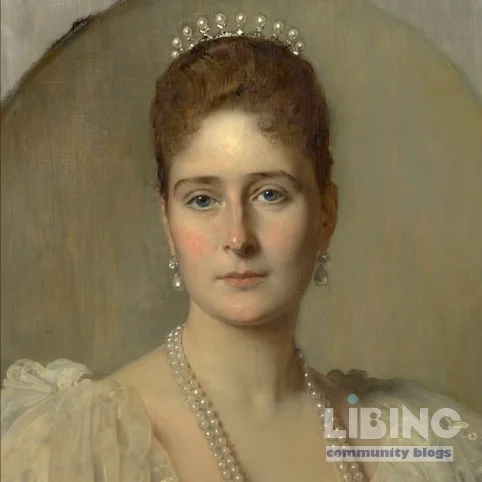
Alexandra Feodorovna and the Fall of the Romanov Dynasty: An Analytical Portrait
Alexandra Feodorovna's life illuminates a critical question about late Imperial Russia: how did a consort's influence reshape a vast monarchy long before its collapse? The problem is timely: in wartime crisis, Tsar Nicholas II found his wife at the center of decision making, often guided by Rasputin. The stakes are high—an antiquated state apparatus, a failing war effort, and the legitimacy of the Romanov dynasty itself. A hidden conflict undercuts official authority: personal loyalty to a mystic advisor clashed with ministerial competence and public expectations. This analysis follows four lenses to reveal not just what Alexandra did, but why her choices mattered. The central thesis is that her intertwining of intimate counsel and political intrusion helped erode state legitimacy and contributed to the dynasty's downfall.
Table of Contents
Analytical lens
To understand Alexandra Feodorovna's impact, we treat her not as a footnote but as a driver of governance choices under pressure. This lens examines decision-making pathways, the reframing of legitimacy, and the limits of autocracy when dynastic anxieties outrun administrative capacity. The question is not whether she influenced policy, but how that influence translated into tangible outcomes for the Russian Empire and the Romanov dynasty.
Her bond with Rasputin reshaped access to power and altered ministerial confidence. In times of hemophilia crises and political turmoil, the mystic healer's status became a proxy for her own judgment and for the public's perception of the court. This dynamic intensified the sense that the Tsar's circle exercised private vetoes over state functions, undermining the credibility of the government and the army's leadership.
From a governance perspective, the key questions are: which acts were attributable to personal preference, and which followed from structural crisis? The answer lies in tracing the sequence from palace circles to policy outcomes, including recruitment, diplomacy, and wartime strategy.
The analysis foregrounds the Romanov dynasty as a system facing external war pressure and internal dissent. When Alexandra and Nicholas dismissed capable ministers in favor of Rasputin's allies, the pattern eroded institutional autonomy and fed public skepticism about the court's ability to govern. This is not a mere anecdote; it represents a process by which dynastic credibility deteriorates as guidance appears personal rather than policy-driven.
Key implications of this lens include a reevaluation of how private influence interacts with official authority in autocracies under stress. The case shows that personal networks can become substitutes for formal legitimacy when institutions falter, with consequences for war effort, famine responses, and political stability.
- Analytical premise: Power flows through intimate networks, not formal ministries.
- Evidence vectors: Ministerial reshuffles, royal decrees, and wartime directives.
Contrasts and conflicts
Public perception and intimate reality part ways in Alexandra's story. The Tsarina's image as a devoted mother and pious wife collided with a reputation for meddling in politics and for enabling a circle around Rasputin that many contemporaries described as unfit for governance. The clash between myth and material influence reveals how rumors coagulated into policy paralysis in the late imperial era.
The contrast between private devotion and public responsibility becomes a lens for reading the court's decisions. While Nicholas II retained the formal prerogatives of the sovereign, Alexandra's assertiveness in domestic and foreign matters suggested a governance model where personal faith and perceived loyalty trumped constitutional norms in moments of crisis. This dissonance amplified the sense that the court operated beyond conventional accountability, feeding accusations of a dynastic clique diagnosing imperial issues through private intuition rather than administrative data.
In the domestic sphere, famine and food shortages exposed the limits of a court that prioritized loyalty over competence. The resulting social strain sharpened anti-regime sentiment and reinforced the narrative of a monarchic system out of touch with the needs of the people. The Bolshevik critique of an aristocratic inner circle found fertile ground in such contradictions, accelerating revolutionary momentum and eroding the monarchy's social legitimacy.
The contrast extends to the army and war effort. While Rasputin's influence is often cited to explain ministerial indiscipline, the broader pattern points to a state apparatus strained by trench warfare, supply failures, and diplomatic missteps. Alexandra's perceived interference with military leadership fed rumors that the court subordinated national interests to a private agenda, undermining morale among soldiers and civilians alike in the Russian Empire.
- Public image vs. private power: The discrepancy fuels distrust in state institutions.
- Court vs. cabinet: The balance of authority tilts toward intimate networks over official channels.
Causes and consequences
The chain of influence runs from personal attachments to national outcomes. Alexandra Feodorovna's alliance with Rasputin did not merely affect court gossip; it shaped real political processes, including ministerial confidence, administrative legitimacy, and foreign policy alignment during a critical phase of World War I. This cascade contributed to strategic miscalculations that weakened the war effort and the monarchy's credibility, culminating in abdication and revolutionary upheaval.
Her role in the 1900s and 1910s is best understood as a catalyst that transformed private counsel into a political signal. When the Tsar delegated to ministers who aligned with Rasputin's circle, the government signaled a departure from established administrative norms. The visible concessions to private influence created a record of policy inconsistency that undermined the public's belief in a coherent national strategy during a time of existential threat for the Russian Empire.
As the war dragged on, logistical failures and civilian suffering intensified scrutiny of the throne. The narrative of a ruler who could be influenced by a mystic healer translated into a broader perception: the state lacked professional governance, and leadership depended on private loyalties rather than institutional merit. That perception helped drive the mass disaffection that would culminate in the February and October revolutions and the family’s eventual confinement in Yekaterinburg.
In causal terms, the sequence can be read as: private influence undermines ministerial integrity → policy volatility increases → public legitimacy erodes → political crisis becomes irreversible. This pattern did not solely arise from Rasputin; it exposed systemic vulnerabilities in a collapsing monarchy and a society already convulsed by war and hunger. The fatal combination of personal networks and institutional fragility accelerated the fall of the dynasty.
- Immediate triggers: ministerial reshuffles, war-time pressures, and public famine.
- Longer-term dynamics: erosion of legitimacy, breakdown of trust, and revolutionary momentum.
Expert reconstruction
Historians have long debated how to weigh Alexandra Feodorovna's influence against broader structural forces. A modern reading treats her as a key node in a failing autocracy rather than a mere symptom of courtly excess. The expert reconstruction emphasizes how private loyalties intersected with public responsibilities, amplifying governance risks during a crisis-driven regime transition. The most persuasive accounts describe a pattern in which intimate networks substituted for formal accountability, with tangible consequences for policy coherence and imperial legitimacy.
Revisionist interpretations argue that Alexandra's role cannot be boiled down to malice or manipulation; instead, they highlight how a court culture prioritized personal trust and dynastic continuity over competent administration in an era of unprecedented pressure. In this light, Rasputin appears less as a single corrupt advisor and more as a symbol of a governance model that rewarded loyalty over expertise. The Ipatiev House years and the eventual execution of Nicholas II and his family crystallize a moment when private influence collided with revolutionary force, sealing the fate of a dynasty.
From the expert perspective, the narrative should focus on causal mechanisms rather than sensational anecdotes. The myth of a singular cause—be it foreign influence, a rogue mystic, or a doomed marriage—gives way to a more nuanced view: a cumulative breakdown of state institutions under stress, intensified by private influence at the apex of power. This shift in interpretation reshapes our understanding of how imperial collapse unfolded and what it reveals about governance under duress in large, multi-ethnic empires.
The historical record invites a sober assessment: Alexandra Feodorovna, Rasputin, and the Romanov circle operated within a system already strained by war, famine, and reform. Their choices did not create the collapse in a vacuum, but they accelerated a trajectory set by structural weaknesses and external pressure. The fall of the Romanov dynasty was thus a composite outcome, in which intimate allegiance and dynastic symbolism intersected with strategic missteps and mass political mobilization in the Russian Empire.
- Scholarly takeaway: private influence can undermine state legitimacy in crisis
- historiographic trend: moving from sensationalism to systemic analysis of governance under stress
In sum, the Alexandra Feodorovna narrative, when read through these four lenses, reveals a pattern: intimate governance under duress compounds existing vulnerabilities, hastening the disintegration of a centuries-old regime. The fall of the Romanov dynasty emerges not from a single misstep but from a convergence of personal influence, institutional fragility, and mass political mobilization in a world at war.
Closing the missing link: private influence and policy coherence
To move from influence to outcomes, focus on three channels: ministerial confidence, wartime command, and resource allocation. When Alexandra favored Rasputin's circle, ministers aligned to loyalists; the result was a shift in who advised the Tsar, affecting strategic choices and information flows. In practice, a reshuffle might replace a capable minister with a loyalist, leading to delayed reforms or inconsistent orders across the war ministry and diplomacy. This is visible in episodes such as changes in cabinet priorities on grain relief, troop morale messaging, and foreign diplomacy during critical campaigns.
Influence channels at a glance
| Channel | Mechanism | Policy Outcome | Example |
|---|---|---|---|
| Ministerial confidence | Private trust replaces formal merit | Policy drift toward loyalist agendas | Cabinet reshuffles favoring Rasputin-linked figures |
| Wartime command | Court signals guide senior appointees | Strategic priorities shift from data-driven planning | Less emphasis on professional military advice |
| Resource allocation | Private networks influence procurement | Inconsistent logistics and relief distribution | Grain relief and supply contracts skewed by loyalties |
Analysis: The table summarizes how private influence can reframe official channels, creating a mismatch between needs and actions. The consequence is not a single misstep but a pattern of decisions that lack public accountability and visible data support, undermining war effort and legitimacy.
Contrasts and conflicts
Public perception and intimate reality part ways in Alexandra's story. The Tsarina's image as a devoted mother and pious wife collided with a reputation for meddling in politics and for enabling a circle around Rasputin that many contemporaries described as unfit for governance. The clash between myth and material influence reveals how rumors coagulated into policy paralysis in the late imperial era.
The contrast between private devotion and public responsibility becomes a lens for reading the court's decisions. While Nicholas II retained the formal prerogatives of the sovereign, Alexandra's assertiveness in domestic and foreign matters suggested a governance model where personal faith and perceived loyalty trumped constitutional norms in moments of crisis. This dissonance amplified the sense that the court operated beyond conventional accountability, feeding accusations of a dynastic clique diagnosing imperial issues through private intuition rather than administrative data.
In the domestic sphere, famine and food shortages exposed the limits of a court that prioritized loyalty over competence. The resulting social strain sharpened anti-regime sentiment and reinforced the narrative of a monarchic system out of touch with the needs of the people. The Bolshevik critique of an aristocratic inner circle found fertile ground in such contradictions, accelerating revolutionary momentum and eroding the monarchy's social legitimacy.
The contrast extends to the army and war effort. While Rasputin's influence is often cited to explain ministerial indiscipline, the broader pattern points to a state apparatus strained by trench warfare, supply failures, and diplomatic missteps. Alexandra's perceived interference with military leadership fed rumors that the court subordinated national interests to a private agenda, undermining morale among soldiers and civilians alike in the Russian Empire.
- Public image vs. private power: The discrepancy fuels distrust in state institutions.
- Court vs. cabinet: The balance of authority tilts toward intimate networks over official channels.
Midpoint checkpoint
| Year | Event | Policy Signal | Public Reaction |
|---|---|---|---|
| 1915 | Rasputin's influence peaks | Policies align with private circle | Growing public suspicion |
| 1916 | Ministerial reshuffles continue | Systemic reform slows | Urban unrest rising |
Analytical note: The mid-point snapshot signals how private networks begin to redefine policy rhythms, eroding trust in public data and official accountability.
Causes and consequences
The chain of influence runs from personal attachments to national outcomes. Alexandra Feodorovna's alliance with Rasputin did not merely affect court gossip; it shaped real political processes, including ministerial confidence, administrative legitimacy, and foreign policy alignment during a critical phase of World War I. This cascade contributed to strategic miscalculations that weakened the war effort and the monarchy's credibility, culminating in abdication and revolutionary upheaval.
Her role in the 1900s and 1910s is best understood as a catalyst that transformed private counsel into a political signal. When the Tsar delegated to ministers who aligned with Rasputin's circle, the government signaled a departure from established administrative norms. The visible concessions to private influence created a record of policy inconsistency that undermined the public's belief in a coherent national strategy during a time of existential threat for the Russian Empire.
Time-line of cumulative effects
| Year | Event | Policy Shift | Impact |
|---|---|---|---|
| 1914 | War begins | Court-curated advice dominates | Unclear strategic direction |
| 1915 | Public strain grows | Relief and supply commands questioned | Morale declines |
Bottom line: Private influence, when anchored at the apex of power, can destabilize governance structures under stress, accelerating the erosion of legitimacy and contributing to systemic crisis.
Expert reconstruction
Historians have long debated how to weigh Alexandra Feodorovna's influence against broader structural forces. A modern reading treats her as a key node in a failing autocracy rather than a mere symptom of courtly excess. The expert reconstruction emphasizes how private loyalties intersected with public responsibilities, amplifying governance risks during a crisis-driven regime transition. The most persuasive accounts describe a pattern in which intimate networks substituted for formal accountability, with tangible consequences for policy coherence and imperial legitimacy.
Revisionist interpretations argue that Alexandra's role cannot be boiled down to malice or manipulation; instead, they highlight how a court culture prioritized personal trust and dynastic continuity over competent administration in an era of unprecedented pressure. In this light, Rasputin appears less as a single corrupt advisor and more as a symbol of a governance model that rewarded loyalty over expertise. The Ipatiev House years and the eventual execution of Nicholas II and his family crystallize a moment when private influence collided with revolutionary force, sealing the fate of a dynasty.
From the expert perspective, the narrative should focus on causal mechanisms rather than sensational anecdotes. The myth of a singular cause—be it foreign influence, a rogue mystic, or a doomed marriage—gives way to a more nuanced view: a cumulative breakdown of state institutions under stress, intensified by private influence at the apex of power. This shift in interpretation reshapes our understanding of how imperial collapse unfolded and what it reveals about governance under duress in large, multi-ethnic empires.
Scholarly takeaway
Private influence can undermine state legitimacy in crisis, as strands of loyalty pull official policy toward private agendas rather than coherent national strategy.
Historiographic trend: moving from sensationalism to systemic analysis of governance under stress, highlighting how networks shape outcomes in autocracies facing existential threats.
In sum, the Alexandra Feodorovna narrative, when read through these four lenses, reveals a pattern: intimate governance under duress compounds existing vulnerabilities, hastening the disintegration of a centuries-old regime. The fall of the Romanov dynasty emerges not from a single misstep but from a convergence of personal influence, institutional fragility, and mass political mobilization in a world at war.
What role did Alexandra Feodorovna play in shaping policy during World War I?
Alexandra's influence extended beyond private counsel; she helped steer who the Tsar trusted for strategic advice and indirectly affected ministerial appointments, wartime diplomacy, and resource decisions. This influence reinforced a perception that court circles decided key matters more than formal institutions. It translated into tangible effects when loyalist factions gained access to decision-makers, altering the tempo and tone of policy in a crisis period. This dynamic is central to understanding how private loyalties could reshape a state's wartime course while eroding public confidence in governance. In practice, the result was a governance pattern where decisions appeared to reflect court loyalty rather than data-driven strategy, especially in grain relief and military messaging. Analytically, this shows how intimate networks can compress the gap between advice and action, creating a risk of inconsistent policy directions that undermined public trust during an existential crisis.
How did Rasputin's position affect ministerial appointments and confidence in the government?
Rasputin's perceived clout increased the credibility of his circle at the expense of a merit-based appointment system. Ministers aligned with Rasputin's circle tended to win and hold power, which shifted the balance of cabinet decisions toward loyalty rather than professional expertise. This often meant slower reforms, contested objectives, and a messaging strategy more reflective of court sentiment than battlefield data. The result was a pattern of ministerial changes that, while seemingly decisive, produced policy volatility and reduced responsiveness to the army and civilian needs on the front lines and at home. From a systems view, the effect was to centralize influence within a narrow network, diminishing institutional autonomy and eroding the credibility of the broader government to respond coherently to wartime pressures.
What evidence supports the view that private influence eroded state legitimacy?
Multiple strands converge: ministerial reshuffles favoring loyalists, public famine and unrest, and visible court interventions in military leadership. A consistent narrative shows that policy randomness, coupled with a perception that decisions derived from private circles rather than data, weakened public trust in the monarch's ability to govern. The cumulative effect was a sense that the state could not deliver predictable governance or effective wartime management, accelerating mass political mobilization against the regime. Analyses emphasize the systemic nature of this erosion rather than blaming a single actor, framing legitimacy as a function of coherent action and credible leadership under stress.
How does the four-lens framework illuminate the fall of the Romanov dynasty?
The four lenses—analytical, contrasts, causation, and expert reconstruction—offer a composite view: private influence interacts with institutional fragility and external pressure to produce a loss of legitimacy. By tracing decision pathways (analytical), the public-private divide (contrasts), the cascade from personal loyalties to outcomes (causation), and revised interpretations (expert reconstruction), historians can explicate how a crisis-driven autocracy unravels under competing loyalties and mass mobilization, rather than attributing the collapse to a single misstep.
What are the main historiographic debates about Alexandra's influence?
Scholars debate whether Alexandra acted as a maladaptive impulse or as a symptom of a broader governance culture that valued dynastic continuity over administrative rigor. Some argue that private influence was exaggerated by sensationalism, while others see it as a central mechanism that redefined power structures at the apex of the state. The ongoing debate centers on how to balance personal agency against structural weaknesses and how to interpret court loyalties within a complex wartime polity. This discussion invites a more nuanced, evidence-based reading that weighs individual roles against wider systemic pressures rather than reducing the narrative to a single cause.
What lessons emerge about governance under duress from this case?
The case highlights that legitimacy depends on coherent policy, transparent accountability, and credible institutions—even under extreme stress. When private networks gain outsized influence, policy coherence can waver, and public trust can erode quickly. The lesson for scholars and policymakers is to examine how leadership structures balance private loyalties with formal processes, ensuring that crisis responses remain data-informed and publicly defensible rather than driven by intimate networks.





Add a comment
To comment, you need to register and authorize
Comments
What makes this case pattern revealing is not simply Rasputin's presence but what his presence symbolized to contemporaries and to later historians. Rasputin's status as a healer and mystic positioned him as a proxy for Alexandra's judgment and for a court that preferred private knowing over public accounting. The effect on governance was likely twofold: first, a erosion of confidence within the ministerial corps that their expertise could be relied upon; second, a public optics problem whereby the army and the civilian administration appeared to be led by private preferences rather than by the sovereign's own formal prerogatives. If we treat governance as a contract between rulers and the ruled, then private influence in crisis not only rearranges personnel but redefines accountability and the meaning of legitimacy. The potentially catalytic moment arises when the public perceives that official channels have been repurposed to serve a private network rather than the national interest.
Discussion prompts: to what extent does the four lens approach capture a dynamic where personal loyalties become substitutes for policy expertise, and how would one measure that substitution in archival records? Would the same pattern be visible in a modern autocracy under military pressure, where control of information flows can be more easily manipulated? And what kind of archival evidence would most decisively demonstrate that Alexandra's influence altered the trajectory of war strategy rather than merely reflecting preexisting systemic weakness?