

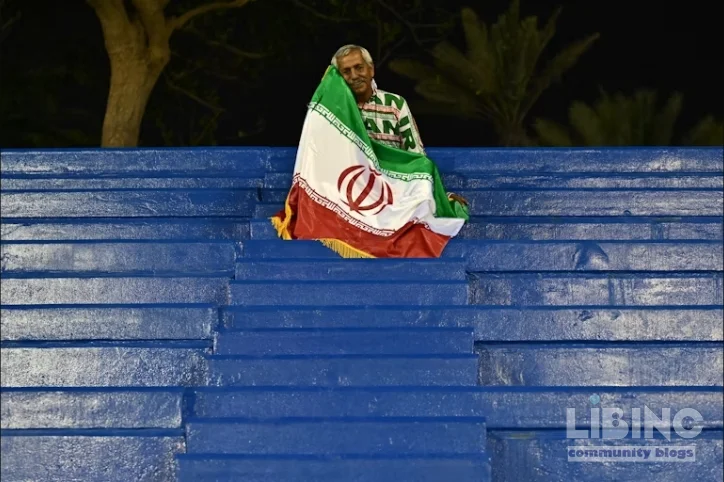
Iran World Cup 2026: Sport, Statecraft, and the Diaspora Dilemma on American Soil
Table of Contents
- Through analytics
- Through contrast
- Through cause-and-effect relationships
- Through expert reconstruction
Through analytics
Iran World Cup 2026 unfolds as a rare collision of sport and statecraft on the world’s most watched stage. The backdrop is not merely a football field but a geopolitical canvas where domestic crackdowns, interstate conflict, and the reach of digital control shape how fans, players, and officials experience the tournament. The scene asks a central question: can a game carried by Team Melli still carry the weight of a people’s pride without becoming a proxy for a government’s actions? The analytic answer begins with constraint and leverage.
On one axis, the decision to host, or participate in, an international event depends on optics and diplomacy. The Iranian government frames the World Cup as a moment for national identity, cultural heritage, and sovereignty. On the other axis, the diaspora, especially in American cities with large Iranian communities, reads the event through the lenses of memory, exile, and political grievance. The tension between these readings determines not only what the team represents on the pitch but what the crowd believes they are permitted to express in the stands and in the city beyond the stadium. This is not a debate about football talent; it is a question about the meaning of national representation under scrutiny from both home and abroad.
Consider the logistical frictions: visas issued at the last moment, training camps relocated to Mexico after hopes for Arizona proved untenable, and ticket allocations alleged to have been blocked. Each friction point reframes the World Cup as a test of process and perception as much as a test of technique. The season’s broader arc includes a four-month digital blackout at home affecting roughly 92 million people, a phenomenon that intensifies the sense that the World Cup exists in a political vacuum that is anything but empty. The flow of information, misperception, and rumor becomes part of the game plan, shaping expectations around performance and protest alike. The analytical core is simple: the World Cup’s value for Iran extends beyond goals; it becomes a barometer of legitimacy, legitimacy contested in a global arena.
In this frame, Team Melli’s performance carries implications for national identity and for the legitimacy calculus of the Islamic Republic. The diaspora’s response—ranging from cautious support to organized protests—reflects a broader question about whether a national team can act as a symbol without becoming a vehicle for political messaging. The dichotomy is stark: a thriving national pride that transcends politics versus a participation that many perceive as tacit approval of political leadership. The analytics suggest that the tournament’s real contest lies in the space between outcomes on the field and narratives off it. The pitch becomes a venue where symbolic capital is earned or squandered by both players and the state.
Beyond symbolism, this World Cup also tests the durability of the sport’s intrinsic norms. FIFA, as the governing body, faces a paradox: celebrate global unity while not appearing indifferent to a political reality that fans and players inhabit. The organization has historically balanced sporting integrity with political sensitivities, but the current moment exposes a gap between rhetoric about fair play and the reality of competing sovereignty claims. The result is a game that must accommodate competing interpretations of what constitutes fair play, including the boundaries of national anthem rituals, displays of flag symbolism, and the permissible scope of political expression inside stadiums. In this sense, the main variable is not only who scores more but which narrative wins the day in the court of global opinion.
From a strategic perspective, Iran’s World Cup 2026 presence offers two leverage points. First, there is cultural capital—the deep-rooted passion for soccer in Iran, a culture where Persepolis and Esteghlal lore and the memory of the 1998 encounter with the United States fuse into a potent national narrative. Second, there is soft power—the chance to project a coherent national story to a global audience even as domestic politics remain contentious. The crucial tension is that the same leverage can backfire if the crowd interprets support for the team as implicit consent for political leadership. The analytics thus reveal a core paradox: the more the team succeeds on the pitch, the greater the temptation for the diaspora to translate success into a critique of governance.
Ultimately, the claim of this analysis is that Iran World Cup 2026 operates as a democratic emblem with stadium-level consequences. The event becomes a litmus test for how a nation negotiates pride, grievance, and protest under conditions of external hostility and internal crackdown. The global stage amplifies all signals, and signals travel faster than the ball. The outcome will hinge on how players and officials navigate political expectations without surrendering competitive focus or forfeiting the integrity of sport. The analysis points toward a nuanced conclusion: excellence on the field might reduce, but cannot erase, the political charge that accompanies every goal and every flag carried into the arena.
Through contrast
Contrast sharpens the lens. In Los Angeles, a city with the largest Iranian diaspora, the World Cup’s opening acts will unfold against memories of exile and revolution, and against a media ecology that is deeply alert to symbolism. In Seattle and other American hubs, fans grapple with a different set of memories and expectations. The contrast is not merely geographic; it is psychological and ethical. In Iran itself, supporters face a different reality, one shaped by information controls, censorship, and the lived experience of political risk. This triad creates a spectrum of responses: admiration for athletic excellence, discomfort with political signals, and a spectrum of possible protests, each with its own risks and consequences.
The diaspora’s affiliations complicate what it means to cheer for Team Melli. On one end, some expatriates celebrate the team as a proud bearer of Iranian culture, a shared heritage that transcends political divisions. On the other end, many insist that supporting the national team implies complicity with a government that orders crackdowns and imposes a digital blackout at home. This split creates a living tension in stadiums, fan zones, and living rooms. The protest strategies circulating among Iranian Americans reflect a broader question about how to exercise political voice in a global arena.
Proposals circulated within communities demonstrate the spectrum of civic imagination. Some call for buying tickets with the explicit intention of leaving seats empty, others propose booing the national anthem, and several advocate carrying plain tricolor banners or non-Islamic Republic symbols in defiance of stadium rules. Yet other voices urge restraint, arguing that the most powerful protest might be visible in performance: disciplined defense, precise passing, and a consistent team identity that refuses to be drawn into political theatre. The tension here is operational as well as ethical: actions in the stands affect the players’ concentration, the team’s public image, and FIFA’s tolerance for political symbolism. The contradiction is stark: the same crowd that seeks to honor national tradition risks betraying it by letting politics displace performance.
From the players’ vantage point, the contrast forces a delicate balancing act. Some athletes view themselves as ambassadors of a culture and a people, while others emphasize that sport remains distinct from politics. The risk is misreading the crowd and miscommunicating intent. A misstep—whether a show of support for or against a political cause—could fracture team cohesion or trigger disciplinary responses. The contrast, then, lies in how much of the political backdrop players absorb versus how much they shield themselves from it to preserve focus. The most effective approach might blend ceremonial respect for national symbols with a disciplined refusal to let political messages eclipse the sport’s purpose: to compete with skill, discipline, and joy.
In this contrast-driven analysis, several tensions surface: the diaspora’s right to protest versus the fans’ desire to celebrate shared heritage; the players’ duty to carry national pride versus their obligation to avoid complicity with political authority; and the host nation’s security apparatus versus fans’ appetite for symbolic resistance. Each dimension of the contrast influences the World Cup’s atmosphere in ways that extend beyond a single match. The result is a tournament with a living, evolving social theatre, where the quality of football, the visibility of protest, and the precision of messaging all shape public perception across borders.
Through cause-and-effect relationships
Understanding the World Cup as a chain reaction clarifies what happens next. The January crackdown and the four-month digital blackout create a psychic and informational environment in which every event on the pitch ripples outward as a political statement or a cultural moment. The effect manifests in three intertwined ways: crowd behavior, media framing, and political signaling. Each branch feeds back into the others, creating a self-reinforcing loop that can elevate or diminish the tournament’s significance.
First, crowd behavior translates political sentiment into in-stadium action. When fans carry symbolic signage, chant in support or protest, or choose to remain silent, they transform a sporting event into a public spectacle. Those choices influence the players’ morale, the tempo of the game, and the crowd’s overall energy. Second, media framing shapes international perception. If outlets interpret every goal as a political act, the World Cup becomes a referendum on governance rather than a celebration of sport. Conversely, a more neutral, performance-oriented narrative can preserve the competition’s core meaning while still acknowledging the context. Third, political signaling from both sides feeds the cycle. Iranian authorities may use the event to project sovereignty and resilience, while diaspora voices push back with demands for accountability. This push-pull determines how aggressively external powers—FIFA, the host nation, and the international community—need to respond to maintain the event’s integrity.
Cause and effect also reveal the potential risks for Team Melli. If the team advances with a series of convincing performances, the public mood could pivot toward pride in sporting achievement, tempered by public memory of repression. If the team falters or if protests dominate the conversation, the World Cup risks becoming a stage for grievance rather than athletic excellence. That shift would test the patience of fans, the tolerance of broadcasters, and the perceived legitimacy of the tournament itself. The causal chain underscores a practical truth: the World Cup operates not merely as a competition but as a process through which a nation negotiates its public image in real time.
Finally, the interplay among sport, sovereignty, and memory creates a potential precedent for future events. If this World Cup establishes a model where fans and players can navigate politics without collapsing into paralysis or spectacle, it could influence how subsequent national teams, hosts, and international federations manage similar tensions. If, instead, it becomes a cautionary tale of politicized spectatorship overshadowing play, future organizers may push for stricter controls or more explicit lines between national representation and political expression. In this sense, the 2026 World Cup could become a case study in the governance of global sport under strain, redirecting the path of international tournaments for years to come.
Through expert reconstruction
Experts reconstruct possible trajectories, not predictions. The first scenario envisions a high-performance arc where Team Melli translates technical discipline into dominant play in Los Angeles and beyond. In this world, players maintain focus, coaches emphasize cohesion, and fans celebrate milestones while avoiding overt political signaling. The diaspora’s voices surface in demonstrations outside stadiums rather than inside, allowing the match to proceed with a relatively clear field of play. In this outcome, football remains the primary language, but the surrounding narrative preserves space for civic dialogue elsewhere.
A second, less optimistic scenario imagines a tournament overshadowed by persistent protest theatre, with stands alternately applauding and booing the national anthem, while tickets become a symbol of political compliance or resistance. In this environment, FIFA faces pressure to refine its guidelines on flags, slogans, and visible political messaging. The risk is a creeping normalization of protest as entertainment, which could erode the perceived sanctity of the competition and complicate future partnerships with host nations and broadcasters.
Between these poles lies a space for constructive reconstruction. Several policy-like adjustments could help preserve sport’s integrity while acknowledging political reality. For example, clear, consistent rules on symbol displays and a public commitment to referee impartiality could reduce incident-driven disruptions. Enhanced security coordination with host cities would minimize risk without encouraging suppressive tactics. Importantly, a performance-first culture—emphasizing skill, teamwork, and fair play—can remind players and fans that the World Cup remains primarily a test of athletic excellence, even when history demands difficult conversations.
Experts also remind us to approach the Iran World Cup 2026 with humility about the limits of sport as a vehicle for social change. The power of football lies in its ability to unite spectators across divides, but it cannot singularly resolve political grievances. The best reconstruction leverages the event to illuminate shared human aspirations—talent, perseverance, and dignity—while leaving room for principled dissent in appropriate venues. In the end, the tournament could become a catalyst for longer-term dialogue about national identity, human rights, and the responsibilities of global sport—if institutions respond with clarity, consistency, and courage.
What emerges from this expert reconstruction is a path that honors both the beauty of the game and the gravity of the surrounding politics. It asks stakeholders to protect the purity of athletic competition while recognizing that a World Cup broadcast into millions of homes is also a mirror held up to the societies that host and participate. The challenge is not to suppress the truth of people’s experiences but to allow those experiences to coexist with the joy of play. If that balance holds, the Iran World Cup 2026 can teach a broader lesson about how a global sport can dignify diverse voices while maintaining its own standards of excellence.
In sum, the World Cup in 2026 offers more than a tournament scoreboard. It presents a test of how a national team navigates a fraught political landscape, a diaspora seeking to define loyalty, and a global audience hungry for authentic athletic performance. The outcome will depend on how players, fans, and organizers translate pressure into poise, and how the sport’s guardians preserve the integrity of competition without erasing the experiences that fuel fans’ sense of belonging. This is not merely about who wins in Los Angeles or Seattle; it is about how a people choose to express themselves on a world stage without surrendering the game they love.
Notes for the reader: The Iranian diaspora, the government’s stance on symbolism, and FIFA’s evolving policies all interact in real time. The World Cup becomes a living laboratory where ideas about sovereignty, representation, and collective memory are tested under the bright lights of a global sport. As fans, analysts, and players watch, they participate in a broader act of national storytelling—one that will shape how Iran and its people see themselves for years to come. The final score, in this sense, might lie as much in the applause that follows the whistle as in the scoreboard itself.
Practical framework for managing sport, state, and diaspora dynamics
The latest synthesis shows a clear, action-oriented angle that teams, fans, and organizers can apply in real time to align peak performance with symbolic constraints. This three-part approach translates strategic insights into concrete steps for on-field discipline, symbol guidelines, and coordinated messaging across players, federations, and host cities.
Visual guide: Scenario comparison
| Scenario | Player Focus | Fan Climate | Media Framing | Governance |
|---|---|---|---|---|
| Optimistic | Discipline & cohesion | Calm, supportive | Performance-first | Low risk |
| Protest-ready | Messaging & symbolism | Tense | Civic narratives | Moderate risk |
| Disrupted event | Crowd management | Volatile | Contested narratives | High risk |
Analysis: This visual clarifies that strong performance and clear symbol rules reduce volatility in crowds and coverage.
The practical steps include codifying symbol guidelines, rehearsing match-day rituals that honor heritage without overshadowing play, and establishing rapid-response channels among federation staff, security, and broadcasters.
• Scenarios and actions: In optimistic cases, emphasize teamwork and quiet symbolism; in protest-ready contexts, pre-announce permitted displays and train players to ignore provocation while maintaining focus; in disruption scenarios, rely on data-led crowd management and transparent media briefings.
This figure acts as a reminder that audiences outside the stadium shape outcomes as much as goals do, guiding how much room is allowed for protest or tribute.
Policy coordination and ongoing education for players, coaches, and officials can preserve the game’s primacy—athletic excellence—while acknowledging political reality.
Policy lattice for symbols
- Pre-approved symbol guidelines for national identity.
- Clear rules on flags, chants, and attire inside venues.
- Transparent referee impartiality and policing protocols.
Analytical takeaway: A balanced framework channels passion into performance, protecting the sport’s integrity while allowing principled expression in appropriate venues.
FAQ
How does the Iran World Cup 2026 illustrate the balance between national pride, diaspora voices, and state power on a global stage?
In plain terms, the event becomes a live test of how a nation projects identity while managing internal tensions and external scrutiny, with diaspora communities amplifying competing expectations. The long-term effect rests on whether performance can co-exist with principled dissent without surrendering moral clarity or competitive integrity. This balance shapes foreign perception, sponsorship dynamics, and future governance of sport within politically charged environments. It also reveals how soft power can be mobilized or constrained by real-time outcomes on the field and in the stands.
The broader implication is that success on the pitch can legitimize national narratives abroad, while visible dissent can pressure institutions to adjust rules and messaging strategies in the shadow of a global audience.
What role does diaspora activism play in shaping the tournament’s atmosphere and its reception abroad?
Diaspora activism acts as a catalyst for heightened attention to governance, rights, and accountability, influencing stadium dynamics, media framing, and diplomatic conversations. The first long sentence here highlights how organized or spontaneous actions can shift the tone from purely athletic competition to a broader civic dialogue, prompting organizers to clarify policies and to balance spectacle with safety. In practical terms, diaspora activity can redefine which moments are celebrated and which are scrutinized, affecting audience engagement and sponsor interest.
In-depth, it also encourages hosts to create space for lawful expression while preserving the sport’s competitive environment.
What guidelines exist or should exist for political symbolism, slogans, and displays at FIFA events?
Existing guidelines aim for a neutral playing field, but evolving contexts require clearer, consistently applied rules that are communicated before tournaments. The recommended approach includes transparent pre-authorization for displays, standardized security protocols, and explicit referee responsibilities to separate on-field strategy from off-field messaging. A well-defined framework reduces last-minute disruptions, protects athletes from coercion, and preserves the audience’s focus on sport rather than politics.
These policies should be revisited with input from players, federations, host cities, and fans to align expectations with evolving norms in international sport.
How can teams balance national pride with political realities without undermining performance?
Teams should adopt a performance-first discipline that also respects symbolic considerations. The first sentence here emphasizes training that maintains concentration regardless of outside noise and establishing rituals that honor heritage without becoming political theater. Clear communications with staff and players about permitted gestures, supported by consistent enforcement, helps protect cohesion. Practically, coaches can rehearse reactions to provocation, ensuring that on-field decision-making remains meticulous and unified.
Ultimately, a practiced, unified team can become a source of national pride while avoiding entanglement in political controversy.
What are the potential future implications for international sport if a World Cup becomes a platform for both performance and protest?
If protest signals gain momentum, governing bodies may face calls for more explicit safety protocols and tighter boundaries around symbolism. The first sentence here acknowledges that tensions could prompt reforms in how hosts negotiate diplomacy, media rights, and fan engagement. The result could be clearer guidelines, stronger anti-discrimination measures, and better risk assessment, all designed to preserve the sport’s integrity while allowing civic voices to be heard in appropriate spaces.
Such evolution could set a precedent for future global events, shaping how power, identity, and sport interact on the world stage.




Add a comment
To comment, you need to register and authorize
Comments