

Invasive Pacific Oysters in Limfjorden: The Oyster Hunt as Citizen Science and Ecological Indicator
Invasive Pacific Oysters in Limfjorden: a case study in coastal change and citizen science
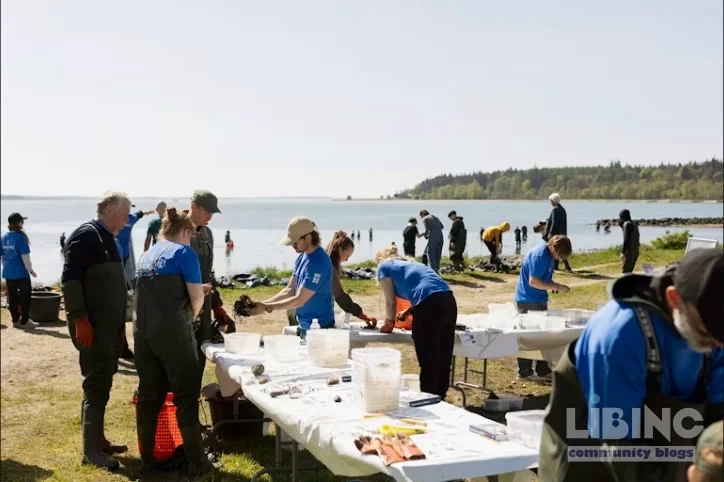
This year, 80 participants waded through shallow, clear water, buckets in hand, quadrats deployed at several sampling sites marked by miniature floats. The scene resembled a field experiment more than a festival, yet it carried the textures of both tourism and science. The central problem is not merely what lives on the seabed but which species—native or non-native—are beginning to dominate the estuary as the climate warms. The stakes are ecological, economic, and cultural: biodiversity depends on balance, coastal communities depend on resilient services, and gastronomy depends on the availability of harvestable raw materials. The hidden conflict is between an appealing, convivial event and the hard, uncertain science that underpins long-term stewardship of Limfjorden. This article maps a path through that tension, tracing how an oyster-hunt can illuminate broader coastal change while raising new questions about communication, governance, and stewardship.
Ecological reality and social interest are not inherently at odds here. This edible approach to science-themes can magnify public understanding of coastal ecology, but it can also mislead if participants equate a single foraging morning with comprehensive knowledge. The event’s public identity—gourmet oyster dinners, playful foraging, and family-friendly spectacle—appears to be the primary draw for most attendees. Yet within this veneer lies a dataset: the baskets yielded classic indicators of invasive species pressure, and the context—Limfjorden’s warming, eutrophication pressures, and the arrival of alien species—provides material for serious inquiry. This juxtaposition matters because it demonstrates how citizen engagement can broaden attention to climate-linked ecological changes, even when the engagement is primarily social and gastronomic. The conversation is shifting, and the question is how to translate a sensory, enjoyable experience into durable environmental insight.
The lead observation is simple: the baskets contain Pacific oysters and other non-native life, including brush-clawed shore crabs and folded sea squirts. The data are not merely catalogues but signals. They point toward altered food webs, new habitat structures, and potential shifts in ecosystem services—such as water filtration, habitat provisioning, and coastline protection—that Pacific oysters can influence in different directions. The event also demonstrates a microcosm of climate adaptation in action. Warmer water temperatures reduce physiological stress for some warm-water invaders while intensifying stress for long-standing native assemblages. The outcome is not just a matter of species tallies but of how coastal ecosystems reorganize their functions under rapid environmental change. The direction of this analysis is to unpack what the oyster-hunt reveals about ecological resilience, social learning, and the limits of public science in the age of climate change.
Inline visualization: a stylized estuary scene with non-native species entering the system.







Add a comment
To comment, you need to register and authorize
Comments