

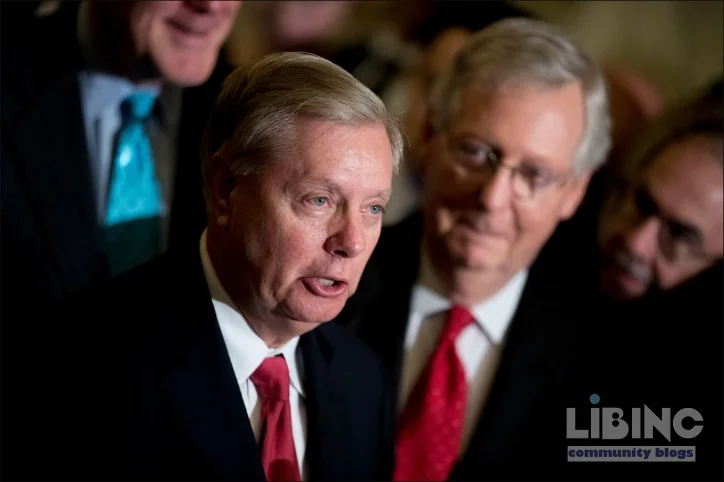
Generational Change in US Politics: The Senate as a Pivot Point in a Shifting Era
Time is a ruthless statistician. The sudden death of a veteran senator and the extended hospitalization of another mark not just personal losses but the closing chapter of a long-running era in the Senate GOP. Beyond the graveyard of bios and obituaries, a broader shift is taking shape: postponed generational change, relentless ideological battlegrounds, and leaders pressed to reassure voters facing eroded economic security and distant wars. President Trump remains a force multiplier, wielding authority with the same appetite for legacy that defined his first term, even as some of his structural bets backfire in the real world of bills and ballots. After the midterms, the question of what follows his decadelong hold on the party becomes not just likely but unavoidable. A parallel succession crisis is already visible within the Democratic Party as insurgent progressives test establishment authority, while both parties wrestle with policy gaps on price stability and growth.
The juxtaposition of a fading era and an unsettled future is not accidental. It is a signal of a political system struggling to translate broad public anxieties into durable policy. The leadership questions are not merely about who sits in the chair; they are about who can translate economic disquiet into coherent, credible governance, and who can command trust across a fractured electorate. The Graham-Plater episode—an emblem of internal party strain and the fragility of even long-standing political alliances—serves as a microcosm for how personal relationships, institutional memory, and partisan strategy interact to shape outcomes in a time of upheaval. This is not only about personalities; it is about the architecture of power itself.
In this landscape, the analysis must move beyond headlines to ask: why now, and what next? Why does a system that prizes stability instead exhibit such volatility? How does the aging of key figures influence policy tempo, foreign commitments, and judicial appointments? And what strategic paths will the major parties pursue to minimize risk while maximizing political capital in a world of increasing information speed and existential economic concerns? This article lays out a framework to understand the signals, the stakes, and the plausible trajectories as the Senate enters a new, uncertain chapter.
What follows is a structured examination in four lenses. First, an analytic view of the existing tectonics and their implications for governance. Second, a comparative contrast between the parties that reveals the fault lines of a realignment in progress. Third, a cause-and-effect map that ties economic insecurity and global frictions to policy paralysis and electoral volatility. Fourth, an expert reconstruction that sketches plausible paths forward for leadership, policy, and institutional resilience. The aim is not to predict a single outcome but to illuminate how the generational question reshapes the incentives, risks, and opportunities facing the Senate and the country.
- Analytical view: the generational tectonics
- Contrasts between parties in a shifting era
- Causes and consequences
- Expert reconstruction for the new Senate
Through analytics
The centerpiece of the current moment is not only the loss or near-loss of aging symbols but the structural inertia they leave behind. The average tenure of Senate leadership has historically acted as a ballast for policy continuity; when that ballast frays, policy speed decouples from the pace of economic and security challenges. The juxtaposition of McConnell’s prolonged rehabilitation and Graham’s death-like removal from the political stage highlights an endurance problem: institutions built to outlast cycles now confront accelerated change. The consequence is not simply a turnover of people but a re-proportioning of power, influence, and know-how across committees, caucuses, and the executive-responsible landscape.
In this frame, the concept of political realignment becomes essential. Realignment describes not mere shifts in party labels, but changes in what voters expect from leadership, what policymakers can credibly promise, and how legislators navigate the line between concession and conviction. The data points—aging leaders stepping back, rising insurgent figures challenging the center, and a public anxious about prices and jobs—point toward a gradual but persistent rebalancing of power away from a single, dominant broker toward a more plural, fractured, and uncertain equilibrium. This is not a collapse of consensus so much as a slow re-synchronization of institutions with the electorate’s evolving priorities.
Historical analogies matter, but they must be used with caution. The 21st-century Senate operates under different informational pressures, media dynamics, and global risk matrices than its predecessors. The old playbooks—centrism as a default, bipartisanship as a hidden art, and a leadership class that governed from the middle—are being reinterpreted under the pressure of domestic discontent and international strain. The strategic questions now revolve around who can credibly claim authority across factions, who can mobilize a coherent policy narrative without eroding the base, and how to manage the inevitable friction that accompanies generational transition while preserving institutional legitimacy.
One critical signal is the evolving role of the Senate as a platform for accountability rather than a mere gatekeeping body. Leadership transitions, especially when unanticipated by the timetable of elections, create space for both reform and retrenchment. The balance between reform-minded energy and conservative proceduralism is delicate: too rapid a renewal risks destabilizing long-standing alliances, while too slow a change perpetuates stale methodologies incompatible with the current economic and geopolitical pace. In this context, the Senate’s trajectory depends on whether a new generation can claim legitimacy by delivering tangible, unitary outcomes or if the process devolves into repeated stalemates punctuated by dramatic, high-visibility moments rather than consistent governance.
What this analysis yields is a map of leverage points. The coalition that can align a younger cohort with an accelerated reform agenda—without alienating core supporters—will hold a decisive advantage in shaping fiscal policy, economic security measures, and the tempo of foreign commitments. Conversely, a failure to anchor leadership changes in credible policy platforms will intensify voter disillusion and invite more radical intra-party challenges. The key question becomes not only who sits in the chair but how the chair is used to produce durable policy results in an era of rapid change and heightened public scrutiny.
Contrasts between parties in a shifting era
Across the aisle, the rivalry between parties is less a simple clash of personalities than a contest over structural philosophies for the country’s future. The Republican coalition is wrestling with the imprint of a leader who combines hardline stances with an instinct for political persuasion, producing an unusual synthesis of hawkish foreign policy, distrust of multilateral commitments, and a populist economic frame. The shift toward a MAGA-influenced agenda, even as it fragments traditional centrism, has created a friction between established institutionalism and the insurgent impulse to rewrite rules and norms. In this environment, the party’s ability to present a coherent, wide-appeal economic program—especially on affordability and housing—remains unsettled, aiding the perception that the GOP is in a period of recalibration rather than consensus-building.
The Democratic coalition presents a contrasting dynamic. On one side, a newly organized energy around younger figures and progressive agendas pushes the party toward a more aggressive stance on economic reforms and social equity. On the other, the establishment wing fears alienating swing voters and eroding the party’s broad base. The political theater around Abdul El-Sayed—who sought to broaden his appeal by disavowing a simplistic socialist label—illustrates a broader tension: how to project anti-establishment energy while keeping a broad coalition intact. The result is a party that is both compelled to innovate and constrained by the risk of alienating its traditional and growing constituencies. This dual pressure fosters a rare form of strategic ambiguity, where the path forward is less a single route and more a portfolio of potential alignments that can be activated under different electoral contingencies.
In foreign policy, the contrast is equally instructive. The Republican hawkish streak—emphasizing sanctions on Russia, a strict stance on Ukraine, and a readiness to escalate pressure on Iran—appears to be losing some of its once-unified elite embrace within the party. The Democratic response, while more cooperative with traditional allies, also faces pressure to be decisive on defense budgets and international commitments without appearing to capitulate to hardened ideological divisions. The net effect is a political landscape where consensus on major security questions remains fragile, and where leadership transitions will determine whether the United States sustains a coherent grand strategy or drifts into episodic crisis management shaped by electoral incentives.
Domestic policy acts as a microcosm of the larger struggle. The affordability crisis—rising rents, stagnant wages, and limited housing supply—has become a litmus test for both bodies. Republicans hesitate to embrace expansive federal interventions that could alienate their base, while Democrats face pressure from progressive blocs to enact sweeping reforms that could risk alienating moderate voters. The tension exposes a broader structural fault line: can either party deliver a credible, administrable set of policies that assuage middle-class anxieties without triggering a backlash from the extremes? The answer will have implications for how voters evaluate leadership credibility, the probability of legislative breakthroughs, and the health of the governing bargain in the years ahead.
Causes and consequences
The causes of the shifting era can be traced to a handful of interlocking dynamics that compound over time. The list below identifies the principal drivers, followed by their consequences for governance and strategy:
- Demographic aging of senior lawmakers and the lag between electoral margins and legislative renewal
- Economic anxiety among broad swaths of voters, particularly around housing affordability and wage growth
- Persistent ideological polarization that narrows the space for compromise and slows policy delivery
- Strategic use of political identity by both parties to mobilize bases, sometimes at the expense of centrism
- Global risks, including Iran, Russia, and regional instability, that demand credible, timely responses
- Media and information ecosystems that compress attention spans and elevate dramatic narratives over incremental governance
These causes generate a cascade of consequences that ripple through legislative strategy and public perception. First, policy gridlock deepens as leadership transitions disrupt established working relationships. Second, the electorate experiences a lag between policy promises and outcomes, fueling distrust in the political class and skepticism about the feasibility of reform. Third, foreign policy credibility can be undermined when domestic political dynamics render long-term commitments fragile or reversible. Fourth, the parties’ attempts to manage internal tensions while projecting unity to voters produce mixed signals about future governance, which further complicates the political calculus for midterm and presidential elections.
To translate these dynamics into tangible effects on policy, consider housing and economic security. The affordability crisis is now a litmus test for the credibility of both parties. A credible plan requires a balanced mix of supply-side incentives and demand-side protections, a design that can withstand internal factional pressure while delivering visible improvements to households. Without a credible policy framework, the public grows more pessimistic about the ability of the political system to respond, which in turn erodes trust and participation. The result is a political ecology where leadership transitions are as significant as the policies they attempt to enact—and where the timing of those changes can determine the success or failure of reform efforts on core issues.
On the institutional level, the Senate’s capacity to manage succession gracefully depends on whether emerging leaders can develop cross-cutting appeals that transcend narrow ideological camps. If the new generation can articulate a coherent national agenda that resonates with both middle-class voters and reform-minded progressives, the chamber could regain some governance legitimacy. If not, the risk is a protracted period of experimentation with unstable majorities and reactive policymaking. Either way, the consequences extend beyond party advantage; they redefine the social compact between citizens and their government at a moment when the country faces significant economic and security challenges.
Expert reconstruction for the new Senate
Analysts across think tanks and congressional offices converge on a few plausible paths for leadership and policy that could anchor the Senate in a more stable, results-oriented trajectory. The following reconstruction outlines four credible futures and the strategic moves that could accompany each.
- Path A: Steady centrism with credible reform package
- Cross-partisan coalitions form around a limited, fiscally prudent policy package focused on housing, energy, and targeted tax reform.
- Emerging leaders cultivate personal credibility with both wings of their parties, prioritizing governance outcomes over symbolic victories.
- Path B: Progressive-bold reform with risk of backlash
- Democrats push a bolder economic agenda, including expansive housing and social programs, testing the tolerance of moderate voters.
- The party leverages youth and insurgent voices to redefine its message while balancing pragmatic constraints.
- Path C: Strategic continuity with disciplined reform
- Leadership emphasizes continuity in core institutions (Judiciary, national security), while selectively updating policy tools to align with current realities.
- Historically informed negotiations with Republicans aim to minimize disruption to long-standing norms and confirm a stable judicial pipeline.
- Path D: Fragmented governance with targeted bursts of action
- A more decentralized leadership approach creates ad hoc majorities for specific initiatives, delivering narrow wins but limited overarching policy coherence.
- This path risks volatility but may yield practical results in discrete policy areas, such as housing, infrastructure, and defense modernization.
In all scenarios, the central requirement is that the Senate develop a credible narrative capable of bridging the old guard and the new generation. That means fewer empty promises and more demonstrable policy deliverables, even if those deliverables are incremental. It also requires disciplined messaging that explains not just what is being done, but why it is necessary in the context of rising costs, insecure livelihoods, and a volatile international environment. The most successful outcomes will be those that align political momentum with tangible improvements in everyday life, thereby restoring public faith in the machinery of government.
To translate these paths into actionable strategies, party leaders would do well to focus on three levers: credible fiscal discipline, targeted policy wins that address immediate concerns (such as housing), and a foreign policy posture that reassures allies while maintaining flexibility to adapt to new threats. The generation shift will test whether the Senate can maintain its reputation for deliberation while becoming a more agile, outcome-driven institution. The first real test will come with the pace and quality of any forthcoming leadership transitions, the ability to mobilize broad coalitions, and the capacity to manage expectations in a public starved for competence and clarity.
Ultimately, the Senate’s trajectory will shape how the nation addresses its most pressing concerns. The interplay between aging leadership, party realignments, and voter sentiment will determine whether a stable governance equilibrium emerges or if the era of episodic governance and fractured majorities becomes the default. The data, in aggregate, suggest a move toward a more plural, complex, and harder-to-predict political environment—a reality that demands sharper strategic thinking, more precise messaging, and a willingness to test innovations while guarding against reckless experimentation. The stakes are high, and the clock is ticking.
Concluding reflection: if the Senate can convert the energy of a generational transition into durable policy outcomes, it may yet redefine the terms of governance for a new era. If not, the consequences will be felt far beyond party lines, in the everyday lives of families grappling with inflation, housing costs, and a world that grows more complex by the day.
A practical missing piece in this analysis is turning insight into actions that voters can feel, especially on housing affordability and middle-class security. This section offers a focused bridge: four policy levers, measurable milestones, and real-world tests that can be pursued in parallel with ongoing debates, while respecting the realities of partisan division.
These visuals anchor the discussion in a tangible reality: housing costs influence consumer sentiment, savings rates, and willingness to invest in local economies. The four levers below translate that reality into policy experiments with early indicators and accountable timelines.
Policy choices must deliver visible wins within a single political cycle to sustain momentum. The aim is to create a credible, cross-cutting track record that can withstand electoral volatility while guiding the Senate toward more predictable governance. With that in mind, the table that follows maps lever, impact, timing, and political viability in concise terms.
| Policy Lever | Immediate Impact | Timeframe | Budget Implications | Political Feasibility | Risks / Notes |
|---|---|---|---|---|---|
| Expanded Housing Vouchers | Direct relief for renters in crowded markets | 12–24 months | Moderate annual cost, scalable by geography | Medium cross-party appeal if tied to anti-eviction safeguards | Administration complexity; requires clear spend controls |
| Zoning Reform & Permitting Simplification | Increases supply, dampens price pressure | 12–36 months | Low to moderate if paired with incentives | High potential bipartisan gains on affordability | Local land-use resistance; requires local buy-in |
| Targeted Tax Credits for Builders | Stimulates private investment in new units | 6–24 months | Low-to-moderate federal outlay with sunset clauses | Competitive but depends on district dynamics | Measurement of actual units vs. permits required |
| Rent Stabilization Pilot Programs | Short-term relief; test policy design | 6–18 months | Low to moderate; pilot-based | Useful for cross-chamber compromise | Careful about state vs federal boundaries |
Across these levers, success hinges on tangible milestones, transparent reporting, and a governance cadence that keeps voters informed about progress and trade-offs.
With these tests, the Senate can demonstrate progress in concrete terms, creating shared credibility even in a divided landscape.
By anchoring reforms in measurable outcomes and transparent reporting, leadership can turn partisan debate into practical gains that touch households directly.
- Choose a small set of policy levers with clear, near-term milestones.
- Pair supply-side reforms with targeted protections to balance innovation and security.
- Use cross-party coalitions to build trust and sustain reform over cycles.
In short, credible progress rests on practical steps, rigorous oversight, and a governance rhythm that rewards delivery over drama.
How will generational shifts affect Senate leadership and policy tempo?
As the average age of senior lawmakers declines and new voices enter the chamber, leadership dynamics tend to become more issue-driven and less schedule-bound. The first year often sees a flurry of committee assignments, caucus realignments, and trial balloons for bipartisan norms that can either harden into formal procedures or wither under pressure. In practice, expect a pattern of incremental wins on targeted issues, paired with renewed debate over long-run budget discipline and the sequencing of major reforms. These shifts can speed up or slow down policy delivery depending on cross-cutting coalitions that rise to the surface in moments of pressure.
Analytically, the real test is whether emerging leaders can translate divergent viewpoints into a coherent, credible agenda that voters perceive as delivering tangible results within a reasonable horizon.
What policy levers can deliver housing relief without broad tax hikes?
Policy levers such as targeted construction incentives, zoning reform, and temporary rental support can reduce housing costs while limiting overall fiscal exposure. A balanced package might combine zoning streamline measures, low-cost capital for builders, and time-limited voucher expansions. The design is crucial: sunset or expiration clauses, performance metrics, and independent oversight ensure accountability. Even in a polarized Senate, these components create a testable, roll-call-friendly path toward affordability that emphasizes efficiency and transparency over sweeping new mandates.
Operationally, pilots in select metros can be used to gauge price effects, while performance dashboards keep the public informed about progress and cost containment.
How do economic insecurity and inflation influence bipartisan action?
Persistent inflation and wage stagnation press both parties toward pragmatic, targeted interventions rather than ideological reversals. The most viable bipartisan actions center on practical relief—like housing, energy affordability, and essential infrastructure—that yield measurable improvements in daily life without triggering widespread tax increases. Political calculus aside, the substantive challenge is delivering credible, fiscally responsible plans with clear timelines and transparent evaluation.
In depth, this means building cross-cutting coalitions that emphasize results, not rhetoric, and recognizing the political value of visible milestones that reassure households about a credible governance path.
What milestones would indicate credible reform in a divided Senate?
The clearest milestones are timely enactment of focused packages, the establishment of independent oversight for cost and impact, and demonstrable improvements in relevant indicators (rental costs, housing supply, or energy bills). A credible reform sequence includes a pilot phase, a mid-course evaluation, and a second-wave expansion if metrics justify it. Public reporting and bipartisan reviews help maintain legitimacy, while sunset provisions ensure policies remain aligned with current conditions rather than locked in by political necessity alone.
Beyond numbers, credibility hinges on narrative: a clear rationale, shared facts, and transparent trade-offs presented to the public in plain language.
How can long-term foreign policy commitments be maintained amid domestic polarization?
Long-term commitments rely on credible steadiness embedded in domestic capabilities, allied partnerships, and disciplined messaging. The approach that works best is a bipartisan framework that defines core interests, risk thresholds, and guardrails for escalation or disengagement. Such a framework can survive political turnover if it is anchored in transparent benchmarks, regular consultation with allies, and procedural norms that limit sudden reversals in strategy. In practice, this reduces volatility and preserves credibility with both domestic audiences and international partners.
Analytically, the key is to separate strategic priorities from electoral dynamics, preserve institutional memory, and use joint statements or documented agreements to minimize the impact of shifting majorities.






Add a comment
To comment, you need to register and authorize
Comments