

Mercy as Moral Weather: Reading Taha Muhammad Ali's Poetry and the Palestinian Inner Life
Mercy is not a sentiment here; it is a method for keeping a political conscience legible under pressure. The present tense of Gaza mirrors the historical rupture that shaped Taha Muhammad Ali’s life: displacement as a permanent feature, memory as a stubborn craft, and language as a quiet weapon against erasure. This article interrogates how Ali’s work, especially the poem Revenge, translates trauma into a precise moral vocabulary, where mercy acts as a countermeasure to cruelty that would otherwise calcify the imagination. The analysis treats mercy not as a retreat from justice but as a philosophical instrument—a way to preserve the human center when the outer world gaslights the truth.
To read Ali is to watch a translator of loss convert raw damage into a form that can be endured without surrender. The central claim is simple and dangerous: mercy, pursued as inner clarity, disciplines not only hatred but the very possibility of political violence as a solution. The poem opens a field where the heart’s discipline intersects with collective memory, suggesting that the future of a people rests on the maintenance of a humane line in the face of repeated outrage. This is where the analysis begins: with mercy as an inner weather system that governs speech, memory, and action.
Analytics: The moral architecture of mercy in Taha Muhammad Ali's poetry
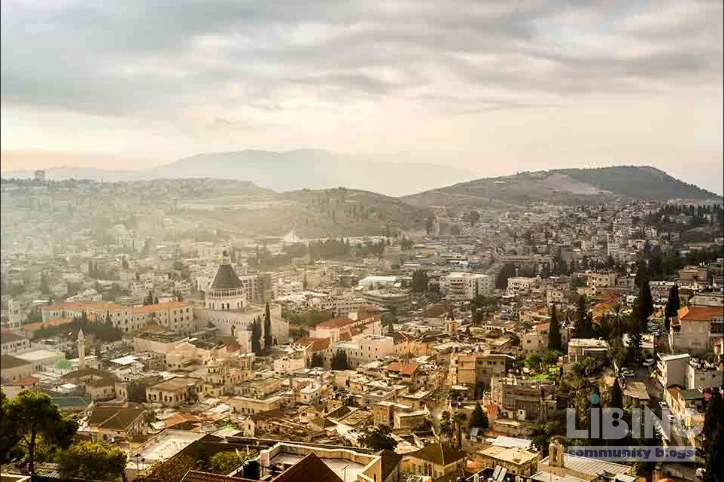
The life of Taha Muhammad Ali began in Saffuriyya, where the ordinary rhythm of daily life carried the weight of a map that would one day be erased. The 1948 flight, the destruction of a village, and the severing of a familiar ground created a rupture between the inner map and the outer world. The effect is not nostalgia but a persistent need to assemble meaning from fragments. In Ali’s poetry, such fragments become the material of a new moral grammar, where mercy is not a sentimental invocation but a structural principle—an inner discipline that maintains fidelity to human beings even when their stories are treated as collateral damage by power.
Analytically, mercy doubles as both constraint and prod. It constrains impulse—especially anger that would justify violence—and it produces a more durable form of resistance: a voice that refuses to let the other disappear behind an abstraction. The poem Revenge crystallizes this move. The opening wound—“a father killed, a house destroyed, a life crushed”—is not sensational; it is a prompt to test the limits of imagined retaliation. The speaker’s fantasy about retribution is allowed to rise, then gently overturned, as the imagined adversary is revealed to have a family and a life that would suffer in the act of killing. In that moment, mercy performs a political function: it decouples violence from inevitability and restores the humanity of the opponent, thereby preserving the moral horizon of the self.
From a terminological standpoint, mercy works in concert with terms like inner discipline, patience, and conscience, which recur as ethical anchors. The phrase patience is greater than resignation appears as a refrain that offsets despair with a disciplined calm. Mercy, in this frame, is a cognitive and ethical architecture: it requires attention to the other, a refusal to reduce the other to a stereotype, and a commitment to maintain a humane public language in the face of propaganda. The effect of this architecture is to make the political not merely a field of conflict but also a field of responsibility—the responsibility to imagine the adversary as another who has pain and vulnerability, not merely as an obstacle to power.
- The inner life is not a retreat from politics but a condition for sustainable political action.
- Language becomes a tool to reframe violence into a shared human condition.
- Memory is the infrastructure that keeps mercy legible when power seeks to erase context.
The analysis therefore locates mercy at the intersection of emotion and memory, where the moral imagination expands the possible responses to oppression. The poem’s tenderness is not naïve; it is a deliberate choice to widen the space in which justice can be discussed without surrendering one’s own humanity. This choice is the core of Ali's political genius: make mercy a political technique, not a decorative trope.
Contrast: Violence and the everyday as memory
Ali repeatedly juxtaposes the visceral brutality of dispossession with the quiet, almost sacred detail of daily life—the smell of coffee, the taste of figs, the quiet of a Nazareth shop. This contrast reveals a double truth: cruelty aims to hollow out the imagination, and mercy aims to protect its last guardrails. The outer world may desecrate land and body, but mercy preserves a lived, inner terrain where a person can still witness without becoming the instrument of their own dehumanization. In this sense, the poem’s everyday scenes become political art: they refuse to concede the erosion of everyday life to cynicism or despair.
The juxtaposition also tests the reliability of language under occupation. Ali’s Arabic is at once accessible and capacious, capable of carrying classical allusions (Cavafy, Seferis) and the Qur’anic cadence, while staying rooted in local memory. The reader witnesses a cultural polyphony—the village’s old map, the Nazareth shop’s shelves, the poet’s notebook—assembled into one argument: memory can outlive the violence that seeks to redefine it. This is not mere nostalgia; it is a method for keeping sight of human continuity when physical continuity collapses. Mercy, then, is also linguistic fidelity—the insistence that a language of care can outlast a regime’s insistence on fear as policy.
- Daily life becomes a canonical counter-memory to displacement.
- Cross-cultural literary dialogue enriches a local conscience with global sensibilities.
- Language acts as a shelter against the internalization of cruelty.
The moral contrast is not a call to passive moralism but to an active cultivation of tenderness in the face of injury. Ali’s stance complicates conventional narratives by proposing that mercy, while not absolving the crime, preserves the subject’s capacity to judge rightly and imagine a future that includes the other’s humanity. A reader emerges with a refined sense that gentleness is not weakness but a strategic resilience essential to sustaining political memory across generations.
Cause and effect: From dispossession to resilience
Dispossession in Ali’s biography is not a single event but a persistent condition that reframes cause and effect across decades. The 1948 displacement created a causal chain: rupture in land, disruption of social memory, and the lifelong task of reconstituting a meaningful self in a space that refuses to forget. The effect is not merely grief but a disciplined refusal to let grief become the only language available. In this sense, mercy becomes a driving cause: it generates the capacity to resist closing the heart, to resist turning pain into a monologue of grievance. The poem Revenge reads as a critical test of this principle: if anger determines action, a people loses a portion of its future; if mercy governs the contemplation of action, a future remains possible even when the present is brutal.
The causal chain extends to the present moment in Gaza. The modern resonance of Ali’s text lies in its prescient warning: cruelty can devastate cities, but cruelty that seizes the imagination risks eroding the spiritual center that sustains a people. The inner discipline that Ali models—guarding the heart against corruption, choosing tenderness, and speaking with moral clarity—offers a practical technology for political endurance. In this view, the present violence tests mercy not as denial of justice but as a form of truth-telling that refuses to confuse retaliation with moral legitimacy. The inner life becomes a strategic asset in a landscape where the outside world seeks to redefine the terms of humanity.
- Dispossession creates long shadows in memory and language.
- Mercy functions as a corrective to the reduction of the other to an enemy.
- The inner discipline is a form of political resistance with long horizons.
The result is a portrait of resilience that does not sugarcoat pain but channels it into a disciplined imagination capable of generosity toward the opponent. This is the root of the poem’s enduring force: mercy as a form of truthfulness that prevents the adoption of the logic of one’s oppressor. It is a claim about the possible moral architecture of national life, even under occupation and bombardment.
Expert reconstruction: Re-reading Revenge today
Adina Hoffman, in her meditation on Ali’s shop and its quiet library, notes how the poet treated listening and copying as acts of care. The notebook becomes a site where languages—Arabic, Greek, Slavic, and classical Mediterranean verse—converge. The expert reconstruction of Revenge after years of engagement with the poem suggests a method for reading under duress: pass through anger but settle on mercy as the ethical center. The poem’s paradox is that mercy does not erase justice; it reframes justice as a relation rather than a confrontation. When the speaker says, I would not kill him, the line does not absolve wrongdoing; it preserves a human boundary that keeps open the possibility of accountability that is not annihilating.
In today’s Gaza, the poem’s counsel has renewed relevance. The line between self-preservation and inaction becomes a precise diagnostic tool for activists, scholars, and ordinary readers. If cruelty seeks to inhabit the imagination, mercy seeks to inoculate it against the infection of dehumanization. The reconstruction is not about sentimentality but about a disciplined refusal to abandon moral law in the face of technological and bureaucratic brutality. The expert reading thus reframes the poem as a practical ethics manual for communities under siege, where the most radical action may be the continued practice of restraint and the stubborn maintenance of human dignity.
- Mercy as ethical infrastructure for memory and action
- Revenge as a moral experiment in restraint and accountability
- Literary memory as a weapon against political amnesia
The reconstruction, grounded in Ali’s archival habits and the poem’s careful syntax, shows how poetry can operate as a form of political literacy. It teaches that the strongest counter to cruelty is not irony or slogans but the steady, patient cultivation of a humane imagination that can still recognize the humanity of the other in the fiercest confrontation.
Closing Reflection
Ali’s life and work illuminate a paradox visible across generations of Palestinian writing: to survive humanly is to keep mercy alive as a cognitive and spiritual discipline. The Revenge poem teaches that tenderness is not a mere emotion but a form of truth-telling—truthful about loss, truthful about the capacity to choose life over fatal certainty. The present moment, with its ceaseless warnings and its calls to fear, demands exactly this discipline. If a single human being tends the flame of conscience, even in the bleakest hour, the possibility of a humane world remains. The memory of Saffuriyya and the endurance of a Nazareth shop become a methodological beacon for readers who seek a politics of care without surrendering the demands of justice.
As the lamp in Ali’s small room continues to cast its circle, the crucial question remains: how will a society translate mercy into policy, memory into action, and poetry into political practice? The answer lies not in heroic bravado but in the steady, disciplined work of keeping the heart intact while naming the truth of injustice with honesty and courage. In this way, mercy is not a retreat from struggle but a strategic stance that preserves humanity long after the smoke clears.
This addition closes a critical blind spot in the current reading: how mercy can translate from a moral ideal into concrete, actionable steps amid ongoing conflict. The following section targets practical pathways, scenarios, and tools that align inner discipline with public impact in today’s Gaza context, grounded in memory and care as political acts.
Closing the practical dimension: Mercy in action today
Mercy, in Ali’s frame, is not soft sentiment but a method for sustaining humane judgment under pressure. The pathways below translate that method into three actionable arenas: everyday acts that preserve dignity, deliberate language that prevents dehumanization, and civic projects that translate memory into policy. The aim is to show how memory, resilience, and careful speech can shape responses that are just, accountable, and humane.
Practical pathways for mercy in action
- Daily acts of care in neighborhoods under strain: neighborhood watch, mutual aid networks, and small rituals that affirm belonging. These acts multiply mercy into social resilience and reduce cycles of violence by creating trusted spaces where grievances can be acknowledged without escalating retaliation.
- Education and translation projects: classroom discussions, translated poetry circles, and youth-led storytelling that foreground empathy for the other. Such projects turn memory into shared understanding, not vengeance, and they build future-oriented civic language.
- Public dialogue and media literacy: community forums that analyze propaganda critically and train citizens to distinguish cruelty from critique. The result is a public sphere where humane public language counters dehumanization and fosters accountability.
Table: Mercy vs. Revenge in daily practice
| Concept | Mercy | Revenge |
|---|---|---|
| Inner discipline | Maintains humanity and prevents escalation | Often fuels retaliation and dehumanization |
| Public language | Careful, precise, accountable | Rhetoric amplifies anger and simplification |
| Memory | Keeps the other in view, not as enemy but as human | Renders memory a fuel for vengeance |
| Impact | Protects future possibilities | Locks in cycles of ruin |
Interpretation: the table renders mercy as social technology—an arrangement of care, language, and memory that expands political possibility rather than narrowing it to retaliation. When everyday life embodies mercy, communities can endure and imagine alternate futures even under pressure.
Memory as resilience
Memory sustains mercy by keeping vulnerable lives visible. In Ali's poems, daily kindness becomes counter-memory, a practice that preserves a humane horizon when the outer world seeks to erase context.
Mercy in practice: three-layer approach
- Daily life as memory
- Household care, neighborly sharing, and small rituals that wire resilience to social bonds.
- Language as durable ethics
- Translations, inclusive discourse, and refusal to reduce opponents to caricatures.
- Public action as accountability
- Education, dialogue projects, and journalism that foreground restraint and humane judgment.
In these concrete steps, mercy becomes a practical strategy that links inner life with outward responsibility, turning poetry into policy in small, tangible ways.
What is the central claim about mercy in Ali's poetry?
Mercy, in Ali's poetry, functions as a political technique that steadies memory and preserves humane judgment amid violence. It reframes justice, showing how restraint can prevent dehumanization and keep accountability within reach. This core idea recurs across poems like Revenge, where imagined retaliation is dissolved by the recognition of shared humanity. The direct claim is that mercy is not a retreat from justice but a disciplined method that preserves political possibility under pressure.
Analytically, mercy narrows the gap between emotion and action, aligning personal ethics with collective memory to sustain a humane political future.
How does the poem Revenge illustrate mercy as a political instrument?
Revenge stages a violent impulse and then unsettles it by revealing the oppressor as a person with a family and needs. The poem thereby shows that mercy can reframe justice as accountability rather than annihilation. This dynamic turns retaliation into a potential for truth-telling and restraint, preventing a cycle of reciprocal harm. It also foregrounds the ethical risk of treating an enemy as mere obstacle rather than a human interlocutor, preserving space for future negotiation or reconciliation.
In practice, this makes mercy a method for political restraint rather than a sentimental gesture.
What role does memory play in preserving humanity under occupation?
Memory functions as an infrastructure that keeps people and places legible to themselves. It prevents the erasure of history and supports a humane response when power seeks to erase context. In Ali's framework, memory binds the inner life to public justice, ensuring that performance of mercy remains credible and not a sop for oppression. This memory-work helps communities endure, organize, and advocate for policy that respects human dignity.
Thus memory is a practical resource for resilience, not merely sentiment.
How can readers translate Ali's mercy into contemporary activism?
The translation involves three steps: cultivate inner discipline to resist anger; articulate public language that foregrounds human dignity; and build memory-based initiatives—education, dialogue, documentation—that connect compassion to policy. Real-world examples include inclusive school curricula, community dialogue circles, and media literacy programs that counter dehumanizing narratives while holding power accountable. The aim is to move from lyric empathy to organized, sustained care that informs both action and policy.
This approach makes mercy a governance aid rather than a vague virtue.
What is the impact of daily life imagery on readers?
Daily life imagery anchors abstraction in tangible experience. The sensorial scenes of coffee, figs, and shopfronts convert political violence into shared human memory, making readers emotionally and morally available to the other. This anchoring helps audiences grasp the consequences of cruelty and the possibility of tomorrow built on ordinary acts of kindness. The effect is to widen the circle of responsibility and to encourage readers to act with care in conversations, classrooms, and communities.
In short, ordinary scenes become extraordinary prompts for humane action.
What insights does Adina Hoffman’s reconstruction offer for modern readings?
Hoffman’s work highlights listening and copying as acts of care, showing how multilingual layers in Ali’s notebook become a practical archive. The reconstruction teaches readers to read under duress by allowing mercy to stabilize interpretation, preserving accountability without erasing memory. For today, this means treating poetry as a tool for political literacy: a means to cultivate a durable public conscience that can withstand propaganda and sustain humane engagement across divides.





Add a comment
To comment, you need to register and authorize
Comments