

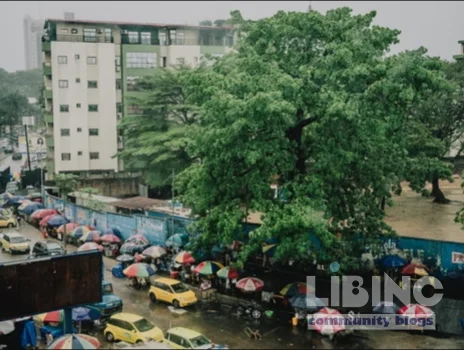
Kinshasa's Last Baobab: An Analytical Look at Urban Growth, Culture, and the Fight to Protect a Symbol
Analytics-driven view of Kinshasa's last baobab
Kinshasa's last baobab sits at the heart of a data-led disagreement about what the city should value as it grows. The megacity's trajectory is defined by a population surge (the city now hosts roughly 17.8 million people, with half under 22), a high demand for energy, and a land market that often values immediacy over long-term resilience. This section translates a complex urban ecosystem into actionable indicators that analysts and policymakers can track. It also flags the hidden costs of neglecting greenery in a city where climate risk compounds with informal settlements and flood-prone lines of transmission.
To understand the pressures on Kinshasa's green infrastructure, we examine four core indicators and their link to the baobab:
- Urban green space retention versus expansion pressure
- Energy mix and charcoal dependency as a driver of tree loss
- Public land governance and land transfers to private developers
- Waste management and flood resilience in flood-prone corridors
In practice, each indicator reveals a common pattern: as demand for land and energy rises, green assets lose priority unless protected by deliberate policy. A notable data point is the 2010 destruction of hundreds of leafy terminalia along Boulevard du 30 Juin, followed by a pledging of replanting that never materialized. This moment signals a systemic risk: even official pledges can fade when governance capacity and financial incentives align against ecological restoration. The last baobab thus becomes a litmus test for whether Kinshasa can translate statistical momentum into ecological preservation instead of substituting shade with construction debris.
LSI: urban green spaces, deforestation, energy mix, waste management, flood resilience. The dynamics of Kinshasa’s growth produce a feedback loop: more people require more housing and more fuel, which erodes the very green cover that could moderate the city’s heat and floods. The baobab’s fate illustrates this loop in real time, highlighting where data must translate into deliberate design choices rather than reactive approvals.
What follows is a more focused view of how these dynamics interact with the baobab’s immediate context: a plot adjacent to a state-owned ferry-port landholding, currently the site of contentious development plans. Activists describe a land-sale mechanism that privileges private gain over public memory and ecological function; officials acknowledge the tension but emphasize the city’s need to modernize. The analytic lens thus shifts from raw numbers to the decision points where policy can either entrench the status quo or reverse it through targeted, credible commitments to green infrastructure and heritage protection.
To structure the discussion in practical terms, consider four policy levers that analytics consistently flag as high leverage when green assets are at stake:
- Explicit green asset registries that link land rights to environmental protections
- Transparent land auctions with conditional protections for heritage trees
- Subsidized electricity expansion to reduce charcoal use and forest pressure
- Maintenance and enforcement of urban design standards that prioritize shade canopies
The analytics show that without credible governance reforms and credible enforcement mechanisms, even high-value symbolic assets like Kinshasa's last baobab may not survive the next cycle of development. The tree becomes both a symbol and a proxy for the quality of urban planning in a city whose essential challenge is not merely growth, but how that growth is organized, financed, and anchored in long-term communal memory.
Contrast: Kinshasa then and Kinshasa now
To grasp the baobab’s significance, it helps to compare two Kinshasas: the early modernist capital envisioned by planners in the colonial era and the sprawling, informal city that dominates today. The historical Kinshasa prized planned green spaces as civic assets; today, most green spaces vanish soon after a development permit issues. The contrast exposes a ruthless economic calculus: the city’s expansion priorities trump sound urban ecology unless a robust counterweight exists in policy and community action.
In the old order, a centerpiece tree could anchor social spaces—markets, prayer places, civic speeches—around which community identity gathered. The baobab near the ferry was once part of a fabric where commerce and ceremony coexisted with shade and respite. Now, the same location has become a site of contested frontage, where the land’s value in monetary terms eclipses its value in ecological and cultural terms. The contrasting trajectory is not merely about trees; it’s about who defines a city’s memory and who pays for its future shade.
Against this backdrop, the activists’ framing of the baobab as a symbol of Congolese culture aligns local values with global concerns about urban resilience. A century-old tree can stand for a people’s relationship to water, to trade routes, and to a coastline of memories—an anchor in a city whose river-borne identity is as vital as its road networks. The tension between heritage and market demand becomes a lens to examine governance quality, transparency, and the legitimacy of development choices in Kinshasa.
LSI: urban planning heritage, memory institutions, green infrastructure, resilience. The contrast also highlights a governance problem: with a population growing by about 730,000 people each year, Kinshasa’s capacity to protect symbolic assets must keep pace with demand for housing, markets, and transport corridors. If the baobab remains alone in a sea of concrete, it will symbolize not tradition preserved, but a failed balance between memory and modernization.
The contrast further underscores a basic projection: unless green spaces are integrated into the city’s growth strategy, modern Kinshasa risks losing not only trees but the social functions trees historically supported. When markets move to the perimeters of the baobab, and the land becomes a commodity rather than a shared resource, the city loses a critical buffer against heat, floods, and social fragmentation. The baobab’s continued survival depends on a rethinking of how land, energy, and memory intersect in decision-making processes that govern urban expansion.
Cause-and-effect: pathways from demand to deforestation
The structural causes of tree loss in Kinshasa run through a chain of supply and demand, governance gaps, and everyday choices about energy and waste. Each link in the chain reinforces the next, accelerating ecological erosion unless targeted interventions interrupt the cascade. This section traces four principal causal pathways from urban demand to the local fate of Kinshasa's last baobab.
- Urban population growth drives land-price inflation and accelerated land conversion to built form, often at the expense of green spaces.
- Electricity shortfalls push households toward charcoal for cooking and heating, placing a heavy extractive load on nearby trees and forests.
- Fragmented land governance enables land deals that prioritize private gain over public heritage protections, with state-owned land sometimes redirected to private developers.
- Lack of robust waste-management and flood-control systems converts green spaces into informal dumps, undermining both ecological and social resilience.
Each causal thread ripples outward. When charcoal use increases as electricity access is limited, the local tree cover bears direct pressure. When land governance fails to safeguard heritage assets, private interests leverage land deals to the detriment of cultural symbols. When green spaces disappear, flood risk rises, and vulnerable communities experience heightened exposure. The baobab thus becomes a focal point where these cause-and-effect dynamics converge, revealing where policy innovations can have outsized impacts.
LSI: deforestation, energy mix, charcoal demand, land governance, flood risk. The interplay among these factors underscores why piecemeal solutions fail: without linking energy policy, land rights reform, and urban design, even well-intentioned conservation efforts struggle to survive the next development cycle. A holistic approach—integrating energy access with green-space protection and transparent land governance—offers the best chance to preserve Kinshasa's last baobab while accommodating growth.
To illustrate the risk, consider the current situation: Onatra, the state-owned transport company that owns the land adjacent to the baobab, stands at the center of a land dispute. Activists allege the land was transferred to a private developer, a claim that Onatra has not publicly contested. If such transfers continue without clear environmental covenants, the baobab will likely lose its immediate setting to construction. The economic calculus of the land alone may overshadow the ecological and cultural costs unless governance mechanisms provide a credible counterweight.
Expert reconstruction: pathways and policy options
In Kinshasa, the struggle to protect the last baobab is as much about governance as it is about trees. Jean Mangalibi, founder of Autour du Baobab, frames the tree as a symbol with social and ecological functions that deserve stronger protection. The activists’ strategy blends public outreach, legal advocacy, and alliance-building with officials who acknowledge the symbol’s value but confront systemic obstacles. This section distills expert voices into pragmatic steps that can steer the city toward a more resilient future without sacrificing memory or ecological integrity.
From a policy perspective, four core actions emerge as high-leverage reforms that could stabilize Kinshasa's green heritage while supporting inclusive growth:
- Establish a transparent heritage-lands registry that links land rights to environmental safeguards, with penalties for noncompliance.
- Create a conditional-use framework for state-owned lands that prioritizes public-interest outcomes like historic preservation and ecological values.
- Accelerate grid electrification and subsidize clean-energy access to reduce charcoal dependency and its ecological footprint.
- Strengthen urban-design standards to preserve canopy cover and incorporate green corridors into new developments and along major arteries such as the ferry routes.
Local officials show candor about the challenge. Malicka Mukubu, head of the National Tourism Office, argues that conserving the baobab transcends aesthetics; it reinforces the strength of Congolese culture and national identity. She notes that the difficulty lies in mobilizing public officials who often view environmental concerns as secondary to immediate economic pressures. Her stance aligns with the activists' call for a governance upgrade—one that makes environmental considerations indispensable to development planning rather than optional add-ons.
Analysts also emphasize the need for participatory processes that include market actors, local communities, and environmental scientists. A credible plan would integrate risk assessments for flood-prone zones, energy-access maps, and land-use scenarios that reserve zones for heritage trees. The baobab’s protection would then be codified in binding measures, not rhetorical commitments. The moment for such a reform is now, before more assets—natural or cultural—fall to the next wave of concrete and commerce.
LSI: heritage protection, urban design standards, governance reform, participatory planning. The reconstruction of Kinshasa’s development model requires a shift from ad hoc permits to strategic planning—where memory, ecology, and growth reinforce each other rather than compete for attention. In practical terms, the last baobab offers a test case for how a megacity can balance cultural symbolism with the imperative of delivering services and jobs to a rapidly growing population, while preserving a living symbol of the city’s historical identity.
In closing, the fate of Kinshasa's last baobab is not simply about whether a tree survives. It is about whether the city can translate memory into policy, and policy into practice, so that urban expansion does not erase the ecological and cultural scaffolding that gives Kinshasa its voice. If the four pathways outlined here are pursued with discipline and transparency, the baobab can stand as a testament to a city that learns to grow without losing its roots.
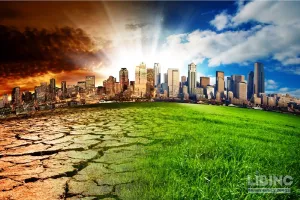
Inline visualization: relative decline of green space as construction rises. This simplified chart mirrors the narrative: growth often erodes canopy if not countered by policy.
Closing the governance gap: practical financing and accountability
To translate momentum into canopy protection and heritage preservation, Kinshasa must anchor growth in credible funding and enforceable commitments. A transparent heritage-lands registry links land rights to environmental safeguards and provides penalties for noncompliance, while conditional rights for state lands create legal room to secure public memory. Coordinated funding from public budgets, international donors, and private partners can bridge revenue gaps while keeping ecological values at the center. A governance dashboard—updated quarterly—offers real-time canopy metrics, energy-access progress, and land transfers, ensuring people see how decisions affect green spaces, flood resilience, and cultural memory.
| Option | Funding Source | Estimated Cost | Timeline |
|---|---|---|---|
| Heritage-lands registry | Public budget + donor funds | $20–40M | 2–3 years |
| Conditional-use covenants on state lands | Public finance + development partnerships | $10–25M | 1–2 years |
| Grid electrification subsidies | Energy programs + grants | $30–60M | 3–5 years |
Practical scenarios center on four actions: (1) codifying a clear canopy-preservation requirement in all land deals near the baobab; (2) tying land rights to environmental covenants with enforceable penalties; (3) accelerating grid electrification to reduce charcoal pressure; and (4) embedding canopy-friendly urban design standards in new districts. In each case, transparent reporting, community monitoring, and independent audits build legitimacy and reduce governance risk, turning data momentum into durable protection for green assets and memory.
| Scenario | Canopy Target | Flood Risk | Implementation Risk |
|---|---|---|---|
| Status Quo | 22% | High | Medium-High |
| Policy Upgrades | 28–30% | Moderate | Medium |
| Community-led Restoration | 32%+ | Low-Moderate | Medium-Low |
What practical steps can Kinshasa take to protect the last baobab?
Protecting Kinshasa's last baobab requires a deliberate, well-funded plan that translates memory into policy and action, including a transparent registry, binding land Covenants, and a clear timetable for electrification and canopy protection. These measures must be accompanied by public reporting, independent oversight, and a participatory process with local communities, developers, and scientists. The goal is to create a robust governance loop where each development decision considers ecological impact, cultural memory, and flood resilience, with concrete milestones and accountable ownership.
In practice, start with a registry of heritage trees tied to land rights, followed by conditional-use covenants on nearby state lands, and a phased electrification program that lowers charcoal demand, all monitored by a public dashboard with quarterly updates.
How would a heritage-lands registry work in practice?
In practice, a heritage-lands registry catalogs trees like the baobab alongside parcels, linking their protection to a set of environmental covenants and penalties for noncompliance. It requires a simple, auditable data model, a public portal, and legislative backing so that transfers, permits, and auctions trigger automatic checks for ecological safeguards and community consent. Regular audits and civil-society oversight ensure the registry remains credible and resistant to backsliding during development surges.
Which funding sources are viable for green infrastructure?
Viable sources include a mix of public budgets dedicated to climate resilience, international donors who fund urban ecology, and private partnerships that value long-term canopy protection. Blended finance can front-load canopy corridors, while performance-based grants release funds as measurable canopy and flood-resilience milestones are achieved. A transparent dashboard makes the return on these investments visible to citizens and lenders alike.
What role do communities play in governance for urban heritage?
Communities help define what memory and canopy mean in everyday life. Their roles include participatory planning, independent monitoring, and local watchdog functions that hold officials to commitments. By co-designing standards for green corridors and co-managing small grants for neighborhood tree-planting, residents translate ecological values into concrete defaults that guide developers and policymakers.
What indicators should be tracked to measure progress?
Core indicators include canopy cover, green-space retention, charcoal-use trends, grid electrification rates, and land transfers with environmental covenants. A governance dashboard should publish quarterly metrics, permit decisions, and risk assessments for flood-prone corridors, enabling timely course corrections and public accountability.
What timelines are realistic for adoption and outcomes?
Adoption of the heritage-lands registry and covenants can occur within 12–24 months, with electrification and canopy-restoration projects ramping up over 3–5 years. Long-term goals include reaching a 28–32% canopy target by 2030 and sustaining a high level of public trust through transparent reporting and independent audits.






Add a comment
To comment, you need to register and authorize
Comments