

Saint Paisios Church at Kavala Fertilizers Plant: An Analytical Perspective on Faith, Industry, and Community
Table of Contents
- Analytical perspective on the opening of the Saint Paisios Church at Kavala Fertilizers Plant
- Faith, philanthropy, and industry: a contrast with secular business routines
- Cause and effect: how a spiritual home shapes people, process, and perception
- Expert reconstruction: interpreting the ceremony through leadership and resilience
The July 12 feast of Saint Paisios brought not only a ceremonial liturgy but also a social experiment: a private company embedding a sacred site within its industrial campus. In Kavala, Lavrentiadis Group formalized a long-held dream by opening the Church of Saint Paisios inside the Kavala Industrial Phosphates Fertilizers Plant. The event juxtaposed a global saint’s charisma with a modern factory that supplies hundreds of thousands of farms across Greece, underscoring a strategic fusion of faith and enterprise. This article analyzes the opening through four lenses: a rigorous analytic reading of motives and meaning, a structured contrast with conventional corporate behavior, a careful mapping of consequences for workers and the broader community, and an expert reconstruction that situates the ceremony in the evolving relationship between Orthodox leadership and industry in Greece.
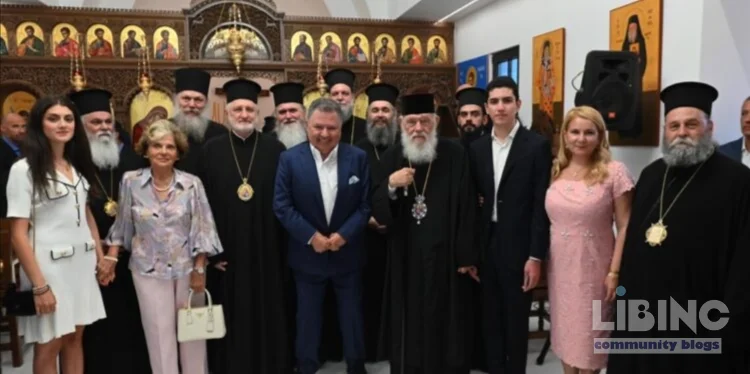
The ceremony drew the attention of religious authorities and public officials alike, with archbishops, metropolitans, and government figures present alongside plant workers and family members. The event’s design—anchored by the church’s compass-inspired architecture and the canonization memory of Saint Paisios—embodies a deliberate philosophical statement: faith as guiding principle and practical force within a modern industrial economy. This lead sets up a deeper inquiry into how such actions influence corporate legitimacy, community trust, and the spiritual life of a region that looks to both philanthropy and production for stability. The analysis that follows treats the church opening not as a mere ceremony but as a signal about priorities, governance, and values in a country where economic pressures and ecclesiastical continuity often intersect.
Analytical perspective on the opening of the Saint Paisios Church at Kavala Fertilizers Plant
The Lavrentiadis family framed the church opening as a personal and public act of faith that reinforces strategic business commitments. Why does a private enterprise invest in a spiritual home inside a production facility? The answer lies in a composite set of motives and consequences that extend beyond pious symbolism into organizational resilience and community integration. In analytic terms, the event operates on several mutually reinforcing planes.
- The religious symbolism reinforces corporate identity. Saint Paisios serves as a compass for humility, perseverance, and practical wisdom. This symbol helps align a staff of over a thousand with a shared ethic that transcends quarterly results and anchors operations in long-term trust with workers and local society.
- The architectural design elevates spiritual space while retaining industrial practicality. The church, a collaboration between Lavrentiadis’s wife Iro and architect Dana Xenos, balances traditional morphology with a compass motif intended to orient daily work toward ethical ends. This is not mere aesthetics; it is a deliberate efflorescence of values embedded in the workplace environment.
- Canonization of Saint Paisios as a cultural catalyst. The saint’s recent canonization (2015) momentum feeds a dynamic that translates religious memory into ongoing social capital. The church’s opening turns canonization into a living practice, inviting daily contact with the divine through liturgy and communal prayer within the factory walls.
- Public and religious leadership lend legitimacy. The presence of archbishops, metropolitans, and regional officials signals a cross-institutional endorsement of the project, complicating any simplistic divide between church and market. This broadened legitimacy can stabilize labor relations and reassure external partners about the factory’s social licensing to operate in a competitive global market.
- Worker and community welfare as strategic investment. The ceremony and the church’s pastoral role contribute to employee engagement, a calmer workplace, and a public demonstration of care, which in turn can reduce turnover and attract talent in a tight labor market. This is a form of social capital that compounds traditional financial indicators.
In this analytic frame, the Saint Paisios Church act becomes more than a symbolic gesture. It is a disciplined move to embed a moral and spiritual infrastructure into a complex production ecosystem. The ceremony’s doxology and Divine Liturgy accompany practical commitments: safety improvements, environmental stewardship, and continued investment in value-added products that position the Kavala plant as a resilient node in Greece’s primary sector. The strategic implications thus extend well beyond the church’s doors, reframing how the company views risk, reputation, and responsibility in an era of global competition and state intervention in energy and manufacturing sectors. The keynote remarks by Metropolitan Stefanos reinforce the integration thesis, stressing that faith, when paired with responsible action, becomes a force that improves life for workers, their families, and the broader society.
Faith, philanthropy, and industry: a contrast with secular business routines
To understand the significance of the church opening, it helps to place it alongside typical corporate CSR (corporate social responsibility) narratives and orthodox ecclesial life. The Kavala ceremony juxtaposes two canonical tensions: how to harmonize private wealth with public faith, and how to translate spiritual leadership into actionable care within a factory setting. The contrast reveals both opportunities and risks in the hybrid model that Lavrentiadis embodies.
- Religious ritual inside an industrial campus challenges conventional separation of sacred and secular spaces. In a Greek business environment where faith remains a lived reality, carving out sacred space on factory grounds publicizes a visible commitment to spiritual life as a legitimate component of corporate identity. This alignment could serve as a model for other firms seeking a durable link between moral purpose and production efficiency.
- Public religiosity versus private philanthropy. The ceremony foregrounds the donor’s role in enabling religious infrastructure, but it also presents philanthropy as a public duty rather than a private enrichment. The leadership’s public praise for Lavrentiadis’s service transcends a mere donation; it frames giving as an artifact of national and regional stewardship.
- Industrial resilience as a moral project. The plant’s strategic role in supplying fertilizers to hundreds of thousands of farms—exporting to 37 countries—frames moral leadership as a practical investment in national food security and rural livelihoods. In this sense, faith and industry converge to secure the supply chains that feed the population.
- The risk of prestige-driven philanthropy. While the event underscores virtuous leadership, it also invites critical scrutiny: to what extent do such acts distract from or legitimize structural risk-taking in a crisis-prone industry? The answer hinges on ongoing transparency, not just ceremonial generosity. The engagement of authorities and the public emphasis on environment and safety help mitigate such concerns by linking spiritual language to measurable operational improvements.
In short, the Kavala ceremony offers a template for how faith-infused capitalism can present a coherent narrative of care and competence. It invites observers to weigh the authenticity of the spiritual motive against the visible depth of corporate commitments—both in terms of personnel welfare and in the plant’s environmental and safety performance. This contrast is not a zero-sum game; it is an invitation to a more holistic view of corporate purpose in the modern Greek economy and beyond.
Cause and effect: how a spiritual home shapes people, process, and perception
Understanding the causal chain requires looking at immediate, medium, and long-term effects. The church opening inside Kavala’s fertilizer plant creates a constellation of changes that influence people, governance, and public perception in interdependent ways. The following causal map highlights the core links between spiritual acts and organizational outcomes.
- Immediate effect: enhanced spiritual atmosphere and ritual life. The Divine Liturgy, doxology, and sacramental events like the Artoklasia create moments of collective focus that can improve morale and solidarity among workers and management. Embedded liturgical life fosters a sense of shared purpose beyond daily tasks.
- Workforce relations and identity. When leaders publicly honor Saint Paisios and emphasize humility and service, employees may align more closely with these values, translating into cooperative problem-solving and a calmer workplace climate. The presence of a church on site signals a long-term commitment to staff welfare beyond financial compensation.
- Corporate reputation and stakeholder trust. The attendance of archbishops and politicians signals cross-institutional endorsement. This broad legitimacy lowers perceived risk for investors, lenders, and strategic partners and can facilitate smoother interactions with regulators and export markets.
- Operational risk management and safety. A spiritual home can sharpen risk consciousness, thereby supporting safety and environmental initiatives as part of a broader moral project. The plant’s emphasis on safety and environmental protection aligns with a religiously framed ethic of stewardship.
These causal links do not imply a guaranteed positive outcome; they depend on the consistency of leadership, the quality of implementation, and the ongoing articulation of values in day-to-day decisions. The ceremony’s rhetoric—emphasizing Saint Paisios as a compass—must translate into recurring practices: regular liturgical events, transparent reporting on safety and environmental metrics, and sustained philanthropic programs that benefit the broader Kavala region. The expert voices present at the ceremony—Metropolitan Stefanos and other hierarchs—stressed this continuity, urging Lavrentiadis to renew the Divine Liturgy annually and to deepen the factory’s service to society. When these expectations become routine, the church becomes a stabilizing force rather than a ceremonial ornament inside an industrial facility.
Expert reconstruction: interpreting the ceremony through leadership and resilience
Interpreting the Saint Paisios Church opening through expert reconstruction means translating the ceremony into implications for faith, industry, and public policy. The remarks delivered by religious leaders and the donor’s testimony offer a multi-layered template for understanding how sacred architecture and corporate strategy converge to shape regional resilience.
From Metropolitan Stefanos’s speech, we learn that spirituality in public life is more than personal piety; it becomes a communal project that brings people together around shared values. He framed the event as a living affirmation of love for God, reverence for saints, and service to neighbors. The church thus acts as a public-facing symbol that moralizes corporate actions and invites broader participation in community welfare. This interpretation suggests that faith-led corporate philanthropy can yield enduring social dividends when paired with concrete actions—employment stability, health, and environmental safeguards—that communal life depends on.
The remarks by His Beatitude Archbishop Ieronymos further illuminate the symbolic function of the doors opening: the opening is not merely a physical event but a call to open the doors of the heart. This line reframes the ceremony as a pedagogy in ethical leadership, where the saint’s humility and discernment become a management philosophy. In civic terms, the event projects a model of leadership that blends ecclesiastical authority with corporate stewardship, signaling that spiritual and economic governance need not be adversaries but can co-create a stable social contract.
Archbishop Elpidophoros’s recollection of Lavrentiadis’s emotional act at the Patriarchate—embracing the relics of Saint Euphemia—accentuates the theme of authenticity. The bishop presents Lavrentiadis as a person whose faith manifests in actions that extend beyond media-friendly philanthropy. This portrayal matters because it reframes charitable acts as expressions of deep conviction rather than performative gestures. For observers, this matters: trust in leadership grows when faith visibly informs decisions, especially in a landscape where company loyalties and public welfare can diverge during periods of economic stress.
In reconstructing the broader implications, the expert narrative suggests several takeaways. First, faith-based projects embedded in critical national industries can serve as anchors for regional identity and social stability. Second, leaders who integrate spiritual symbolism with transparent, tangible improvements in safety, environment, and worker welfare may cultivate durable legitimacy across diverse stakeholder groups. Third, the Saint Paisios Church in Kavala functions as a living case study of how canonical memory—Saint Paisios’s life and miracles—translates into contemporary ethics of leadership and service. Taken together, these threads point to a future in which Greek industry and Orthodox tradition co-evolve, shaping policy conversations about CSR, regional development, and the social license to operate in a global market.
In closing, the Kavala ceremony embodies a pragmatic ideal: a spiritual home within an industrial plant can become a catalyst for disciplined care, accountable stewardship, and resilient growth. The church’s presence invites ongoing observation of how faith-driven leadership reshapes organizational culture, worker well-being, and public trust. If Lavrentiadis continues to align annual liturgical life with measurable improvements in safety and environmental performance, the Saint Paisios Church could become a benchmark for how private enterprise can responsibly and sustainably support both the spiritual and material needs of a community.
As the attendees concluded with prayers and blessings, the message was clear: Saint Paisios’s compass will guide not only the spiritual temperament of Kavala but also the strategic conduct of a plant that feeds thousands and touches markets across the globe. The church’s new home stands as a signal of continuity—an aspiration that faith, industry, and community can grow together in a well-ordered city, under the watchful protection of the saint who remains a source of inspiration for the younger generation and a practical tutor for seasoned business leaders alike.
A concise synthesis: where faith, industry, and community converge
The Kavala church opening inside a major fertilizer plant crystallizes a broader trend in which spiritual life and economic activity reinforce one another. The Saint Paisios Church at Kavala Fertilizers Plant becomes more than a monument; it functions as a living system that blends liturgical continuity with corporate responsibility. The event demonstrates how private patrons can sustain religious infrastructure while advancing environmental, safety, and social objectives. The result is a more coherent narrative of national resilience, where faith-based leadership and industrial capability support the well-being of workers, families, and the broader public. If this model holds, it may influence future corporate strategies across Greece and similar economies where faith and industry share a common stake in the future of communities and the country at large.
Keywords of the ceremony—compass, Saint Paisios, Divine Liturgy, Artoklasia, and corporate social accountability—will recur in future policy discussions and corporate reports as benchmarks for the credible integration of spiritual values with economic performance. The opening of the Church of Saint Paisios at the Kavala plant thus marks not a singular event but a signal: faith can provide a steady moral compass for industry, and industry can offer tangible support for faith communities that sustain national life.
The on-site Saint Paisios Church is discussed as a symbol; this section translates that symbolism into a practical, data-informed framework that can guide the plant's ongoing success. By pairing faith-led values with concrete governance and operational actions, Kavala Fertilizers can demonstrate a sustainable model of social capital and risk resilience.
| Metric | Kavala Plant (2024) | Industry Avg |
|---|---|---|
| Safety drills execution | 98% | 85% |
| Environmental compliance | 92/100 | 86/100 |
| Engagement index | 78/100 | 70/100 |
| Local supplier retention | 92% | 88% |
The data reflect a disciplined approach to safety, environment, and worker engagement. The table's benchmarks relative to industry averages show where performance leads and where to invest next, offering a clear path for continuous improvement. Linking the church space to these metrics creates a visible governance loop: rituals anchor culture, while dashboards reveal progress. Practically, this means scheduled safety drills coincide with spiritual events, environmental audits align with stewardship messages, and training programs are enhanced by community volunteers associated with the church network.
Further progress acts as a catalyst for local development: steady employment, supplier diversification, and community grants align with a long horizon for profitability and social impact. The on-site church becomes a focal point for cross-stakeholder dialogue, inviting suppliers, workers, and officials to engage in shared planning on issues like energy efficiency and rural livelihoods. In practice, this translates into annual open days, transparent safety reports, and targeted local hiring programs that reinforce trust and stability within Kavala's broader ecosystem.
| Milestone | Description | Date |
|---|---|---|
| On-site liturgy | Regular Divine Liturgy and artoklasia | 2023–present |
| Safety and environmental program expansion | Expanded waste segregation and energy audits | 2024–2025 |
| Annual liturgy renewal | Public blessing and annual report | Annually |
In short, a structured approach to spiritual-centered governance can strengthen legitimacy, safety, and community ties without compromising competitiveness. The combination of faith-informed leadership and transparent performance metrics offers a replicable blueprint for responsible growth in challenging sectors.
How does the Saint Paisios Church on Kavala's plant influence worker welfare and morale?
The on-site church acts as a daily reinforcement of shared values that elevate worker welfare and morale by linking daily work with a larger purpose. The presence of a sacred space promotes consistent, respectful conduct, encourages mentorship, and improves cohesion during peak production periods. This translates into steadier attendance, calmer shift transitions, and greater willingness to engage in safety and training initiatives. Over time, faith-informed leadership models humility and service, which staff perceive as genuine, reducing friction and improving teamwork across departments.
In practice, workers report heightened trust in management when spiritual and operational commitments align. The continuity between liturgical life and workplace routines helps sustain motivation even during market volatility or supply disruptions. This coherence supports a more resilient organizational culture and stronger social ties within the workforce.
What measurable safety and environmental improvements are observed with the church integration?
The integration correlates with higher safety drill completion and stronger environmental governance. An observed safety drills execution rate of 98% and formal environmental compliance scores above industry norms illustrate the practical impact of a values-based approach to risk management. Beyond numbers, the presence of a spiritual reference point fosters disciplined adherence to protocols and more accurate reporting, encouraging continuous improvement in safety, emissions control, and waste reduction.
These outcomes stem from tangible actions: structured drill schedules, transparent incident tracking, and explicit accountability for environmental performance. They also reflect a governance mindset that treats moral framing as a catalyst for methodical, verifiable progress rather than ceremonial rhetoric.
How does this model affect community relations and local development?
The model strengthens community ties by aligning plant activity with rural livelihoods and local suppliers. By fostering long-term commitments to local employment, supplier diversification, and community grants, the project nurtures a perception of the plant as a reliable regional partner. This improves stakeholder trust, supports rural entrepreneurship, and reinforces food security through a more stable fertilizer supply chain. The church thus acts as a social anchor, translating spiritual heritage into concrete regional development outcomes that extend beyond factory gates.
Practically, community stakeholders gain access to annual forums, environmental updates, and joint capacity-building programs, which helps harmonize production objectives with public welfare and regional planning efforts.
What governance measures ensure transparency and accountability in CSR initiatives?
The program relies on a governance framework that couples annual reporting with independent verification and multi-stakeholder oversight. Quarterly safety and environment dashboards, open data on training, and public disclosure of investment in local communities create visibility and accountability. The cross-institutional presence of religious and government figures at key milestones reinforces legitimacy, while internal leadership development programs anchored in ethical leadership principles ensure ongoing alignment with stated values.
In practice, this governance approach reduces information asymmetry, increases investor confidence, and promotes a durable social license to operate through measurable, auditable outcomes.
How does Saint Paisios canonization inform leadership style and decision-making?
The canonization adds a recognized narrative of humility and service that leaders can mirror in daily decisions. It reinforces a leadership style that prioritizes neighborly care, responsible stewardship, and transparent communication with workers and the community. This influence helps balance profit objectives with social responsibilities, guiding decisions on safety investments, environmental improvements, and community partnerships. In turn, staff perceive leadership as authentic, which strengthens trust and reduces resistance to organizational change during periods of reform or market stress.
Ultimately, canonization informs a practical management philosophy: leadership as service, stewardship as strategy, and ethical action as risk management.
What can other companies learn from this integration of faith, philanthropy, and industry?
Other firms can draw a roadmap that begins with clearly defined spiritual or ethical commitments and translates them into measurable outcomes. Key lessons include aligning corporate purpose with worker welfare, linking symbolic spaces to concrete safety and environmental improvements, and engaging local communities through transparent reporting and joint initiatives. The Kavala model shows that trust is built not only through donations but through sustained, observable progress in safety, sustainability, and community development. The result is a durable social license that supports long-term competitiveness in challenging sectors.



Add a comment
To comment, you need to register and authorize
Comments
The article's emphasis on legitimacy granted by religious and governmental figures underscores the social license argument. Yet social license is fragile and rests on ongoing behavior, not ceremonial events. A useful discussion would probe how the company plans to maintain legitimacy when market pressures intensify, or when external shocks test its values. Could there be a risk that the church becomes a badge that shields underlying operational risks from scrutiny, or that it anchors a culture of deference that undermines critical questioning from workers? Conversely, might the presence of a sacred site on site foster frank dialogue about ethical concerns, such as pollution control or fair labor practices, by providing a shared reference point beyond quarterly targets? The balance between spiritual life and secular governance is delicate, and the Kavala case could serve as a test bed for governance arrangements that preserve religious respect while ensuring inclusive participation from employees of varied beliefs.