

Eight-Year Enlistment as a Strategic Bet for Space Force Talent: An Analytical Review
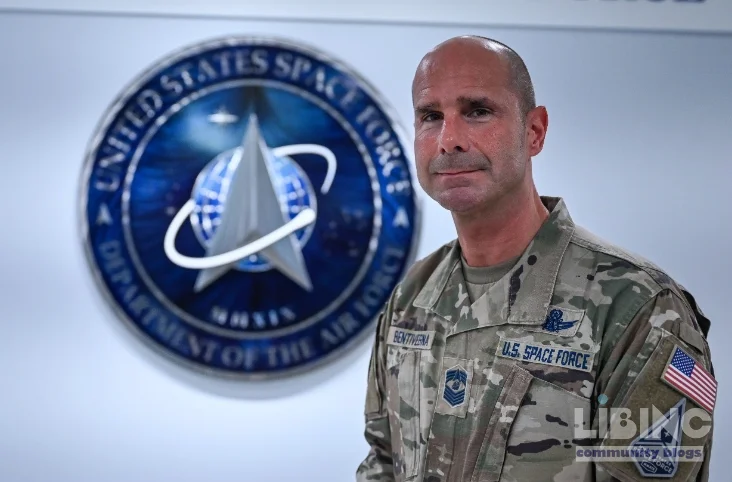
The Space Force's Initial Enlisted Bonus Pilot marks a bold experiment in structural change. It offers a $25,000 eight-year enlistment bonus to new guardians, running from July 1 to November 30, capped at 100. The incentive applies across specialties, reflecting a belief that the service must grow deep, technically proficient talent in space operations, cyber, and intelligence. Chief Master Sergeant John Bentivegna frames the move as feasibility testing for an eight-year enlistment model that could slow attrition and deepen expertise. Yet it remains uncertain whether cash alone will bind talent away from lucrative civilian opportunities, or whether longer contracts will align with the lengthy and demanding training pipelines these fields require. This analysis probes the program's design, likely impact on readiness, and the structural barriers that could limit its payoff.
Analytical view: Eight-year enlistment feasibility and ROI
Why weigh an eight-year enlistment now? The Space Force faces a rare mix of high technical demand and the need to grow a talent pool calibrated for a precision mission set. The pilot targets guardians across three core fields—space operations, cyber, and intelligence—where the training curve runs steep and the qualification bar is high. The eight-year horizon is designed to align investment in schooling, security, and on-the-job growth with a longer payoff in mission readiness. Because only a subset of enlistees will move into the most technically demanding roles, the program's ROI depends on throughput and effective career development that keeps graduates in uniform beyond initial certification. In short, the endeavor tests whether extended commitments can yield the depth of expertise the mission requires.
The pilot runs from 1 July to 30 November, and the first-come, first-served approach distributes a $25,000 bonus to enlistees who accept an eight-year contract, up to a cap of 100. The incentive applies across specialties, underscoring a system-wide test rather than a niche experiment. Training durations vary by specialty but can extend into the first two years, creating a prolonged ramp to qualified status. This longer commitment requires careful alignment of retention projections with the cost of training and the probability of attrition given a competitive civilian market.
- Time-to-qualification duration
- Training investment vs retention payoff
- Industry competition for space-domain talent
- Throughput of technical schools and pipelines
The Space Force emphasizes that the eight-year model goes beyond a simple stipend. Three major career fields—space operations, cyber, and intelligence—drive the complexity of qualification and the security filters that shape who can advance. The cap on bonuses and the scale of the pilot imply limited immediate effect, but the model will reveal how much the service can lean on non-cash elements—career ladders, challenging assignments, and agile schooling—to sustain a high-skill force over a longer horizon.
Contrasts: Eight-year enlistment incentives vs legacy norms
Cash bonuses attract attention, but incentives alone rarely cement long-term service. The eight-year enlistment model sits alongside deepened career development paths, structured progression, and mission-identity benefits that industry rarely matches. The Space Force must balance the lure of immediate pay with the need for a credible, multi-year career arc that sustains mastery in space operations, cyber defense, and intelligence.
The Edwards AFB 40-hour master’s degree program, available to 24 guardians annually, provides a signal that the service seeks to pair incentives with meaningful professional growth. While the opportunity enhances retention prospects, it also reveals the complexity of the eight-year model: the service must ensure that training pipelines remain open to sustain throughput rather than bottlenecking the force. Cash alone cannot substitute for the sense of purpose and advancement offered by advanced schooling and challenging assignments.
As in any high-skill sector, the civilian space domain draws talent with lucrative offers in launch systems, data analytics, and mission design. The eight-year model thus pits cash incentives against opportunity costs, raising questions about retention curves and the willingness of guardians to forego shorter-term civilian gains for longer-term service. This tension forms the crucible of the program's viability.
Cause and effect: Linking training timelines, clearances, and manpower outcomes
Longer contracts require longer, more expensive preparation of guardians, delaying full deployment into critical units. The eight-year horizon shifts the service's manpower calculus from quarterly or annual staffing to multi-year trajectories that complicate budget cycles, performance metrics, and readiness planning. Without commensurate throughput, the plan risks undercutting its stated aims.
The Top Secret/Sensitive Compartmented Information clearance pipeline emerges as a key bottleneck. Every enlisted member must pass a single school background investigation; delays in clearance translate into cascading gaps in staffing and readiness across space operations, cyber, and intelligence. The result is a fragile link in the chain where training and certification can't deliver results if the security apparatus blocks access to the field.
From a policy vantage, the cap of 100 bonuses and the small size of the Space Force's force structure complicate the math. If the eight-year path yields a modest retention boost, the service still must absorb the opportunity costs of delayed availability for mission-critical roles and the risk that early eight-year enlistees exit during the growth phase. The net effect on readiness remains uncertain until the pilot yields robust data on churn and progression after certification.
Expert reconstruction: Leadership implications and future scenarios
Bentivegna frames the program as a deliberate investment in guardian experience rather than a Faustian cash bargain. The focus on challenging assignments, a clear path to noncommissioned officer status, and access to advanced schooling—like the Edwards AFB master’s program—aim to deepen retention beyond the paycheck. This expert reconstruction suggests that mastery curves, not merely compensation, drive commitment in such a specialized workforce.
The model's success also depends on scalable training pipelines, cross-training opportunities, and a clear long-term plan that translates eight-year commitments into meaningful career ladders. If not managed, the scheme risks depleting the civilian market's interest in guarding technical roles and inviting misalignment between workforce supply and defense needs. The Space Force will need to demonstrate that eight-year terms translate into measurable readiness gains.
Looking ahead, an eight-year enlistment could yield deeper expertise in orbital mechanics, space resilience, and cyber defense, provided the service can maintain throughput and reduce bottlenecks. If the model shows durable retention and accelerated skill development, policymakers may adopt longer terms as a standard. Conversely, persistent bottlenecks or poor alignment with mission demands could confine the pilot to a limited footprint, compelling a revision of incentives and training workflows.
Ultimately, the eight-year enlistment pilot tests a central premise: long-term commitments are valuable only when training, screening, and career pathways align with mission needs. The Space Force's ability to translate a large upfront incentive into durable capability rests on throughput, clearance efficiency, and compelling professional trajectories that keep guardians serving beyond the initial years.
Closing the clearance throughput challenge: practical steps
Among the constraints shaping the eight-year enlistment pilot, the clearance pipeline stands as the decisive gate. Even with a robust incentive, progress toward qualification hinges on timely access to sensitive information, which in practice slows onboarding, school enrollment, and unit deployment. If the service cannot move candidates through background checks, adjudication, and access approvals quickly enough, the longer contract loses its appeal, since trained guardians remain tied to administrative processes rather than operating in critical units. To make the model viable, leadership should treat clearance as an operational milestone to be aligned with schooling, not a separate hurdle. This requires coordinated staffing, parallel processes, and a data-driven view of throughput.
| Stage | Typical Time (weeks) | Bottleneck | Mitigation | Readiness Impact | Notes |
|---|---|---|---|---|---|
| Candidate screening | 2–3 | Background checks queue | Parallel intake | Moderate | Sets pace for all follow-ons |
| Clearance initiation | 1–2 | Initial adjudication workload | Pre-briefs and expedited queues | Moderate | Crucial for early schooling slots |
| Technical schooling | 8–12 | Class capacity | Expanded cohorts | High | Directly ties to skill buildup |
| Specialty qualification | 12–24 | Hands-on slots | Cross-training and flexible cohorts | High | Credentialing pace matters |
| Final clearance | 4–6 | Adjudication backlog | Dedicated lines | High | Delay can slow deployment |
| Unit onboarding | 2–4 | Seat availability | Reserved slots for eight-year cohort | Moderate | Ring-fenced positions improve throughput |
| Deployment and retention | Ongoing | Attrition and requalification needs | Retention programs and career ladders | High | Sustains field capability |
The takeaway is clear: faster clearance processing amplifies the value of the eight-year enlistment by turning upfront schooling and assignments into real, on-force capability. When clearance and onboarding move in sync with training pipelines, the eight-year model can yield meaningful gains in space operations, cyber defense, and intelligence readiness. Conversely, any sustained delay in access to sensitive work reduces the payoff of the tuition-like investment in human capital and may erode retention incentives over time.
To operationalize this, leadership can implement a staged plan: (a) create parallel intake streams that begin schooling while clearance is underway, (b) reserve class slots for eight-year entrants to prevent bottlenecks, and (c) deploy a real-time dashboard that flags any emerging delays and redirects resources. These steps transform a funding signal into a durable capability, not merely a one-time payment.
- Standardize and accelerate background investigations
- Reserve eight-year cohorts in training pipelines
- Parallel track schooling and clearance updates
- Incentivize retention through career ladders and advanced schooling
- Adopt data-driven dashboards to monitor progress
What is the eight-year enlistment pilot in Space Force?
The eight-year enlistment pilot is a targeted program offering an upfront $25,000 bonus to new guardians who commit to an eight-year term across core fields such as space operations, cyber, and intelligence. The pilot runs from July 1 to November 30 and is capped at 100 participants. The objective is to test whether a longer commitment, coupled with enhanced schooling and challenging assignments, can yield deeper technical expertise and lower attrition in a high-demand, mission-critical domain. This approach treats compensation as part of a broader talent-development strategy rather than a simple cash incentive.
Analytically, the model seeks to balance upfront costs with deeper capability and longer-term readiness. It places emphasis on training pipelines, career progression, and secured access to sensitive work, while acknowledging that external market conditions and clearance delays can dilute potential gains. If successful, the pilot could inform broader personnel policy around multi-year terms and enhanced education for hard-to-fill roles in space operations and cyber defense.
How does the $25,000 bonus work with the eight-year term?
The $25,000 is awarded to eligible enlistees who agree to an eight-year contract at the time of enlistment. The incentive is subject to a cap—100 participants—and is tied to successful entry into the specified career fields. This means the payout is not a general across-the-board stipend; it is contingent on meeting program requirements, including staying for the entire eight-year period and progressing through the designated schooling and qualification milestones. In practice, this turns a cash offer into a commitment aligned with long-term skill development.
From a strategic view, the payoff is framed as part of a broader retention equation: cash plus a defined career ladder, access to advanced schooling, and targeted assignments that together create a compelling value proposition for guardians to remain in uniform beyond initial certification windows.
Why is clearance processing a central factor for success?
Clearance processing governs when a trainee can access sensitive material, start advanced schooling, and join critical units. If the timeline for background investigations and adjudication stretches beyond training windows, eight-year enlistees might not reach the field when needed, undermining readiness and diminishing the perceived value of the longer commitment. Efficient clearance becomes a multiplier, enabling faster qualification, more timely deployments, and stronger alignment between training timelines and mission requirements.
Analytically, the bottleneck in adjudication can erode the ROI of the incentive program. Reducing delays through parallel processing, pre-clearance preparation, and dedicated adjudication lines can translate into measurable gains in throughput and overall force capability.
What are the expected effects on readiness and retention?
Expected effects hinge on throughput, retention, and the quality of career pathways. If eight-year enlistees complete training and enter critical units with minimal disruption, readiness improves because a higher proportion of trained personnel are available when needed, not just in concept but in practice. Retention should rise when guardians perceive a credible longer-term path, including opportunities for advanced schooling and leadership roles. However, if bottlenecks persist, the perceived value of an extended commitment may diminish, and churn could rise among early eight-year entrants.
From an analytics standpoint, tracking milestone completion, unit deployment timing, and subsequent promotion rates will provide signals on how well the model translates into durable capability.
What steps can improve the program’s outcomes in practice?
Key steps include parallelizing hiring and clearance processes, reserving training slots for eight-year cohorts, and building a cross-trained pool of instructors to avoid single-point bottlenecks. Additionally, reinforcing the link between education, assignments, and career ladders creates a coherent value proposition for guardians to stay longer. Finally, implementing a real-time metrics dashboard helps leadership detect slowdowns early and reallocate resources quickly.
These steps, when combined with the eight-year incentive, create a practical, data-informed approach to building deeper expertise in space operations and cyber defense while maintaining readiness across the force.
How will the Space Force measure success and when will decisions be made?
Success will be measured by throughput efficiency, time-to-qualification, retention rates beyond the initial years, and observable readiness improvements in core domains. The pilot’s short-term data (cycles within the first year) will inform whether to scale the program or adjust terms. Long-term decisions will rely on longitudinal analyses of deployed capability, mission outcomes, and the cost of training versus the value generated by enhanced skill depth. Until robust results emerge, managers will likely refine the process, not abandon the concept.






Add a comment
To comment, you need to register and authorize
Comments