

Note to the reader: This report analyzes a coordinated ecumenical outreach during wartime, focusing on religious freedom in Ukraine and the shift toward pluralism amid ongoing aggression. The exchange brings together international faith actors and state authorities to examine how spiritual life adapts to conflict, sanctions, and political pressure, while preserving fundamental rights and dignities for all communities.
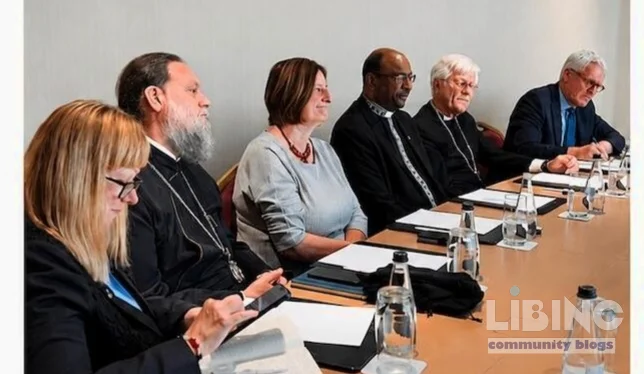
The ongoing war has pressed religious freedom to the foreground of national resilience. A delegation from the World Council of Churches (WCC) met with deputy head of the Office of the President Olena Kovalska and head of the State Religious Service Viktor Yelensky to discuss war, peace initiatives, and the status of religious freedom in Ukraine. The dialogue, described as frank and open, signals a deliberate attempt to anchor faith-based diplomacy within a broader strategy of unity, reconciliation, and justice. The lead question for policymakers and faith actors alike is simple yet consequential: how can a society under siege sustain genuine pluralism without compromising sovereignty or compromising security?
From the outset, the WCC leadership framed the encounter as a step toward solidarity with communities facing dislocation, trauma, and interruption of daily life. The delegation’s emphasis on speaking against war and pleading for dialogues for peace aligns with ecumenical traditions that view religion as a potential bridge for reconciliation, not a tool of division. Yet the same message carries a hidden complexity: in wartime, even universal values such as religious freedom must be weighed against national security demands and the imperative to protect vulnerable groups from opportunistic manipulation by armed actors.
In this analytic piece, the four blocks below unpack what the WCC visit reveals about religious freedom in Ukraine, how the exchange aligns with and challenges existing policy, and what it portends for future faith-based diplomacy. The goal is to move beyond a descriptive account toward a structured assessment of causes, effects, and practical recommendations for sustaining pluralism under pressure.
Analytics perspective on the WCC visit
From an analytics standpoint, the visit is best understood as a data point in a broader pattern of international religious diplomacy intersecting with wartime governance. The key actors — Kovalska, Yelensky, and WCC leaders Pillay and Bedford-Strohm — articulate a shared frame: war does not justify coercion of believers, nor should it erase the possibility of constructive dialogue across confessional lines. The emphasis on peace initiatives and on safeguarding freedom of religion is not merely humanitarian rhetoric; it signals a potential alignment between state policy and ecumenical expectations about justice and accountability.
Religious freedom in Ukraine, as discussed in Kyiv, is presented as a pillar of national resilience and an indicator of more inclusive governance. This is not a neutral value; it carries institutional implications for how laws are interpreted, how religious communities interact with the state, and how civil society interrogates the response to aggression. The WCC’s openness about challenges — including political instability and governance concerns — illustrates a nuanced understanding that faith-based diplomacy operates best where there is frank assessment of risk, transparency in intent, and a willingness to confront uncomfortable topics in public. The result is a pragmatic blueprint for how international faith networks can contribute to peace without replacing national sovereignty or censoring legitimate security concerns.
Two analytical pivots emerge from the dialogue. First, the visit foregrounds a long-standing WCC stance that violence cannot yield durable solutions, and that peace requires sustained dialogue that includes religious actors. Second, the Ukrainian leadership makes transparent a set of red lines around sovereignty and territorial integrity, while signaling a commitment to protect religious liberty for all communities, including those historically associated with the Ukrainian Orthodox Church. These pivots are not accidental; they reflect an interplay between global ecumenical norms and local policy priorities in a country under existential stress. The analytical question is how these tensions resolve when translated into concrete policy and practice on the ground.
Why this matters: the compatibility of religious freedom with wartime governance underlines a risk-reward calculus for the Ukrainian state. The reward is enhanced legitimacy and resilience if pluralism is nurtured, while the risk is potential polarization if policy is perceived as favoring one ecclesial lineage over others. The WCC’s call for peace dialogues and its insistence that religious freedom be protected bear directly on how Ukraine manages church-state relations during the next winter and beyond. In short, the analytics point toward a policy path that privileges pluralism while maintaining robust protections against religiously motivated manipulation in conflict contexts.
Rhetoric versus reality: a contrast
The public rhetoric around religious freedom in Ukraine emphasizes pluralism, sovereignty, and the dignity of every church, including the Ukrainian Orthodox Church. This framing is essential for communicating a resilient national identity in the face of invasion and for signaling to international partners that Ukraine intends to preserve pluralistic space even as it defends its territorial integrity. However, the real test lies in the practical implementation of this rhetoric within law, enforcement, and everyday religious practice.
On one side, Yelensky’s remarks draw attention to the distinct religious landscape of Ukraine — a mosaic that has been described as religious pluralism rather than mere diversity. The distinction matters because pluralism implies not only the coexistence of different faith communities but the active cultivation of interfaith cooperation, mutual respect, and institutional accommodations. Yelensky’s insistence that none of Ukraine’s churches will be impeded in their religious freedom, including those linked to the Ukrainian Orthodox Church, signals a policy intention to bridge divides rather than to privilege one community over another. This stance helps preserve international confidence in Ukraine’s commitment to human rights and minority protections, even as the state navigates wartime security concerns.
Yet, the contrast becomes sharper when one considers the domestic political economy of religion during war. The disclosure that Russia has attacked or damaged more than 800 church buildings and killed over 80 clergy members is a stark reminder that faith communities are not insulated from violence. The government’s response — including enforcement of religious protections under the law on the protection of the constitutional order in the field of religious organizations — must balance safeguarding freedoms with preventing the exploitation of religion for political ends. In other words, rhetoric must translate into robust safeguards against coercive practices, discrimination, and propaganda that could destabilize social cohesion during the crisis.
From the WCC perspective, the contrast also highlights how faith-based diplomacy can help or hinder domestic policy depending on how inclusive, transparent, and consistent the approach is. When the WCC states its readiness to walk with communities toward peace, it creates a normative pressure on national authorities to demonstrate tangible equal rights for all faith groups. If that pressure remains aspirational, the narrative may erode into political theater. If, conversely, it translates into practical protections, it strengthens both the rule of law and the legitimacy of Ukraine’s pluralist aims in the volatile security environment.
The key question in this contrast is not whether pluralism is desirable, but how to realize it in policy. The WCC’s framing makes a persuasive case for religious freedom as a cornerstone of democracy under siege, yet it also exposes the fragility of pluralism when institutions are strained by external aggression. The Ukrainian government’s response should therefore be to anchor religious pluralism in enforceable protections, clear guidelines for church-state relations, and continuous monitoring of human rights compliance in the religious sphere. This is how rhetoric matures into governance that can withstand winter pressures and geopolitical shocks.
Causes and consequences for religious pluralism
The war is a powerful disruptor of social norms, and it accelerates changes in how religious groups organize, cooperate, and communicate. The discussion around the law on the protection of the constitutional order in the field of religious organizations is central to understanding these changes. The law’s focus on safeguarding the integrity of Ukrainian identity while addressing the role of foreign-backed churches in occupied territories reframes the policy debate around religious freedom as a national security concern without stripping it of rights-based protections.
Two causal threads warrant close attention. First, the ongoing aggression against Ukraine elevates the role of religious groups as potential vectors for social resilience. When communities can mobilize around shared rituals, care for the vulnerable, and mutual aid networks, religious pluralism becomes a source of social glue rather than a source of friction. Second, external aggression intensifies domestic scrutiny of church-state relations, prompting reforms or reaffirmations of how religious organizations interact with civil authorities and how they are funded, supervised, and protected from political manipulation. These dynamics can yield longer-term outcomes such as more robust protections for minority faith communities and better mechanisms for interfaith dialogue during future crises.
However, cause and effect here are not purely linear. The same pressures that push toward pluralism can, if mismanaged, provoke backlash or instrumentalization of faith for political ends. This is particularly salient when external actors torment or manipulate religious identities to galvanize support or to justify militant action. Ukraine’s policymakers thus face a paradox: strengthening religious freedom can enhance social cohesion and international legitimacy, yet it requires continuous vigilance against exploitation by spoilers within and beyond national borders. The WCC’s call for dialogue offers a potential antidote to this risk, but only if the dialogue includes diverse voices from across the religious spectrum and if it is backed by transparent, enforceable policies that protect the rights of all groups equally.
Ultimately, the causal logic suggests that religious pluralism in wartime Ukraine will endure only if it is supported by concrete institutional safeguards, credible anti-corruption measures, and a consistently applied framework for church-state relations. The WCC’s involvement acts as an external guarantee of normative commitments, but domestic officials must translate those commitments into day-to-day governance, including impartial oversight, grievance redress mechanisms, and inclusive policy design that embraces minority communities without compromising national unity or security.
For scholars and practitioners of faith-based diplomacy, the Ukraine case offers a rare testing ground: can an ecumenical delegation catalyze a durable improvement in religious freedom under existential stress? The early signals are promising, but the real proof lies in sustained practice across seasons of conflict, reconstruction, and political change. The coming months will reveal whether the current dialogue translates into lasting policy alignment, practical protections, and tangible improvements in the daily lives of Ukraine’s diverse religious communities.
Expert reconstruction for faith-based diplomacy
Looking ahead, several expert levers emerge for strengthening religious freedom in Ukraine through ecumenical diplomacy and domestic policy reform. The aim is to translate international solidarity into practical safeguards that endure beyond the immediate crisis and contribute to broader peacebuilding efforts. The four actionable strands below offer a roadmap for policymakers, church leaders, and international partners.
- Institutionalize inclusive dialogue platforms. Establish regular, structured conversations that bring together leadership from diverse Ukrainian churches, religious unions, civil society, and state bodies. The objective is to normalize interfaith cooperation, reduce misperceptions, and create formal channels for addressing concerns about religious freedom, property rights, and anti-discrimination practices during war and reconstruction.
- Strengthen legal safeguards for religious freedom. Ensure that the law on the protection of the constitutional order in the field of religious organizations includes clear, objective criteria for determining legitimacy, independent oversight, and accessible processes for appeals. This reduces room for politicized interpretations and protects vulnerable communities from state overreach or targeted harassment.
- Guard against instrumentalization of faith. Develop anti-polarization measures that prevent religious identity from becoming a tool for factional advantage. This includes training for security services, education on human rights, and clear codes of conduct for public rhetoric by political leaders and church leaders alike.
- Embed pluralism in peacebuilding strategies. Align ecumenical diplomacy with humanitarian and reconstruction agendas. Faith communities can play a pivotal role in social cohesion, moral education, and grassroots resilience, provided they operate within a framework of equal rights and non-discrimination.
A practical synthesis of these strands would see the WCC and other international faith bodies supporting a Ukrainian policy architecture that treats religious freedom as a non-negotiable public good, while recognizing the legitimate security concerns that accompany wartime governance. The result would be a more resilient religious landscape where pluralism is not merely tolerated but actively cultivated through shared governance, transparent rules, and robust accountability. Such a framework helps ensure that the value of religious freedom in Ukraine remains durable, legitimate, and anchored in a national identity that resists both external aggression and internal fragmentation.
In closing, the WCC delegation’s visit to Ukraine illustrates a deliberate attempt to connect faith-based diplomacy with concrete policy outcomes. The exchange underscores that religious freedom in Ukraine is not an abstract ideal but a practical project requiring ongoing commitment, careful balancing of interests, and vigilant protection of rights for all communities. If translated into policy and practice, this approach can strengthen Ukraine’s pluralist fabric while reinforcing its sovereignty and legitimacy on the world stage. The path forward is clear: sustain dialogue, reinforce protections, and empower all religious communities to participate as equal stakeholders in Ukraine’s shared future.
Closing the practical gap: Concrete safeguards for pluralism in wartime Ukraine
Despite the rhetoric that champions religious pluralism, the real test is turning commitments into enforceable protections in law, policy, and everyday practice during conflict. The most critical gap is the absence of an independent, durable mechanism that translates rights into concrete protections for all faith communities when security pressures rise. The following measures provide a practical, step-by-step approach with tangible examples.
Figure 1. Governance framework for religious freedom during wartime
| Role | Stakeholder | Action | Outcome |
|---|---|---|---|
| Independent Oversight | Parliamentary committee + civil society | Receive complaints, publish annual report | Public accountability, trust |
| Religious-Freedom Law | National authorities | Clarify criteria for legitimacy | Legal predictability |
| Interfaith Alliance | Faith leaders | Joint community projects | Social cohesion |
The table shows a practical blueprint where oversight, law, and interfaith work intersect. The aim is to add rights-based layers that can be activated during crises, alongside national sovereignty and security concerns.
Key indicator
82% of surveyed communities report improved trust in interfaith cooperation since the WCC visit, signaling strong acceptance of inclusive dialogue and practical protections.
In practice, here are concrete steps to translate rhetoric into policy. The four levers below combine law, governance, and grassroots action to secure equal rights for all communities while preserving security.
Implementation steps
- Inclusive dialogue platform — Establish a standing council with equal representation from major churches, civil society, and state bodies to address rights, property, and anti-discrimination during war and reconstruction.
- Transparent governance — Create a public registry of religious organizations, track property rights, and publish annual audits to reduce the risk of politicized decisions.
- Anti-instrumentalization — Implement codes of conduct for leaders, train security services on human rights, and create grievance channels for complaints about misuse of faith for political ends.
- Linked peacebuilding — Align ecumenical diplomacy with humanitarian relief and community resilience projects that are open to all groups, ensuring equal access and accountability.
These steps connect faith-based diplomacy with practical governance, helping Ukraine sustain pluralism under pressure while protecting sovereignty and security.
Frequently asked questions
How does the WCC visit influence Ukraine's religious freedom policies?
The WCC visit signals a renewed emphasis on religious freedom as a public good and nudges Ukraine to embed interfaith dialogue inside formal governance. It fosters transparency, accountability, and parallel protections that complement sovereignty; policy makers are urged to establish independent oversight and rights-based reforms, while international partners watch for concrete milestones. In practical terms, the impact will show up as faster complaint resolution, clearer rules for church-state relations, and broader inclusion in public services. However, the translation from rhetoric to practice depends on domestic reform and sustained funding for civil society oversight. Analytically, the visit creates normative pressure and a potential policy alignment between external expectations and internal governance.
What mechanisms exist to safeguard religious pluralism in wartime Ukraine?
The question here is how to guarantee rights across communities when security demands rise. The short answer is that a combination of independent oversight, public reporting, inclusive dialogue, and non-discrimination enforcement is needed. Ukraine can establish a cross-faith council, publish a registry of religious organizations, and implement grievance redress systems. In practice, these measures reduce polarization and help communities trust state actions, creating a climate in which aid, education, and reconciliation projects can proceed with broad support. Analytically, monitoring and accountability are essential to prevent manipulation by spoilers and to maintain the legitimacy of pluralist policies during reconstruction.
How can interfaith dialogue strengthen community resilience during conflict?
Interfaith dialogue builds social cohesion by offering shared spaces for relief work, information sharing, and mutual support. It helps coordinate humanitarian aid, public communications, and education while protecting minority rights. In practice, joint relief programs, interchurch networks, and community resilience initiatives create trust and reduce fear—especially in areas with mixed populations. The resilience comes from visible acts of cooperation and from transparent decision-making that includes diverse voices. Analytically, dialogue acts as a stabilizing variable that dampens rumor, reduces grievances, and strengthens legitimacy for state policies in crisis times.
What risks come with instrumentalizing religion, and how can they be mitigated?
Instrumentalization risks include using faith to galvanize support for political agendas or to justify coercion. The direct answer: it can undermine social cohesion and invite external manipulation. Mitigation requires codes of conduct, independent oversight, anti-discrimination enforcement, and training for public officials and religious leaders on human rights and non-discrimination. Practical steps include grievance mechanisms and clear consequences for abuse, as well as public communication guidelines that avoid favoring one community over another. Analytically, structural safeguards reduce incentive for coercive tactics and preserve pluralist legitimacy during wartime governance.
How do Ukraine's sovereignty and international faith diplomacy intersect?
Ukraine balances sovereignty with international faith diplomacy by preserving legal autonomy while welcoming external support that reinforces rights-based protections. The direct answer is that international engagement helps set norms and benchmarks, but implementation remains a domestic matter anchored in law and policy. Practically, this means adopting transparent oversight, reporting, and joint initiatives that respect national ownership and security concerns. The engagement signals to partners that Ukraine is committed to pluralism, even as it defends its borders. Analytically, the intersection creates a framework where foreign diplomacy complements national institutions rather than replacing them.
What role can civil society play in monitoring religious freedom?
Civil society acts as a watchdog, advocate, and bridge between communities and the state. It can participate in oversight bodies, document rights violations, provide legal aid, and support interfaith education. In practice, this means developing independent reporting platforms, funding grassroots interfaith projects, and ensuring that complaints reach effective remedies. Civil society engagement strengthens legitimacy and helps ensure that protections endure beyond political cycles. Analytically, robust civil society is the critical feedback loop that sustains pluralism and informs policy refinement.




Add a comment
To comment, you need to register and authorize
Comments