

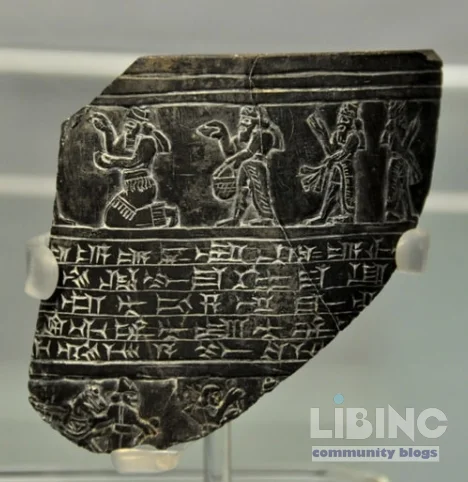
- Lead
- Analytical Perspective on Nergal
- Contrasting Roles: Destruction and Protection
- Cause and Effect: War, Plague, and the Underworld
- Expert Reconstruction: Scholarly Readings
- Conclusion
The figure of Nergal sits at a difficult crossroads within Mesopotamian religion. He embodies the paradox at the heart of ancient Near Eastern belief: a deity whose power to annihilate is matched by his capacity to shield communities from the harms he himself commands. This tension did not emerge fully formed in one century or one city; it coalesced over centuries as Nergal—also known as Erra or Irra—migrated from a regional, likely agricultural, deity of Kutha to a universal god whose influence touches warfare, pestilence, and the circles of the dead. His cult, temple, and iconography reflect a long negotiation between chaos and order, between the heat of the sun and the cooling logic of ritual protection.
To understand Nergal is to watch a deity evolve through political and theological climates. His temple, E-meslam, anchors his early identity as Meslamtaea, “He Who Comes Forth from Meslam,” signaling his association with a place and a ritual economy rather than a single myth. The eruption of Nergal into the broader Mesopotamian imagination—culminating in the Ur III period and persisting through the Neo-Assyrian era—shows the ways in which crowding into the pantheon produced a multi-layered figure. This article tracks that evolution, interrogating how Nergal’s destructive energy remains legible as a form of divine governance rather than mere antagonism, and how protection from death and disease arises from the same cosmic force that menaces human life.
Analytical Perspective on Nergal
To analyze Nergal is to reconstruct a spectrum: origin, iconography, worship, and mythic function. The early Sumerian frame—where the heat of the high summer sun is read as divine fury—grounds his association with death in a tangible climate, a world where environmental extremes threaten harvests and livelihoods. This lineage travels forward into the Akkadian and Babylonian periods, where Nergal becomes a universal, war-haunted deity with the mace, the scimitar, and a lion’s heraldry as his signature implements. The evolution from a local agricultural god to a cosmically charged deity of pestilence and warfare did not erase his protective uses; it amplified them, enabling he is invoked in exorcisms and healing rites alike. The dual nature is not an anomaly but a theological necessity: death, pestilence, and war require a god who can be both harnessed and appeased.
Key dimensions emerge when we examine the sources that frame Nergal’s identity: temple patronage, iconography, mythic narratives, and the literary tradition that ties him to other major powers. In iconography he strides forward with a mace bearing a double lion’s head, a scimitar at the ready, and a body that could merge human agency with animal puissance. The lion and the bull associations emphasize a cosmic scale of violence and strength—an assertion that the divine will can restructure reality through force when necessary. Stylistically, these features place Nergal in a pantheon of war and plague gods who share a troubling kinship with deities across the Near East, including the Hurrian-Akkadian Aplu and, later, Greek and Roman transpositions of similar martial-pestilence figures.
In literary terms, Nergal’s role in the mythic imagination often hinges on his temper and his perceived lack of remorse. The Wrath of Erra, a telling example, mobilizes a passage where a god’s fury erupts into catastrophe, with even the gods unable to fully restrain him. That narrative is not merely entertainment; it functions as a philosophical instrument—one that offers a consistent explanation for suffering in a cosmos governed by capricious divine will. Such myths transform Nergal from a mere instrument of violence into a theodic figure who helps mortals understand pain as part of a larger moral and cosmic ledger.
From a ritual perspective, the efficacy of Nergal hinges on ritual efficacy and the social need to bear misfortune. As a figure associated with exorcism and illness, he occupies a crucial niche in healing rites. The Babylonian priest’s incantation places Nergal at the right hand of the rite, a position that symbolizes a protective function rather than a punitive one alone. The practical dimension of Nergal’s worship—cures for disease, drives for exorcism, and ritual defense during plagues—binds his destructive force to a social technology: ritual action that reconciles human vulnerability with divine power. In short, the analytic frame reveals a god designed to manage chaos through ritual integration, not simply to unleash it.
Contrasting Roles: Destruction and Protection
Contrasts in the Nergal corpus illuminate the tension between fear and guardianship that characterizes Mesopotamian religion. On one hand, he stands as the archetype of destructive force—“the burner,” “the raging king,” a divine agent whose tempers can raze cities, wipe out crops, and unleash famine. The epithet package—raging king, furious king, fighting cock—reads as a lexicon of power that mortals must negotiate through ritual discipline. On the other hand, Nergal functions as a protector, particularly against demonic and malignant forces. His guardianship within the cultic framework of exorcism emphasizes a controlled application of destruction: the death that he personifies can also neutralize other malevolent forces, creating a boundary between order and chaos.
In the mythic imagination, the duality is not simply pragmatic but existential. If the gods themselves enact cosmic order, then Nergal’s aggressive energy becomes a necessary counterbalance to the lethargy or corruption of others. The dialogues and narratives surrounding Nergal show how divine action is interpreted through the human need to find means to endure suffering. The care that priests take in conjuring his protective presence—often as a remedy against illness—demonstrates why he remains a central figure when communities face both natural and supernatural threats. The structural tension here is not a contradiction but a functional redundancy: multiple layers of divine governance require a deity who embodies both the hazard and the cure.
The interregional dialogue with other martial and pestilence deities—Aplu among the Hittites, the Greek and Roman analogs of war gods, Nabû’s tense inheritance in later syncretisms—reiterates a pattern: Nergal’s martial energy is domesticated through cross-cultural exchange, which reshapes local cults and expands the deity’s sphere of influence. The end result is not merely a broader iconography but a more nuanced function: Nergal becomes a universal solution to universal problems—death, decay, pestilence, and war—yet always mediated by human ritual practice. This mediation is crucial; it shows how a god who embodies destruction can still anchor social resilience by offering protection and order in the face of annihilation.
Cause and Effect: War, Plague, and the Underworld
Historical narratives around Nergal link his actions to political and ecological pressures of the era. The Blitt of any single myth cannot fully explain his behavior; instead, the god’s agency reveals patterns tied to invasions, shifting political centers, and demographic stress. The Wrath of Erra, for instance, may reflect real-world invasions by Aramaeans and Suteans during a period of upheaval—an interpretive reading that aligns divine anger with collective memory of violence. In these stories, Nergal’s outbursts become a way of rationalizing sudden calamities that communities otherwise cannot easily ascribe to a rational cause. The myth thus functions as a coping mechanism for collective trauma and a template for divine governance during crisis.
Equally important is Nergal’s involvement with the underworld. The Marriage of Ereshkigal and Nergal presents a strategic compromise that allows a war god to inhabit the realm of the dead while retaining a foothold on the living world. Enki’s intervention—providing fourteen demon escorts to maintain gate-opening capabilities—ensures that the cycle of death and renewal remains a dynamic, not a static, order. This myth offers a causal framework: warfare, pestilence, and death do not simply intrude upon human life; they circulate through ritualized arenas where divine order can be renegotiated and rebalanced. The result is a cosmos in which death is not the terminus but a gate that ritual and mythwork continuously reopens and refines.
In practical religious life, Nergal’s protective function against demons and malignant spirits is equally consequential. In Babylonian prayers and incantations, his presence at the priest’s right hand signals a reliable agent against illness and spiritual affliction. The priest’s confidence that Nergal can support healing rituals reflects a world in which cosmic dangers are legible through the vocabulary of ritual efficacy. The underworld is not a mere afterlife destination; it is a structuring incentive for moral and social order that compels communities to organize meaning around death, disease, and conflict. The cause-and-effect logic, then, is a map of interlocking spheres: natural events provoke ritual responses; these responses, in turn, shape collective memory and political legitimacy.
Expert Reconstruction: Scholarly Readings
Scholars converge on a core insight: Nergal’s identity emerges through a process of hyphenation—between local and universal, between destruction and protection, between mortality and ritual governance. Jeremy Black notes that Nergal and Erra were once separate deities, only later becoming so closely identified that their names could be used interchangeably. This scholarly observation invites a broader methodological lesson: the god’s character is not a fixed artifact but a dynamic construction shaped by religious reforms, political power, and cross-cultural exchange. The result is a composite figure whose meaning shifts with the contexts in which he is invoked.
Yagmur Heffron emphasizes Nergal’s role as a representative of a particularly destructive aspect of death—one that is also linked to plague and pestilence. This framing helps explain why Nergal’s protective features arise alongside a capacity for catastrophic harm. Stephen Bertman’s reading of The Wrath of Erra situates the myth within a historical frame, arguing that it provides a narrative mechanism to account for suffering during periods of crisis and to console communities by pointing to eventual renewal. In this light, Nergal’s violence has a social function: it clarifies the boundaries between order and chaos, and it legitimizes communal resilience through ritual solidarity and divine mediation.
Comparative perspectives—such as the Hittite adaptation of Aplu into a plague god—reveal how regional dynamics shape the reception of Nergal. The plague’s universality demands a powerful divine response, and Nergal’s character—at once terrifying and protective—fulfills that demand in a way that other gods cannot. The synthesis across scholarship suggests a model in which Nergal embodies a structural necessity: a god who can enact destruction while enabling a communal response that transforms catastrophe into a catalyst for preservation and renewal. This reading anchors Nergal within a wider Near Eastern theological economy, where death, disease, and war are not simply negated but negotiated through ritual, myth, and political legitimacy.
Conclusion
In tracing Nergal from a regional agricultural god to a cosmopolitan figure of death, war, and protection, this analysis reframes him as a central operator in Mesopotamian cosmic governance. His identity—defined by heat, destruction, and the underworld—remains legible because it is continually mediated by ritual exorcism, mythic diplomacy, and political necessity. Nergal’s paradox is not a flaw but a design feature, enabling communities to endure suffering and persevere through ritual memory. If the gods are the authors of order in a world of chaos, Nergal is the pen that inscribes the violence that must be faced with courage, and the ritual mechanism that makes that courage possible.
| Era | Role | Iconography | Primary Focus |
|---|---|---|---|
| Early Local (Kutha) | Agricultural deity and temple economy | Double lion‑headed mace; Meslam link | Local protection and ritual economy |
| Akkadian-Babylonian Expansion | Universal war and pestilence | Scimitar; lion symbolism; standard | Widespread cult; exorcisms |
| Ritual and Healing Phase | Protector against illness | Right hand position; ritual tools | Healing rites |
| Mythic Narrative | Cosmic anger and reform | Fury within epic imagery | Philosophical function in suffering |
| Underworld & Marriage | Gatekeeper of dead; governance | Ereshkigal pairing | Cosmic order across life and death |
This compact view anchors Nergal’s evolution in concrete shifts of worship, image, and social role. The table shows how he moves from a local agricultural figure to a transregional force, yet always with a built‑in function: to convert fear into disciplined action, protect the living, and regulate the boundaries between chaos and order through ritual practice.
The following discussion expands on how communities operationalize this paradox in daily life, from healing prayers to crisis narratives.
Practical Mediation: How Communities Harness Nergal's Power
In daily practice, communities used structured rites to channel Nergal’s destructive energy into protective outcomes. Exorcism invocations, healing hymns, and temple rituals positioned him as a reliable ally at moments of pestilence, invasion, or plague. The black‑inked tablets and spoken polyphonies that recount his deeds served as playbooks for priests and lay households alike, turning cosmic violence into an instrument of social resilience. For example, a Babylonian rite might begin with cleansing invocations, move through a formal appeal to Nergal at the rite’s right hand, and culminate in offerings designed to seal the boundary between illness and health.
This empirical pattern reflects a broader truth: destruction can be harnessed, with ritual discipline, to protect and restore the community. The mid‑section of this analysis highlights how a god associated with heat and death also anchors ritual healing and exorcism, demonstrating a sophisticated social technology for crisis management.
- Purification of space and participants
- Invocation of Nergal at the rite’s right hand
- Recitation of protective hymns and charms
- Exorcism of malignant spirits or disease demons
- Offering and dedication to seal the ritual boundary
In scholarly terms, these sequences reveal how myth and ritual cohere to produce social order even in the face of chaos, with Nergal acting as both the spark and the shield.
Who is Nergal and what roles does he fulfill?
From the earliest Mesopotamian cults, Nergal emerges as a multi-faceted deity whose realm spans the heat of the sun, warfare, pestilence, and the underworld; yet his influence also extends into healing rites and protective invocations, so that in practice he is invoked to shield communities, drive out demons, and authorize rites that restore order after crises, making him both feared and trusted—a god whose authority rests on balancing destructive power with social resilience, ritual competence, and a supported priesthood; in daily life he is imagined at the right hand of the ritual master, receiving sacrifices and guiding exorcisms when plague or invasion threatened households.
Analytically, the practical effect is that Nergal embodies a governance model: danger is managed through ritual channels that convert force into a structured social response, linking cosmic power with concrete healing and protection.
How can Nergal be both a destroyer and a protector in Mesopotamian belief?
This paradox is best understood as a single operational principle: destruction under disciplined ritual control can secure social order by cleansing space of contagion and hostile forces while opening a path to renewal; Nergal's brutal energy is thus channeled through hymns, charms, and prescribed offerings so that what razes also reconstructs, what devastates also heals, and what terrifies mortals becomes a tested stimulus for communal resilience.
Scholars note that this dual role is not a contradiction but a deliberate strategy that keeps chaos within a managed framework, with priests acting as mediators who translate violent power into protective action for the living.
What is the Wrath of Erra and how does it function in understanding suffering and renewal?
The Wrath of Erra narrates a crisis when divine anger spirals into calamities that human communities must endure, and it is read as a moral framework in which suffering is intelligible within a larger order; the myth reassures that after the purge comes reform, balance, and a renewed capacity to govern danger.
In practice, the tale supports ritual strategies that transform fear into organized response, giving communities a shared script for resilience and a path toward renewal through ritual solidarity.
How was Nergal invoked in healing and exorcism rites in Babylonian practice?
In Babylonian ritual life, Nergal appears at the right hand of the officiant in healing incantations and exorcisms, where his symbolic weapons and protective presence anchor the rite, drive out disease or demonic attack, and stabilize the patient and the household.
Analytically, this ritual positioning reflects a broader pattern: powerful harms can be shifted toward constructive outcomes when a trusted deity mediates between illness, spirit disturbance, and social care, turning peril into a structured healing process.
How do cross-cultural exchanges shape Nergal's image across the Near East?
Cross-cultural exchanges, especially with Hurrian and Hittite traditions, expand Nergal from a local war god into a universal figure who bears pestilence and protection, adopting new symbols, myths, and liturgical formulas that align with different political needs and religious landscapes.
Analytically, these exchanges show how religious identities adapt to regional networks, creating a more resilient archetype capable of addressing a range of threats from war to plague across cultures.
What does the myth of the Marriage of Ereshkigal and Nergal reveal about the afterlife and political order?
The Marriage of Ereshkigal and Nergal presents a strategic compromise whereby a war god enters the realm of the dead while maintaining a link to the living world through gatekeeping, ritual mediation, and Enki's assistance, preserving social balance between life and death.
It highlights how the afterlife becomes a site where political legitimacy and cosmic order are negotiated, ensuring that death does not end governance but reshapes it through ritually sanctioned authority.



Add a comment
To comment, you need to register and authorize
Comments
I would propose a deeper examination of the rites in which Nergal stands to the right of the exorcist. How does the textual formulation vary across locales and periods, and what is the significance of weapon imagery in healing and protective incantations? The iconography of a double lion headed mace and scimitar seems to insist on a threshold theology—boundaries between life and death, between chaos and order, between illness and cure. Could the lion iconography be understood as a social pedagogy that makes the threat legible to lay worshippers and officials alike? Moreover, the article note about cross cultural exchange invites a comparative program: how do analogous figures in neighboring traditions turn destructive force into a redundant safety net, and what light does that throw on the adaptive flexibility of the Mesopotamian pantheon?
Finally, a methodological thought: the idea of Nergal’s hyphenated identity grows clearer when we track temple patronage and mythic narratives together with political reforms. If Nergal migrates from a regional to a cosmopolitan role, what does that imply for the localization of ritual knowledge and for the persistence of localized cults within a broad network? A potential extension would be to map textual attestations to archaeological patterns in temple architecture, iconography ensembles, and ritual offerings, to test whether changes in political authority align with shifts in ritual emphasis. In short, the paradox is not simply a curiosity of mythology; it is a lens to understand how ancient societies sustained resilience by turning fear into a disciplined, communal practice of protection.