

Modern dating and the digital dilemma in Jem Calder's I Want You To Be Happy: an analytical deep dive
Table of Contents
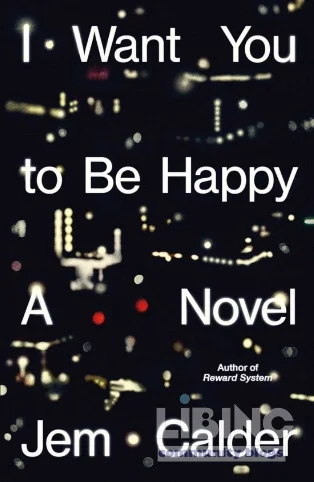
Modern dating unfolds in crowded bars and private screens, a frictionless lab where desire collides with hesitation. Calder's I Want You To Be Happy places a mid-30s copywriter and a 23-year-old barista inside a London night that becomes a test case for how people navigate attraction, affordability, and ambition. The stakes are not merely romantic: they involve self-presentation, timing, and the cost of miscommunication in an era of constant visibility. The hidden conflict arises as both characters guard their vulnerabilities behind status signals, career critiques, and fear of commitment. This analysis evaluates Calder's method, the novel's contribution to conversations about modern dating, and what happiness might resemble when every exchange is potentially performance and data point.
Block 1 — Analytics of modern dating
From a data-informed reading, Calder's couple function as a case study in digital loneliness, social media stimuli, and the rhythm of texting culture in modern dating. The bar scene, the early dialogue, and the couple's tentative disclosures reveal a pattern: desire latches onto signals that are easy to quantify—name, job status, leisure choices—while true compatibility defers to slower, less measurable cues such as timing, tone, and mutual vulnerability. This is not merely stylistic flourish; it is a diagnostic technique that encodes the contemporary mating ritual into observable behavior patterns and micro-gestures that readers can identify with in real life.
Chuck and Joey's first exchange at the bar functions as a microcosm of the era: two people narrating themselves through social status, professional insecurity, and the pressure to perform. Calder does not reward the effortless connection; he records the friction, the misfires, and the small apertures where curiosity survives. The result is a portrait of modern dating that foregrounds uncertainty rather than certainty, and the reader experiences the same cognitive dissonance that these characters endure when a spark arrives under noisy, crowded conditions. The climactic tension emerges not from a grand gesture but from a deliberate choice to reveal or withhold parts of oneself in the face of perceived judgment.
Calder's verb-driven prose mirrors the attention economy that governs the dating landscape. The narrator threads in actions and routines—a constant inventory of daily labor, streaming preferences, phone checks, and the pace of conversation—in a way that makes the text feel mechanized yet precise. This is not mere glitter of style; it is a methodological decision to map how instant gratification, though seductive, often corrodes long-term reliability in intimate encounters. The result is a work that reads as both a narrative and a social dataset, where the cadence of a text message or a social post becomes as consequential as a confession shared in the dark of night.
The book’s structural choice—to center a male narrator who is both sharp and evasive—compounds the tension. Chuck’s avoidance patterns and reliance on alcohol as a coping mechanism illuminate how self-protective strategies can undercut potential happiness. Calder thus invites a closer look at how self-definition, rather than external chemistry alone, organizes the dating playbook. The novel becomes a case study in self-sabotage and the paradox of wanting closeness while fearing it, a paradox intensified by a culture that celebrates quick wins and rapid feedback loops rather than slow, durable intimacy.
Joey’s responses, measured and sometimes paradoxical, offer a counterweight to Chuck’s evasiveness. Her awareness of response times as a test of interest exposes a key dynamic of digital romance: waiting becomes an instrument of self-respect and boundary-setting rather than mere anxiety. This is where Calder’s modern dating fiction achieves sharpness: by giving the reader a mirror of their own experiences with ghosted texts, delayed replies, and the persistent pressure to appear nonchalant, even as longing brews beneath the surface. The narrative’s reliance on a third-person perspective that toggles between male and female viewpoints heightens the sense of shared insecurity and mutual suspicion, a state that feels both intimate and estranging in equal measure.
The vehicle for analysis is not novelty for novelty’s sake; Calder’s innovations are in how he choreographs everyday activities into a language that conveys longing, fear, and the ache of potential failure. The repeated coinages—gaze-unlocked, V-60-ed, hot-desked, sense-checked—function as a lexicon of contemporary behavior, encoding the way people literally live through their screens. The consequence is not cynicism but a tempered, often sympathetic realism. Calder’s characters move through a world that is meticulously observed, where the minutiae of consumption, status, and routine inform a deeper question: can happiness emerge from a chemistry that is always being mediated, curated, and archived?
Block 2 — Contrast in contemporary dating norms
The novel’s standout achievement is how it contrasts with older romance templates that tend to glamourize grand gestures and clear, linear progress toward a coupledom. Calder foregrounds a different vocabulary—one that acknowledges ambiguous outcomes as intrinsic to modern dating. The gender dynamics in dating narratives here are more nuanced and less melodramatic than classic tropes, where a single moment decides everything. In Calder’s world, attraction evolves in fits and starts, and happiness arrives as a negotiation rather than a verdict, a distinction that matters for readers who grew up with fewer screens controlling the tempo of courtship.
The narrative voice—slightly clinical, largely compassionate—deliberately tempers romance with realism. The female perspective, Joey, emerges as the more perceptive observer at times, able to parse motives and consequences that the male narrator misses. This asymmetry in perception is not a flaw but a strategic seam that invites readers to interrogate their own assumptions about who leads a dating conversation and why. In this sense, the book is less a love story than a study of how people learn to regulate desire when the social contract has shifted from ritual to algorithmic pairing and constant public observation.
In Calder’s world, social media influence reshapes what counts as progress. A “like” or a new follower can feel like a transactional marker that substitutes for commitment, setting up a scenario where desire becomes performance rather than confession. The contrast with older novels is instructive: where the older romantic arc rewards persistence, Calder’s arc rewards honesty about limits and a willingness to redefine happiness on terms that acknowledge contemporary constraints. The book’s charm hinges on its refusal to sanitize the messiness of dating in the age of constant updates, notifications, and curated self-presentation, a texture that resonates with readers who recognize the pressure to appear self-possessed while feeling unsteady inside.
Joey’s sensitivity to timing and boundaries creates a counterpoint to Chuck’s emphasis on surface signals and external validation. The result is a nuanced exploration of power, vulnerability, and mutual care that does not pretend to have a single, definitive answer to whether this pair should become a couple. Calder’s skill lies in presenting the friction as a perpetual state rather than a momentary hurdle, thereby reframing happiness not as a fixed location but as an ongoing negotiation that must endure the rhythms of a digital life. The contrast thus reveals the persistence of human longing amid devices that promise speed but rarely deliver certainty.
Block 3 — Causes and effects in the dating economy
The book makes explicit how structural factors—age gap, finances, career ambitions, and the pressure to project a certain lifestyle—influence every choice these characters make. The age gap is more than a date-late joke; it is a sustained source of friction that shapes expectations about maturity, ambition, and stability. The tension arises when Chuck’s desire for discretion and Joey’s hunger for recognition collide with the realities of their financial situations and long-term plans. Calder uses this friction to illuminate a broader dynamic in dating economies: unequal resources and divergent timelines push partners toward misalignment, even when attraction remains strong.
The financial and professional dynamics feed back into communication patterns. When one party feels precarious about money or a future that seems uncertain, they are more likely to test boundaries, delay commitments, or retreat to alcohol or other coping strategies. These behaviors then cascade into the relationship, creating a chain reaction of misinterpretations and unmet needs. The result is a cautionary tale about how material conditions—income stability, housing, and lifestyle expectations—shape the trajectory of young-to-middle-aged relationships in urban centers where the dating pool is saturated yet the emotional economy feels fragile.
The causal chain extends to how self-presentation and brand signaling influence perception. In a world where people curate everything from social feeds to life trajectories, the implicit contract is no longer simply “be yourself” but “be a version of yourself that is legible, desirable, and sustainable.” Calder’s characters navigate this conflict by testing boundaries around vulnerability and speed. The consequence is a relationship that may become possible only if both parties learn to resist the pull of performative signals and instead cultivate room for ambiguity, patience, and trust. The narrative thereby links micro-behaviors to macro-implications: when timing and integrity align, a genuine connection becomes plausible; when they diverge, happiness remains a hopeful but elusive target.
The causal relationship between waiting and trust is a recurrent motif. Joey’s deliberate pacing in replies—paired with Chuck’s habit of avoiding confrontation—creates a test of mutual resolve rather than a mere test of attraction. The drama of timing is not incidental: it demonstrates that the path to genuine intimacy in modern dating hinges on the willingness to accept uncertainty without retreating into habitual coping strategies or superficial displays of control. Calder thereby reorients the reader to see happiness as a function of disciplined patience and honest risk-taking in the face of a fast-paced, image-driven social ecology.
Block 4 — Expert reconstruction for lasting connection
What would it take for Chuck and Joey to move from tentative signals toward a sustainable relationship? An expert reconstruction suggests a sequence of calibrated steps that prioritize durable communication, emotional transparency, and shared inquiry into personal values. First, a candid acknowledgment of each other’s constraints—financial, professional, and logistical—could reduce the fog created by status signaling and fear of judgment. Second, a renegotiation of expectations—recognizing that happiness may require adjustments in career plans or living situations—could provide a framework for alignment without erasing individual aspirational lives. Third, a deliberate practice of non-urgent communication—timing conversations to allow for reflection rather than instantaneous gratification—could reconstitute trust and reduce the misreadings that drive distance in modern dating.
The expert reconstruction also emphasizes the role of boundaries as a form of mutual care. In a culture that equates responsiveness with interest, stepping back deliberately communicates emotional maturity and autonomy. Calder’s characters glimpse a possible future where happiness emerges not from constant connection but from intentional, compassionate distance that makes reunion more meaningful. In this sense, the book offers a practical blueprint for navigating the dating economy: cultivate patience, resist the lure of performance, and treat vulnerability as a strength rather than a liability. The reconstruction indicates that authentic connection is not found by dissolving boundaries but by refining them to support mutual growth in a high-velocity social environment.
Finally, Calder’s fiction invites readers to view happiness as a discipline rather than a feeling. The characters’ oscillations illuminate a universal truth about modern dating: success rests on the capacity to align desire with reality while remaining open to transformation. If readers take away one lesson, it is this: the path to lasting connection in the digital era requires both self-knowledge and a willingness to renegotiate what counts as success in love. The novel thus reframes happiness as a practice—one that unfolds through time, conversation, and a shared willingness to endure ambiguity without surrendering authenticity.
In sum, Calder’s I Want You To Be Happy maps the complexity of modern dating with a precision that feels both intimate and analytic. It shows how ordinary moments—texts, pauses, shared jokes—carry disproportionate weight in shaping expectations and outcomes. The novel’s achievement lies not in delivering a definitive verdict on whether Chuck and Joey end up together, but in exposing the mechanics of how people decide to stay or walk away when the signals around them multiply and movie-like endings become rarer. The final takeaway is a sober optimism: happiness in the digital era requires more than chemistry; it requires clarity, courage, and a willingness to rewrite the terms of connection for a world that constantly tests them.
As a closing reflection, Calder’s work offers a compact guide to navigating modern dating: observe the signals, but prioritize sustained conversation over instant validation; accept time as a tool for maturing desire; and treat happiness as a negotiated outcome that grows through intentional practice rather than spontaneous bliss. The book does not pretend to resolve every tension in the contemporary mating game, but it does provide a nuanced map for readers who want to approach modern dating with more awareness, empathy, and purpose. In a culture where the next message is never far away, Calder asks us to consider what it would take to reach a form of happiness that persists beyond the moment of connection and into the longer arc of shared life.
Ultimately, I Want You To Be Happy offers a precise microcosm of modern dating: the search for meaning amid a sea of signals, the way time, money, and attention shape outcomes, and the persistent pressure to appear nonchalant while yearning for real connection. The novel reframes happiness as a discipline, not a feeling, requiring discernment in a world where every message carries a potential audience.
A practical path to lasting connection in the digital era
The most visible gap in the analysis is the lack of concrete steps readers can apply. This compact blueprint translates Calder’s insights into repeatable actions that work in digital dating, emphasizing clear boundaries, honest cadence, and shared inquiry.
| Scenario | Signal Type | Healthy Response | Common Misreads | Example Text |
|---|---|---|---|---|
| First bar encounter | Surface signals (status, vibe) | Ask clarifying questions; slow pace | Assume instant chemistry | "I’m enjoying this—what does a calm, productive week look like for you?" |
| Late reply | Delay, boundary testing | Acknowledge delay and set a check-in time | Disinterest | "No rush—let’s touch base Friday evening." |
| Finance talk | Lifestyle signals | Share constraints early | Money talk is a red flag | "Here’s what I can commit to financially in the next two months." |
| Planning a future | Long-term goals | Discuss timeline; negotiate | Unrealistic optimism | "Would you be open to revisiting this in four weeks after we test compatibility?" |
Step-by-step path
- Step 1: Align on values — start with a candid talk about money, time, and relationship goals. Prompt: "What does a stable week look like for you?"
- Step 2: Establish boundaries — agree on response cadence and privacy; practice non-urgent communication.
- Step 3: Design a low-drama cadence — schedule weekly check-ins, not daily status updates; monitor for burnout.
- Step 4: Practice vulnerability — share a small fear, then invite reflection from the other side.
In practice, couples mirror a steady tempo: brief, honest disclosures paired with patient listening. For Chuck and Joey, this means choosing moments to reveal long-term intentions and testing those intentions against real-life constraints.
- Open with concrete plans within a realistic horizon (2-4 weeks).
- Clarify non-negotiables early (finances, living arrangements, family).
Dialogue prompts to sustain healthy momentum
- Opening: "I’ve enjoyed our conversations. What would a balanced two weeks look like for you?"
- Boundaries: "How do you prefer to handle messages when you’re busy?"
- Future talk: "If we test compatibility for a month, what would you want to see as signs of progress?"
These prompts act as micro-commitments that keep the relationship anchored in reality while preserving curiosity and warmth.
How does timing influence modern dating outcomes?
Timing matters in modern dating because it governs how partners interpret signals, decide when to disclose vulnerabilities, and judge the seriousness of pursuing a connection; when replies come rapidly, eagerness can mask anxiety or the desire to please, while long silences can be read as disinterest, fear of judgment, or misaligned life timelines, so a measured pace—coupled with explicit short-term commitments and transparent talk about expectations—creates a shared temperature that reduces guessing, aligns priorities, and invites honest feedback; a synchronized cadence signals respect for each other’s time and finances, and it primes trust, which is the core ingredient for lasting connection. Analytically, timing reduces misreads and builds confidence by sequencing small disclosures before larger commitments.
What role do finances and living arrangements play in compatibility?
Finance and housing realities shape daily life and future planning, so early clarity about income, debt, rent, and relocation plans reduces projection errors and prevents late-stage friction; a direct exchange on these topics—without shaming or defensiveness—creates a framework where both parties can decide alignment versus compromise; practically, discuss a 6-8 week trial period with shared goals and permissible adjustments; analytically, financial transparency correlates with perceived stability, which in turn supports steadier communication and trust-building.
How can boundaries improve communication online and offline?
Boundaries provide safety nets that prevent overexposure and burnout; clearly stated rules about response times, sharing of personal information, and privacy expectations reduce anxiety and misreads; in practice, establish agreed rhythms (e.g., check-ins on evenings or weekends) and define what constitutes urgency; this cultivates trust and reduces resentment when plans change or delays occur, a crucial factor in sustaining connection over time.
What is an effective cadence for messages in dating today?
A healthy cadence balances responsiveness with space; the first day should feel engaged but not rushed, with subsequent replies that respect the other person’s time and life; aim for a pattern that includes a weekly check-in plus occasional spontaneous warmth; this cadence prevents burnout, increases anticipation, and keeps the relationship anchored in real life. Analytically, cadence moderates anxiety and aligns expectations, which improves long-term compatibility.
How can readers apply Calder's expert reconstruction in real life?
The reconstruction translates to a simple sequence: state constraints clearly, renegotiate expectations when needed, and practice non-urgent communication; implement a 30-day trial of deliberate, vulnerability-based conversations, paired with weekly reflections; this approach strengthens trust and reduces the risk of misreading signals, thereby turning attraction into sustainable partnership.





Add a comment
To comment, you need to register and authorize
Comments