

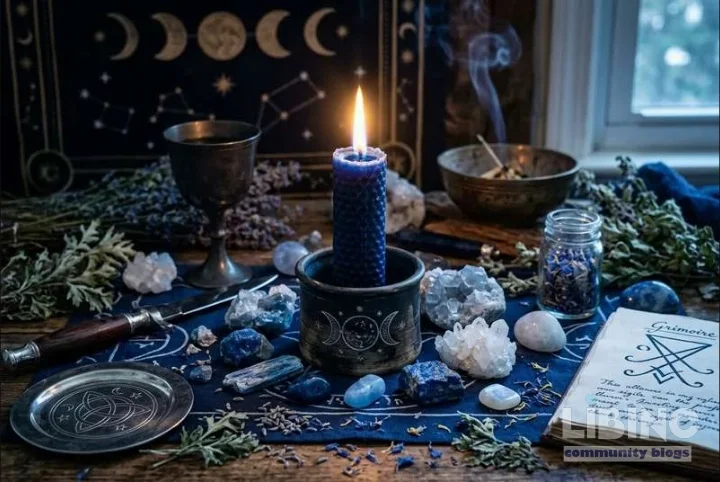
Blue Candle Magic: An Analytical Guide to Symbolism, Spells, and Safer Practice for Calm Communication
Blue candle magic is a soothing, potent practice that offers a direct path to calm, clarity, and authentic communication. In chaotic moments, a single blue flame can act as a conduit between intention and manifestation, inviting the universe to respond with measured resonance rather than impulsive reaction. This guide distills the practice into a structured, analytically grounded approach that honors both the subtlety of energy work and the discipline of ritual craft. You’ll encounter the color’s symbolic vocabulary, practical spells you can perform tonight, and the ethical guardrails that keep magic aligned with the highest good.
Blue candle magic draws on the vibrational spectrum associated with blue—the color of the throat, the seasonless flow of water, and the quiet authority of peaceful action. This is not merely a mood booster; it is a communicative technology that can recalibrate how you speak to others and how you hear your own truth. For many practitioners, the practice lowers cognitive noise, sharpens intention, and widens the channel through which authentic voice travels. In practical terms, the flame becomes a messenger, and the ritual becomes a protocol for disciplined, compassionate expression.
Table of Contents- 1. Analytical Perspective on Blue Candle Magic
- 2. Contrast: Blue vs. Other Magical Frameworks
- 3. Cause-and-Effect: How Blue Candle Magic Shifts Outcomes
- 4. Expert Reconstruction: Advanced Practices and Ethical Design
1. Analytical Perspective on Blue Candle Magic
Blue candle magic operates as a form of sympathetic magic: the color blue encodes a spectrum of energies that you consciously align with your intention. The mechanism is not mystical whimsy alone; it rests on the intersection of color psychology, frequency theory, and ritualized attention. When you light a blue candle with a precise aim for truth-telling or calm communication, you synchronize your inner state with an external symbol, creating a feedback loop that biases perception, interpretation, and action toward your stated goal. This is a practical model of energy work grounded in cognitive-behavioral patterns and symbolic priming.
To understand why blue works, examine its core correspondences. The color frequency aligns with the throat chakra, suggesting a direct path to authentic voice and clear articulation. The water element signals fluidity, emotional regulation, and underlying currents of experience that often govern speech and listening. Together, these associations form a coherent framework: the flame awakens the inner voice, while the water-coded energy dissolves tension that would otherwise distort expression. In this sense, blue candle magic is less about coercing reality and more about aligning perception with truthful intent, a subtle but consequential distinction for effective practice.
From an operational standpoint, the practice rests on three mechanisms. First, intentional alignment—clarifying what you want to say or hear before you light the wick. Second, symbolic resonance—letting the blue flame embody that intention while you hold it in focused awareness. Third, feedback interpretation—reading the flame and wax as messages that guide next steps. A robust approach treats these as an integrated loop: intention, energy alignment, and adaptation based on responses from your inner and outer environment. This triad underpins a reliable set of outcomes, from cleaner conversations to sharper listening, when executed with discipline and care.
In practice, blue candle magic benefits from a deliberate ritual structure. The flame’s steady glow is more than atmosphere; it is a measurable variable that interacts with the practitioner’s state of mind. The color’s frequency and the water-element energy invite patience, gentle momentum, and persistent clarity—qualities essential to speaking truth without aggression. This combination helps prevent common pitfalls such as sentimentality, misinterpretation, or impulsive speech—issues that frequently derail communication efforts in high-stakes or emotionally charged contexts. The result is a more resilient channel for truth and connection, made possible by a disciplined ritual rhythm.
2. Contrast: Blue vs. Other Magical Frameworks
Compared with red or black candle magic, blue emphasizes restraint and truth-telling over impulse and banishment. Red focuses on vitality, assertion, and passion; blue emphasizes vocally honest but emotionally regulated expression. Black, often associated with protection and barrier-work, can create distance or suppression if misapplied. The contrast matters because it reveals the epistemic limits of color-coded magic: every hue carries a different set of constraints, values, and risks. Blue candle magic excels in scenarios requiring listening, diplomacy, and authenticity, whereas other colors may be better suited to boundary-setting or erasure of negative patterns when used with explicit ethical guardrails.
That said, the appeal of blue is not universal. Some practitioners may overfit blue to all communication problems, neglecting structural factors such as context, relationships, and timing. The responsible practice acknowledges these limits and uses blue as a facilitative tool within a broader toolkit—complementing honest speech with practical communication strategies, active listening, and conflict resolution skills. In this sense, blue is a scaffold, not a substitute for competent interpersonal work. The throat chakra alignment helps explain this: energy alone cannot repair a poorly designed conversation; it must be matched with genuine intention, mutual consent, and skillful phrasing.
When blue is paired with complementary modalities, its efficacy increases. A few integrated pathways include meditation to stabilize the nervous system, journaling to crystallize intent, and breathwork to sustain calm during dialogue. These practices extend the energy work into cognitive and emotional domains, creating a more reliable platform for truthful discourse. The result is not magical bypass but an enhanced capacity to show up with clarity, humility, and a willingness to hear others. This comparative lens clarifies when blue candle magic should be invoked and when it should be complemented by practical communication strategies.
3. Cause-and-Effect: How Blue Candle Magic Shifts Outcomes
The causal model for blue candle magic can be mapped as a sequence of interlocking events that begin with intention and end with observable social and internal shifts. Each link in the chain creates a lever for change, and understanding these levers helps practitioners tune their rituals for reliable results. The core sequence is: intentional clarity → flame resonance → throat chakra alignment → calmer speech and listening → better relational outcomes. While this is a simplified map, it captures the essential dynamics of the practice.
- Intention clarity: Before lighting, you articulate one precise outcome, such as: "I speak my needs with calm confidence." This mental focus aligns with the blue color’s symbolic function and primes the water-energy to support emotional regulation, an effect amplified by breathwork and meditation.
- Flame resonance: The blue flame acts as a living symbol that you actively hold in attention. This engagement reinforces neural pathways related to executive function, attention control, and emotional regulation—factors critical to constructive dialogue.
- Chakra alignment: The throat chakra is invited into balance by both the color cue and the energy work surrounding the ritual. When this center operates with ease, your tone, pace, and articulation improve, reducing miscommunication and defensive reactions in others.
- Speech and listening: Calmer speech and more attentive listening emerge as cognitive load decreases. The practice reduces cognitive tunnel vision, enabling you to hear concerns you might otherwise miss and to respond with measured clarity.
- Relational outcome: In interpersonal exchanges, participants experience less escalation, more empathy, and a shared sense of space for truthful exchange. The long-term effect is a more trustworthy communication pattern that compounds over time.
To ground this causal map in a concrete ritual, consider the Peaceful Communication Spell adapted from common blue candle routines. The intent is not simply to make a good impression but to cultivate a dependable channel for truthful, compassionate speech. The sequence below emphasizes practical control variables: intention clarity, ethical release, and post-ritual reflection. Integrating this with the throat chakra framework improves reliability and fosters durable behavioral change.
4. Expert Reconstruction: Advanced Practices and Ethical Design
Experts approach blue candle magic as an integral part of a broader spiritual technology. Advanced practitioners embed color work within a disciplined practice regime that includes preparation, ethical constraints, and empirical reflection. The following recommendations synthesize the core insights from the analytical and comparative sections into actionable, repeatable routines. The emphasis remains on safe, consensual work, with a clear understanding that energy is best guided by responsibility, not control.
Ritual preparation and dressing starts with cleansing the candle to remove residual energy, followed by anointing with complementary oils. Fine-tuning to your goal requires choosing herbal allies and crystals that align with your intention and your throat chakra balance. Lavender or chamomile oils support calm and sleep, while peppermint sharpens focus and communication. Among crystals, aquamarine lends truth-telling ease and blue lace agate reduces shyness; clear quartz amplifies intent across the spectrum. A minimal, potent setup uses one oil, one herb, and one crystal to maintain clarity and prevent dilution of the energetic signal.
Moon phase and timing matter. The waxing phase supports drawing in peace and clarity; the full moon magnifies truth-telling and deep healing; the waning phase is ideal for releasing anxiety and old patterns that hamper speech. The choice of timing should reflect the intended boundary between cultivation (growth) and release (letting go of impediments). This is not superstition but a practical calibration of the energetic field to align with natural cycles, a habit that strengthens intuitive reading and psychic development over time.
Ethical guardrails are non-negotiable in expert practice. The guiding maxim is: never cast spells to infringe on another’s free will. The standard phrase—This, or something better, for the highest good of all involved—keeps intention aligned with universal harmony and prevents manipulation. The flame must be treated as a living energy rather than a tool for coercion. Ethical discipline also includes secure handling: never leave a candle unattended, keep it away from drafts, and snuff the flame respectfully rather than blowing it out, to preserve the energy’s continuity for future use.
Outcome tracking completes the expert loop. Practitioners document experiences, adjust language for precision, and reflect on whether and how the intended outcomes materialize. This practice strengthens the throat chakra through repeated alignment of speech with inner insight, sharpening both communicative skill and psychic awareness. Regular journaling, paired with brief meditations after each session, reinforces the habit of noticing subtle shifts in energy and perception—an essential component of sustained mastery in blue candle magic.
To close, blue candle magic is not a solitary ritual but a disciplined, relational practice. Its value lies in how its color-coded energy partners with intention and ethical intent, supporting calmer communication and deeper truthfulness. When integrated with a holistic approach—meditation, breathwork, journaling, and respectful herbal and crystal allies—the practice yields measurable improvements in how you speak and how you listen. In short, blue candle magic offers a structured path to authentic expression if approached with rigor, care, and humility.
Conclusion: Blue candle magic, when examined through an analytical lens, reveals a robust framework where symbolism, energy work, and ethical practice converge to enhance calm communication and authentic expression. The method is not a panacea; it is a disciplined practice that benefits from clear intention, careful preparation, and responsible integration with broader personal-development tools. With this approach, blue candle magic becomes a reliable, thoughtful instrument for personal and relational change, capable of supporting clarity in speech, listening, and inner knowing.
Closing the Practical Gap in Blue Candle Practice
Even with a robust framework, blue candle work gains traction when paired with a repeatable ritual that translates intention into observable steps and measurable gains. The missing piece is a compact protocol that blends energy work with concrete communication tools and a simple way to track results.
- Intent crystallization — articulate one outcome before lighting, e.g., "I express my needs with calm clarity."
- Execution anchor — couple the flame with 3 breaths and a note on tone.
- Feedback loop — after dialogue, compare outcomes with the aim and adjust wording next time.
- Ethical check-in — ensure consent and respect for others' space.
Two practical scenarios show how this integrates with ordinary communication:
- Scenario A: You request a deadline extension with a calm, factual pitch; you log tone and listener response for reflection later.
- Scenario B: You give constructive feedback with empathy and pauses; you map listening cues and adjust pacing.
| Outcome | Trigger | Notes |
|---|---|---|
| Calmer tone | Before speaking | 3 breaths |
| Clear intent | During candle | Repeat phrase |
In practice, combine this ritual with active listening and journaling; the synergy increases reliability and creates a durable conversational channel.
Key takeaway: a disciplined routine that combines intention, ritual cue, and reflective practice yields progressively clearer speech and listening over time.
By weaving these elements, blue candle practice becomes a practical habit that yields measurable gains in clarity, listening, and relational quality.
What is blue candle magic and how does it work?
Blue candle magic is a practice that uses a blue candle flame to focus intention on calm, truthful communication and to prime your state for authentic speech. It works by aligning cognitive focus with symbolic cues and by integrating breathwork and mindful listening.
How can blue candle magic improve communication in high-stress conversations?
It reduces cognitive load and promotes present-moment awareness, which helps you choose words more carefully and pace your speech. Pairing the ritual with active listening amplifies these effects and helps you read others’ signals more accurately.
What are safe and ethical guardrails when practicing blue candle magic?
Always respect free will and use the highest good as a guiding principle. Never attempt to coerce outcomes, keep the practice private and consensual when appropriate, and handle the flame safely to avoid harm.
What practical steps compose a blue candle ritual?
Start with a clear single outcome, cleanse and light the candle, and spend a few minutes in focused breathing while repeating the core intent. Afterward, journal outcomes and plan adjustments for future conversations.
How do you choose oils, crystals, and herbs for throat chakra alignment?
Opt for calming oils like lavender or chamomile to reduce nervous energy, peppermint for focus, aquamarine or blue lace agate to support truthful speech, and clear quartz to amplify intention. Use one oil, one herb, and one crystal to keep signals clean and focused.
How can I measure progress after a blue candle ritual?
Track changes in tone, pacing, and listening accuracy over time using a simple log or audio notes. Look for fewer misunderstandings, smoother requests, and more empathetic responses from others as indicators of progress.





Add a comment
To comment, you need to register and authorize
Comments
Share examples of how you would adapt the ritual to different settings: a family meeting, a job interview, a conflict resolution session, or a creative collaboration. What structural changes would you add to the outlined approach to keep the practice rigorous while remaining flexible and humane? I am curious about how readers balance personal energy regulation with the needs and agency of others, and what signs signal that the practice is nourishing, rather than coercive. If you have integrated blue candle work with journaling, breath work, or meditation, please describe what you noticed about the durability of the shifts and the sense of authenticity that emerged in your speech and listening.
A robust protocol would also include a control condition. For example, practice a neutral candle with a non expressive color and compare its effects to blue candle ritual, ensuring that any observed differences are not simply due to relaxation or novelty. The study should not rely on subjective memory alone; it should gather behaviors that are observable in conversation, such as opportunities to speak, interruptions, and reciprocity. A simple post session reflection can document changes in how one hears others and adjusts tone.
Moon phase timing and rhythm deserve a testable stance as well. A within subject design could compare outcomes across waxing, full, and waning periods to see whether energy alignment with natural cycles corresponds to any additional gains in clarity or trust. This does not demand belief in metaphysical causality, but rather asks whether ritual timing and symbolic cues contribute to adherence to a practice and to better self regulation during communication.
Finally, I would detail an operationalization of the flame as a cue to release unhelpful patterns. Before the session, write one precise statement about the unwanted habit in communication, then during the ritual engage with the flame and the breath to create a new phrasing and new pacing. Afterward, journal about changes in speech, differences in listening, and any shifts in relational warmth. In a longer term frame, track whether repeated cycles translate into measurable reductions in argumentative escalation, more consistent use of clarifying questions, and improved rapport with diverse interlocutors.
What follows is an invitation to the community to co design practical research that respects human dignity, honors spiritual experiences, and still seeks to illuminate plausible mechanisms. If you have tested a version of this ritual, share the exact wording you used, the preparation steps, and the concrete outcomes you observed. How did you control expectations, and what did you learn about sustaining gains over time? What advice would you offer to someone who wants to explore blue candle practice without slipping into magical thinking? These are fertile questions for discussion and collaborative refinement.
Another thread worth discussing is outcome accountability. The article mentions tracking outcomes, journaling, and reflection. What would constitute robust measures without slipping into placebo or magical thinking? Could a simple rubric for clarity of speech, perceived honesty, and mutual understanding, collected over multiple conversations, help separate genuine skill growth from transient mood shifts? How might practitioners handle conflicting feedback from others when their own inner cues point toward a desired direction that others resist?
Finally, the ethical design of the practice invites danger signals to be built in. If a practitioner notices a pattern of manipulation, coercion, or unintended harm, what steps should be taken to pause, recalibrate, or even discontinue the ritual until consent, trust, and safety are restored? I invite reflections on these guardrails: how do you know when to proceed, when to adjust the target, or when to seek additional training in communication ethics?
I welcome discussion on the mechanisms behind the proposed feedback loop. If the flame acts as a cue to reframe internal dialogue, could combining blue candle work with structured cognitive reappraisal scripts amplify results? Might practitioners benefit from explicit pre and post ritual checklists to capture shifts in cognitive load, breath rhythm, and speech tempo? Another fruitful angle is comparing blue candle magic with secular communication training. Does the ritual add unique anchor points that deepen practice, or could the same gains be attained through mindfulness prompts, journaling, and rehearsal without symbolism? These are not rival claims but invitations to map the edges between ritual energy work and evidence based communication strategies. How would you test whether outcomes sustain beyond the ritual window, and what would you set as minimum criteria for success in real world dialogue?