

Food skills education in schools: An analytical case for improving diets and lifelong wellbeing
Table of Contents
- Analytics: The data-driven case for food skills education
- Contrast: Home cooking versus school-based skill learning
- Cause-and-effect: How food skills education translates into healthier diets
- Expert reconstruction: A practical blueprint for implementing food skills education
Europe faces a stubborn childhood obesity problem, with roughly one in ten seven-to-nine-year-olds affected. In England, obesity climbs from about 10% at reception to roughly 22% by year six, underscoring a failure of current approaches to translate knowledge into sustained healthier choices. Better diets correlate with better physical health, while high-quality dietary patterns that emphasize whole foods like fruits and vegetables correlate with stronger mental health in adolescence. Yet information alone has not closed the gap. A more active, scalable strategy is needed. Cooking and food skills instruction offers a concrete route to change: it pairs knowledge with hands-on practice, builds confidence, and situates healthy choices within real-life routines that children will carry into adulthood. By advancing nutrition literacy, schools can empower students to navigate a food environment saturated with temptation. This article examines how a skills-based curriculum could reshape obesity trajectories and long-term wellbeing.
Analytics: The data-driven case for food skills education
The core data landscape shows clear links between diet quality, fruit and vegetable intake, and health outcomes in children. Europe reports obesity prevalence around 10% among seven-to-nine-year-olds, with England’s trend moving toward 22% by year six, highlighting a widening gap between knowledge and sustained healthy behavior. When families lack time or resources, even accurate nutrition information fails to translate into healthier choices. In this context, food skills education becomes a practical vehicle to build nutrition literacy and habitual fruit and vegetable intake, anchored in repeated, kitchen-based practice rather than isolated lessons.
- Hours and cadence: regular, hands-on sessions reinforce skills and norms
- Outcomes: improved diet quality linked to physical and mental health benefits
However, the evidence also demands caution: correlation is not causation. Some studies find that children who learn more food skills at home show slightly higher obesity risk, possibly because households with preexisting risk factors are more engaged in meals. Conversely, kids who peel vegetables with a peeler are 15% less likely to be obese, suggesting selective skills may reflect broader contexts rather than direct causation. These complexities argue for school-based programs that standardize exposure, reduce inequality, and isolate skill-building from confounding family dynamics; building nutrition literacy is central to this effort.
The Japan Shokuiku experience offers a telling contrast: a nutrition education policy that integrates food into the curriculum, linked with school meals, correlates with a notably lower obesity prevalence among youths (4.4% for 5–19-year-olds) compared to world averages. This example demonstrates how a policy-enabled, school-based approach can translate knowledge into sustained behavior change when the environment supports practice, feedback loops, and social norms around vegetables and whole foods; it also highlights the role of systemic support in turning classroom learning into real-world choices.
Yet policy in England shows a lag between evidence and implementation. The national curriculum for food teaching was last updated in 2015 while evidence on food skills has grown. A practical target is roughly 24 hours of food skills teaching per year, distributed as about 12 two-hour lessons across the 39-week school year. Regular, hands-on sessions focusing on simple savoury dishes that foreground vegetables would build confidence, familiarity, and healthy habits—laying the groundwork for long-term wellbeing, not merely short-term compliance.
Why should schools lead on these skills? Children acquire know-how through observation, practice, and reinforcement, and the school environment shapes confidence and habitual behavior more reliably than home contexts alone. A shift to a skills-based curriculum, embedded with nutrition messaging, helps students navigate a food landscape saturated with marketing, convenience foods, and time pressures by providing practical competences that persist beyond the classroom.
Key takeaway from this analytics lens: a standardized, school-based food skills program can address inequalities, reinforce core dietary messages, and establish durable habits that bend obesity trajectories in the long run.
Contrast: Home cooking versus school-based skill learning and the limits of informal practice
Home-based food preparation offers opportunities to improve fruit and vegetable intake and overall diet quality, but disparities in time, resources, and cooking confidence lead to uneven benefits across socio-economic groups. When parents are pressed for time, cooking at home may rely on energy-dense, high-fat, high-sugar foods that clash with health goals, even as children learn hands-on skills. This mismatch highlights a fundamental gap: knowledge without structured, equitable practice rarely translates into sustained behavior change, and home environments alone may widen existing inequities rather than close them. School-based cooking offers a corrective by delivering standardized experiences that build cooking skills and dietary skills regardless of home context, thereby supporting universal improvements in diet quality and nutrition literacy.
There is a risk of oversimplified cause-and-effect narratives. The fact that more home food preparation skills are associated with higher obesity risk does not prove that cooking causes obesity. Instead, it may reflect reverse causation or confounding factors like appetite-driven cooking involvement among already affected children. By moving learning into schools, we reduce selection bias and offer a controlled setting where students can master peeling, chopping, and cooking with consistent guidance and feedback. This approach also allows for assessment across cohorts rather than isolated anecdotes from individual households; it aligns with broader curriculum goals and measurement standards in nutrition literacy.
Another important contrast is pace and structure. Home cooking evolves through family routines and informal practice, which can be irregular. In schools, regular, deliberate practice in kitchens with age-appropriate recipes, food safety training, and standardized outcomes creates consistent competency gains. When linked with nutrition messaging and school meals, the learning becomes visible: students can explain why they choose vegetables, demonstrate knife skills, and reflect on how food choices influence energy, mood, and concentration; this is a practical translation of knowledge into daily decisions, not merely information reception.
To maximize equity, school programs must ensure access to equipment, ingredients, and guidance. Implementing this requires kitchen facilities, safe spaces to practice, and a curriculum that values vegetables, whole grains, and fibre. Embedding cooking into core subjects—science for food chemistry, maths for portions, language arts for recipe writing—could reinforce learning and broaden health literacy. The experiences of Japan and other nations show that integrated policy can move beyond isolated cooking clubs toward a system-wide shift that reaches all students.
Against this backdrop, the 19,736 European children study offers a nuanced signal: a single skill like peeling with a peeler can be associated with lower obesity risk, but broad home-based skill exposure correlates with higher risk if not properly scaffolded. The implication is clear: to convert skills into healthier diets, schools must provide structured, progressive, and equitable learning environments that connect day-to-day food preparation with robust nutrition education and supportive parental engagement.
Strategically, home cooking remains valuable but must be scaffolded by school-based practice to avoid widening gaps in access and capability. A coordinated approach that combines home involvement with structured in-school skill-building appears most promising for sustained dietary improvements and long-term health outcomes.
Cause-and-effect: How food skills education can translate into healthier diets and lower obesity risk
The causal chain begins with skill acquisition: when students learn to peel, chop, measure, and cook, they gain control over ingredients and portions, which increases willingness to prepare vegetables and whole foods. This practical confidence reduces barriers to trying new foods and supports sustained fruit and vegetable intake, a cornerstone of diet quality and metabolic health over time. The mechanism is not only taste; it is self-efficacy and habit formation reinforced by feedback from teachers, peers, and family members. In other words, skill-building creates a cognitive and physical environment where healthy choices become easier and more habitual, not exceptional.
- Skill to habit: repeated practice builds lasting routines
- Self-efficacy: confidence translates into more frequent healthy cooking
However, translation from kitchen practice to long-term health requires a supportive ecosystem. Students must see adults modeling healthy behavior, have access to affordable ingredients, and encounter regular opportunities to apply what they learn in real-life settings—home, school canteens, and community programs. When these conditions exist, a 12-week module on vegetables can move the needle on daily vegetable intake and reduce caloric imbalance, contributing to healthier growth trajectories and improved energy balance. In this ecosystem, nutrition literacy is not a separate subject but a functional outcome of ongoing cooking and dietary education in schools.
- Access to affordable ingredients
- Environment supportive home and school settings
Crucially, the effect sizes matter. A modest reduction in obesity risk arises from cumulative, repeated exposure to practical cooking and food skills across multiple years, rather than a single lesson. This is why the proposed 24 hours per year, distributed as 12 two-hour lessons, matters. The regular practice around preparing simple savoury dishes fosters familiarity, reduces neophobia, and builds resilience against food marketing pressures that push children toward ultra-processed options. In short, the effect is cumulative, context-dependent, and highly sensitive to instructional quality and school climate.
- Cadence: multi-year exposure yields stronger effects
- Learning quality: skilled teaching drives outcomes
Assessment and feedback loops are essential for sustaining impact. Schools should track indicators such as frequency of fruit and vegetable consumption, cooking self-efficacy, and home cooking engagement, alongside health outcomes where possible. These measures help distinguish causal effects from incidental associations and allow policymakers to adjust the curriculum in response to what works in different settings. The goal is not merely knowledge transfer but the development of a lifelong capacity to navigate evolving food environments, with diet quality improving in lockstep with skills.
Expert reconstruction: A practical blueprint for implementing food skills education
Based on the evidence and global comparisons, a workable blueprint centers on a steady, well-supported shift to a skills-based curriculum across primary and lower secondary education. The core proposition is simple: around 24 hours of food skills teaching per year, equating to roughly 12 two-hour lessons across the 39-week school year, with regular refreshers and progression across year groups. This cadence ensures that peeling, chopping, cooking, and menu planning become routines rather than one-off experiences, reinforcing both technique and healthy decision-making. It also channels resources toward a clearly defined outcome: improved dietary patterns and, over time, healthier weight trajectories.
Implementation requires concrete investments and structured policy alignment. Schools need cooking equipment and safe facilities, age-appropriate recipes, and teacher training that emphasizes hands-on pedagogy, food safety, and inclusive classroom management. In addition to equipment, schools must stock ingredients and place the kitchen at the center of the timetable—integrating cooking with science, maths, and literacy. A sustainable program also requires professional development for teachers, cross-curricular planning time, and a network of local partners—community kitchens, supermarkets, and public health bodies—to ensure a steady supply of ingredients and real-world relevance for students.
- Resources kitchen facilities, ingredients, training
- Structure cross-curricular integration and timetable placement
- Partnerships local businesses, community programs, health authorities
Curricular alignment is essential. Rather than a standalone module, food skills education should weave into existing frameworks: nutrition science, health education, mathematics (measurement and portions), and language arts (recipe writing and food journaling). This coherence reduces fragmentation and helps teachers deliver coherent, age-appropriate content. It also supports equity by normalizing skill-building across all schools, irrespective of parental resources or household routines. The end goal is a durable shift in school culture, where food skills education is as routine as swimming or science labs and is accompanied by a clear set of outcomes and assessments.
Monitoring, evaluation, and continuous improvement must guide the journey. Key metrics include students’ cooking confidence, frequency of home meal preparation, vegetable consumption, and BMI trends over time. A staged rollout with pilot schools, independent evaluation, and scalable training for teachers helps identify what works best in different districts. Finally, public messaging should reinforce the value of cooking skills as a lifelong asset—skills that empower children to navigate food environments in ways that support growth, mood, learning, and metabolic health.
Beyond schools, the approach requires family engagement and community support. Parents benefit from guidance on supporting skill development at home, shopping for affordable produce, and creating time-efficient meals. Community cooking programs, school meal collaborations, and after-school clubs can extend the reach of food skills education while ensuring the nutrition messages stay coherent and practical. A national policy perspective that treats cooking as a foundational life skill would yield dividends in health, well-being, and social equity, aligning education with long-term public health goals.
In sum, the shift to a skills-based curriculum is a prudent investment in children's health and futures. By combining practical cooking skills with sustained nutrition messaging, schools can reduce the obesity burden, improve diet quality, and establish patterns of healthy eating that endure into adulthood. The path is not risk-free—implementation complexity, resource constraints, and differing school capacities must be managed—but the payoff is substantial: a generation equipped to cook, choose wisely, and thrive in the modern food environment.
Closing the access gap: an equity-driven implementation blueprint
Even with strong evidence, many schools lack facilities, budget, or staff to deliver cooking skills equitably. A practical plan aligns resources with need, ensures universal access to safe spaces, and builds family support to sustain gains. Below is a concise blueprint that schools can adapt.
| Aspect | Current challenge | Proposed action | Expected impact |
|---|---|---|---|
| Facilities | Limited or shared kitchens | Dedicated spaces or interim setups | Better safety and practice |
| Training | Inconsistent teacher prep | Structured professional development | Higher skill transfer |
| Resources | Variable ingredient budgets | Grouped procurement with subsidies | More vegetable use |
| Equity | Unequal access by income | Universal access with outreach | Broad participation |
Policy alignment and cross-curricular integration turn cooking into a core learning thread. Practical steps include: dedicated budget lines, shared procurement, and clear timetables that place kitchen sessions alongside science, maths, and literacy. Family engagement through simple home activities extends learning beyond the classroom.
Examples include urban schools converting unused prep areas into teaching kitchens, rural schools sharing mobile units, and districts coordinating with local markets to supply affordable produce. Clear governance, monitoring, and scaled rollout ensure progress is visible and adjustable.
| Year | Focus | Milestones | Measurement |
|---|---|---|---|
| Year 1 | Foundations | Equipment, teacher training | Participation rate |
| Year 2 | Curriculum | Cross-curricular units | Veg intake |
| Year 3 | Scale | Community links | BMI trends |
In sum, a structured, equity-focused implementation connects skills with daily choices, delivering durable health benefits while narrowing gaps in opportunity.
What is food skills education in schools?
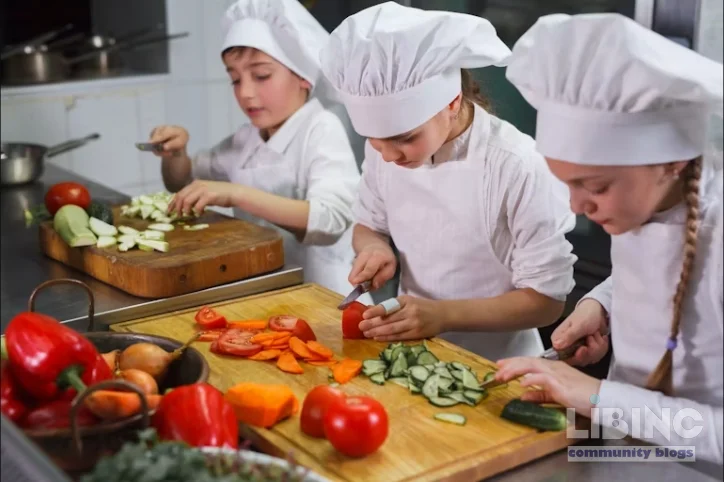
Food skills education in schools combines hands-on cooking with nutrition literacy, so that every pupil learns to peel vegetables, chop, measure portions, follow food safety rules, and discuss ingredients in the context of science, health, and daily life; this practical competence is reinforced by teachers who guide progress with age-appropriate recipes, short experiments, and reflective journals, linking cooking tasks to math (fractions and portions), science (nutrients and reactions), and language arts (recipe writing and communication), while schools pair kitchen sessions with healthy eating messages, school meals, and family engagement to foster consistent practices at home and in social environments. In practice, this approach makes healthy choices more familiar and achievable in everyday life.
How does school-based cooking affect obesity risk?
Evidence shows that school-based cooking programs can influence obesity risk when they are regular, progressive, and integrated with meals and broader nutrition education, because repeated, hands-on experiences with vegetables, whole grains, and affordable ingredients build taste preferences, self-efficacy, and daily routines that favor healthier energy balance, while teachers model healthy choices, and schools provide supportive canteen options, family involvement, and ongoing assessment; without this comprehensive ecosystem, one-off lessons may have limited lasting impact. Real-world success also depends on addressing structural barriers such as time in the timetable, staff workload, and ongoing access to ingredients, which together determine whether gains endure.
What resources are needed to implement school food skills education?
Food skills education requires practical kitchen spaces or safe conversion plans, a budget line for ingredients, classrooms adapted for hands-on work, teacher training focused on safety and pedagogy, and partnerships with local suppliers or community kitchens. When planning, districts should map current assets, identify gaps, and pursue phased investments with clear milestones; the goal is to create an equitable platform where all students can practice skills, regardless of household resources. With strong support, schools can sustain progress beyond initial rollout.
How can schools ensure equitable access to cooking programs?
To ensure equity, programs should be universal rather than selective, with explicit funding for kitchens, equipment, and ingredients in all schools, plus targeted outreach to families facing time and resource constraints. Shared procurement, community partnerships, and translated materials help remove barriers; inclusive scheduling and staff support reduce disparities in participation, while ongoing evaluation highlights gaps and drives adjustments that protect every student’s opportunity to build cooking skills and nutrition literacy.
How can cooking be integrated with other subjects?
Cooking activities naturally connect to science through nutrition and chemistry, to maths via measurements and portions, and to literacy through recipe writing and journaling. Schools can design cross-curricular units where a vegetable recipe reinforces a science experiment on acidity or a math lesson on fractions; such alignment reduces fragmentation and builds a coherent learning pathway that reinforces health messages across disciplines.
How should progress and impact be measured?
Progress should track both process and outcomes: participation rates, cooking confidence, frequency of home cooking, vegetable intake, and, where feasible, BMI trends. Regular surveys, quick assessments after each module, and brief food journals help distinguish causal effects from correlations; dashboards that share results with teachers, families, and policymakers enable timely adjustments and continuous improvement.





Add a comment
To comment, you need to register and authorize
Comments