

The Predynastic Period of Ancient Egypt: From Hunter-Gatherers to State Formation
Table of Contents
- Lead
- Analytics: Tracing the Predynastic Trajectory
- Contrast: Predynastic Societies vs. Later Dynastic Egypt
- Cause and Effect: How the Predynastic World Became a State
- Expert Reconstruction: Debates, Centers, and the Narmer Question
- Conclusion
The Predynastic Period of ancient Egypt is not a simple preface to history but a layered emergence of complex society along the Nile. In the absence of inscriptions, archaeologists reconstruct social organization from settlements, craft specializations, and mortuary practices. The central problem is how dispersed communities stabilized into a shared political order without a formal state. The stakes are methodological as well as political: understanding the shift from mobile foragers to centralized authority clarifies how urban centers, writing, and monarchy took definitive shape. Hidden tensions appear in the evidence as overlapping regional trajectories and contested identities for early rulers. This analysis traces the arc from mobile hunter-gatherers to proto-dynastic cohesion, relying on material culture, settlement patterns, and cross-regional interactions to explain state formation on the Nile.
Analytics: Tracing the Predynastic Trajectory
The transformation from Paleolithic subsistence to Neolithic agriculture represents a decisive reorganization of life along the Nile. The Neolithic transition did not occur at a single moment but through a mosaic of regional adaptations, innovations in pottery, storage, and craft specialization, and evolving social hierarchies. This analytic frame situates the Predynastic Period as a sequence of interlocking developments rather than a uniform culture. The result is a landscape in which rival communities test ways to mobilize resources and legitimize leadership.
Scholars often chart this trajectory through distinct regional cultures and sites, recognizing that the terms of the period refer to excavation loci rather than fixed ethnographic labels. The following sequence captures the major milestones and the cross-cutting processes that ultimately underwrote state formation:
- Faiyum A (ca. 9000–6000 BCE) — a cradle of early agriculture, reed housing, and seasonal mobility that anchors sedentary impulses in the depression south of the Giza plateau.
- Merimde (ca. 5000–4000 BCE) — expansion of organized settlements and granaries, signaling the growth of storage economies and centralized labor organization.
- El-Omari (ca. 4000 BCE) — oval huts, plastered walls, and an intensification of craft production, including early ceramics and textiles.
- Ma’adi and Tasian (ca. 4000–3000 BCE) — architectural sophistication increases, with large community buildings, underground chambers, and more complex wind-breaks.
- Badarian (ca. 4500–4000 BCE) — a notable advance in ceramic technique and social burial practices, foreshadowing elite mortuary economies.
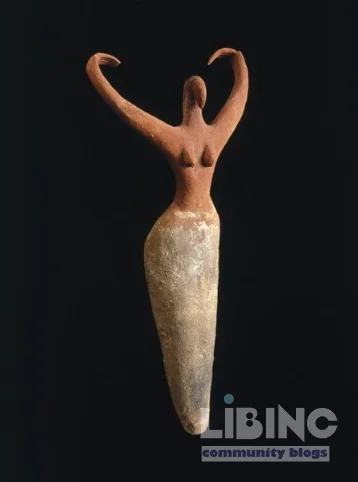
- Amratian/Naqada I (ca. 4000–3500 BCE) — more refined dwellings, black-topware pottery, and early sculpture, signaling rising craft specialization and social differentiation.
- Gerzean/Naqada II (ca. 3500–3200 BCE) — trade networks expand, pottery adopts stylistic Palestinian influences, and metalworking appears in copper and precious metals.
- Naqada III (ca. 3200–3150 BCE) — state-like institutions emerge, symbols travel across the Nile valley, and monumental tombs indicate elite control and ritual complexity.
These phases transmit a core trend: the gradual consolidation of craft, storage, and exchange systems that enable surplus and the emergence of centralized authority. The material culture evolves from simple, functional objects to symbolic objects, indicating a shifting logic of power and ritual. In this synthesis, the evolution from Neolithic practice to proto-dynastic institutions appears less as a rupture and more as the accrual of organizational capabilities across regional centers.
Discussions of writing begin here, with inscriptions appearing on ceramics and bone, not yet forming sentences. The early script is limited and localized, which underscores a broader point: the emergence of a writing system correlates with administrative needs rather than with immediate political consolidation. The Namibian-Nile exchange is visible in pottery, tools, and animal imagery, showing that long-distance contact contributed to innovation rather than simply mirroring Mesopotamian templates. This cross-cultural fertilization becomes a recurring feature of the period, culminating in the Naqada III phase that points toward the dynastic state.
Contrast: Predynastic Societies vs. Later Dynastic Egypt
The Predynastic scene contrasts with the dynastic world in scale, complexity, and governance. The landscapes of Lower and Upper Egypt host different trajectories, yet the late Predynastic period shows a trend toward political centralization that foreshadows unification. The early phase is characterized by multiple centers of gravity, each advancing its own infrastruture and ritual economy. This pluralism, rather than fragmentation, becomes the fertile ground for a decisive political pivot.
Comparison with the later dynastic state highlights several inflection points. Trade networks, including exchanges with Canaan and Mesopotamia, supply imported ideas, not merely goods. This cross-border contact accelerates metallurgy, craft aesthetics, and administrative concepts that later stabilize into a centralized bureaucracy. The emergence of necropolises, large tombs, and regional cult centers also signals a shift from household burial to communal monumental memory, a key feature of early statecraft. In this sense, Predynastic Egypt did not so much abandon regionality as it reorganized it into a framework that could sustain a unified polity.
In this contrast, the role of upper Egyptian polities—Thinis, Naqada, and Nekhen—becomes central. Their growth and interactions, including contested supremacy, illustrate how early competition can yield a centralized solution. The transitional phase is less a single breakthrough and more a series of strategic consolidations under leaders who court legitimacy through monumental tombs, votive offerings, and shared religious language. The result is a landscape in which unity emerges not from uniformity but from the capacity to coordinate multiple centers around a common political project.
Trade, too, operates as a decisive factor in this contrast. Long-distance exchange brings ideas of measurement, standardization, and ritual symbolism that become embedded in the cultural repertoire. These influences do not erase local distinctiveness; they amplify it, producing a hybrid world in which Egyptian identity is both locally rooted and regionally expansive. This dynamic clarifies why the Predynastic period is best understood as a crucible rather than a mere preface to the First Dynasty.
Cause-and-Effect: How the Predynastic World Became a State
The causal chain linking subsistence strategies to political form is intricate and contingent. The shift from hunter-gatherer mobility to sedentary farming creates surplus that supports storage, craft specialization, and ritual economies. With surplus comes the ability to sustain non-food production and allocate labor to monumental projects and burial goods. These material conditions lay the groundwork for a leadership class that can monopolize the most valuable resources and organize large-scale projects.
As craft production intensifies, so does social differentiation. Pottery, metalwork, and architecture become markers of status and political influence. The emergence of cemeteries, the deliberate placement of grave goods, and the increasing frequency of public monuments point to the formalization of elite power and of a social hierarchy capable of mobilizing communities. This is the hinge where economic surplus translates into political legitimacy and ritual authority, enabling a more centralized form of governance to develop across multiple centers.
The role of writing should not be understated in this causal web. Script emerges as a practical tool for administration, record-keeping, and ritual instruction, even if full sentences are initially rare. The Naqada III horizon shows signs of broader administrative concepts—seal impressions, standardized ceramic forms, and symbolic repertoires—that would underpin a later, more formal dynastic state. In this light, writing is less the origin of power than its amplifier, helping to coordinate exchange, religious life, and political authority across a growing polity.
Another crucial driver is military and strategic competition among city-states. The famous Scorpion Kings and later Narmer’s emergence illustrate a competition landscape in which control of resources, trade corridors, and religious legitimacy translates into real political power. The unification of Upper and Lower Egypt, whether achieved by conquest or diplomacy, marks the apex of a long trend toward centralized rule. The dynastic shift rests on the weld between economic capacity, ritual authority, and a governing class capable of organizing and sustaining a state over the long term.
Trade networks also work as catalysts rather than mere channels for goods. Contacts with Mesopotamia introduce new technologies and architectural practices, while Canaanite connections reshape ceramic styles and metalworking techniques. These external influences are not foreign impositions; they become integrated elements of an emerging Egyptian political imagination. The result is a hybrid system that can harness external ideas without surrendering local sovereignty—a feature that helps explain the durability of the early dynastic state once established.
Expert Reconstruction: Debates, Centers, and the Narmer Question
Scholars now debate whether the Predynastic period should be read as a sequence of discrete cultures or as a long, continuous cultural evolution. Some argue for distinct cultural phases tied to particular locales, while others see a single, evolving core culture that gradually expanded through interregional exchange and intermarriage. This tension reflects the broader methodological challenge: can we separate culture from polity when both share material culture, rituals, and burial practices?
The city-states of Thinis, Naqada, and Nekhen appear as early centers in the narrative of unification. In this reconstruction, military campaigns, marriage alliances among elites, and the accumulation of ritual capital contribute to a shared political language. The Scorpion Kings and the figure known as Ka or Sekhen (often connected with Manetho’s references) sit at the heart of this debate. Narmer’s ascent is treated by some as the political culmination of centuries of regional power consolidation, while others insist the unification was more gradual and negotiated than military conquest alone.
Central to the Narmer question is the Narmer Palette, a tangible year-marker that many scholars read as evidence of a military conquest and political consolidation. Yet the interpretation is contested: does this artifact name a single ruler who unified the lands, or does it reflect a composite iconography of a dynastic tradition built over generations? The most persuasive readings link Narmer with the Menes of Manetho’s chronology, but the evidence remains debated. Regardless of the exact identity, the conclusion is clear: a centralized state emerges from a network of polities that progressively align around a shared religious-ritual and political framework. This synthesis inaugurates the Early Dynastic Period and sets the template for three millennia of Egyptian governance.
Conclusion
The Predynastic Period stands as a crucial incubator for the states, symbols, and strategies that would define ancient Egypt. It is a period of regional experimentation in settlement, craft, and burial that gradually coalesces into a unified political order. The evidence for Mesopotamian, Nubian, and Canaanite influences is strong, but these are assimilated into a distinctly Egyptian trajectory rather than absorbed wholesale. The emergence of centralized authority, monumental architecture, and a writing-adjacent administrative culture marks more than a transition; it marks a transformation in how a society understands itself and its future. The Predynastic synthesis culminates in a dynastic state whose founders—whether Narmer, Menes, or another figure—are framed by the very material culture and ritual economy they inherited and transformed. The Nile’s long arc from dispersed communities to a centralized rule provides a model for how complex societies operationalize power across regions and generations.
Closing Synthesis: The Engine of State Formation
A key driver beyond subsistence surplus and monumental ritual is the integrated administrative economy that binds regional centers into a single political project. In Predynastic Egypt, standardized craft forms, storage practices, and ritual calendars enabled coordination across Naqada, Nekhen, and Thinis, creating the governance logic that could mobilize labor and resources on a large scale. This framework—combined with symbolic authority and religious legitimation—offers a practical model for how a dispersed network coalesces into a unified state and lays the groundwork for the Early Dynastic Period.
- Administrative standardization in weights, seals, and ceramic forms linked centers and reduced transaction costs.
- Ritual economy where cemeteries and temple precincts consolidated legitimacy and redistributed surplus.
- Strategic exchange networks along the Nile and cross-border contacts diffused ideas and technologies.
Figure 1 below illustrates how three regional trajectories converge over time into a centralized political project.
Figure 1. Regional trajectories toward state formation
| Center | Phase | Key Developments |
|---|---|---|
| Thinis | Early political hub | Monumental cult complexes |
| Naqada | Naqada I–II | Craft specialization, ceramics |
| Nekhen | Proto-state activity | Burial rites, ritual economy |
| Ma’adi | Late Predynastic | Storage facilities, architecture |
The table shows a distributed system in which surplus, ritual capital, and durable exchange created a network with enough coherence to support centralized rule. In this frame, the emergence of Naqada III marks a decisive expansion of administrative reach, standardization, and ritual memory, enabling a durable political project that could sustain longer-term governance across multiple centers.
Figure 3 demonstrates a nested progression from regional practice to a shared political language, culminating in the dynastic vision that unites Upper and Lower Egypt. The practical logic of administration, calculation, and ritual legitimacy remains the engine of this transformation, rooted in local innovation yet oriented toward a broader polity.
Figure 3. Key milestones toward the Naqada III state
- Proto-state centers
- Thinis
- Nekhen
- Economic consolidation
- Granaries
- Storage compounds
- Monumentalization
- Tombs
- Religious monuments
In this synthesis, external contacts with Mesopotamia and Canaan are absorbed, not copied. Local sovereignty persists, but a shared administrative and ritual vocabulary enables a stable unification that brands the dynastic era as a continuation of Predynastic experimentation rather than a sudden rupture.
What defines the Predynastic period in Egypt?
A comprehensive answer: The Predynastic period is defined by a sequence of regional centres along the Nile where subsistence patterns shift from mobile foraging to sedentary farming, accompanied by craft specialization, storage economies, and evolving burial practices that collectively set the stage for centralized political authority. This evolution is characterized by increasing social differentiation, development of proto-administrative systems, and early symbolic art that foreshadows the later dynastic state. Analytically, it is a transition from dispersed communities to interconnected polities rather than a single, uniform culture. This trajectory illustrates how localized innovation and intercenter exchange can produce a durable political order when combined with ritual legitimacy and economic coordination.
The practical implication is that the roots of state formation lie not in a single breakthrough but in cumulative adjustments across regions that align around shared religious and administrative concepts, paving the way for the Early Dynastic Period.
How did regional centers contribute to unification?
The early centers—Thinis, Naqada, Nekhen—operated as competing yet interconnected hubs. Each developed its own labor organization, craft specializations, and monumental burials while exchanging ideas and goods through Nile networks. Over time, alliances, strategic marriages among elite lineages, and the reproduction of religious language created a common political culture that gradually aligned around a centralized project. In short, unification emerged from coordinated rivalries rather than a simple conquest.
Analytically, this shows that state formation can be a negotiated evolution where legitimacy is reinforced by ritual and shared symbols as much as by coercive force.
What is the Narmer Palette's significance?
The Narmer Palette is widely read as a monument to political consolidation, often interpreted as illustrating a ruler unifying Upper and Lower Egypt. Its imagery suggests a consolidated authority and a ritual framework that legitimizes sovereignty. However, some scholars view it as a composite symbol that reflects a longer dynastic tradition rather than a single decisive act. Regardless, the Palette marks a symbolic threshold where centralized rule becomes visually codified in material culture, enabling a unified political project to take shape.
In practice, the Palette demonstrates how rulers used iconography to link military, religious, and administrative power in service of state formation.
How did trade influence early state formation?
Trade acted as a catalyst, not merely a channel for goods. Contacts with Mesopotamia and Canaan brought new technologies, administrative concepts, and aesthetic ideas that Egypt selectively integrated into its own system. This exchange accelerated craft standardization and the spread of ritual idioms that reinforced a centralized narrative. The result was a hybrid system in which external ideas were adapted to fit local political needs, strengthening the overall capacity to govern.
Thus, cross-border exchange contributed to the administrative sophistication that underpinned eventual unification.
What role did writing and record-keeping play?
Writing emerged gradually as an administrative tool—seal impressions, pottery marks, and proto-inscriptions supported record-keeping and ritual instruction rather than full prose. This evolving script system allowed more reliable management of resources, labor, and monumental offerings. In Naqada III, writing’s administrative function expands, acting as a backbone for a growing bureaucratic class and a shared political culture that could sustain a centralized state.
In short, writing amplified power by coordinating exchange, governance, and ceremonial life across multiple polities.





Add a comment
To comment, you need to register and authorize
Comments