

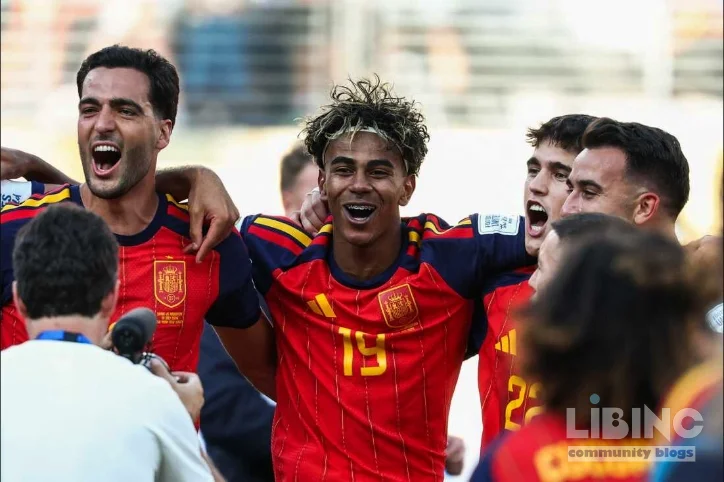
Spain back-to-back World Cup titles: 2026 triumph across men's and women's football
- Analytical core: diagnosing Spain's 2026 triumph
- Contrasts and comparisons: Spain’s path against rivals and past versions
- Cause-and-effect pathways: how governance, culture, and momentum intersect
- Expert reconstruction: implications and the road ahead for Spanish football
Analytical core: diagnosing Spain's 2026 triumph
Spain’s 2026 World Cup title did more than add another trophy to the cabinet. It reflected a systemic convergence: a generation of players who learned to blend the meticulous tempo of La Roja with practical adaptability against diverse styles. The winning goal by Ferran Torres demonstrated more than individual technique. It exposed a coordinated pressure-peel sequence and a finishing instinct cultivated through years of domestic and international competition. This is not just a one-off moment of skill; it is the proof that a national program can translate domestic strength into global resonance.
At the core lies talent depth and tactical elasticity. Spain succeeded by deploying a flexible front six that could morph into one of several attacking shapes while preserving a compact, disciplined defense. Nico Williams’s linked runs and Torres’s decisive strike illustrate a pairing built to exploit space in transitional phases and to convert a single chance into a championship moment. The result is a system that can thrive under pressure and convert control into decisive outcomes, a hallmark of World Cup-winning teams in the modern era.
- Depth of talent across positions, enabling position switches and dynamic pressing
- Coordinated pressing and transition play that minimizes dangerous counterattacks
- Efficient finishing in high-stakes moments, turning limited chances into goals
- Sustained performance from domestic players who inhabit a high-competition environment
These elements do not appear in a vacuum. La Liga’s global profile, combined with a national federation that has learned from past governance missteps, creates a fertile environment for strategic experimentation. The national team benefits from a steady supply line of players who understand how to chess-match opposing tactics in real time, a capability that marks modern champions in the FIFA World Cup era.
Contrasts and comparisons: Spain’s path against rivals and past versions
Spain’s 2026 triumph sits in contrast not only with the 2010 generation that lifted the World Cup but with the more recent fluctuations in the federation’s governance and the public discourse surrounding women’s football. The 2010 side relied on a mature, technically refined approach, but the 2026 group demonstrates that Spain has broadened its playbook. The federation’s alignment with the domestic league, and its willingness to address long-standing structural concerns, create a more resilient pipeline from youth to senior teams. This is a departure from a period when talent could outpace governance and resources, producing sporadic success rather than continued dominance.
Compared with Argentina’s methods in the final, Spain employed a more disciplined, possession-oriented plan that still allowed for direct, efficient finishing when the moment demanded it. The wrinkle: Spain balanced patient buildup with rapid, high-intensity transitions that unsettled an otherwise dangerous opponent. The result was not merely a tactical variation but a demonstration that Spain can tailor its approach to the opponent, a capability that often defines World Cup winners in knockout rounds. The 2026 final thus stands as a case study in how a federation leverages its domestic ecosystem to adapt on the world stage, rather than relying on a single interpretive template.
- 2010 champions versus 2026 multisystem adaptability: a shift in playing philosophy
- Spain’s federation governance and investment patterns compared with contemporary rivals
- Argentina’s style in the final and Spain’s strategic counterpoints
Beyond tactics, the path reveals a broader cultural shift: a generation of players who demand consistency, professional standards, and institutional accountability. The 2023 Women’s World Cup victory, followed by reforms and leadership changes in the federation, set a precedent for aligning men’s and women’s football under shared objectives. That alignment, once considered a risky bet, now appears as a central pillar of Spain’s continued success on the sport’s biggest stage.
Cause-and-effect pathways: how governance, culture, and momentum intersect
The causal chain behind Spain’s 2026 triumph begins with the domestic and international attention generated by the 2023 Women’s World Cup victory. The public pressure to reform coaching, resources, and training environments produced a governance cadence that aligned the federation’s priorities with the requirements of a top-tier national program. As the women’s program thrived, the federation’s leadership faced scrutiny over the Rubiales incident and the broader treatment of players. The outcome was a renewed, more accountable culture that rippled into the men’s program, strengthening player solidarity and institutional trust. This is a rare case in which off-field governance changes translate into on-field performance across both senior national teams.
The chain of causality extends to the players’ relationships with the federation and with each other. In 2023-24, players publicly demanded better resources and leadership, and some, like Borja Iglesias, made principled decisions about participation pending leadership changes. By 2026, those tensions transformed into unity that supported a collective goal: win the World Cup and demonstrate Spain’s ability to govern itself toward excellence. The result is not only a trophy but a demonstration that a national program can recover from reputational shocks and emerge stronger, provided governance keeps pace with performance needs.
- 2015-2023 reform cycle: removing bottlenecks in coaching, resources, and culture
- Public accountability and player-led demands translating into governance changes
- Interconnected progress: women’s and men’s teams reinforcing each other’s development
From there, momentum built through a shared identity—La Roja as a standard-bearer for disciplined, technically proficient football. The final’s result is as much about the federation’s capacity to align incentives and uphold ethical standards as it is about tactical acumen. The broader implication: a country that invests in governance as a core competitive asset can sustain success across generations and genders, a rare but increasingly necessary condition for modern football supremacy.
Expert reconstruction: implications and the road ahead for Spanish football
Experts across coaching, sports governance, and cultural studies converge on a single takeaway: Spain’s model must institutionalize the factors that produced 2026’s double-trophy moment. First, maintain the pipeline from youth academies to senior squads, ensuring that tactical flexibility remains a cultural habit rather than a lucky adjustment. Second, uphold governance reforms and transparency to protect player welfare, safeguard competitive integrity, and preserve trust between players and the federation. Third, continue elevating the women’s program as a national asset, recognizing that progress in one side strengthens the other through shared learning, branding, and resource allocation.
In practical terms, this means expanding elite training centers, investing in data-driven talent identification, and ensuring the domestic league remains a high-velocity training ground for national-team systems. It also means formalizing a shared strategic plan that covers both the men’s and women’s programs, with regular reassessment of coaching structures, medical staff, and scouting networks. If Spain preserves these elements, the 2026 triumph will not be an outlier but a blueprint for sustainable success that other federations will study closely.
- Institutional continuity: codify governance reforms and player welfare standards
- Talent pipelines: scalable academy-to-national-team pathways with data-driven scouting
- Cross-gender alignment: shared resources, coaching education, and performance science
The broader forecast is cautious but optimistic. Spain’s capacity to sustain elite performance hinges on disciplined execution of these reforms, creative adaptation to evolving tactical trends, and a continuing emphasis on ethical leadership. If the federation keeps delivering, the 2026 moment becomes a long-term trend rather than a single historic event, reconfiguring how the world measures a country’s football maturity.
In the immediate horizon, attention turns to the next World Cup cycle and the ongoing development of players who trained under the current system. A successful continuation will depend on maintaining competitive clubs, strong academies, and robust professional environments that echo in the national-team corridors. The alliance between La Liga's global footprint and Spain's national strategy could become a durable engine of success, shaping a generation that learns to win with both skill and integrity on the world stage.
Spain’s 2026 World Cup triumph thus stands as more than a scoreline. It translates into a strategic mandate: sustain a high-performance culture through institutional resilience, ethical leadership, and cross-program collaboration. The message to the football world is clear—when a federation aligns talent, governance, and culture, back-to-back World Cup titles across men’s and women’s teams stop being a rare occurrence and start resembling a national standard.
Ultimately, the 2026 victory confirms a fundamental truth about modern football: success depends as much on how a country manages its football ecosystem as on the brilliance of its players. Spain showed that the right combination of talent, governance, and purpose can lift a nation above the noise of short-term results and into the realm of sustained, multi-generational excellence.
Practical blueprint: operationalizing Spain's model
Spain’s 2026 achievement rests on a repeatable system, not a moment of luck. Core elements include governance reforms, a scalable academy‑to‑senior pipeline, and a culture of flexible, technically precise football that adapts to different opponents. A data‑informed approach guides talent identification, selection, and player welfare, while cross‑program coaching ensures consistency from youth levels to the senior team. In practice, that means regular performance reviews, shared playbooks, and joint training blocks across men’s and women’s programs to sustain excellence over cycles.
- Governance cadence: regular reviews, independent audits, and transparent resource allocation
- Academy‑to‑national‑team pipeline: age‑group ladders, data‑driven scouting, and early exposure to international competition
- Coaching coherence: common playbooks and continuous staff education
- Welfare and performance metrics: safeguarding, medical standards, and workload management
| Stage | Timeframe | Primary Metric | Responsible Body | Example Outcome |
|---|---|---|---|---|
| Youth Academy | U12–U14 | Development minutes | Federation & clubs | Progress to U15 squad |
| Youth Elite | U15–U18 | National call-ups | Academies & national staff | First senior training camp |
| U21 Transition | U19–U21 | Caps earned | National team coaches | Senior debut |
| Senior National | 25+ | Minutes in top leagues | National team & clubs | Competitive senior appearances |
| Data & Scouting | Ongoing | Talent index accuracy | Analytics dept. | Predictive call-ups |
The examples show how a concrete pipeline translates to on‑field consistency: players graduate through defined stages, receive standardized coaching, and reach the national team with matched tactical literacy. A simple shift in emphasis—from raw talent to structured progression—can sustain performance across cycles.
In practice, federations should formalize a shared 10‑year plan covering coaching education, medical staff, scouting, and international competition calendars. If implemented, the Spain model becomes less about a particular generation and more about a durable standard for national football excellence.
What are the core elements that underpin Spain's 2026 success?
Spain’s 2026 achievement rests on a repeatable system, not a moment of luck. Core elements include governance reforms that align resources with performance goals, a scalable academy‑to‑national‑team pipeline, and a culture of tactical flexibility that adapts to different opponents while maintaining technical clarity. A data‑driven approach guides talent identification, selection, and welfare, while shared coaching keeps playing styles coherent across generations. In practice, this means regular performance reviews, cross‑team training blocks, and open channels between federations, clubs, and national squads. This combination yields higher youth progression, more minutes for academy graduates, and better knockout results.
In short, the blueprint turns talent into durable performance through process, accountability, and alignment across football ecosystems.
How do governance reforms translate into on‑field performance?
Governance reforms remove bottlenecks that slow player development, ensuring resources reach training, facilities, medical care, and scouting when they are most needed. The core effect is a culture of accountability, transparency, and long‑term planning that supports coaches and players. Analytical reviews drive better decisions about coaching structures, staffing, and competition schedules, while safeguarding standards protect players from burnout. The practical outcome is steadier investment in talent and a clearer path from academy to national team, which translates into steadier results on the field.
When governance aligns with performance needs, the system becomes resilient during transitions between generations.
What is the academy‑to‑national‑team pipeline, and why does it matter?
The pipeline maps how players rise from youth levels into the senior squad, with defined stages, milestones, and evaluative checkpoints. The importance lies in ensuring each step builds the necessary technical, tactical, and physical foundations before exposure to higher‑level pressures. A robust pipeline reduces abrupt jumps, improves adaptation in knockout games, and increases collective confidence across generations. It also enables consistent coaching philosophies, so players arrive with a similar interpretive framework and tactical literacy.
With a transparent pipeline, teams can forecast talent availability and plan resource allocation more effectively.
What practical steps can other countries take to replicate this model?
Start with a governance audit to identify bottlenecks and align incentives across federations, leagues, and national teams. Build a formal academy‑to‑senior pathway with age‑group ladders, standardized coaching curricula, and shared performance metrics. Invest in cross‑program coaching and joint training blocks to unify playing philosophy. Establish data‑driven scouting and a welfare framework that protects players’ health and development. Finally, create a long‑term plan with measurable targets for minutes played by academy graduates and progression rates to the senior team, plus annual reviews to adjust the plan as needed.
Replication is most effective when the plan is codified and resourced, not when it hinges on a single generation of talent.
What role did cross‑program alignment between men’s and women’s teams play in the 2026 success?
Cross‑program alignment amplified learning, resource sharing, and branding impact. Shared coaching education, performance science, and talent identification create a single ecosystem that benefits both sides. The practical gains include parallel development timelines, improved staff retention, and a unified national football narrative that engages fans, sponsors, and young players. This collaboration also helps in tackling governance challenges, as reforms in one program can be tested and scaled within the broader system.
In short, joint planning magnifies impact beyond the men's team alone.
What metrics should federations track to ensure sustained success?
Key metrics include academy graduation rates to the U21 and senior levels, minutes played by academy graduates in top leagues, and progression rates from youth to senior national teams. Additional indicators cover player welfare outcomes (injury incidence, load management), coaching‑staff stability, and the return on investment in facilities and data analytics. Regular benchmarking against peer nations helps keep targets ambitious and realistic. Together, these metrics provide a dashboard to drive continuous improvement over cycles.





Add a comment
To comment, you need to register and authorize
Comments
Compared with the final’s opponent, Spain emphasized disciplined possession while remaining capable of decisive transitions. The wrinkle is not a single template but a capacity to tailor the approach to the opponent’s profile, a hallmark of champions who win by adapting rather than by rigid adherence to a single ideal. The broader advantage lies in the interconnectedness of the system: the domestic ecosystem feeds national teams with players who understand the emphasis on ethics, performance culture, and long-term planning. Youth systems, professional leagues, and the national program reinforce one another, creating a feedback loop in which improvements in governance raise the floor for players while on-field success strengthens support for reform.
Beyond tactics, there is a cultural shift reflected in a generation that expects consistency, professional standards, and institutional accountability. The cross-pollination with the women’s program—where reforms and leadership changes fostered a more aligned vision—contributes to a shared language of excellence that permeates both sides of the federation. The challenge for observers is whether this alignment is durable across leadership changes and economic cycles, and what happens when unexpected shocks test the system’s credibility. The discussion invites scrutiny of governance, resource allocation, and the social contract binding players, clubs, and the federation, asking how to sustain a multi‑layered competitive advantage over many cycles.
A core strength is talent depth: players who can switch positions, press as a unit, and adjust their roles in response to the opponent’s choices. When a team can rotate minds and bodies without losing cohesion, it becomes resilient under pressure—a hallmark of World Cup-winning teams in the modern era. Equally important is the environment that supports such a system: La Liga’s global profile brings top-level competition and a steady stream of players who inhabit a culture of professionalism. The federation’s governance has also matured, learning from earlier missteps and creating a clearer path from youth academies to the senior team. This alignment between club, league, and national authority is what makes the system more than the sum of its parts.
Of course, risks remain. Talent depth can erode if financial shocks or misaligned incentives shrink opportunities for younger players. An overreliance on a handful of clubs could render the system brittle if those clubs hit periods of weakness. And even robust governance must guard against stagnation, ensuring that tactical openness does not become experimentation without discipline. The challenge is to keep pushing the pipeline, doing so with transparency, rigorous coaching standards, and a shared sense of purpose that transcends cycles of leadership.
A fruitful discussion would probe how to sustain this model beyond a single triumph. What metrics best indicate that coaching, scouting, and player welfare have become embedded rather than episodic responses to success? How can the federation preserve momentum if domestic economic conditions change or if competing leagues draw away senior players? And how might Spain further integrate men’s and women’s programs so that improvements in one realm reinforce the other? The answers will require cooperation across sport science, governance, and cultural leadership, but they promise a durable blueprint for modern football that others will study and possibly imitate.