

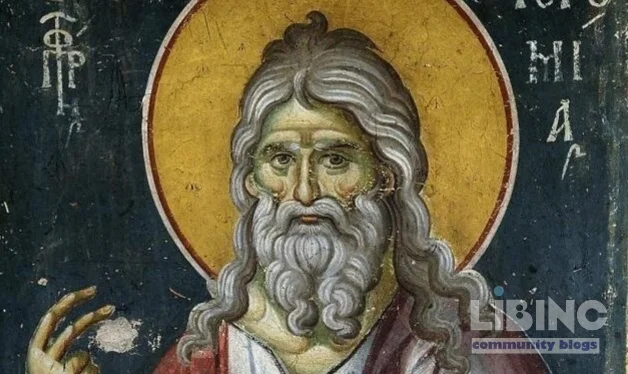
Jeremiah and Alexander in Alexandria: Prophecy, Empire, and the Birth of a Hellenistic Christian World
Through contrast: prophetic hope versus imperial power
Jeremiah embodies a prophetic stance anchored in covenant faithfulness and ethical repentance. He speaks to a people driven by stubborn historical memory and imminent judgment, offering hope not as political victory but as a transformed relationship with God. Alexander embodies imperial power and strategic genius: he reshapes geographies, administrates vast territories, and forges a pervasive cultural environment. The contrast is not merely about belief versus force; it is about how each form of authority seeks to reorder time itself—Jeremiah by divine promise within a decaying polity, Alexander by rapid spacetime compression that compresses distant lands into a single cultural orbit. The juxtaposition asks: can faith flourish within or against a system designed to maximize control? The answer begins with recognizing the limits of each frame and the ways in which their tensions generate new possibilities for collective memory.
The second layer of contrast concerns audience and reception. Jeremiah’s message targets a covenant people in crisis, a community oriented toward repentance and renewal. Alexander’s campaigns address a world eager for connection, exchange, and common language, even if those gains come through conquest. The different audiences explain why each figure becomes an emblem in Alexandria’s mythos—one as a herald of divine hope, the other as a founder of a cosmopolitan city that would later host Greek learning and Christian preaching. This divergence matters because it clarifies how memory is mobilized in service of future projects. The texts produced in later centuries interpret Jeremiah through the lens of Christian Messianism, while Alexander’s memory is reframed as the historical catalyst of a shared Greek world. In the end, the contrast reveals how memory can be repurposed to serve radically different ends without erasing the original meanings.
Several critical tensions emerge from this contrast. The prophetic horizon, rooted in a transcendent future, can risk anti-imperial isolation; the imperial horizon, rooted in a telos of control, can suppress prophetic critique. Yet in Alexandria, these trajectories are not mutually exclusive; they create a hybrid space in which prophetic expectation and cosmopolitan infrastructure reinforce one another. This hybrid space helps explain the sudden emergence of an unusually connected world in which travel, commerce, and education enable the rapid dissemination of ideas. The region thus shows how prophecy and empire, when filtered through a shared urban culture, become catalysts for transformations that neither could achieve alone. The enduring insight is that memory, when reinterpreted, can bridge seemingly incompatible projects and lay groundwork for new kinds of spiritual and cultural synthesis.
To appreciate the role of rhetoric and memory in this synthesis, it is helpful to consider a small set of mechanisms that render Jeremiah and Alexander legible in Alexandria. These include:>
- Memory networks: temples, tombs, and literary citations that anchor the past in living urban culture
- Symbolic geography: the city’s streets, harbors, and theater spaces as stages for narrative proclamation
- Educational ecosystems: schools and libraries that translate and circulate texts across language and culture
Each mechanism retools the ancient memory of a prophet and a conqueror into a contemporary language that can reach diverse audiences. The result is a city whose memory itself becomes a form of power, capable of supporting future movements beyond the lifetime of either Jeremiah or Alexander.
Cause and effect: how the Hellenistic world enabled the Gospel
Alexander’s conquests did more than claim territories; they created a transregional network that carried ideas, goods, and languages across vast distances. The widespread diffusion of Greek became a lingua franca for commerce, scholarship, and governance. This shared linguistic platform lowered cognitive barriers for cross-cultural communication, a prerequisite for the rapid spread of early Christian teaching. The cause-and-effect logic is straightforward: empire-friendly infrastructure creates space for new religious movements to flourish. In this sense, Alexander’s reach becomes an enabling condition for the Apostolic mission to transcend local particularisms. The historical lesson is that political scale, correctly harnessed, opens doors for spiritual transformation without prescribing its content.
The Hellenistic world also redefined time in a way that suits prophetic messages. Time became a horizon with long-range implications rather than the short, household-scale rhythms of a single polity. For Jeremiah, this expanded horizon was the New Covenant, a promise that would one day surpass the limitations of a singular community. For the Apostles, the Greek-speaking world provided both a method and a geography for preaching to Gentiles. The consequence is not merely a larger audience, but a more nuanced conversation among peoples who shared a common medium—language—that allowed reasoned debate, rhetorical engagement, and mutual critique. The synergy of language and time is thus central to why the Gospel could travel far beyond its origins.
In addition to language and timing, the urban texture of Alexandria matters. The city’s grid—its ports, markets, theaters, and cemeteries—became a living archive of intercultural encounter. Merchants, soldiers, scholars, and clergy intersected in public spaces where memory could be contested and reinterpreted. A text could travel with a trader, a philosophy could be debated in a lecture hall, and a rite could be performed in a temple that also housed a Christian congregation later. This urban dynamism demonstrates a critical cause: the material culture of the Hellenistic city turned spiritual messages into accessible experiences. The Gospel’s spread was not only a matter of ideas; it was the consequence of a reliable, interconnected urban ecology that the Alexander-driven world made possible.
The mechanics of diffusion in this period can be summarized in a concise triad:
- Linguistic accessibility: Greek as a shared lexicon reduces translation frictions
- Cultural proximity: cosmopolitan norms ease cross-cultural reception
- Institutional channels: libraries, schools, and urban networks that carry texts and ideas
Each component reinforces the others, producing a cascade that turns a local Jewish prophetic tradition into a message with universal potential. The result is a cultural map in which Jeremiah’s hope for a new covenant aligns with a world prepared to receive a message that transcends any single ethnic or political identity.
Expert reconstruction: re-reading ancient memory and tradition
A cautious approach to ancient memory recognizes the provisional nature of some traditions while still appreciating their explanatory power. The Lives of the Prophets, among other texts, preserves a tradition that Alexander, upon founding Alexandria, learned of the Egyptian reverence for Jeremiah and ordered the prophet’s relics moved to the new city. While historians debate the factual accuracy of this account, its persistence in religious memory reveals a meaningful perception: holy figures cross borders and inspire cities. The tradition serves as a valuable interpretive lens, not as a catchall for historical fact, but as a clue about how communities imagined the interaction between divine messengers and political founders. The cultural memory surrounding Jeremiah in Egypt and the later sanctification of his tomb reflect a broader pattern: sacred figures are integrated into urban memory as agents who protect and bless the city. This pattern suggests that religious memory can function as a civic resource, enabling communities to imagine a shared destiny beyond the immediate present.
Critically, the Alexandrian reminiscence of Jeremiah highlights how pious traditions can outlive the historical personage. The story of relics being placed to guard the city from venomous snakes and crocodiles is emblematic of how sacred figures become protectors in the public imagination. The value of such traditions lies in their capacity to foster moral cohesion and to anchor a city in a narrative of divine care. Yet the scholarly task is to disentangle symbol from fact, to distinguish plausible historical kernels from later hagiographic embellishments. The expert reconstruction thus demands a careful balance: honor the social usefulness of memory while subjecting it to rigorous philological and historical scrutiny. In Alexandria, this balance becomes especially visible, because memory and city-building intertwine across generations.
From a hermeneutical perspective, Jeremiah’s prophetic themes—justice, repentance, and hope—are reinterpreted within a cosmopolitan frame that the Hellenistic world supplies. The New Covenant motif transforms into a universal horizon, not by erasing particular Jewish expectations but by reframing them in a language intelligible to a broad audience. The effect is a kind of catalytic reinterpretation, where a particular promise becomes a shared expectation. This is why the Alexandrian memory matters: it shows how communities re-script sacred narratives so they can travel farther and more widely. If we read Jeremiah through the Alexandrian lens, we can see how a local prophetic message becomes a global narrative, capable of crossing cultures while preserving its essential claim about relationship with the divine. This interpretive move is not mere fancy; it is a structural observation about how memory can be instrumental in historical change.
In sum, the Jeremiah–Alexander pairing in Alexandria functions as a case study in the interplay of memory, city, and world-historical change. The tradition surrounding relics and protection may be legendary, but its persistence reveals a durable human inclination: to inscribe sanctity into urban space in order to legitimize a city’s role in larger historical destinies. The expert reconstruction therefore does not settle the question of fact; it clarifies how communities use memory to sustain a sense of purpose across generations. It also suggests that the spiritual and the civic are not separate domains but convergent streams that feed into the same historical rivers. Looking at Jeremiah and Alexander in Alexandria reveals how religious thought and imperial infrastructure can co-create a world ready for the Christian proclamation, even when the actors themselves do not foresee that outcome.
The four analytic frames together illuminate a shared dynamic: prophecy as horizon, empire as channel, memory as engine, and language as vehicle. This dynamic is not a tidy chronology but a web of causes and effects that unfold across centuries. The New Covenant promise remains the essential spiritual motive, while the Greek-speaking, cosmopolitan milieu supplies the practical means for that motive to reach distant shores. The Alexandrian instance demonstrates how a city can become a living archive of history in which the past is always being reinterpreted to fit present needs. The larger implication for scholars and readers is clear: to understand the spread of the Gospel, we must study not only texts but also cities, languages, and memory cultures that enable a message to travel and endure.
Ultimately, Jeremiah and Alexander in Alexandria reveal a truth about historical causality: events do not exist in isolation but derive meaning from the networks they inhabit. The prophet’s call for renewal enters a cultural economy shaped by an empire’s reach, and the empire, in turn, creates the conditions for a spiritual movement to gain a universal audience. The synergy is subtle, not sensational, but it is powerful. The memory of Jeremiah becomes a moral map for a world whose people increasingly live in shared spaces and speak a common tongue. Alexander’s architectural and linguistic legacy does not replace the prophetic word; it amplifies its capacity to travel. The result is a historical pattern in which divine purpose and human initiative converge to reframe the world’s spiritual possibilities.
From this vantage point, the early Christian mission emerges less as a sudden rupture than as a carefully prepared continuation of a long negotiation between sacred memory and urban modernity. The Hellenistic city, especially Alexandria, is not a mere backdrop but an active agent in shaping the conditions for gospel proclamation. Jeremiah’s hope and Alexander’s worldliness are thus two halves of a whole: one gives direction, the other gives reach. The combined effect is a world whose communication networks, educational institutions, and cultural norms can sustain a message beyond its own borders. In that sense, the unity of Jeremiah and Alexander in Alexandria becomes a prototype for understanding how prophecy and empire together forge the paths along which history travels toward a transformed horizon.
In this sense, the historical echo of Jeremiah and Alexander in Alexandria is not simply about two figures; it is about a matrix in which memory, city, and culture interact to shape history. The prophetic message of the New Covenant meets the cosmopolitan infrastructure of the Hellenistic realm, and the Gospel finds a home in a world already prepared for its universal address. The synthesis is not automatic, but it is real: a city that memorizes holiness and commands culture can nurture a faith that travels. The ancient tradition of Jeremiah’s tomb in Egypt and the Alexandrian reverence for his relics thus becomes a metaphor for how spiritual ideas travel: not as a single leap of faith, but as a measured ascent through shared spaces, libraries, markets, and streets that connect hearts and minds across differences. The story remains instructive: great prophetic calls, when embedded in expansive human networks, can catalyze transformations that far outlast their moment of origin. This is the enduring lesson of Jeremiah and Alexander in Alexandria—their legacies, kept alive by memory and language, continue to shape how the world receives a message that claims to redeem it all.
To search for solutions within modern scholarship, we must honor the complexity of this historical moment. The Alexandrian nexus shows that spiritual movements require not only doctrinal clarity but also infrastructural ecosystems capable of carrying ideas across space and time. The Gospel’s spread depended on a language that could be understood by many and a city that could host a diverse audience. The dual legacy of Jeremiah and Alexander thus illustrates a broader principle: religious insight thrives when it is supported by the cultural and logistical means of communication. The Alexandrian case remains a compelling reminder that the conduits of memory and the channels of exchange are as crucial to salvation history as the ideas themselves. By acknowledging this, researchers can better interpret how ancient texts and urban legacies co-create a global conversation that continues to unfold today.
In the final analysis, the Jeremiah–Alexander symbology in Alexandria offers a compact narrative of how prophecy and empire collaboratively shape a world capable of embracing transformative faith. The prophet’s horizon of the New Covenant provides moral clarity, while the conqueror’s infrastructural logic supplies the reach. Together, they demonstrate that a city can become a birthplace of cultural and spiritual transformation, not by erasing difference but by enabling dialogue across it. This synthesis remains a guiding perspective for understanding the historical underpinnings of Christian civilization—a reminder that even seemingly divergent forces can, in their own time, prepare the way for a message that claims, in due course, a universal audience.
As a final reflection, consider how the memory of Jeremiah in Alexandria and the historical force of Alexander’s empire invite us to read history as a conversation between prophetic fidelity and civic imagination. The interaction between memory and city reveals that faith moves through lives, not merely through texts. The propagation of the Gospel depends on such coordinated forces—divine promise and human networks—working in concert. Jeremiah and Alexander in Alexandria, then, is not just a historical coquettish pairing; it is a durable model for how the past informs the present and, in turn, inspires the future of universal proclamation.
Thus, the ancient crossroad in Alexandria stands as a symbolic hinge in world history. It demonstrates that the trajectory toward a salvific world is not dictated by a single actor but by the synergistic operation of prophetic hope and cosmopolitan exchange. The New Covenant promise finds a receptive audience precisely because the Greek world offers a common language and shared spaces for dialogue. By reading Jeremiah and Alexander together in this city, we glimpse how memory can be mobilized to sustain a mission across cultures and centuries. The result is a richer, more nuanced understanding of how a world prepared for the Gospel, through the very act of connecting distant peoples, can become a world ready to hear the message that redeems it all.
Because history is not a linear script but a network of possibilities, the Jeremiah–Alexander axis in Alexandria remains a fertile ground for inquiry. It invites scholars to examine how ancient prophecies gain resilience when embedded in a diverse urban ecosystem. It invites theologians to appreciate how a universal language can emerge from the interplay of memory, city-building, and cultural exchange. And it invites readers to see how divine purposes can operate through human strategies without compromising either integrity. The model remains instructive: to understand the origin of a global message, study how memory travels through cities, languages, and networks that endure beyond the lifetimes of any single actor. In that sense, Jeremiah and Alexander’s shared city is a living laboratory for the history of ideas and the history of faith.
In the end, the Alexandria connection embodies a paradox worth holding tightly: the sacred and the secular can co-create a future that neither could achieve alone. Jeremiah teaches that fidelity to covenant shapes longing for salvation; Alexander demonstrates how administrative genius can knit disparate worlds into a common frame of reference. The synthesis is not accidental but historical, not incidental but structural. When we read Jeremiah and Alexander in Alexandria, we are reading the long preface to a narrative in which the Gospel moves through a world already prepared to listen. The result is a historical pattern that remains relevant for understanding how spiritual messages reach across boundaries—through memory, language, and city power—toward a horizon that is continually being shaped by human and divine cooperation.
Ultimately, the Jeremiah–Alexander axis in Alexandria offers a compact, instructive model for understanding the emergence of a global Christian narrative. It shows how prophetic hope and imperial reach can co-create a world of shared memory and common language, enabling a message to travel farther and faster than either force could alone. The Hellenistic milieu did not merely host a future faith; it actively prepared the ground for it. And the memory of Jeremiah, carried into Egypt and celebrated in the city’s life, became part of a story that would travel to the ends of the earth. Such is the enduring lesson of Jeremiah and Alexander in Alexandria: history moves not by solitary leaps of genius but by the patient, intricate weaving of faith, culture, and community into a tapestry capable of bearing lasting, universal meaning.
In closing, the legacy of Jeremiah and Alexander in Alexandria is best understood as a demonstration of how prophecy and empire, when situated within a vibrant urban culture, can lay the groundwork for a global message. The New Covenant promise and the world-spanning Greek world together create a durable ecology for early Christian proclamation. To study this crossroad is to witness how memory becomes a public resource, how language becomes a bridge, and how cities become the crucibles of historical change. It is in these crucibles that the world learns to listen to a message not limited by borders but capable of inviting every nation to share in a single, hopeful future.
Ultimately, Jeremiah and Alexander in Alexandria remind us that the past is not inert but operative. The prophetic call and the imperial project, though distant in time, converged in a city that catalyzed a universal conversation. The memory of Jeremiah, reimagined within a cosmopolitan context, and the cultural infrastructure laid by Alexander’s empire together foster a world prepared to receive the Gospel. This is not merely a historical curiosity; it is a diagnostic key for understanding how transformative faith travels through space and time—through a city that remembers, a language that unites, and a history that keeps moving toward the horizon of salvation.
In the final balance, the Jeremiah–Alexander nexus in Alexandria offers a disciplined, historically grounded lens on how ancient ideas become modern transformations. It demonstrates that the spread of faith relies as much on the architecture of memory and the routes of communication as on the content of the message itself. The crossroad remains instructive: it shows that prophecy and empire, when interpreted through a shared urban life, can provide a durable framework for the world’s encounter with salvation. This is the enduring implication of recognizing Jeremiah and Alexander in Alexandria as more than mere biographical curiosities—an enduring reminder of how history becomes history through the intertwined acts of memory, language, and space.
With this perspective, scholars and readers gain a clearer view of how a divine horizon accommodates human ingenuity. The path from Jeremiah’s covenant to the Gospel’s reach runs through the city’s streets, libraries, and markets, where voices from diverse backgrounds speak in a common tongue. Alexandria’s memory of Jeremiah and its reverence for Alexander illuminate the intricate choreography by which a world prepared for the Gospel becomes a world open to salvation. The two figures, though separated by time, share a single stage: a city that, through memory and exchange, carries forward a message that claims the whole world.
Thus, the tale of Jeremiah and Alexander in Alexandria endures as a compact study of how history’s decisive moments are not isolated but interconnected. It shows that prophecy can set horizons while empire provides conduits. When memory and language cooperate, a message can travel, be received, and endure. The Alexandrian crossroads invites us to see history as a living conversation that continues to shape how faith speaks to the world today, using the same tools that once carried both a prophetic hope and an empire to the furthest shores.
In sum, the Jeremiah and Alexander story offers a blueprint for understanding the complex ecology that makes global proclamation possible. It is a reminder that the past is a resource, not merely a record—a resource that equips communities to translate ancient promises into universal hopes. If we attend to the Alexandrian memory of Jeremiah and the linguistic and urban infrastructure that Alexander helped to unfurl, we glimpse how a world prepared for the Gospel continues to be a world capable of receiving it. The insight remains as relevant now as it was then: history’s great transformations arise where memory, language, and space come together to carry a message beyond the boundaries of any single tradition.
Final reflection: Jeremiah and Alexander in Alexandria illustrate a paradox of history—divine purpose working through human means to accomplish a universal outcome. The prophet’s voice of renewal intersects with the empire’s reach, and the city becomes the theatre where both legacies perform. The New Covenant promises bloom within a Greek-speaking world, and that world’s networks enable a message to travel from shore to shore. This is the enduring testament of the Alexandrian crossroad: that faith’s advance often travels on the back of cultural and logistical infrastructures forged by human ambition, yet guided by a providential horizon that invites all nations to share in salvation.
The synthesis offered by this analysis does not diminish either Jeremiah’s depth or Alexander’s boldness; rather, it shows how their distinct trajectories anticipate a truth: historical change of this magnitude requires a confluence of visions, languages, and spaces. In Alexandria, the prophecy and the empire do not cancel each other; they complement, challenge, and expand the possible. The result is a world where a covenantal hope finds a broad highway, where streets and seas become routes for a message that speaks to every people under heaven. This is the enduring pattern of the Jeremiah–Alexander axis in Alexandria: a memory that travels, a language that unites, and a city that receives the future with open streets and waiting ears.
Ultimately, the Jeremiah and Alexander narrative in Alexandria is not a marginal footnote of antiquity but a lasting illustration of how history’s great moments are woven from multiple threads. It teaches that prophetic courage and imperial reach can support one another when oriented toward a common good: the liberation of hearts and minds through a message of universal relevance. The Alexandrian memory thus remains a testament to the power of human culture to prepare the ground for divine revelation, and to the possibility that seemingly divergent forces can together seed a future larger than the sum of their parts.
In light of this, the enduring lesson for scholars, theologians, and students of history is to study not only what prophetic words say, but how memory and city-building enable those words to travel. The Jeremiah–Alexander axis in Alexandria shows that the spread of the Gospel relied as much on infrastructure and language as on doctrinal clarity. It invites us to examine how modern memory cultures, libraries, and urban networks continue to shape how a message is heard around the world. By attending to these layers, we uncover the hidden mechanics of history’s most transformative communications—the quiet, persistent work of moving a truth from a moment into a global conversation that endures through time and space.
And so the study concludes with a practical takeaway for contemporary readers: to understand how ideas cross borders, we must trace the routes they ride—the roads of memory, the channels of language, the architectures of city life. The Jeremiah–Alexander crossroad offers a blueprint for how such routes are built and sustained. It is a reminder that history’s most enduring transformations arise not from singular acts but from the interplay of memory, mobility, and meaning across generations. In Alexandria, as in the broader world, the journey of a message toward all nations begins with a path laid by memory, language, and city-building—the path that Jeremiah and Alexander, in their different ways, help to illuminate.
Finally, the synthesis invites ongoing inquiry: how do current theological narratives hinge on urban and linguistic infrastructures? The Jeremiah–Alexander example encourages scholars to consider not only the text but the networks that carry it. It pushes historians to examine how memory is kept alive in ritual, education, and public space. And it challenges theologians to recognize that a message intended for a particular people can become universal precisely because urban cultures offer channels for dialogue, exchange, and interpretation. The Alexandrian crossroads thus remains a living laboratory for understanding how sacred memory and secular power together shape the trajectory of faith in the contemporary world.
Through contrast: prophetic hope versus imperial power
Jeremiah embodies a prophetic stance anchored in covenant faithfulness and ethical repentance. He speaks to a people driven by stubborn historical memory and imminent judgment, offering hope not as political victory but as a transformed relationship with God. Alexander embodies imperial power and strategic genius: he reshapes geographies, administrates vast territories, and forges a pervasive cultural environment. The contrast is not merely about belief versus force; it is about how each form of authority seeks to reorder time itself—Jeremiah by divine promise within a decaying polity, Alexander by rapid spacetime compression that compresses distant lands into a single cultural orbit. The juxtaposition asks: can faith flourish within or against a system designed to maximize control? The answer begins with recognizing the limits of each frame and the ways in which their tensions generate new possibilities for collective memory.
The second layer of contrast concerns audience and reception. Jeremiah’s message targets a covenant people in crisis, a community oriented toward repentance and renewal. Alexander’s campaigns address a world eager for connection, exchange, and common language, even if those gains come through conquest. The different audiences explain why each figure becomes an emblem in Alexandria’s mythos—one as a herald of divine hope, the other as a founder of a cosmopolitan city that would later host Greek learning and Christian preaching. This divergence matters because it clarifies how memory is mobilized in service of future projects. The texts produced in later centuries interpret Jeremiah through the lens of Christian Messianism, while Alexander’s memory is reframed as the historical catalyst of a shared Greek world. In the end, the contrast reveals how memory can be repurposed to serve radically different ends without erasing the original meanings.
Practical bridging practices for memory and city life
To translate the Jeremiah–Alexander dynamic into a 21st‑century urban setting, three actionable patterns guide work in modern cities: memory networks, symbolic geography, and educational ecosystems. Memory networks transform sacred sites and archives into living civic assets—tombs, libraries, and museums become spaces for public dialogue about ethics, justice, and belonging. Symbolic geography treats harbors, streets, and theaters as stages for narrative proclamation, linking past witnesses to current civic issues. Educational ecosystems connect universities, schools, and cultural institutions to curate cross‑disciplinary courses and public programs that pair ancient memory with contemporary urban life.
- Memory networks: preserve and reanimate memory nodes as public resources (e.g., a tomb repurposed as a civic archive).
- Symbolic geography: design city spaces as venues for inclusive storytelling about justice and shared futures.
- Educational ecosystems: weave texts and histories into curricula, public lectures, and community programs.
Scenario: a city festival guides locals along a Jeremiah–Alexander memory trail, pairing prophetic themes with modern urban challenges, while university panels explore how ancient memory informs today’s intercultural dialogue. Outcome: heightened civic memory, broader audience reach, and a durable foundation for universal conversations in a cosmopolitan setting.
Memory diffusion across time: a compact table
| Mechanism | Ancient Example | Modern Application |
|---|---|---|
| Memory networks | Temple precincts and relics anchor city memory | Public archives and museums become daily reference points for civic identity |
| Symbolic geography | Harbors and theater spaces used for narrative proclamation | Urban routes and cultural districts host storytelling about belonging and justice |
| Educational ecosystems | Libraries and schools circulate texts across languages | Cross‑disciplinary programs connect theology, history, and urban studies |
| Linguistic diffusion | Greek as lingua franca enables cross‑cultural debate | Multilingual curricula and public programs reach diverse communities |
| Urban infrastructure | City grids and markets sustain movement and exchange | Digital platforms and transit networks harmonize knowledge flows |
The texts produced in later centuries interpret Jeremiah through the lens of Christian Messianism, while Alexander’s memory is reframed as the historical catalyst of a shared Greek world. In the end, the contrast reveals how memory can be repurposed to serve radically different ends without erasing the original meanings.
Memory, language, and space are the three levers that carry a message beyond borders.
Cause and effect: how the Hellenistic world enabled the Gospel
Alexander’s conquests did more than claim territories; they created a transregional network that carried ideas, goods, and languages across vast distances. The widespread diffusion of Greek became a lingua franca for commerce, scholarship, and governance. This shared linguistic platform lowered cognitive barriers for cross-cultural communication, a prerequisite for the rapid spread of early Christian teaching. The cause-and-effect logic is straightforward: empire-friendly infrastructure creates space for new religious movements to flourish. In this sense, Alexander’s reach becomes an enabling condition for the Apostolic mission to transcend local particularisms. The historical lesson is that political scale, correctly harnessed, opens doors for spiritual transformation without prescribing its content.
The Hellenistic world also redefined time in a way that suits prophetic messages. Time became a horizon with long-range implications rather than the short, household-scale rhythms of a single polity. For Jeremiah, this expanded horizon was the New Covenant, a promise that would one day surpass the limitations of a singular community. For the Apostles, the Greek-speaking world provided both a method and a geography for preaching to Gentiles. The consequence is not merely a larger audience, but a more nuanced conversation among peoples who shared a common medium—language—that allowed reasoned debate, rhetorical engagement, and mutual critique. The synergy of language and time is thus central to why the Gospel could travel far beyond its origins.
In addition to language and timing, the urban texture of Alexandria matters. The city’s grid—its ports, markets, theaters, and cemeteries—became a living archive of intercultural encounter. Merchants, soldiers, scholars, and clergy intersected in public spaces where memory could be contested and reinterpreted. A text could travel with a trader, a philosophy could be debated in a lecture hall, and a rite could be performed in a temple that also housed a Christian congregation later. This urban dynamism demonstrates a critical cause: the material culture of the Hellenistic city turned spiritual messages into accessible experiences. The Gospel’s spread was not only a matter of ideas; it was the consequence of a reliable, interconnected urban ecology that the Alexander-driven world made possible.
The mechanics of diffusion in this period can be summarized in a concise triad:
- Linguistic accessibility: Greek as a shared lexicon reduces translation frictions
- Cultural proximity: cosmopolitan norms ease cross-cultural reception
- Institutional channels: libraries, schools, and urban networks that carry texts and ideas
Each component reinforces the others, producing a cascade that turns a local Jewish prophetic tradition into a message with universal potential. The result is a cultural map in which Jeremiah’s hope for a new covenant aligns with a world prepared to receive a message that transcends any single ethnic or political identity.
Expert reconstruction: re-reading ancient memory and tradition
A cautious approach to ancient memory recognizes the provisional nature of some traditions while still appreciating their explanatory power. The Lives of the Prophets, among other texts, preserves a tradition that Alexander, upon founding Alexandria, learned of the Egyptian reverence for Jeremiah and ordered the prophet’s relics moved to the new city. While historians debate the factual accuracy of this account, its persistence in religious memory reveals a meaningful perception: holy figures cross borders and inspire cities. The tradition serves as a valuable interpretive lens, not as a catchall for historical fact, but as a clue about how communities imagined the interaction between divine messengers and political founders. The cultural memory surrounding Jeremiah in Egypt and the later sanctification of his tomb reflect a broader pattern: sacred figures are integrated into urban memory as agents who protect and bless the city. This pattern suggests that religious memory can function as a civic resource, enabling communities to imagine a shared destiny beyond the immediate present.
Critically, the Alexandrian reminiscence of Jeremiah highlights how pious traditions can outlive the historical personage. The story of relics being placed to guard the city from venomous snakes and crocodiles is emblematic of how sacred figures become protectors in the public imagination. The value of such traditions lies in their capacity to foster moral cohesion and to anchor a city in a narrative of divine care. Yet the scholarly task is to disentangle symbol from fact, to distinguish plausible historical kernels from later hagiographic embellishments. The expert reconstruction thus demands a careful balance: honor the social usefulness of memory while subjecting it to rigorous philological and historical scrutiny. In Alexandria, this balance becomes especially visible, because memory and city-building intertwine across generations.
From a hermeneutical perspective, Jeremiah’s prophetic themes—justice, repentance, and hope—are reinterpreted within a cosmopolitan frame that the Hellenistic world supplies. The New Covenant motif transforms into a universal horizon, not by erasing particular Jewish expectations but by reframing them in a language intelligible to a broad audience. The effect is a kind of catalytic reinterpretation, where a particular promise becomes a shared expectation. This is why the Alexandrian memory matters: it shows how communities re-script sacred narratives so they can travel farther and more widely. If we read Jeremiah through the Alexandrian lens, we can see how a local prophetic message becomes a global narrative, capable of crossing cultures while preserving its essential claim about relationship with the divine. This interpretive move is not mere fancy; it is a structural observation about how memory can be instrumental in historical change.
In sum, the Jeremiah–Alexander pairing in Alexandria functions as a case study in the interplay of memory, city, and world-historical change. The tradition surrounding relics and protection may be legendary, but its persistence reveals a durable human inclination: to inscribe sanctity into urban space in order to legitimize a city’s role in larger historical destinies. The expert reconstruction therefore does not settle the question of fact; it clarifies how communities use memory to sustain a sense of purpose across generations. It also suggests that the spiritual and the civic are not separate domains but convergent streams that feed into the same historical rivers. Looking at Jeremiah and Alexander in Alexandria reveals how religious thought and imperial infrastructure can co-create a world ready for the Christian proclamation, even when the actors themselves do not foresee that outcome.
The four analytic frames together illuminate a shared dynamic: prophecy as horizon, empire as channel, memory as engine, and language as vehicle. This dynamic is not a tidy chronology but a web of causes and effects that unfold across centuries. The New Covenant promise remains the essential spiritual motive, while the Greek-speaking, cosmopolitan milieu supplies the practical means for that motive to reach distant shores. The Alexandrian instance demonstrates how a city can become a living archive of history in which the past is always being reinterpreted to fit present needs. The larger implication for scholars and readers is clear: to understand the spread of the Gospel, we must study not only texts but also cities, languages, and memory cultures that enable a message to travel and endure.
Ultimately, Jeremiah and Alexander in Alexandria reveal a truth about historical causality: events do not exist in isolation but derive meaning from the networks they inhabit. The prophet’s call for renewal enters a cultural economy shaped by an empire’s reach, and the empire, in turn, creates the conditions for a spiritual movement to gain a universal audience. The synergy is subtle, not sensational, but it is powerful. The memory of Jeremiah becomes a moral map for a world whose people increasingly live in shared spaces and speak a common tongue. Alexander’s architectural and linguistic legacy does not replace the prophetic word; it amplifies its capacity to travel. The result is a historical pattern in which divine purpose and human initiative converge to reframe the world’s spiritual possibilities.
From this vantage point, the early Christian mission emerges less as a sudden rupture than as a carefully prepared continuation of a long negotiation between sacred memory and urban modernity. The Hellenistic city, especially Alexandria, is not a mere backdrop but an active agent in shaping the conditions for gospel proclamation. Jeremiah’s hope and Alexander’s worldliness are thus two halves of a whole: one gives direction, the other gives reach. The combined effect is a world whose communication networks, educational institutions, and cultural norms can sustain a message beyond its own borders. In that sense, the unity of Jeremiah and Alexander in Alexandria becomes a prototype for understanding how prophecy and empire together forge the paths along which history travels toward a transformed horizon.
In this sense, the historical echo of Jeremiah and Alexander in Alexandria is not simply about two figures; it is about a matrix in which memory, city, and culture interact to shape history. The prophetic message of the New Covenant meets the cosmopolitan infrastructure of the Hellenistic realm, and the Gospel finds a home in a world already prepared for its universal address. The synthesis is not automatic, but it is real: a city that memorizes holiness and commands culture can nurture a faith that travels. The ancient tradition of Jeremiah’s tomb in Egypt and the Alexandrian reverence for his relics thus becomes a metaphor for how spiritual ideas travel: not as a single leap of faith, but as a measured ascent through shared spaces, libraries, markets, and streets that connect hearts and minds across differences. The story remains instructive: great prophetic calls, when embedded in expansive human networks, can catalyze transformations that far outlast their moment of origin. This is the enduring lesson of Jeremiah and Alexander in Alexandria: their legacies, kept alive by memory and language, continue to shape how the world receives a message that claims to redeem it all.
To search for solutions within modern scholarship, we must honor the complexity of this historical moment. The Alexandrian nexus shows that spiritual movements require not only doctrinal clarity but also infrastructural ecosystems capable of carrying ideas across space and time. The Gospel’s spread depended on a language that could be understood by many and a city that could host a diverse audience. The dual legacy of Jeremiah and Alexander thus illustrates a broader principle: religious insight thrives when it is supported by the cultural and logistical means of communication. The Alexandrian case remains a compelling reminder that the conduits of memory and the channels of exchange are as crucial to salvation history as the ideas themselves. By acknowledging this, researchers can better interpret how ancient texts and urban legacies co-create a global conversation that continues to unfold today.
In the final analysis, the Jeremiah–Alexander symbology in Alexandria offers a compact narrative of how prophecy and empire collaboratively shape a world capable of embracing transformative faith. The prophet’s horizon of the New Covenant provides moral clarity, while the conqueror’s infrastructural logic supplies the reach. Together, they demonstrate that a city can become a birthplace of cultural and spiritual transformation, not by erasing difference but by enabling dialogue across it. This synthesis remains a guiding perspective for understanding the historical underpinnings of Christian civilization—a reminder that even seemingly divergent forces can together seed a future larger than the sum of their parts.
Thus, the tale of Jeremiah and Alexander in Alexandria endures as a compact study of how history’s decisive moments are not isolated but interconnected. It shows that prophecy can set horizons while empire provides conduits. When memory and language cooperate, a message can travel, be received, and endure. The Alexandrian crossroads invites us to see history as a living conversation that continues to shape how faith speaks to the world today, using the same tools that once carried both a prophetic hope and an empire to the furthest shores.
In sum, the Jeremiah and Alexander story offers a blueprint for understanding the complex ecology that makes global proclamation possible. It is a reminder that the past is a resource, not merely a record—a resource that equips communities to translate ancient promises into universal hopes. If we attend to the Alexandrian memory of Jeremiah and the linguistic and urban infrastructure that Alexander helped to unfurl, we glimpse how a world prepared for the Gospel continues to be a world capable of receiving it. The insight remains as relevant now as it was then: history’s great transformations arise where memory, language, and space come together to carry a message beyond the boundaries of any single tradition.
Final reflection: Jeremiah and Alexander in Alexandria illustrate a paradox of history—divine purpose working through human means to accomplish a universal outcome. The prophet’s voice of renewal intersects with the empire’s reach, and the city becomes the theatre where both legacies perform. The New Covenant promises bloom within a Greek-speaking world, and that world’s networks enable a message to travel from shore to shore. This is the enduring testament of the Alexandrian crossroad: that faith’s advance often travels on the back of cultural and logistical infrastructures forged by human ambition, yet guided by a providential horizon that invites all nations to share in salvation.
The synthesis offered by this analysis does not diminish either Jeremiah’s depth or Alexander’s boldness; rather, it shows how their distinct trajectories anticipate a truth: historical change of this magnitude requires a confluence of visions, languages, and spaces. In Alexandria, the prophecy and the empire do not cancel each other; they complement, challenge, and expand the possible. The result is a world where a covenantal hope finds a broad highway, where streets and seas become routes for a message that speaks to every people under heaven. This is the enduring pattern of the Jeremiah–Alexander axis in Alexandria: a memory that travels, a language that unites, and a city that receives the future with open streets and waiting ears.
Ultimately, the Jeremiah and Alexander narrative in Alexandria remind us that the past is not inert but operative. The prophetic call and the imperial project, though distant in time, converged in a city that catalyzed a universal conversation. The memory of Jeremiah, reimagined within a cosmopolitan context, and the cultural infrastructure laid by Alexander’s empire together foster a world prepared to receive the Gospel. This is not merely a historical curiosity; it is a diagnostic key for understanding how transformative faith travels through space and time—through a city that remembers, a language that unites, and a history that keeps moving toward the horizon of salvation.
1) How do memory networks help faith travel in ancient and modern cities?
In plain terms, memory networks serve as durable tracks that connect sacred narratives to daily urban life, and they work best when local sites, libraries, and public programs actively curate the past as a shared resource. This pattern mirrors how Jeremiah’s covenant language could retell itself across cultures in Alexandria, as churches, schools, and cultural centers later reinterpreted that memory for new audiences. The broader implication is that public memory becomes a civic asset that enables universal messages to resonate across languages and borders. In practice, cities today can cultivate memory networks by preserving sacred spaces, hosting inclusive archives, and linking them to community programs that address justice, peace, and human dignity.
Analytically, memory networks create a feedback loop: memory informs practice, practice tests memory, and memory adapts to new contexts, expanding the potential reach of a message without diluting its core claim.
2) What role did language play in spreading the Gospel across the Greek world?
The first sentence explains that language acts as a bridge that lowers barriers to understanding, while the second clause notes that shared linguistic norms foster reasoned debate and critique. This dual role helps us see why the Gospel moved so readily in a cosmopolitan setting like Alexandria, where Greek served as a common medium across diverse communities. In modern terms, multilingual dissemination and accessible translations function similarly, enabling a message to travel further and land with clearer meaning in new cultures. The practical upshot is that translation and bilingual education should be prioritized in outreach strategies to maintain fidelity while broadening reach.
Analytically, language is not merely a vehicle for words; it shapes interpretive horizons and the pace at which ideas can travel, which is crucial for cross-cultural dialogue.
3) How does the concept of a cosmopolitan city influence today’s mission and scholarship?
The introductory sentence asserts that cosmopolitan cities provide a living laboratory where memory, media, and mobility intersect to facilitate universal dialogue. The second sentence adds that urban infrastructures—libraries, universities, and public forums—translate sacred narratives into language and relevance for diverse audiences. The takeaway is that cities today should cultivate inclusive spaces that welcome multiple traditions, encourage critical inquiry, and support cross‑disciplinary learning. This approach helps faith communities stay credible and responsive while maintaining doctrinal integrity. The broader scholarly implication is that city life is not mere backdrop but an active agent in historical change.
Analytically, urban pluralism becomes a catalyst for reinterpretation and dissemination in global contexts.
4) What is the central tension between prophecy and empire in Alexandria?
The opening sentence states that prophecy offers a horizon of renewal while empire provides infrastructural reach, a pairing that can either clash or cooperate depending on how they orient toward the common good. The second sentence notes that in Alexandria these trajectories converge, creating a hybrid space where memory and power reinforce one another. Practically, this means modern readers should look for ways prophetic voices can guide policy and planning in multicultural settings without suppressing critique. The lasting lesson is that infrastructure and integrity can co‑create a more expansive social horizon when guided by shared moral aims.
Analytically, the synergy emerges when spiritual aims influence governance and civic design rather than when each operates in isolation.
5) How should scholars approach ancient memory when it intersects with city-building?
The opening sentence emphasizes careful, contextual analysis as essential for understanding how memory shapes public life. The second sentence argues that relics and temple memory should be studied not as fixed facts but as dynamic narratives that influence urban identity. The practical implication is methodological: researchers should combine philology, archaeology, and urban studies to understand how memory becomes public and influential. The broader significance is that memory is not a passive record but an active resource for civic imagination and future directions.
Analytically, memory acts as a living script that cities can repurpose to catalyze social and spiritual transformations.
6) What is the overarching takeaway about prophecy and empire for global proclamation?
The first sentence states that prophecy and empire can jointly illuminate a path toward universal proclamation when they engage with a shared urban culture. The second sentence notes that memory and language, grounded in city life, can carry a message farther than either force alone. The practical implication is clear: to communicate globally, continue building bridges through education, culture, and inclusive urban spaces. The broader insight is that history’s great transformations emerge not from solitary acts but from the orchestration of memory, mobility, and meaning across networks.




Add a comment
To comment, you need to register and authorize
Comments
A further dimension concerns who receives the message. Jeremiah’s audience is a covenant people in crisis, a community oriented toward renewal through repentance. Alexander’s campaigns address a world hungry for connection and exchange, a world that requires a shared language to coordinate commerce and culture. That divergence helps explain why each figure accrues symbolic power in Alexandria’s story: one as a bearer of divine hope, the other as a founder of a cosmopolitan city that incubates Greek learning and Christian preaching later on. Memory here is never neutral. It is mobilized in service of future aims, and that mobilization can be redirected by readers across centuries. The crucial question for contemporary discussion is how memory can be repurposed without erasing original meanings, and how a city can become a stage where moral critique and intellectual hospitality meet. When the two trajectories are allowed to inhabit the same space, one can hold its ground while the other expands reach, and the tension can become a creative force rather than a sterile paradox.
Finally, attention to the mechanisms that sustain this synthesis—memory networks, symbolic geography, educational ecosystems—helps us see how an ancient pair can illuminate modern urban life. Temples and tombs anchor the past in the present, streets and harbors provide spaces for narrative proclamation, and libraries and schools translate and circulate texts across languages. In such a setting, memory becomes a resource for civic life, a tool for bridging differences while preserving core commitments. The discussion invites us to consider how our own cities cultivate memory as a form of power, and how scholars, theologians, and city planners might collaborate to keep memory honest, inclusive, and generative. What would it mean to read deeply the Jeremiah tradition through an Alexandrian lens, to ask how prophetic honesty can travel without losing its ethical edge, and to examine how a cosmopolitan infrastructure can nurture a hearing for renewal that does not collapse into mere accommodation? The answer lies in recognizing memory as a living, contested practice that can sustain moral courage in diverse streets and markets.