

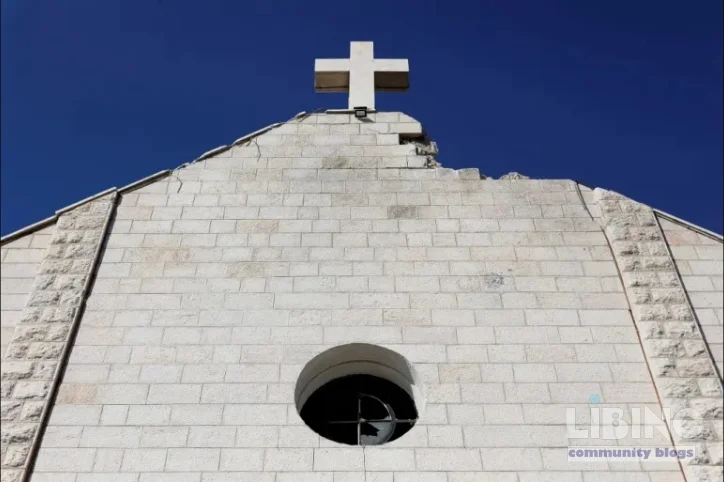
Kairos Palestine II and the Church of England: An analytic shift toward Palestinian Christian testimony
The General Synod of the Church of England has resolved to listen seriously to major Palestinian Christian calls, including Kairos Palestine II, and to review investments in light of the ICJ Advisory Opinion on the Occupied Palestinian Territory. This move signals a structural shift in the church’s public engagement with voices from the Holy Land and a willingness to confront uncomfortable moral questions in Gaza. It asks not merely for sympathy but for disciplined engagement with testimonies, legal reasoning, and humanitarian data that have been widely documented. The decision invites a debate about what constitutes faithful witness in a modern Anglican context, and whether listening can translate into a credible public theology after Gaza.
Its stakes extend beyond terminology. A positive reception could broaden the church’s moral authority, deepen interfaith dialogue, and sharpen its stance on human rights, while the risk remains that political heat will be weaponized to police religious language or to mute critical scrutiny of policy. The Synod’s move, therefore, becomes a test case for whether a traditional religious institution can recalibrate its public witness in a contested geopolitical moment without surrendering doctrinal commitments to justice and peace.
Placed in a broader historical frame, the conversation touches on a difficult question: how a former imperial actor should reckon with its legacy in Palestine while navigating contemporary humanitarian and legal norms. The Kairos Palestine II document, the testimony of Palestinian Christians, and the International Court of Justice’s Advisory Opinion on the Occupied Palestinian Territory provide a set of coordinates for evaluating Anglican alignment with international law and moral accountability. The result is not merely a policy tweak but a rethinking of Anglican witness across theology, public life, and global responsibility.
Contents
- Analytics: reading the Synod decision in context
- Contrast: competing framings and moral vocabularies
- Causes and effects: structural drivers and potential outcomes
- Expert reconstruction: implications for policy and practice
Analytics: reading the Synod decision in context
Analytically, the Synod’s resolution to hear Kairos Palestine II marks a deliberate move from passive tolerance to active listening. The act is not a public endorsement or a doctrinal verdict; it is a procedural commitment to engage with contested narratives, to subject them to theological and juridical scrutiny, and to translate testimony into policy questions. This distinction matters because it preserves space for rigorous critique while opening space for witness that has long been marginal in mainstream Anglican discourse. The central question becomes: why does listening to Palestinian Christian voices matter for Anglican identity in the 21st century?
Palestinian Christian testimony, UN reporting, and the International Court of Justice’s opinions interact to create a dense evidentiary field. In this field, the Kairos Palestine II document functions as a moral artefact that presses the Church to reflect on its theology of land, sovereignty, and human rights. The analysis must distinguish between critique of policy and the illegitimate targeting of a people. Where some see an opportunity to foreground humanitarian law and risk, others fear a widening of the space for anti-Semitic insinuations if criticism becomes indistinguishable from delegitimization of the state of Israel. This tension is not a surface feature; it reveals the fundamental challenge of maintaining robust interfaith solidarity while holding power to account.
Within Anglican governance, the move translates into concrete questions: will the Church adjust its investment criteria in light of the ICJ Advisory Opinion? Will it revise public statements about the Holy Land to reflect a more nuanced engagement with both Palestinian Christian witness and Israeli state policy? And how will the church calibrate its public theology so that it remains rigorous, credible, and compassionate in Gaza’s humanitarian emergency? These questions demand a method that treats religion as a public, legally legible agent rather than as a private sentiment or a partisan voice. The Kairos Palestine II moment invites such method, even as it tests its resilience under political pressure.
Dimensions of change
- Theology: rethinking doctrines of land, justice, and suffering in light of Gaza testimonies.
- Public witness: aligning sermons, statements, and advocacy with documented humanitarian realities.
- Solidarity: widening interfaith conversations to include diverse Jewish perspectives that oppose the Gaza blockade and speak against Zionist excesses.
- Accountability: linking advocacy to governance, ethical investments, and transparent reporting on impact.
The shift is not an endorsement of any particular political program but a demand for principled reasoning in a space that has historically collapsed moral language into geopolitical shorthand. The Kairos Palestine II moment thus becomes a test case for whether a major church can sustain constructive disagreement while preserving its integrity as a voice for justice. If the church can demonstrate disciplined listening followed by principled action, it will have created a pathway for theology to engage with urgent realities rather than retreat into abstract pieties. If not, the risk is hybrid: a performative listening that yields no durable change in policy or practice, and a public discourse that remains divided and unproductive.
Key questions for further analysis
- What concrete policy shifts follow from listening to Kairos Palestine II?
- How will investment reviews reflect international legal norms without compromising institutional governance?
- Which voices within Palestinian Christian communities will be prioritized in ongoing dialogue?
- How will interfaith partners translate critique into constructive action rather than into polemics?
Contrast: competing framings and moral vocabularies
Critics from the pro-Israel side—most prominently the Board of Deputies—argue that engagement with Palestinian Christian documents risks endorsing a rhetorical stance that could slide into anti-Semitic territory. The instrument of listening, they claim, becomes a vector for delegitimizing the state of Israel or for letting the language of suffering eclipse the complexities of security and peace. In contrast, advocates for Kairos Palestine II emphasize that any rigorous moral inquiry must confront the lived reality of Gaza’s civilians, the scale of devastation, and the legal constraints that govern occupation. The question is whether moral accountability to human suffering can be decoupled from broad political positions about national legitimacy.
The public exchange has also highlighted intra-Jewish contention over how to speak about Gaza and Israel. Jewish voices for liberation, who welcomed the Synod’s decision, articulate a broader trend: many Jews—whether religious or secular—oppose the destruction of Gaza and challenge blanket alignment with state policy. This intracommunity plurality undermines the stereotype of a monolithic Jewish response to Palestinian suffering. It also places the Church in a position to facilitate dialogue that acknowledges both Palestinian claims and Jewish concerns about safety, memory, and anti-Semitism. The challenge is to cultivate a dialogical space where critiques of policy do not become proxies for hostility toward a people or their faith.
Strategically, the contrast exposes a deeper disagreement about the purpose of interfaith dialogue. Is dialogue primarily a risk management exercise designed to maintain harmony within a multi-faith society, or a moral enterprise aiming to expose injustice and demand accountability wherever it appears? The Kairos Palestine II moment tests the Church’s ability to sustain this tension without surrendering clarity of purpose. The Board’s outraged response, when read alongside the testimony from Palestinian Christians and diverse Jewish voices, may reveal more about political fear and reputational risk in modern public life than about the ethical boundaries of Christian speech.
Framing contrasts
- Confining dialogue to non-controversial topics versus embracing hard moral questions.
- Singling out specific concerns about precision of language versus defending the integrity of witness to suffering.
- Policing speech to protect communal safety versus expanding the space for critical conscience in public life.
- Assuming a single unified Jewish position versus recognizing plural Jewish perspectives on Gaza and policy.
Causes and effects: structural drivers and potential outcomes
To understand why this moment matters, it helps to connect the Synod’s decision to long-standing structural forces in British public life. Britain's historical role in Palestine—through the Balfour Declaration, the Mandate, and a long arc of theological exegesis that sometimes aligned with dispossession—casts a shadow over contemporary debates about justice and memory. The Synod’s move to hear Palestinian Christian voices can be read as an attempt to reckon with that legacy, not to perpetuate it. In this sense, the decision is a moral corrective aimed at aligning Anglican public witness with contemporary standards of human rights and international law.
The causal chain extends to practical policy instruments. If the church translates listening into action, we should expect a systematic review of investments in light of the ICJ’s guidance and related human rights assessments. The effect would be to grant the church a sharper conscience in its financial portfolio, potentially leading to divestment from or reorientation of holdings that conflict with humanitarian norms. This consequence reflects a broader redefinition of church-state in a globalized world, where moral authority increasingly intersects with fiduciary responsibility and risk management in international markets.
At the same time, the decision triggers a set of deleterious side effects if not carefully managed. The risk of inflamed interreligious tensions rises when voices interpret listening as political alignment rather than empirical critique. In the Gaza context, where civilian harm continues and humanitarian access remains constrained, any perception of bias can erode trust and impede necessary humanitarian diplomacy. The key to avoiding this pitfall lies in transparent processes, inclusive dialogue, and robust documentation that links testimony to policy choices and to measurable outcomes on the ground.
Consequences to watch
- Policy alignment with international legal norms, including the ICJ framework for occupation and settlement controversies.
- Transformations in financial governance, including ethically informed investments and risk disclosures.
- Shifts in interfaith engagement that incorporate diverse Jewish and Christian voices beyond traditional boundaries.
- Public perception of Anglican credibility amid ongoing humanitarian crises in Gaza.
Expert reconstruction: implications for policy and practice
From an expert vantage point, the reconstruction of Anglican policy after Gaza requires a disciplined pathway—from testimony to theology to practice. The Kairos Palestine II moment should be treated as a catalyst for a four-part program: (1) theological rearticulation, (2) governance reform, (3) interfaith coalition-building, and (4) accountability and measurement. Each part must be coherent with the others to avoid the trap of performative rhetoric that fails to translate into tangible change. The aim is to develop a theology after Gaza that remains faithful to biblical justice while engaging the realities of contemporary international law and humanitarian norms.
First, theology must engage with questions of land, rights, and solidarity in ways that resist simplistic absolutism. The Church needs a robust framework for evaluating national narratives against the universality of human rights and the dignity of all people, including Palestinian Christians and Israeli civilians. Second, governance should introduce explicit criteria for advocacy and investment, transparently reporting how statements relate to policy actions and financial decisions. Third, interfaith coalitions must be broadened to include Jewish, Muslim, and secular voices that share a commitment to ending violence and protecting civilian life. Fourth, accountability requires clear benchmarks, independent review mechanisms, and public reporting on progress, setbacks, and lessons learned.
The practical implications extend beyond rhetoric. If the Synod’s approach proves effective, Anglican leadership could become a testing ground for how churches navigate contested moral terrains without capitulating to partisan pressures. The integration of Kairos Palestine II into church life would then serve as a model—albeit a difficult one—for other faith communities grappling with similar dilemmas: how to acknowledge suffering, uphold legal norms, and act with courage in the face of political tumult. The ultimate measure is not the salience of a single document but the consistency of policy choices with a principled, evidence-based public witness.
Next steps for implementation
- Establish a multi-stakeholder commission to evaluate the Kairos Palestine II impact on theology, governance, and finance.
- Publish annual progress reports detailing policy changes, investment decisions, and interfaith initiatives connected to Palestinian Christian testimony.
- Develop a public-facing narrative that distinguishes lawful critique of state policy from antisemitic rhetoric, with clear examples and safeguards.
- Expand interfaith forums to include a broader spectrum of Jewish and Muslim voices, ensuring representation of diverse perspectives.
The trajectory of this policy experiment will illuminate how far a major church can go in aligning its public witness with rigorous moral reasoning, human rights obligations, and the lived realities of people in Gaza and the broader Occupied Palestinian Territory. If successful, it could redefine Anglican public life as a field of serious moral inquiry rather than a battleground of ideological loyalties. If unsuccessful, it will expose the limits of listening without binding action and accountability to a transparent policy framework.
In sum, Kairos Palestine II stands at the intersection of theology, ethics, and diplomacy. The Church of England’s willingness to hear Palestinian Christian testimony—and to subject that testimony to legal and humanitarian scrutiny—represents a decisive step toward a theology after Gaza. The ultimate test is not the novelty of the idea but the durability of the church’s response: consonant with justice, credible to diverse communities, and capable of translating conscience into concrete acts of solidarity and reform.
Concrete governance blueprint: translating listening into action
While the Synod affirmed serious listening, the next step is a binding framework that turns testimony into practice. This section outlines a governance blueprint that connects Kairos Palestine II, international law, and ethical investments to concrete actions in church life. It relies on clear criteria, accountable structures, and measurable outcomes that the public can examine.
| Area | Purpose | Timeline | Metrics |
|---|---|---|---|
| Theology framework | Articulate land, rights, and solidarity in light of Gaza testimonies | 12–18 months | Revised doctrine outline; 2 public seminars |
| Governance reforms | Establish criteria for advocacy and investment | 6–12 months | Policy memo; investment screen published |
| Interfaith coalition | Broaden voices beyond traditional partners | Ongoing | 6 forums/year; 20 participants |
| Accountability reporting | Transparency and external scrutiny | Annual | Annual impact reports |
Through that framework, the church can demonstrate how testimonies shape theology, finance, and public advocacy in a way that is transparent and verifiable. It also ensures safeguards against rhetoric that could weaponize dialogue or compromise safety for Jewish communities.
Implementation steps and nested governance:
- Theology and doctrine — publish revised doctrinal framework on land, rights, and solidarity within 12–18 months.
- Investment policy — develop an ethical investment screen, disclose criteria, and publish annual portfolio impact.
- Public advocacy — set criteria for statements that align with humanitarian law and human rights, with safeguards against antisemitism.
- Accountability — establish an independent review panel, publish annual progress reports, and invite external audits.
In practice, this could mean divesting from companies linked to settlements, redirecting funds to humanitarian relief, and funding interfaith dialogues that include Palestinian Christian voices and Jewish partners.
How does Kairos Palestine II influence Anglican governance and accountability?
Kairos Palestine II shapes Anglican governance by anchoring the church's public witness in a shared moral framework that requires governance structures to translate testimonies into explicit policy actions; in practice, this means a formal pipeline from testimonies and legal norms to investment choices, statement guidelines, and public reports, with defined roles and timelines that make each step auditable; it also creates accountability by demanding measurable outcomes, such as annual portfolio reviews aligned with international law and documented interfaith engagement. The approach connects theology and finance in transparent terms so that witness translates into tangible, trackable changes over time.
Analytically, this approach pressures the institution to demonstrate cause-and-effect between stated values and enacted policy.
What concrete steps are proposed to implement the Synod's listening stance?
The proposed steps include a formal governance pipeline that translates testimonies into specific actions: revise investment criteria, publish annual impact reports, expand interfaith dialogues, and establish independent oversight. In the short term, a doctrinal refocus would be published within 12–18 months, while the portfolio screen would be ready within six months; in parallel, interfaith forums would begin immediately, with yearly progress reviews to sustain momentum.
How will diverse Palestinian Christian and Jewish voices be represented?
Representation is to be broadened through a rotating multi-stakeholder council including Palestinian Christian leaders, Jewish scholars, and Muslim partners, ensuring a balance of perspectives on Gaza, security, and humanitarian relief. This structure would complement existing diocesan bodies and include transparent nomination processes, minimum participation targets, and annual reporting on voices engaged and policy implications realized.
What safeguards prevent antisemitism while addressing Gaza?
Safeguards include explicit policy language that distinguishes legitimate critique of state policy from prejudice against Jewish people; a formal code of conduct for public statements; and independent monitoring that flags language crossing lines into antisemitism or denial of Israel’s right to exist. This ensures dialogue remains focused on human rights and civilian protection.
What metrics will track success of policy and investment changes?
Metrics include portfolio alignment with humanitarian norms, annual reports detailing actions taken in response to testimonies, the number and quality of interfaith engagements, and independent reviews assessing learning and course corrections. These measures provide clear evidence of progress rather than rhetoric alone.
How does the ICJ Advisory Opinion feed into policy decisions?
The ICJ Opinion provides a legal frame for evaluating occupation, settlements, and humanitarian access; the church can use it to justify investment choices and advocacy that comply with international law, while recognizing the complexities of security concerns. The governance framework translates such norms into concrete steps and public reporting.




Add a comment
To comment, you need to register and authorize
Comments