

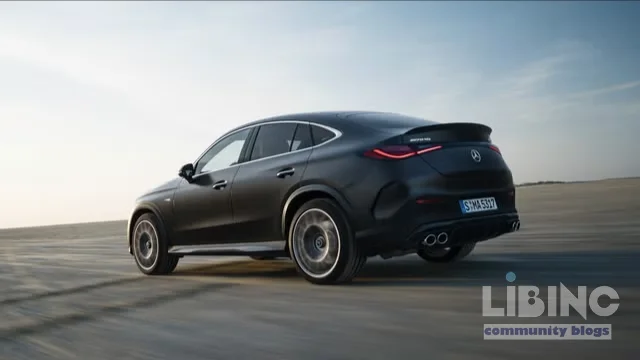
Mercedes-AMG GLC53: Pivoting to an Inline-Six for High-Performance Real-World Driving
Table of contents
- Analytic perspective on the Mercedes-AMG GLC53 powertrain
- Contrast with the four-cylinder AMG GLC models
- Cause and effect: how engineering choices shape dynamics
- Expert reconstruction: engineering decisions, trade-offs, and implications
Engines don’t just produce numbers; they shape what a car feels like in everyday driving. The 2027 Mercedes-AMG GLC53 marks a deliberate move by AMG away from the familiar four-cylinder performance narrative and toward a powered-by-6 philosophy that prioritizes usable thrust, refined delivery, and consistent performance across real-world conditions. The centerpiece is a revised M256 family inline-six, a powertrain that marries forced induction with a 48-volt mild-hybrid system and an electric supercharger to smooth the line between low-speed response and sustained high-rpm acceleration. The question this article tackles is not only “how fast?” but also “how does this powertrain change the character and competitiveness of AMG in the mid-size SUV segment?”
Analytic perspective on the Mercedes-AMG GLC53 powertrain
The GLC53 uses a 3.0-liter inline-six that is both supercharged and turbocharged, with a direct-injection, dual-overhead-cam layout, aluminum block and head, and an intercooler designed to preserve charge density as boost climbs. The most visible shift here is the integration of a 10-horsepower electric supercharger—an upgrade from the previous 7-horse unit—that works in concert with a single dual-scroll turbo. The intention is to deliver immediate throttle response while sustaining higher peak boost. This is not only about raw horsepower; it is about the gestalt of torque delivery and the predictability of boost in everyday driving, where an SUV user experiences, more than anything, a broad and usable RPM window for acceleration and overtaking.
- Engine architecture: inline-six, DOHC, 24-valve, aluminum block and head, direct injection.
- Boost strategy: electric supercharger plus a single dual-scroll turbo delivering up to 21.8 psi of boost in the higher gear ranges.
- Hybrid integration: 48-volt mild-hybrid system with a starter-generator capable of up to 23 hp and 151 lb-ft, though these figures don’t inflate the nominal power number.
The headline figure is 443 hp at 6100 rpm and 472 lb-ft of torque at 2200 rpm, with an overboost extension to 472 lb-ft briefly. The power peak occurs at a relatively accessible rpm range compared with the old high-spirited four-cylinders, which peaked higher but delivered power that was less usable at low speeds. The result is a broad torque curve that makes the GLC53 feel eager from a standstill and muscular through midrange, a trait AMG has historically used to mask heavier curb weights and front-end inertia in performance SUVs.
From a control standpoint, the GLC53 relies on a nine-speed automatic and AMG-tuned 4Matic all-wheel drive to distribute torque with minimal notice during rapid transitions. The chassis and drivetrain integration is intended to keep the car sane at the limit without sacrificing the immediacy of throttle response that enthusiasts expect from AMG. The 48-volt system adds a layer of refinement—enabling the starter-generator to smooth ignition and startup sequences and to provide an extra torque source when the clutch engages, which improves feel without breaking the propulsion envelope. This is the core reason the GLC53 can feel more like a nimble, muscular road car rather than a straight-line brute in daily driving.
The car’s mass, quoted around 4,800 pounds, remains the most consequential constraint on performance in this segment. AMG’s engineering choices aim to preserve momentum and traction, not to pretend weight does not exist. The result is a vehicle that delivers forceful acceleration, but its dynamic bite—how it communicates through steering and suspension—lags behind a lighter, more nimble compact. Yet the combination of a well-sorted powertrain with advanced dampers and rear-wheel steering means the GLC53 can be surprisingly confident in mid-corner transitions and highway merges, provided the driver respects the mass and chassis balance.
Why this matters: the GLC53’s engine strategy demonstrates AMG’s intent to make a high-performance SUV feel like a connected, predictable partner rather than a raw power exercise. The electric boost and mild-hybrid assistance ensure that the engine isn’t chasing peak rpm for torque; instead, the torque arrives in a way that keeps the vehicle feeling ready and decisive in most everyday situations, with a reserve that reveals itself when the road opens up.
Contrast with the four-cylinder AMG GLC models
Mercedes has historically used the GLC as a proving ground for high-performance powertrains with either four cylinders in the GLC43 or V-8s in the GLC63. With the introduction of the GLC53, the automaker positions the inline-six as the new baseline for AMG performance in this compact SUV. The replacement of the four-cylinder hybrid options means a shift not only in power figures but also in character, packaging, and the way the car responds to driver input in real-world scenarios. The four-cylinder variants leaned heavily on peak power and high-rev delivery, often delivering a sonic signature that is both a hallmark of AMG and sometimes a clarion call for tuning volatility. The GLC53, by contrast, foregrounds broad, low- to mid-range torque and measured throttle response, letting the car pull strongly out of slow corners and when merging onto faster roads without the frantic rev climbs that defined the earlier four-cylinders.
- Power and torque: GLC53 443 hp @ 6100 rpm and 472 lb-ft @ 2200 rpm (brief overboost), compared with GLC43’s 416 hp and 369 lb-ft in its most potent form, and GLC63’s very different V-8 character. The torque advantage is most prominent in real-world acceleration, where midrange grunt is king.
- Delivery and sound: the inline-six’s turbocharged plus electric boost produces a steadier, less variable note than the V-8 haven for the six-cylinder with drone tendencies in Comfort mode; the GLC53’s engine note trades some of the classic AMG V-8 growl for a more modern, drone-prone ambience in some drive modes.
- Weight and dynamics: the GLC53 sits around 4,800 pounds, heavier than many compact crossovers; the one-two punch of mass and AWD geometry shapes steering feel and cornering balance differently from the lighter four-cylinder derivatives.
From a performance metrics perspective, the GLC53 targets a 0–60 mph time around the high three-second range and a top speed that can reach either 155 mph or 167 mph with a Dynamic Plus package, depending on configuration. In comparison, the outgoing four-cylinders offered brisk acceleration, but seldom matched the all-around accessibility of the GLC53’s torque-rich delivery. The new model’s 2.5-degree rear-wheel steering and adaptive dampers provide a more planted feel at speed, though the overall heft means the car never fully disguises its mass the way a lighter sports compact might.
- Real-world usability: the GLC53’s torque-first behavior reduces the need to chase peak rpm, which translates to flatter midrange acceleration in daily driving.
- Pricing expectations: the base price is around $70,000–$75,000, with options quickly pushing the MSRP toward six figures, especially when performance-orientated packages are selected.
Ultimately, the transition from four-cylinder AMG GLC models to the six-cylinder GLC53 signals a technology-led refinement strategy. The GLC53 is not merely about more power; it is about delivering usable performance with a balance of refinement, driveability, and everyday capability that aligns with a modern, weight-conscious AMG product portfolio.
Cause and effect: how engineering choices shape dynamics
The shift to a turbocharged inline-six with an electric assist is not a mere power play. It is a carefully orchestrated change aimed at achieving measurable advantages in throttle response, midrange pull, and overall driveability. The electric supercharger mitigates turbo lag at very low revs, while the turbo provides the main boost at higher revs. The 48-volt mild-hybrid system supplements this by delivering a torque shadow through the starter-generator and by enabling a smooth stop/start experience that doesn’t intrude on power availability when you need it most. The net effect is a powertrain that feels available and linear, not abrupt or unpredictable.
Weight remains the most tangible negative of AMG’s approach here. At roughly 4,800 pounds, the GLC53 carries too much mass for the car to feel nimble in tight bends, yet the chassis engineers have mitigated that through rear-wheel steering, active dampers, and a tuned suspension geometry that preserves agility in the mid-corner. The 15.4-inch front brakes and 14.2-inch rear discs supply ample stopping power, but the weight budget means the car relies on brake modulation and chassis balance more than raw speed to maintain composure through aggressive sequences. The result is a car that performs with authority in straightline acceleration and highway merges, while requiring calmer steering inputs in low-speed switchbacks compared with lighter sport SUVs.
- Powertrain synergy: electric boost plus conventional turbo boost yields a broad torque plateau, reducing throttle-off lag and improving response to mid-range throttle demands.
- Dynamics and handling: weight and AWD dynamics shape turn-in feel; rear-wheel steering eases mid-corner transitions, but the car never pretends to be a light-feeling racer.
- Efficiency and packaging: the 48V system improves efficiency marginally while enabling smoother operation; the engine’s high-pressure direct injection supports better fuel economy for a performance SUV when paired with stop/start logic.
From a driver’s perspective, the GLC53’s powertrain design makes everyday driving more confident: there is a clear line from throttle pedal to midrange acceleration, and the electric assistance helps the car feel punchier off idle and during overtakes. Yet the price is a heavier ride and a deeper reliance on electronic management to keep the car balanced as speed increases. AMG’s architecture makes this trade-off explicit: the more torque you harvest at lower revs, the less you need to chase peak horsepower at high rpm—though you still get a respectable top-end for highway sprints and eager highway overtakes.
Expert reconstruction: engineering decisions, trade-offs, and implications
From an engineering vantage, AMG’s decision to migrate to the GLC53’s inline-six with a modern hybrid boost system reflects a broader performance trend: power density is still king, but real-world usability wins more customers. The cylinder head, intake camshaft, intake manifold, and intercooler are all redesigned to maximize the effectiveness of a single turbo and the electronic boost system. The net result is a powertrain that delivers immediate thrust with a refined, controlled cadence. The nine-speed automatic is optimized for the six-cylinder torque curve, ensuring quick, smooth shifts that keep the engine in its sweet spot without the perceived drama of constantly revving to a peak power plateau.
AMG’s packaging choices also address the car’s mass, leveraging the 48-volt system to support a more controllable launch and launch-to-acceleration sequence. In practice, that means better throttle modulation and more consistent mid-range acceleration, even when the car is not perfectly aligned with the ideal fuel map. The chassis is a crucial partner in this strategy: adaptive dampers, coil springs, and multi-link suspension help the GLC53 resist body roll, while the 2.5-degree rear-wheel steering reduces the effective turning radius and sharpens steering response, a feature particularly valuable in urban driving and late-apex cornering. These choices reveal a philosophy: AMG will produce high-performance SUVs that feel accessible, not only on a track but on a congested freeway or a twisty mountain road.
- Engine refinement: revised M256 cylinder head and intake components improve volumetric efficiency and throttle response in the mid-range, where most drivers live.
- Hybrid integration: the 48V system works as a powertrain enabler rather than a gimmick, contributing to smoother launches and a more stable torque delivery across gears.
- Chassis collaboration: the suspension geometry, dampers, and rear-wheel steering are tuned to preserve agility while accommodating the mass, resulting in predictable grip and confident cornering at speed.
For potential buyers and enthusiasts, the GLC53’s strategy implies a longer-term cost calculus. The base price sits around $70,000 to $75,000, with substantial optional equipment ready to push the MSRP well into six figures. The car’s value proposition rests on more than raw horsepower; it is about a coherent, high-performance experience that remains credible on common roads, with a torque-rich character that helps the SUV feel lively without being reckless. In the current Mercedes-AMG lineup, the GLC53 positions itself as the pragmatic alternative to a V-8 performance SUV—one that promises robust performance and better real-world usability at the cost of some of the visceral drama associated with higher-rev alternatives.
In closing, the GLC53 demonstrates that AMG’s most effective performance solutions in the mid-size SUV segment come from a triad: a sophisticated inline-six with both forced induction and an electric boost, a 48-volt mild-hybrid system to smooth out the powertrain’s responses, and an chassis that communicates the car’s intent with confidence. The result is a vehicle that feels ready to run at the moment you touch the accelerator and remains calm enough to be a practical daily driver. If AMG intends to preserve the GLC53’s momentum, future iterations will likely refine the exhaust character and throttle-mapped response to preserve that sense of reliability and power without leaning on the dramatic, high-rpm notes that define some of AMG’s V-8 offerings.
Conclusion: The Mercedes-AMG GLC53 embodies a shift in performance strategy. It trades some of the ears-plugging drama of a high-rev V-8 for a torque-dominant, mid-range acceleration profile that translates into usable speed and confidence on real roads. The inline-six, aided by a sophisticated hybrid strategy and chassis tuning, provides a coherent, livable performance package that can stand as a benchmark for a new generation of AMG crossovers—where power is plentiful, but control and predictability are the core currency.
Keywords
- Mercedes-AMG GLC53
- Mercedes GLC-Class
- inline-six engine
- M256 engine
- AMG 4Matic
- 48V mild-hybrid
- electric supercharger
- performance SUV
Real-world ownership considerations and efficiency
Real-world efficiency and ownership costs matter as much as peak numbers when buyers evaluate a performance SUV. The GLC53 delivers robust midrange thrust and smooth delivery, but appetite for fuel and real-world economy depends on how you drive, climate, and payload. In city traffic with stop-start and climate control, the 48-volt mild-hybrid system helps keep torque available without aggressive engine revving, and the electric supercharger reduces lag at low speeds. On longer highway duties, the vehicle’s mass, all-wheel drive engagement, and aero losses keep economy within a practical range rather than a sticker-number ideal. For owners, the trade-off is a more capable daily partner at the cost of higher maintenance and tire wear than a lighter crossover. The payoff is predictable throttle response, confident overtakes, and a chassis that remains composed across seasons and surfaces.
| Aspect | GLC53 Real-world behavior | What influences it | Notes |
|---|---|---|---|
| Fuel economy | Midrange torque helps city and highway progress, but mass and AWD cut into efficiency vs lighter crossovers. | Driving style, climate control usage, payload, terrain. | Expect pragmatic numbers rather than peak-figure bragging rights. |
| Maintenance costs | Higher than non-performance SUVs due to AMG hardware and wear items. | Battery system, turbo/chip integration, tires, brakes. | Factory maintenance plans and options can offset some costs with long-term warranties. |
| Tire and brake wear | Heavier mass accelerates wear relative to lighter rivals. | Driving style, tires chosen, and road conditions. | Performance tires improve grip but wear faster in daily use. |
| Resale value | Strong brand equity and AMG appeal help preserve value in the segment. | Usage, options, and service history. | Maintenance records and remaining warranty matter at resale. |
| Practicality | Rear-wheel steering and adaptive dampers enhance urban maneuverability and comfort on mixed surfaces. | Chassis tuning, package level, and ride mode selection. | Expect a refined compromise between sportiness and day-to-day comfort. |
| Ownership experience | High-tech engine and 48V system offer smoother responses but add perceived complexity. | Software updates, servicing quality, and dealer support. | Customer education on modes and maintenance pays off over time. |
In urban and suburban contexts, the GLC53 shines when you value a ready-to-go torque curve over the drama of a high-rev engine. In places where winter grit or chronic stop-and-go conditions are common, the 48-volt system helps begin acceleration smoothly from a stop, while the AWD system preserves traction. When planning a road trip or mountain drive, expect steady, predictable power delivery and good midrange pull, tempered by the SUV’s mass. Overall, real-world ownership favors a balanced, mature performance package that pairs strength with everyday usability, rather than a raw power sprint.
- Urban scenario: stop-start traffic with frequent merges and climate control active; the GMU offers smooth torque and immediate response.
- Highway scenario: long grades; the GLC53 maintains momentum with fewer downshifts and steadier throttle application.
- Winter scenario: cold start performance is aided by the hybrid system, but winter tires and cautious driving remain critical.
How does the GLC53's inline-six hybrid powertrain change real-world performance compared with the four-cylinder AMG GLC models?
Real-world performance benefits from the GLC53’s inline-six with electric boost are evident in everyday driving: the combination offers immediate midrange torque, linear throttle response, and a broad peak that arrives early, helping the SUV feel eager without chasing power through high revs—unlike the four-cylinder variants that depend more on high-rpm delivery and a louder engine character. This translates into smoother overtakes, quicker merges, and a more predictable acceleration profile on grades and wind-blown lanes. In daily use, the GLC53 often feels more confident and easier to drive smoothly than its four-cylinder siblings.
The practical upshot is not just speed but confidence at common speeds and road situations, especially when passing on a two-lane road or entering a highway with a nearby ramp. The electric boost softens throttle response at low speeds and the turbo maintains boost at higher revs, reducing throttle hesitation and improving cadence through corners.
What role do rear-wheel steering and adaptive dampers play in daily handling and long highway drives?
Rear-wheel steering and adaptive dampers enhance maneuverability in tight urban spaces and stabilize high-speed cornering on highways. The rear-wheel angle reduces turning radius, making parking and U-turns easier, while the adaptive dampers keep body motion controlled without sacrificing ride comfort. In long drives, the system helps the GLC53 feel more planted, reducing steering kickback over expanding pavements and maintaining confidence through undulating sections. These systems turn a weighty SUV into a more approachable partner for daily use and weekend getaways.
How do fuel economy and emissions compare in city driving versus sustained highway cruising?
The 48-volt hybrid setup boosts efficiency in stop-and-go city traffic by supporting idle-stop functions and torque assist without sacrificing response. On highways, aero and weight limit gains, so fuel economy typically settles into a practical band rather than a dramatic improvement. Emissions are in line with modern turbocharged hybrids in this class, with real-world results depending on driving cadence, weather, and load. In daily use, expect better city efficiency from the hybrid assist, with highway consumption similar to other performance-oriented SUVs in its segment.
What are typical ownership costs, including maintenance and tires, for the GLC53?
Maintenance costs for the GLC53 will be higher than non-performance SUVs due to AMG components, tires with performance ratings, and potential premium pricing for parts and service. Tire replacement intervals depend on tire type and driving style, and brake wear is boosted by higher mass and performance ambitions. Ownership value is supported by strong resale demand for AMG crossovers, but overall cost of ownership will hinge on maintenance plans, dealership support, and how frequently the vehicle is driven in aggressive modes. Budget for increased tire and brake wear relative to non-performance compact SUVs.
How does the GLC53 perform in varying weather conditions, such as rain or cold climates?
In wet and cold conditions, the GLC53 benefits from AWD traction and a broad torque curve that helps prevent wheelspin during acceleration. The hybrid system can assist smooth starts, while the electronic stability controls maintain composure through damp corners. Like any performance SUV, prudent tire choice and careful driving in adverse weather are essential, but the car is designed to maintain confidence when road grip is reduced. For buyers in colder climates, winter tires paired with adaptive drive modes provide the best balance between grip and power delivery.
Is there a practical sense in which the GLC53 offers better value versus its AMG peers?
Value comes from a blend of usable power, refined delivery, and real-world driveability. The inline-six with electric boost delivers torque where most daily driving happens, reducing the need to rev high for response. This makes daily acceleration feel decisive without the drama of track-focused engines. If you prioritize steady, predictable performance in everyday use, the GLC53 can represent a smarter balance than a high-rev V8 in similar packaging, while still delivering AMG prestige and a high level of chassis confidence.





Add a comment
To comment, you need to register and authorize
Comments