

DNA input optimization for CAR-T therapy monitoring: insights from a Cerba Research poster
Table of contents
- Lead
- Analytics-driven interpretation of DNA input optimization in CAR-T monitoring
- Contrasts in workflow performance and operator variability
- Cause-and-effect framework for pre-analytical variables
- Expert reconstruction: practical workflow recommendations
- Concluding insights
Lead: CAR-T therapies hinge on precise safety and pharmacokinetic monitoring. The dominant methods—replication-competent lentivirus/retrovirus (RCL/R) testing by qPCR and vector copy number (VCN) assessment by ddPCR—pull genomic DNA from patient whole-blood samples. In the first two weeks of therapy, patients undergo lymphodepletion, often leaving very few circulating lymphocytes to sustain DNA-based measurements. This creates a unique pressure on the testing workflow: we must maximize the DNA available for RCL/R and VCN assessments without overburdening automated extraction systems that can saturate or bias results. The Cerba Research poster summarized here dissects how varying input volume affects DNA yield and, by extension, assay fidelity in the high-stakes early CAR-T window. The analysis moves beyond a simple volume–yield curve to reveal how platform, operator, and pre-analytical decisions shape the reliability of critical measurements such as vector copy number and replication-competent virus detection. It becomes clear that DNA input optimization for CAR-T therapy monitoring is not a single parameter fix but a holistic adjustment to the entire analytical workflow.
DNA input optimization in CAR-T therapy monitoring: analytics perspective
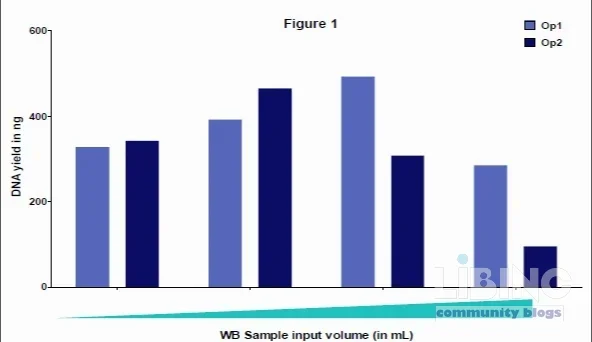
The core question is simple: does more input DNA from whole blood always translate into better assay performance for RCL/R and VCN testing? The poster provides two contrasting operational observations that force a reevaluation of assumptions. In one workflow, increasing the sample input volume from 0.5 mL to 4 mL did not improve isolated DNA yield when a particular operator used an automated platform. In that scenario, the extraction chemistry or the platform’s void or retention characteristics perhaps capped yield, or there was suboptimal lysis and nucleic-acid recovery at higher volumes. The implication for DNA input optimization for CAR-T monitoring is that volume alone cannot guarantee better results; there is a threshold beyond which extraction efficiency plateaus or even declines due to system saturation, binding sites, or sample handling constraints. This is a reminder that replication-competent lentivirus and vector copy number assays depend on the availability of high-quality DNA, but equally on the extractor’s ability to process the input without bias. When the goal is to detect rare events—RCL/R in clinical contexts or low-copy VCN in early CAR-T stages—the assumption that “more DNA equals better sensitivity” fails if the DNA cannot be recovered in a representative and amplifiable form. These observations foreground the need for robust pre-analytic validation of extraction workflows and careful consideration of the platform's dynamic range in the context of low lymphocyte counts.
From a technical perspective, the relationship between input volume and DNA yield is best viewed through the lens of an extraction system’s capacity and the sample’s biology. Vector copy number assessment relies on ddPCR, which benefits from precise partitioning and template availability. If the input DNA is degraded, or if inhibitors co-purify with larger volumes, ddPCR efficiency can drop. Conversely, when the workflow is optimized to handle larger volumes without introducing inhibitors, VCN measurements can become more accurate because they better reflect the true DNA quantity in the nucleic-acid pool. This nuance—where platform capabilities, DNA integrity, and sample quality intersect—drives the central thesis: DNA input optimization for CAR-T therapy monitoring must be tailored to the instrument, chemistry, and the patient’s biological state to preserve assay accuracy in a landscape of rapid lymphocyte depletion and recovery.
Contrasts in workflow performance and operator variability
The poster highlights how two operators using two different automated platforms produced divergent outcomes. In one instance, increasing input volume did not elevate DNA yield, and operator-specific factors likely contributed to the observed plateau. In the complementary workflow, DNA yield scaled with sample volume, suggesting a linear relationship between input and DNA when certain extraction conditions were met, and when the operator’s technique aligned with the platform’s strengths. This contrast underscores that operator experience, pipetting accuracy, and platform-specific binding properties collectively shape DNA recovery. For CAR-T monitoring, where sample timing spans days 0 through 28 and DNA availability is constrained during early lymphopenia, these differences translate into the risk of underestimating VCN or missing RCL/R events if the input strategy is not calibrated for the laboratory’s exact configuration. The key takeaway is that DNA input optimization for CAR-T therapy monitoring cannot rely on a universal, one-size-fits-all protocol but must be tuned to the concrete assay platform and operator behavior in use.
In practice, the implication is that laboratories should perform a controlled, platform-specific pilot to define the range of input volumes that yield linear DNA recovery without compromising downstream inhibition or carryover. The goal is to establish a workflow where input volume remains within an operational envelope that preserves both sensitivity and specificity for RCL/R detection and VCN quantification. Such calibration not only improves assay robustness but also reduces variability across runs that arise from day-to-day differences in sample quality or instrument performance. For researchers and clinicians, this means documenting performance metrics for each volume increment and using those data to define a recommended input window tailored to the patient population and the testing platform in use.
Cause-and-effect framework for pre-analytical variables in CAR-T monitoring
To develop a rigorous DNA input optimization strategy, we must map the cause-and-effect trajectory from patient physiology to assay output. The pre-analytical chain begins with lymphodepletion, which, while beneficial for CAR-T cell engraftment, reduces circulating lymphocyte counts. Fewer lymphocytes translate to a smaller pool of genomic DNA available for extraction during the critical first two weeks post-infusion. The direct consequence is an elevated reliance on the efficiency of the nucleic-acid isolation step to recover DNA from a limited starting material. If the extraction step fails to recover DNA efficiently at the higher input volumes, the net DNA available for RCL/R and VCN assays could stagnate or decline, paradoxically reducing assay performance even as input volume increases. This mechanistic chain explains why simply increasing input volume can have mixed outcomes across different laboratory setups and why the “volume is the lever” assumption cannot stand on its own in CAR-T monitoring contexts.
Another causative layer is the platform-specific dynamics of nucleic-acid binding and elution. Different extraction kits and automation chemistries have distinct binding capacities, wash stringencies, and elution efficiencies. When input volume approaches the platform’s binding or washing limits, inhibitors may co-elute, or column saturation may occur, undermining qPCR and ddPCR performance. The outcome is a non-linear response in DNA yield as input volume increases, particularly in samples with low DNA input or high inhibitor load. Therefore, DNA input optimization must account for these biochemical realities: the chosen platform’s binding capacity, the extraction chemistry’s tolerance for higher volumes, and the sample’s inherent nucleic-acid quality. In this framework, optimal input is a function of platform capacity, sample biology, and the assay’s detection chemistry, not just a numeric target.
Expert reconstruction: practical workflow recommendations for CAR-T monitoring laboratories
Based on the posterior data and the analytic framework above, here is a consolidated blueprint for DNA input optimization in CAR-T monitoring workflows. The recommendations emphasize empirical validation, platform-aware thresholds, and ongoing performance monitoring to sustain analytical fidelity during early CAR-T therapy.
- Define platform-specific input ranges: Establish a tested window of 0.5–4 mL whole-blood input that yields acceptable DNA recovery for your extraction kit and automated platform. Validation should include linearity assessments across this range and checks for inhibitor carryover that could affect qPCR or ddPCR.
- Pilot per operator and instrument: Conduct parallel runs with multiple operators and instruments to quantify inter-operator and inter-instrument variability. Use this data to set operator-specific acceptance criteria and to calibrate routine training programs.
- Monitor DNA quality alongside quantity: Use DNA integrity selectors (e.g., gel-check or fragment analysis) and quantify DNA concentration with a fluorometric method (like Qubit) to complement VCN and RCL/R assays. High DNA quantity without integrity offers little diagnostic value in ddPCR.
- Incorporate internal controls: Spike-in controls and inhibition controls help identify wells where ddPCR or qPCR efficiency deviates due to extraction artifacts. This practice is essential for early CAR-T windows when DNA is scarce and assay precision matters most.
- Balance volume with assay sensitivity: When VCN or RCL/R detection is at the limit of quantification, favor input volumes that maximize DNA recoverability while minimizing inhibitors. The goal is to keep the template within the ddPCR dynamic range without compromising droplet stability or amplification efficiency.
- Document pre-analytical variables: Record sample collection times, lymphodepletion status, and storage conditions. These factors influence DNA stability and must feed into the interpretation of RCL/R and VCN results in the early CAR-T phase.
- Align workflow with clinical timing: In days 0–28, prioritize consistent DNA input strategies that can be reproducibly executed within tight timeframes, ensuring that the sample volume used aligns with the clinical monitoring schedule and the assay’s turnaround requirements.
- Continuous performance review: Periodically revalidate optimization parameters as platforms and reagents evolve or as patient populations shift. Small adjustments can accumulate into meaningful improvements in assay robustness over time.
These steps translate the Cerba Research poster’s insights into an actionable, platform-aware DNA input optimization framework for CAR-T monitoring. The emphasis is on preserving analytical integrity in the face of lymphodepletion and variable DNA availability, rather than chasing a universal volume goal. By combining controlled pilot testing, detailed documentation of pre-analytical factors, and ongoing performance monitoring, laboratories can implement a robust DNA input optimization strategy for RCL/R and VCN assays that is tailored to their exact instrumentation and sample characteristics.
Pathways to reliable CAR-T monitoring through informed DNA input optimization
Carrying forward the lessons from the Cerba Research poster, the core message is that DNA input optimization for CAR-T therapy monitoring is a systems problem. The reliability of RCL/R testing by qPCR and VCN quantification by ddPCR depends on the delicate balance between available DNA and the extraction and amplification processes designed to measure that DNA. Variation in operator technique, platform chemistry, and pre-analytical biology can shift the relationship between input volume and DNA yield from straightforward to complex. The practical implication for clinical and translational researchers is to treat DNA input optimization as a calibrated, platform-specific protocol rather than a generic directive. By embracing a structured, data-driven approach to input volume, laboratories can improve the accuracy and consistency of CAR-T safety and pharmacokinetic assessments during the most critical early phase of therapy. Cerba Research’s demonstrated capabilities in Virology, Immunology, Oncology and Cell & Gene Therapy provide a blueprint for scalable, high-quality testing that supports the evolving landscape of CAR-T and related therapies.
Expanded pragmatic framework for DNA input optimization in CAR-T monitoring
The missing daily-operational guidance is a compact, instrument-aware runbook labs can apply immediately. This section offers a concise framework with concrete thresholds, controls, and decision points to stabilize RCL/R and VCN measurements in weeks 0–2.
Key elements to implement include platform-aware input ranges, per-operator calibration, concurrent DNA quality metrics, and inhibition-control strategy. If yield is linear and inhibitors are controlled, expand the window; if not, tighten the range and optimize lysis or washes. A simple decision framework helps labs choose volume while preserving ddPCR sensitivity during the low-lymphocyte stage.
| Platform | Input Range (mL) | DNA Yield Linear | Inhibitor Risk |
|---|---|---|---|
| Platform A (Automated X) | 0.5–2.0 | Yes | Low |
| Platform B (Automated Y) | 0.8–3.0 | Partial | Medium |
| Platform C (Manual) | 1.0–2.5 | Yes | Low |
| Platform D (Hybrid) | 0.6–1.8 | Yes | Low |
Pilot steps: define platform ranges, run parallel tests, collect yield and quality metrics, and set operator-specific acceptance criteria. Log pre-analytic variables to contextualize results and align with days 0–28 clinical timing.
Operational reminder: document input windows per instrument, maintain a running log, and revalidate after reagent changes. This compact framework enables robust, rapid CAR-T monitoring in the critical early window.
What is the recommended approach to DNA input optimization for early CAR-T monitoring?
The recommended approach is platform-specific pilot testing to define input windows; labs should start with 0.5–2.0 mL and expand cautiously if linear recovery is shown and inhibitors are controlled. This direct approach reduces run-to-run variability and supports reliable early monitoring.
In practice, pilot across operators and instruments, evaluate DNA yield, purity, and ddPCR performance, and formalize a platform-specific protocol with clear acceptance criteria.
Which controls are essential when varying input volumes?
Spike-in controls and inhibition controls are essential to detect extraction artifacts; pair with DNA integrity assessment and concentration measurements to ensure each well yields reliable ddPCR or qPCR results. These controls are critical in the early therapy window where DNA is scarce.
How do pre-analytical factors like lymphodepletion influence DNA yield?
Lymphodepletion lowers circulating lymphocytes, reducing starting DNA; labs should map input windows to actual DNA availability and monitor DNA quality to maintain assay sensitivity. This helps avoid false negatives in RCL/R and VCN detection.
What is the role of internal controls in ensuring assay performance?
Internal controls detect extraction efficiency and inhibitors; include at least one spike-in control and one inhibition control in each run to identify compromised wells and preserve assay fidelity, especially in days 0–14 post-infusion.
How should a lab implement a pilot study for input optimization?
Define platform-specific ranges, run parallel tests across operators, collect DNA yield and purity metrics, analyze linearity and inhibition, and lock in an operator-aware input window. Document results to support ongoing optimization.
What are the clinical implications of optimizing DNA input on RCL/R and VCN results?
Optimized input improves measurement accuracy, reduces false negatives and positives, and supports reliable early CAR-T safety and pharmacokinetic assessments. This translates to more confidence in patient monitoring decisions.





Add a comment
To comment, you need to register and authorize
Comments