

Canterbury pilgrimage as practice: reviving a medieval rite in a modern landscape
Table of Contents
Canterbury pilgrimage, once a magnet for medieval travelers, has re-emerged as a meaningful itinerary for a broad spectrum of modern wanderers. The problem is not whether people want to seek meaning through walking, but how to do so responsibly in a landscape of heat, crowds, and digital guidance. The stakes are modest in scale but high in cultural value: to preserve historic routes, sustain sacred spaces, and extract contemporary relevance from an ancient rite. Yet a hidden conflict lurks: modern tourism, GPS convenience, and secular curiosity can threaten the integrity of the path and the stillness that pilgrims historically sought. This analysis uses Canterbury as a case study to examine how pilgrimage is reconfigured today, what it reveals about beliefs, place, and travel, and how walkers can engage with history and landscape in a rigorous, humane way.
Analytic through-line: data, history, and meaning
The current revival of pilgrimage does not merely reflect nostalgia; it tracks a measurable shift in how people pursue meaning through movement. In the last decade, pilgrimage has surged as a cultural form that traverses religious boundaries and secular curiosity alike. YouGov data for 2025 shows 3.7 million British adults have already made a pilgrimage, and almost one in five are considering it. That signal matters because it reframes sacred travel from a devotional act to an embodied practice that people pursue for meaning, perspective, and respite from daily pressures. Canterbury, with its legendary shrine to Thomas Becket and a dense network of historic routes, becomes a testing ground for how ancient motifs survive in a gadget-driven age. The challenge is not to romanticize the past but to understand how the past informs present behavior and the kinds of value modern travellers seek in walking a sacred landscape.
To understand Canterbury as a living itinerary rather than a museum piece, we must map the routes, markers, and institutional supports that sustain the pilgrimage today. The city sits at the confluence of several historic paths: the Pilgrims’ Way from Winchester, the Old Way from Southampton, and the Augustine Camino from Rochester. The English leg of the Via Francigena, an ambitious continental circuit from Canterbury to Rome, has motivated walkers to assemble pilgrim passports, waymarkers, and social media-enabled communal planning. These infrastructural elements do more than orient feet; they shape expectations, pacing, and even the social texture of the experience. In other words, the route becomes a performance space for belief, memory, and endurance, not merely a line on a map.
The Becket legend remains the gravitational center of this phenomenon, but its gravity now operates through multiple channels. Becket’s shrine was historically one of Europe’s most popular pilgrimage foci, drawing thousands of pilgrims seeking intercession, penance, or mediated contact with sanctity. Today, that gravitational pull translates into a modern ecology: heritage professionals, volunteering custodians, and local businesses all have a stake in guiding walkers along historically resonant paths, while preserving the quiet, contemplative atmosphere of the cathedral precincts. The data point is not simply counts of feet on a path but how those feet interpret history, landscape, and personal time. The result is a Canterbury pilgrimage that reads like a social barometer of meaning-seeking in a secular age.
Analytically, the question is why people undertake Canterbury pilgrimage now. The answer lies at the intersection of memory, search for meaning, and boundaries between sacred space and public space. On one hand, the familiarity of medieval names and markers—Becket, the scallop shell, the North Downs Way—offers a legible framework for travel. On the other hand, modern travellers bring different expectations: faster itineraries, digital maps, and a flexible sense of commitment. The tension between reverence and convenience creates a space where symbolism can be tested and reinterpreted. The modern Canterbury pilgrimage thus becomes a social experiment in how a medieval rite adapts to contemporary sensibilities without losing its core experiential truth: walking as a language for attention and encounter with something larger than oneself.
- Historical gravity of Becket’s shrine and medieval networks
- Contemporary motives: meaning, respite, embodied practice
- Infrastructure: waymarkers, pilgrim passports, and digital aids
- Regional routes: Pilgrims’ Way, Old Way, Augustine Camino, Via Francigena English leg
Why this matters: Canterbury’s pilgrimage ecology reveals how sacred travel migrates into secular culture, preserving ritual form while expanding its social reach. The result is not a uniform tradition but a spectrum of practices that range from strict devotional pacing to reflective walking as personal inquiry. That spectrum is the essence of the modern Canterbury pilgrimage: a living interface where history informs movement, and movement re-animates history.
Contrasts: sacred space versus modern travel
Entering Canterbury Cathedral, one encounters a built history that feels simultaneously intimate and colossal. The clang of an organ in tuning, the faint drone of the vault, and the hushed reverence of visitors articulate a ceremony without a formal liturgy. In these moments, the sacred space asserts itself as more than a backdrop; it is a participant in the journey. Yet the modern pilgrim also arrives as a traveler, with gear, maps, and a timetable, a dynamic that often pulls tradition toward practicality. This contrast—between the cathedral’s hushed gravity and the walker’s tempo—produces a productive friction that both clarifies and complicates the experience of Canterbury pilgrimage.
To illustrate the tension, consider the digital ecology that accompanies today’s routes. Paper maps coexist with apps that pin routes, stamp passports, and estimate mileage. The Via Francigena logo—a pilgrim carrying a staff—appears on waymarkers, while the English leg is joined to the North Downs Way via acorn symbols and local signage. These markers are not mere convenience; they encode values about pace, endurance, and community. The pilgrim who follows the shell at the gate or the acorn on a mile marker participates in a shared language that binds strangers across regions. In contrast, the cathedral’s interior rewards quiet attention, deep listening, and a slower, unhurried mode of reading space and time. The juxtaposition of speed and stillness is not a problem to solve but a clue to how the Canterbury pilgrimage recalibrates attention in a crowded world.
Another axis of contrast lies in motivation. Some walkers seek spiritual companionship, others pursue cultural heritage, and a growing minority test their limits through physically demanding distances. The Holy Dusters, local volunteers who maintain the fabric of the building, embody a practical devotion that contrasts with the pilgrim’s inner pilgrimage. The volunteer’s quiet, routine stewardship makes sacred space legible to outsiders and reminds us that religious travel depends as much on everyday labor as on singular moments of transcendence. This everyday sacredness—dusting, cleaning, and welcoming—is a counterpoint to the exalted architecture and to the traveller’s outward journey. The result is a Canterbury pilgrimage that is both interior practice and exterior display, a duality that invites careful attention rather than exclusive devotion.
In sum, the contrast between sacred space and modern travel exposes a core truth about pilgrimage today: it thrives when both reverence and accessibility cohabit. The cathedral offers a portal to memory; the route offers a practice of endurance. When walkers honor both, they create a form of pilgrimage that is ethically grounded, aesthetically attentive, and historically informed. This is the practical meaning of Canterbury pilgrimage in a modern landscape: it is a discipline of attention that invites, but does not compel, belief, and it remains alive precisely because it can accommodate multiple motives without surrendering its symbolic weight.
Cause and effect: Becket’s cult, routes, and revival
The Becket story is not merely antiquarian lore; it is a causal force that created enduring pilgrimage infrastructures. Becket’s murder in 1170, followed by rapid canonization, transformed Canterbury into a magnet for spiritual tourism across medieval Europe. Shrines, relics, and sanctified routes multiplied, drawing pilgrims who sought intercession, penance, or personal transformation. The shrine’s popularity catalyzed the creation of legible lines of travel—the Pilgrims’ Way, the Old Way, the Augustine Camino—each a corridor between sacred purpose and geographic space. The effect was a durable pilgrimage economy anchored in memory and ritual, a system that still resonates with today’s walkers who want to connect with history while walking modern landscapes.
As centuries turned, the mechanisms of pilgrimage shifted but did not vanish. In the contemporary moment, the revival is fostered by institutional sponsorship, public heritage programs, and transnational networks that link Canterbury to wider European trajectories like the Via Francigena. A modern pilgrim passport is stamped at the Dover museum or at cathedral outposts, turning the personal journey into something recognizably communal. The revival is not a nostalgic re-enactment; it is an adaptive re-use of ancient form, mediated by new technologies and new attitudes toward faith. The cause—Becket’s cult—continues to generate effect: a landscape where respectful walking, site preservation, and historical interpretation align to sustain an authentic experience while accommodating diverse motives.
These causal links extend into place-making and local economies. Pilgrim traffic brings vitality to Canterbury’s streets, inns, and chapels, and encourages investment in interpretive programs and volunteer networks. Yet the flip side is real: increased footfall risks overwhelming fragile spaces, undermining the very calm that makes the place meaningful. The modern revival thus involves a balance between accessibility and reverence, a calibrated tension that keeps the Canterbury pilgrimage legitimate as practice rather than spectacle. The Becket spectrum—sacred magnetism plus tourist infrastructure—shapes not only who comes, but how they come, what they carry, and what they leave behind.
Finally, the Becket narrative encourages a broader reflection on religion, memory, and public space in contemporary Britain. Pilgrimage acquires public value when it becomes a shared culture of walking that respects places, histories, and other travellers. The revival’s cause is not a single sermon but a gradual reweaving of routes, signs, and rituals into daily life. The effect is a Canterbury pilgrimage that remains a living conversation between past and present, where Becket’s shadow informs steps taken today and in the days to come.
Expert reconstruction: Canterbury pilgrimage today
What would a rigorous, sustainable Canterbury pilgrimage look like for a modern reader? It begins with preparatory learning—acknowledging the historical weight of Becket’s shrine, the symbolic shell on the gate, and the route markers that stitch the landscape together. It continues with a practical ethos: walk at a pace that allows perception, carry essential gear, and adopt a responsible involvement with local communities and sacred spaces. The following reconstruction blends discipline with flexibility, honoring both the medieval roots of the rite and the contemporary demand for accessible, humane travel.
- Planning and pacing: choose a route by daylight hours and climate; allow for rest in villages; avoid peak heat windows to preserve energy and safety.
- Equipment and care: wear supportive footwear, carry a refillable bottle, pack blister kits and limited snacks; map the route with offline capability for reliability.
- Documentation and ethics: obtain a pilgrim passport where possible; respect worship spaces, restricted areas, and local customs; minimize waste and signage impact on historic features.
- Navigation and markers: follow the Pilgrims’ Way, Old Way, Augustine Camino markers, and Via Francigena English leg with careful attention to wayfinding cues; use technology as a guide, not a substitute for landscape reading.
- Engagement with local heritage: participate in cathedral tours or talks when offered; support small businesses that sustain villages along the route; contribute to funded conservation efforts where feasible.
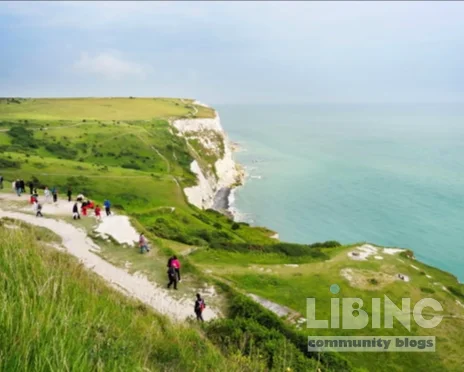
Physically, the Canterbury pilgrimage demands resilience but rewards deliberate attention. The heat is a real adversary, as is the long, straight line of a country lane that can blur perception and patience. Yet the walk’s reward lies not only in arriving at Dover or the celebrated Becket shrine, but in what the journey makes visible: the light on stone, the echo of long corridors, and the kinship formed between strangers who share the path. The arc from gate to coast becomes a study in constraint and freedom—a space where one labors for something larger than personal preference, while discovering a new form of companionship with landscape, history, and fellow walkers.
For the modern Canterbury pilgrimage, the goal is not to perfect a timeworn ritual but to sustain a practice that can travel across faiths and non-faith perspectives. It is a discipline of presence, a reimagining of a medieval rite tailored to a secular, climate-conscious era. When done with care, Canterbury’s routes become more than scenic walks; they become living archives in motion, where memory can be touched, history can be walked through, and a sense of belonging to a broader human story can be felt along the way.
In the end, the Canterbury pilgrimage offers a compact lesson about travel today: the deepest experiences arise where careful attention to place, history, and others converges with personal stamina and curiosity. The journey to the coast, the passing through stone and light, the shared ritual of stamping a passport and standing in a quiet nave—all of these elements together form a modern rite that honors its medieval ancestry while remaining relevant to today’s travellers. Ice-cream theories aside, the real reward comes from moving through space with intention and letting space move through you in return.
Ultimately, Canterbury remains a laboratory for how sacred travel evolves. The pilgrimage is not nostalgia but a living practice that invites repeated, varied engagement: a route, a tradition, a conversation with time, and an invitation to walk with others toward a shared understanding of place and purpose. That is the heart of the Canterbury pilgrimage in a modern landscape: a dynamic, enduring invitation to walk slowly, listen deeply, and carry memory forward.
Conclusion
The Canterbury pilgrimage, reconceived for the present, binds history to experience and place to process. It asks walkers to balance reverence with practicality, tradition with innovation, and personal meaning with collective memory. By attending to routes, spaces, and communities with care, travellers help sustain a medieval rite that remains surprisingly contemporary: a practice of attention in which the walking itself becomes the destination and the journey, rather than a mere means to an end.
Practical framework for responsible Canterbury walking
To close a critical gap, this section translates the idea of a modern Canterbury pilgrimage into a concrete, repeatable practice that preserves space, history, and wellbeing.
Practical planning builds from three segment options that balance endurance with time for reading landscape and memory.
| Segment | Distance (km) | Typical Time | Notes |
|---|---|---|---|
| Short day | 8–12 | 3–5 h | Urban edges, frequent stops |
| Moderate day | 12–20 | 5–7 h | Rural lanes, pace matters |
| Long day | 20–30 | 7–9 h | Strategic rests, safety |
A final checklist centers on three pillars: pace with perception, gear that breathes, and ethical engagement with communities and habitats. It is not about rigid rules, but sustainable rhythm that can travel with diverse faiths and beliefs.
- Pace with perception – walk slowly enough to read light, sound, and texture; build pauses into daily plans.
- Gear that breathes – light footwear, layered clothing, refillable bottle, map offline.
- Ethics and community – respect sacred spaces, patronize local businesses, participate in conservation efforts.
Frequently asked questions
What is the Canterbury pilgrimage in modern times?
Today it is a broad movement combining heritage, personal reflection, and physical challenge across routes like the Pilgrims’ Way and the English leg of the Via Francigena. Walkers seek meaning through movement, cultural dialogue, and sustainable travel, rather than a fixed doctrinal form. This mix invites dialogue across beliefs and encourages thoughtful engagement with landscape and memory.
How should walkers plan pacing and heat management?
Walk at a pace that leaves room for perception and rest, typically 4–5 hours of walking per day. This supports listening to space, safety in heat, and time for pauses in villages or churches. In hot weather, start early, hydrate, and carry shade and sun protection.
What gear is essential for a day on the route?
Essential gear includes supportive footwear, a refillable bottle, light rain shell, map or offline route access, and a small first aid kit. With careful packing, walkers stay light while preserving safety and adaptability to changing conditions.
How does Becket's heritage influence today’s pilgrims?
Becket’s story anchors the route in memory and consecrates space as a site of contemplation. Pilgrims engage with history through markers, signage, and custodians who interpret meaning for diverse visitors, balancing reverence with curiosity.
How can walkers minimize impact on sacred spaces?
Respect worship areas, follow signage, avoid restricted zones, and leave no trace such as litter or excessive noise. Support conservation programs and choose local services that reinforce stewardship rather than spectacle.
What role does technology play in the journey?
Technology offers offline maps, route updates, and community planning, but should guide rather than replace landscape reading and social interaction. The best journeys combine digital support with attentive observation of place and people.





Add a comment
To comment, you need to register and authorize
Comments
Place reading becomes practical when spaces are allowed to speak for themselves. The memory embedded in Becket's shrine is not a monologue but a chorus of layers — medieval routes that survive in markers, eighteenth century inns that grew up around pilgrimage traffic, twenty first century hotels that cater to longer stays, and modern conservation practices that stabilize fragile joints of masonry. Those layers can be engaged with gradually: slow segments that invite whispered reflection, and brisker intervals that accommodate families and school groups. The aim is not to sterilize space but to empower walkers to notice, to question, and to connect what they feel in their feet with what they learn in the nave.
Pace and safety form the second strand of a workable ethic. Heat, crowding, and the sheer magnitude of the landscape can become barriers to contemplation if not managed with care. A practical Canterbury would offer pacing guidance that acknowledges climate realities: cooler hours for the longest treks, shaded rest points, and flexible detours that preserve endurance without eroding the arc of the journey. It would also embed clear, humane safety practices that respect both local knowledge and the unpredictability of weather. Guidance should emphasize perceptual shifts — how to read light, wind, birdsong, and the texture of the path — as essential yields of the walk, not optional add ons to a checklist.
Communal stewardship binds the rest into a living system. Local residents, volunteer custodians, cathedral staff, village businesses, and visiting pilgrims all contribute to a shared experience. The most durable revival is not a one season revival but a generational practice in which guardianship is recognized as a craft: training a new generation of stewards, creating inclusive interpretation that invites diverse voices, and ensuring that the economic benefits extend to the communities that hold the spaces. The goal is to build a model of pilgrimage that neither erases the past nor commodifies the present, but interweaves memory with daily life so that both become legible to one another.
This approach raises practical questions that invite conversation. How should markers and signage be designed so they hint at history without interrupting perception? What role should technology play — as a guide, as a memory aid, or as a scaffold that can be switched off in moments of quiet? How can pilgrim passports be transformed from a badge of achievement into a reflective ritual that encourages dialogue among walkers from different backgrounds? And how can the Canterbury ecosystem ensure that accommodation, cafes, and transport do not eclipse the sanctity of space but rather support a thoughtful, sustainable rhythm? If the community can answer these questions with humility and generosity, the Canterbury pilgrimage can become a resilient instrument for contemplative travel that respects both the medieval soul of Becket and the plural desires of modern travelers.
In this sense, Canterbury becomes a laboratory where form and ethics meet. The journey from gate to coast is not only a test of endurance but a test of attention: attention to place, to others, to history, and to the self that wanders and listens. The walking itself becomes the pilgrimage, and the destination grows to include the quiet you carry with you and the stories you leave behind. When observers, builders, and walkers enter into a shared apprenticeship — to patch and preserve, to listen and learn, to walk with care and curiosity — the ancient rite reloads with contemporary meaning. The heart of the matter is this: a modern Canterbury pilgrimage that endures is one that values presence as a resource more than spectacle, and that treats space as something to be tended rather than conquered. What would scholarly and civic leadership look like if it treated every mile as a chance to cultivate reverence and responsibility at once? What structures, habits, and partnerships would be required to sustain such a practice over many seasons and many decades?