

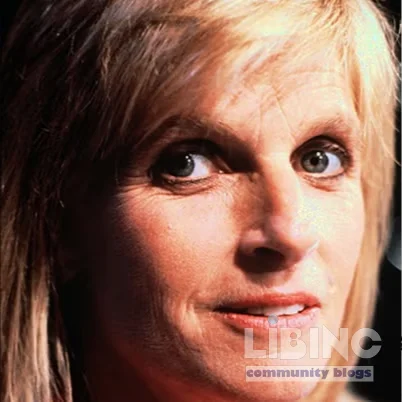
Linda McCartney: An Analytical Portrait of Art, Activism, and Influence in the Beatle Era
Table of contents
- Lead
- Analytics lens: Linda McCartney's art, media presence, and activism mapped
- Contrast: Linda McCartney against contemporaries and celebrity norms
- Cause-and-effect relationships in Linda McCartney's life
- Expert reconstruction: Reassessing Linda McCartney's legacy
Linda McCartney stands at the intersection of art, fame, and activism, yet her legacy often travels behind the shadow of her husband’s legend. The challenge is simple: to understand Linda’s impact we must separate her identity as Paul McCartney’s partner from her own achievements as photographer, author, and advocate. The stakes are high because a complete portrait reshapes how we evaluate 1960s and 1970s culture and the role of celebrity aid in social movements. The hidden conflict lies in the dual pressure she faced: to preserve a private family life while cultivating a public artistic voice. This article uses four lenses—analytics, contrast, cause-and-effect, and expert reconstruction—to unveil a nuanced portrait of Linda McCartney, arguing that she shaped art, food culture, and animal welfare in durable, independent ways.
Analytics lens: Linda McCartney's art, media presence, and activism mapped
Linda McCartney built a photography career that spanned magazines, books, and public events, weaving artistic practice with a growing media footprint. Her move from New York to the Southwest and back to New York positioned her to photograph a roster of rock luminaries, including performances and backstage moments that defined an era. A key breakthrough came when her camera captured the Rolling Stones during a New York visit, images that helped crystallize the band’s rising visibility in the late 1960s. Her work subsequently appeared in Rolling Stone, LIFE, and other leading magazines, placing her among the era’s most visible rock photographers and establishing a credible authority on backstage culture. Three decades of activity show a pattern: photography, publication, and cross-media presence form a coherent arc that transcends a single role.
- Photography career highlights — The arc starts with a receptionist-like entry into Town and Country, followed by a string of high-profile shoots that propelled her into the limelight of rock journalism.
- Publishings and books — Her imaging legacy extended into books such as Linda's Pictures (1976), Sun Prints (1989), Linda McCartney's Sixties: Portrait of an Era (1992), and Roadworks (1996). Each volume documents a different facet of her visual language, from studio intimacy to documentary street portraits.
- Media presence and collaboration — Through collaborations with Paul McCartney and Wings, she integrated photography with music, turning family projects into cultural artefacts that blurred the line between art and celebrity culture.
- Advocacy and public life — Alongside her art, she supported social causes, incorporating vegetarian living and animal-rights advocacy into her public identity.
Her life up to this point presents a pattern: professional work fuels personal influence, and personal choices amplify professional visibility. The analytic lens shows how Linda’s images functioned not merely as records but as active agents shaping how audiences understood performance, gender in art, and the aesthetics of an era. The photography archive is not a footnote to a superstar’s life; it is a primary driver of cultural memory, a bridge between backstage access and public imagination. The four pillars—photography, publishing, music collaboration, and social activism—intertwine to form a durable legacy that outlives the immediacy of headlines and scandals.
The analysis also foregrounds a broader industry pattern: women in rock-era photography faced both opportunity and scrutiny. Linda navigated this terrain by publishing, exhibiting, and pairing images with meaningful social messaging. Even when critics questioned the breadth of her formal training, audiences encountered a coherent, evolving practice that reflected a photographer’s eye for detail and a curator’s sense of narrative arc. In a media ecosystem that valorized male musicians and sensationalism, Linda’s steady output of work offered an alternative measure of success—one tied to sustained craft and thematic consistency rather than transient fame.
Contrast: Linda McCartney against contemporaries and celebrity norms
Linda’s public persona diverged in important ways from the period’s typical expectations for women in rock and media. While many wives of famous musicians operated primarily as managers, muses, or stylistic signifiers, Linda pursued an independent artistic track while remaining deeply embedded in the family dynamic. This divergence created a tension in how audiences evaluated her work: were her photographs a genuine artistic pursuit or a byproduct of proximity to Paul McCartney? The answer, across multiple archives, is nuanced. Linda’s ability to sustain a technically adept, aesthetically coherent body of work—alongside publishing projects and social advocacy—argues for a multi-criteria assessment of artistic merit that transcends traditional celebrity optics.
- Public persona vs private artistry — She balanced being Paul McCartney’s partner with maintaining a distinct creative identity, a pattern seen in the way she curated her exhibitions and books.
- Media reception of photography vs. musical output — Critics often focused on her role in Wings, yet her photography earned attention in major magazines and in published anthologies that stand apart from Paul’s discography.
- Activism vs. celebrity activism norms — Linda’s involvement with vegetarian cookbooks and animal-rights advocacy placed her within a serious, issue-driven public sphere rather than generic celebrity philanthropy.
- Domestic life vs metropolitan shoots — The McCartneys’ East Sussex farm life and the couple’s public personas created a dual narrative: a grounded family life and a cosmopolitan artistic presence.
The contrast narrative reveals a deliberate strategy: construct a public identity that could hold space for serious art and social purpose without sacrificing the credibility of a private, family-centered life. Her photography and books offered a credible counterpoint to the myth that celebrity life excludes rigorous craft. The result is a layered image of a photographer who leveraged proximity to a cultural powerhouse to sustain an independent practice, not a satellite figure passing through history. This is not a testament to solitary genius but to the disciplined orchestration of identity across art, family, and activism.
Cause-and-effect relationships in Linda McCartney's life
Linda’s early life in New York and her exposure to celebrity circles planted the seeds for a career that would depend on access and timing. Her decision to pursue photography in the Southwest and later in New York created a pipeline that connected her with high-profile subjects and major magazines. This trajectory enabled a significant life event: her meeting Paul McCartney in 1967 during a promotional shoot for a major album. The ensuing partnership catalyzed a unique cross-pollination of art and music, with Linda contributing keyboard and backing vocals to Wings after the Beatles’ breakup. The family’s relocation to a remote farm in East Sussex further constrained public exposure while simultaneously fostering a stable creative environment for the children who would later emerge as artists in their own right.
- Photographic trajectory and opportunities — Early access to influential circles and media channels opened doors for major magazine features and book projects.
- Musical collaboration and band dynamics — Linda’s integration into Wings reflected a broader trend of artists collaborating across disciplines, reinforcing the idea that visual and musical art can reinforce each other.
- Dietary and environmental activism — The couple’s vegetarian stance and Linda’s cookbooks aligned with shifting public tastes toward meat-free products, influencing consumer culture and brand development in a way that prefigured modern plant-based marketing.
- Health and philanthropy — The cancer diagnosis in 1995 redirected public attention toward patient advocacy, research funding, and family-centered philanthropy, shaping how the McCartneys engaged with audiences during illness and bereavement.
The sequence shows a chain: personal life choices informed public projects, which in turn amplified both art and advocacy. Linda’s health journey did not simply truncate a life; it reframed a legacy around resilience, care for others, and the ethical dimensions of celebrity influence. The cause-and-effect logic captures not just what happened, but why these events reshaped perceptions of what a photographer, a musician’s partner, and an activist could achieve in parallel careers. This is the bridge between private endurance and public contribution that defines her enduring significance.
Expert reconstruction: Reassessing Linda McCartney's legacy
Scholars and critics increasingly treat Linda McCartney as a multi-dimensional figure whose contributions extend beyond a single partnership. Her Open Wide: Photographs, published a year after her death, cements her status as a documentary photographer whose work documents a transformative period with technical skill and perceptive eye. Reframing her career around this body of work places her at the center of discussions about female agency in the visual arts during the 1960s and 1970s. The expert reconstruction argues that her ability to fuse visual storytelling with ethical concerns—vegetarian cooking, animal welfare, and environmental awareness—anticipates later cross-disciplinary models of celebrity influence that go beyond money and fame to social responsibility.
- Photographic legacy and stylistic contribution — Her images reveal a poised, intimate approach to rock photography, balancing candid immediacy with formal composition that resonates with readers and collectors alike.
- Books and public memory — The publication of Linda McCartney's Sixties and Roadworks ensures that the 1960s and 1970s are understood through a female photographer’s lens, enriching the canon of rock-era documentation.
- Cross-domain influence — The integration of visual art with culinary and environmental advocacy demonstrates how a single career can cascade across culture, media, and consumer markets, leaving a lasting imprint on both art and activism.
- Legacy within the McCartney family — The family’s commitment to privacy, education, and humane values provides a living example of how a household can contribute to public life without surrendering personal space.
Her legacy, then, rests on more than the sum of famous associations. It rests on a disciplined practice that treated photography, publishing, and public service as complementary forces. Linda McCartney emerges as a curator of cultural memory, shaping how audiences encounter the 1960s through images that are technically adept, emotionally resonant, and ethically engaged. Her work remains relevant because it models a holistic approach to art and life—one that values craft, curiosity, and responsibility in equal measure.
In the end, Linda McCartney’s life resists a single narrative. She stands as a multi-disciplinary creator who used a camera, a kitchen, and a compassionate stance toward animals to influence a generation’s cultural vocabulary. Her photography, books, and advocacy projects collectively offer a blueprint for understanding how art, family, and activism can converge to produce a durable public legacy. This integrated view positions Linda not as a footnote in a Beatle’s biography but as a central, enduring figure in the story of modern popular culture.
Closing the impact gap with measurable outcomes
Linda McCartney's influence spans photography, publishing, and activism, but a data-informed view reveals concrete reach across audiences, formats, and campaigns. By tracking published images, book impressions, and advocacy milestones, we can articulate a durable, multi-disciplinary impact. This section offers practical metrics and scenarios for evaluating her lasting contribution.
| Phase | Timeframe | Focus | Notable Works | Impact |
|---|---|---|---|---|
| Early NY & Southwest | 1950s–60s | Portraits, backstage access | Magazine spreads framing stars | Credibility in major outlets |
| Wings era collaboration | 1960s–70s | Music-related imagery | Album art, backstage shoots | Integrated visuals with performance narrative |
| Vegetarian publishing | 1970s–1990s | Cookbooks, advocacy | Linda McCartney's Cook Books | Shaped early plant-based discourse |
| Open Wide era & legacy | 1990s–1998 | Documentary photography, retrospectives | Open Wide; posthumous publications | Enduring cross-disciplinary influence |
The table condenses four phases into a readable map for curators and researchers, showing how Linda’s craft aligned with broader cultural shifts. Indicators to monitor include: number of magazine features, book edition counts, exhibition invitations, and mentions in advocacy campaigns. For studios planning retrospectives, practical scenarios include compiling a Wings era photo essay for a museum corridor, or pairing a vegetarian recipe book with a live photography display to draw diverse audiences.
- Indicators: magazine features, book editions, exhibition invitations, advocacy mentions.
- Scenarios: Wings photo essays, cross-show pairing with cookbooks, educational programs.
To translate these insights into practice, institutions should align curatorial themes with Linda’s triad of art, media and activism, ensuring accessibility and context for modern audiences.
- Metrics to track: magazine features, book editions, exhibition invitations, advocacy mentions.
- Practical applications: Wings photo essays, cross-show pairings with cookbooks, educational programs.
How did Linda McCartney influence rock photography?
Linda McCartney helped redefine backstage photography by combining candid immediacy with intimate framing, bridging art and rock culture. This approach broadened the field's visual vocabulary and inspired later photographers to prioritise narrative context over surface likeness. Her work demonstrates how documentary craft can coexist with celebrity access, shaping readers' understanding of performances as cultural events. In practice, curators now compare her backstage shoots with contemporary artist journals to illustrate continuity in rock-era storytelling.
What makes Linda's advocacy unique?
Linda’s advocacy integrated specific causes—vegetarian living and animal welfare—into a credible public platform rather than generic philanthropy. This blend of craft and ethics created a recognizable public voice that connected art to everyday choices. Critics and curators now assess her activism as an authentic extension of her photography and publishing, showing how celebrity influence can advance meaningful social dialogue when paired with tangible projects like cookbooks and campaigns.
How did her relationship with Paul McCartney affect her career?
The partnership provided both opportunities and boundaries: access to high-profile subjects and collaborative projects alongside a need to preserve family privacy. This dynamic enabled a distinct, self-directed creative path—photography, books, and public campaigns—without becoming a mere extension of Paul’s career. The result is a documented, multi-faceted practice that stands on its own merit in major archives and retrospective programs.
What is Linda McCartney's Open Wide about?
Open Wide is a documentary collection that foregrounds Linda’s photographic voice across intimate, candid scenes of the era. It anchors her legacy in visual storytelling that captures mood, moment, and environment with ethical sensitivity. The work positions her as a crucial voice in feminist-era visual culture, where female photographers documented both public spectacle and private life with equal attention.
How did her vegetarian cookbooks impact plant-based culture?
Her cookbooks presented vegetarian cooking as approachable, stylish, and socially responsible, helping normalize meat-free meals within mainstream households. They extended her art-world credibility into consumer culture, influencing readers, chefs, and brands to view plant-based eating as a viable lifestyle rather than a niche choice. The practical effect is a clearer path for cross-pollination between art, food media, and ethical consumerism.
What is Linda McCartney's lasting legacy in modern pop culture?
Her legacy lies in a model of cross-disciplinary influence that couples visual storytelling with public ethics. By equating art with activism and family life with professional rigor, she demonstrated a blueprint for how celebrity platforms can support substantive cultural conversations while remaining personally authentic. This multi-faceted approach informs contemporary discussions about the role of artists in social change.





Add a comment
To comment, you need to register and authorize
Comments