

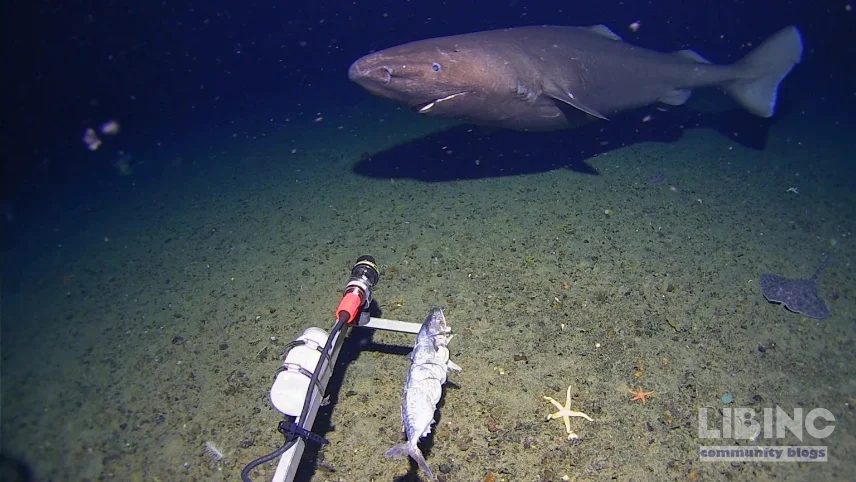
Sharks populate every ocean basin, yet Antarctica has remained the most stubborn outlier in their known distribution. The latest footage from the Minderoo-UWA Deep-Sea Research Centre disrupts that narrative: a sleeper shark glides through frigid Antarctic waters near the South Shetland Islands at about 500 meters depth. The sighting, recorded in January 2025, raises a straightforward question with complex consequences: how can a predator built for cold, deep, energy-sparing living exist where conditions are most extreme? The answer likely lies in a suite of interlocking adaptations that keep cold-water predators efficient amid near-freezing temperatures. This discovery forces a reevaluation of ocean connectivity, ecological resilience, and the limits of what we assume about polar life.
The discovery is not merely a curiosities-fueled headline. It tests the assumption that polar seas are binary barriers for large, slow-moving predators. If sleeper sharks inhabit Antarctic waters, the implications ripple through our understanding of migration corridors, trophic dynamics, and the metabolic calculus of life at the edge. The stakes extend to climate-driven changes in ocean temperature, nutrient flow, and predator-prey relationships that shape entire Antarctic food webs. In short, a single sighting becomes a lens to examine how cold-water survival strategies scale across enormous geographic and ecological distances.
In this article, we dissect the finding through four lenses: analytics that parse the data, contrasts with known distributions and physiology, cause-and-effect logic linking traits to survival, and expert reconstruction that translates observation into broader ecological hypotheses. The aim is to move beyond the sensational moment and illuminate the mechanisms, uncertainties, and practical implications. As with all deep-sea discoveries, the narrative rests on careful inference, not certainty, and on a disciplined look at what the data actually permit us to conclude about the Antarctic sleeper sharks.
We begin with a clear, analytic frame for the observation, then layer in comparisons to related species and known cold-water strategies. From there, we trace cause-and-effect chains that explain why these sharks can persist in such environments, and finally we assemble a professional reconstruction that integrates field data with the broader science of polar biology. The result is a disciplined, evidence-based exploration of an unexpected feature in Antarctica’s underwater world: a sleeper shark navigating one of the ocean’s coldest habitats.
Table of contents
- Through analytics
- Through contrast
- Through cause-and-effect relationships
- Through expert reconstruction
Through analytics
The initial observation centers on a single, sizable sleeper shark specimen moving through near-freezing Antarctic waters. The animal reportedly measured roughly 2–3 meters in length, aligning with mid-sized members of a group known for large body size and slow movement. The depth of about 500 meters places the sighting squarely in deep-water habitat, where low temperatures and high pressure shape physiology differently from shallow-water relatives. From a data perspective, this is a rare encounter: sleeper sharks are cryptic, solitary, and long-lived animals that rarely surface to be seen on camera.
Analytically, the key signal is not just the visual: it is the compatibility of the observed physiology with a suite of cold-water adaptations. Sleeper sharks share a renowned tolerance for cold, with very low metabolic rates that enable them to move slowly yet persistently. A slow metabolism translates into low energy demands per unit distance traveled, a crucial feature when prey items are sparse and temperatures suppress enzymatic activity. The observer’s note that the animal appeared robust in a region where life persists on the edge is consistent with what we know about Arctic and North Pacific sleeper sharks. The question then becomes whether the Antarctic encounter is an exploratory foray, a seasonal foray into a marginal habitat, or the onset of a more permanent range extension.
One of the most important analytic threads concerns the metabolic budget that underpins cold-water endurance. Sleeper sharks thrive on energy efficiency: they move with deliberate, unhurried paces, which limits heat production and conserves energy. The trade-off is that growth tends to be slow, which in turn influences age-at-maturity, reproductive output, and longevity. In Greenland sharks, for example, growth is measured in millimeters per year, a rate that mirrors the slow pace of life in late-life stage. If Antarctic sleepers exhibit comparable metabolic economics, they can exploit cold, nutrient-rich waters without paying steep energetic costs. The broader implication is a potential shift in how we model energy flow in polar ecosystems under warming scenarios.
From a genetic standpoint, sleeper sharks carry a set of adaptations that support protein functionality at low temperatures. A recent genome study highlights duplications in DNA repair and immune function genes, along with boosted protection against oxidative stress. These features reduce the cumulative damage caused by time and temperature, effectively extending viability in extreme environments. In the Antarctic shark, we would expect similar genetic machinery to operate in tandem with physiological mechanisms such as TMAO and urea accumulation, which stabilize protein conformation and osmotic balance. This leads to a second analytic thread: how molecular safeguards translate into ecological resilience in the coldest loop of the world’s oceans.
Another analytic nuance relates to the detection context. The Minderoo-UWA team situates the camera in a patch of relatively warmer water, which could act as a microrefuge that permits penetration farther south than typical. If such “hot water corridors” exist, they could function as dynamic highways that allow occasional incursions into marginal habitats. But detection alone cannot confirm residency. We must weigh the probability of vagrancy against the possibility of a fledgling, low-density population with seasonal presence. In any event, the data hint at a more nuanced distribution model for sleeper sharks than a simple pole-to-pole map.
Finally, the lead analytic question centers on how this single observation changes our map of polar shark biogeography. The presence of a sleeper shark in Antarctic waters challenges the long-standing assumption that sharks cannot occupy the planet’s coldest seas. It invites reexamination of historical sampling biases, detection limits, and the impact of deep-water currents that shuttle life between hemispheres. In short, this is not a one-off sighting; it is a data point that could recalibrate our understanding of sensory and dispersal capacities in large, deep-water predators.
Through contrast
Viewed against traditional Antarctic marine fauna, the sleeper shark stands out in several key ways. The region hosts specialized denizens adapted to freezing temperatures, but most of the widely recognized predators rely on high-energy strategies or rapid movements that are less compatible with the deep, cold environments near the southern ocean floor. Sleeper sharks, by contrast, embody a contrasting life history: slow-moving, energy-conserving, and capable of long-term persistence on minimal prey. This contrast matters because it highlights how different survival strategies can converge in the same extreme environment, enabling extended endurance even when encounters with prey are unpredictable.
Geographically, the apparent Antarctic encounter aligns the sleeper shark with persistent polar lineages rather than episodic migrants. The Greenland shark, an emblem of longevity, shares many metabolic and molecular traits with sleeper sharks, including the accumulation of TMAO and high urea content. The presence of a related life form in Antarctica underscores a broader pattern: cold-water specialists possess solvent systems that maintain protein stability and cellular integrity at temperatures that would destabilize physiological processes in other taxa. This comparative angle clarifies why the Antarctic record might not be a one-off anomaly but a signal of broader phylogeographic connectivity among cold-water predators.
From a biomechanical standpoint, the sleeper shark's locomotor tempo is conspicuously slow, a trait that stands in stark relief against the fast, energy-intensive predators that traditionally dominate Antarctic shelves. The metabolic conservation embedded in a slow gait is a primary determinant of how far and how often these animals can travel through icy seas. In environments where prey is patchy, this style becomes a decisive advantage: it lowers energy expenditure while allowing prolonged presence in favorable microhabitats. The contrast also points to an important methodological implication: detecting slow, cryptic species requires targeted, long-duration observation rather than sporadic sampling.
Another contrast lies in sensory ecology. Sleeper sharks rely on subtle cues and deep-water foraging strategies rather than rapid chases or surface-directed hunting. Their sense of smell, hydrodynamic detection, and extended patience enable them to exploit prey that may be scarce and dispersed. In Antarctica, where nutrient pulses can be episodic, such sensory and behavioral strategies become crucial for survival. The discovery in a warmer water pocket suggests a sensory and behavioral flexibility that may be underestimated in polar ecosystems.
Yet the contrast is not purely about strength or speed. It also encompasses ecological role. Greenland and sleeper sharks function as apex or near-apex predators in their respective deep-water habitats, shaping scavenging networks and scavenger guild dynamics. In Antarctic waters, if sleeper sharks establish a foothold, they would interact with krill, other benthic invertebrates, and slow-moving fish differently than typical Antarctic predators. That interplay could rewire some trophic relationships, especially in deeper zones where energy is limited and every predation event carries outsized weight.
Through cause-and-effect relationships
To move from observation to explanation, we map cause-and-effect chains that connect physiology to distribution. One central chain links low metabolic rate to energy efficiency, which in turn supports survival in prey-scarce, frigid environments. Sleeper sharks minimize daily energy expenditures by moving slowly, resting longer, and selecting prey that yields high caloric return per unit of effort. This metabolic calculus is not mere trivia; it is the backbone of their cold-water life history and explains why a large, slow predator can endure in Antarctica where others cannot.
Another causal thread follows osmotic balance. Urea and TMAO accumulate in sleeper sharks’ tissues, stabilizing proteins and enabling function near the freezing point. Urea helps maintain osmotic balance against seawater, while TMAO counteracts the protein-destabilizing effects of that salt balance. The relative abundance of these molecules in sleeper sharks is not incidental; it is a direct consequence of living in an environment that would otherwise destabilize enzyme activity and cellular structure. The effect on the animal’s physiology cascades into a broader ecological effect: reliable protein stability supports high-latitude endurance and niche occupation.
Genetics offers another cascade. Duplications in DNA repair and immune-function genes reduce cumulative cellular damage in long-lived organisms. This genetic feature aligns with observations of extraordinary longevity in Greenland sharks and helps explain the resilience of polar lineages under chronic stress from oxidative damage. In Antarctic sleepers, such genetic fortitude translates into a longer window for successful reproduction and population persistence, even when encounters with mates or prey are sporadic. The chain from genetic architecture to life-history outcomes is not instantaneous, but the link is robust.
Ecology provides yet another cause-and-effect thread. If warmer water corridors enable occasional southward incursions, these routes could function as ecological bridges rather than mere waypoints. The effect would be to increase genetic exchange between hemispheric populations or to seed low-density colonies in marginal habitats. Either outcome changes how scientists model range limits, occupancy probabilities, and responses to climate-driven shifts in ocean temperature. The net effect is a more dynamic view of polar predator distribution than the old, static maps allowed.
Finally, the discovery forces a reassessment of sampling bias and detection probability. Traditional surveys may undercount large, cryptic species in deep, high-latitude waters, where visibility is poor and cameras operate only intermittently. The causal takeaway is simple: our understanding of distribution is bounded by where we look and how long we look. If we extend sampling in time and space, we should expect more surprises from sleeper sharks and other cryptic deep-water species. This has direct implications for how we allocate research resources and interpret oceanic biodiversity in a changing climate.
Through expert reconstruction
Leading researchers emphasize that the Antarctic sighting, while striking, does not rewrite known biology in a vacuum. Dave Ebert, a shark scientist at San Jose State University, notes that sleeper sharks are true polar sharks, and the finding is exciting but not entirely unexpected. He cautions that the discovery should be treated as a data point prompting more rigorous investigation rather than as definitive evidence of a resident Antarctic population. The expert stance is to view this event as a potential indicator of broader patterns rather than a refutation of prior knowledge.
Alan Jamieson, who directs the Minderoo-UWA Deep-Sea Research Centre, frames the observation as a surprising moment in a long career. He recounts that in 25 years he has seen only a handful of sleeper sharks, and the one captured off Antarctica was unusually large. Jamieson suggests that a localized warm-water corridor could create a temporary window for southern expansion, but he also emphasizes the need for sustained observations to confirm residency rather than rarity. The expert reconstruction thus leans toward cautious optimism: the ocean remains a highly variable system, capable of presenting exceptions that do not immediately redefine baseline biology.
The scientific take-away is twofold. First, polar oceans host a spectrum of adaptations that enable life at the extreme edge of temperature, pressure, and nutrient availability. Second, rare sightings should provoke targeted follow-up studies, including genome sequencing, stable isotope analysis to determine trophic level, and long-term camera deployments to assess residency metrics. This approach integrates field data with laboratory validation, converting a single sighting into a testable hypothesis about range expansion and ecological resilience. The exciting part is not only the discovery itself but the potential to illuminate hidden corridors of connectivity across the globe’s cold-water systems.
From the experts’ vantage, the Antarctic sleeper shark remains an emblem of the ocean’s capacity to surprise. It symbolizes how life can endure by balancing energy budgets, leveraging molecular safeguards, and exploiting microrefugia that arise in a continually shifting climate. The message is not that Antarctica suddenly teems with sleeper sharks, but that the polar oceans possess a latent plasticity that science is only beginning to chart. The next steps involve systematically testing five core questions: residency, population structure, genetic exchange across hemispheres, ecological impact on Antarctic predators, and the role of oceanographic features in enabling north-south movement.
Ultimately, the Antarctic sleeper shark finding is a rare data point that invites robust, iterative research. It challenges researchers to refine models of distribution, to reexamine the assumptions behind polar predator biogeography, and to design studies that can separate vagrant events from meaningful range extensions. In a field where each discovery raises more questions than it answers, this observation is a powerful prompt for a more nuanced, evidence-based approach to understanding the world’s coldest seas. As Jamieson puts it, there is still much we don’t know about where sharks roam and why, which makes every new sighting both a clue and a clue to new questions.
In sum, Antarctic sleeper sharks reveal a more connected, more adaptable polar ocean than previously acknowledged. They highlight the interplay of physiology, genetics, and oceanography that underpins survival in extreme environments. The implications extend to conservation planning, climate impact forecasting, and the strategic deployment of deep-water monitoring. The Antarctic encounter does not close the book on shark distribution, but it certainly opens a new chapter worth reading with careful, prolonged observation and rigorous testing.
Conclusion drawn from the convergence of analytic data, comparative physiology, and expert interpretation is clear: sleeper sharks are built to endure in cold, deep water, and their potential presence in Antarctic habitats reflects the ocean’s capacity for unexpected connectivity. Whether this observation marks a rare excursion or the start of a broader pattern remains to be seen, but the method and implications are now more precise. The ocean remains a dynamic, interconnected system, and Antarctic sleeper sharks may turn out to be a crucial piece of that intricate puzzle.
The most critical gap is determining whether the Antarctic sighting represents regular residency or episodic visits by a wandering individual. Confirming true residency demands sustained data streams that connect repeated presence, genetic linkage, and dietary signals over multiple seasons. The following compact package outlines a practical path to clarity, combining field deployments with laboratory analyses and oceanography to build a coherent picture of who stays, who passes through, and why.
| Species | Habitat | Mean Size (m) | Metabolic Rate | Key Adaptations | Notes |
|---|---|---|---|---|---|
| Sleeper shark (Antarctic sighting) | Deep cold water | 2–3 | Low | Energy-efficient locomotion, TMAO/urea balance | Isolated record |
| Greenland sleeper | Deep Arctic | 4–5 | Low | Long lifespan, genome adaptations | Better known |
| Greenland shark | Cold deep water | 6–7 | Ultra-low | Slow growth, high survival | Iconic for longevity |
In practice, researchers can deploy a phased toolkit to test residency. For example, a three-year, low-impact camera array around the South Shetland reefs can document repeat visits; tissue sampling during routine captures supports population-genetic tests; stable isotopes map trophic links; environmental DNA surveys complement sightings; and oceanographic models identify warm-water corridors that enable southward movements. This integrated workflow turns a single sighting into a robust, testable hypothesis about connectivity in polar oceans.
Repeated appearances in microrefugia imply a higher chance of residency than a one-off event.
Implementation steps for teams at sea and in the lab include the following structured plan:
- Site and gear design
- Choose diverse, long-term camera sites
- Plan data transfer and power reuse
- Sampling and genetics
- Collect tissues for sequencing
- Analyse population structure
- Isotopes and diet
- Stable isotope analysis to map trophic position
- Combine with stomach content data
Frequently asked questions
What does the Antarctic sleeper shark sighting tell us about polar connectivity?
In plain terms, the observation points to a more dynamic connectivity among polar deep-water systems than previously documented, with long-lived, energy-efficient predators able to exploit episodic warm pockets or refugia that cross traditional geographic barriers. If repeated sightings occur, a coherent pattern emerges linking movement, genetic exchange, and trophic roles across hemispheres. This integrated view reframes how we understand oceanic links and the potential for cross-pole exchange in cold-water ecosystems. Ongoing work will quantify how often such incursions occur and whether they seed stable populations. This is not a prediction, but a hypothesis that hinges on sustained data rather than a single event.
Analytically, researchers will weigh movement data against genetic evidence and diet signals to separate true residency from rare wanderings, informing models of species distribution in the era of climate-driven change.
How can scientists distinguish residency from transient visits?
In clear terms, residency is shown when repeated appearances align with stable genetic signatures and consistent dietary indicators over multiple seasons. A single sighting may reflect chance intrusion, but multiple visits documented by cameras, tissue genetics, and isotope data create a converging case for persistence. The practical workflow combines long-term monitoring, genetic analyses, and isotopic profiling to build a time-resolved picture of presence, persistence, and ecological role. Without multi-year evidence, conclusions remain tentative rather than definitive.
Ultimately, distinguishing residency from vagrancy requires sustained effort and diverse data streams that cross the thresholds of detection and interpretation.
What methods are used to study deep-sea sharks in polar regions?
Researchers employ an integrated toolbox: long-running camera arrays to record visits; non-lethal tissue sampling for genome sequencing; stable isotope analyses to map diet; environmental DNA surveys to detect presence even when animals are unseen; and oceanographic modeling to identify corridors that enable movement. This combination strengthens inference about population structure, connectivity, and niche occupancy, enabling more confident assessments of how polar predators persist in extreme habitats. Real-world deployments test the feasibility and yield of these methods in harsh southern ocean conditions.
The approach emphasizes data compatibility, cross-validation, and field practicality to produce actionable insights for ecology and conservation planning.
What are the implications for Antarctic food webs?
At baseline, adding a cold-water predator into the Antarctic mix could shift trophic relationships, particularly in deeper zones where energy is scarce and predators play outsized roles in nutrient cycling. If sleeper sharks establish a foothold, they may recalibrate scavenging networks, compete with existing deep-water predators, and influence prey spectra such as benthic invertebrates and slow-moving fishes. Understanding these dynamics requires concurrent studies of prey availability, predator-prey interactions, and seasonal energy pulses, integrating observational data with ecosystem models to forecast potential rearrangements under warming scenarios.
Analysts stress cautious interpretation until residence is established and the full trophic context is clarified.
How might climate change influence future sightings?
Forecasts suggest warmer pockets could become more frequent, potentially increasing opportunities for southern incursions by deep-water predators. This would raise the probability of range shifts and alter connectivity patterns among polar populations. Probing this trend involves linking oceanography with predator physiology, genetics, and dietary data to trace how temperature shifts alter energy budgets and movement. In practice, adaptive monitoring networks that respond to evolving ocean conditions will be essential for timely detection and interpretation of such changes.
Researchers emphasize that climate-driven change will not produce immediate, uniform answers, but it will shape the odds and timing of future sightings.
What is the timeline for follow-up research?
In straightforward terms, researchers propose stepwise, multi-year programs: initial years focus on establishing repeated visits and collecting baseline genetic data; mid-phase expands with isotope and eDNA sampling; final stages integrate movement data with oceanographic models to test connectivity hypotheses. The timeline is meant to yield clear signals of residency, population structure, and ecological impact within a few field seasons, enabling a robust forecast of how polar predator dynamics may evolve with the climate. This plan prioritizes repeatable methods and transparent reporting.
The goal is not a single answer but a coherent, evidence-based trajectory for understanding Antarctic sleeper sharks within a broader polar framework.





Add a comment
To comment, you need to register and authorize
Comments