

Table of contents
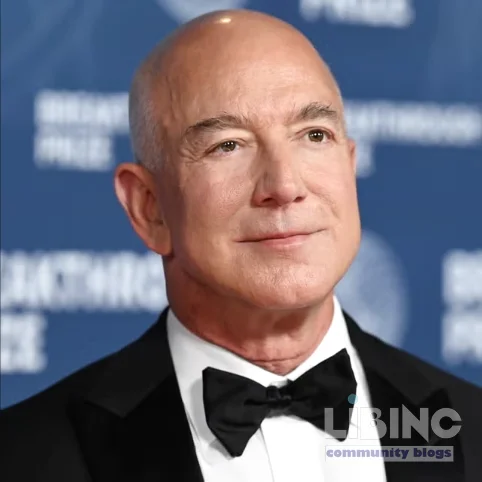
Jeff Bezos’s Venice wedding to Lauren Sanchez, a three-day spectacle on the private island of San Giorgio Maggiore and across the Venetian garrisoned landscape, functions as a high-value data point in the arc of one of the world’s most influential business empires. The ceremony, reportedly a black-tie affair for about 200 guests, fits a pattern of wealth signaling that accompanies record-breaking corporate fortune, media ownership, and space ambitions. It also raises questions about how such public displays relate to the practical governance of a vast enterprise ecosystem that spans e-commerce, cloud computing, and aerospace. The event’s cost is estimated at around $50 million, a number that underscores the scale of private wealth at stake and the potential implications for public perception of philanthropy and responsibility.
The guest list—celebrities, business leaders, and cultural figures—reflects a deliberate social choreography that blends entertainment with strategic branding. Yet beneath the glitter lies a hidden conflict: how does the spectacle reconcile with ongoing debates about labor practices at Amazon, competitive scrutiny for AWS, and the ethics of wealth concentration in a democratic economy? This piece dissects the Venice wedding through four analytical lenses to reveal not just what happened, but why it matters for the broader trajectory of Jeff Bezos’s empire and the institutions surrounding it.
Block 1: Through analytics
Wealth signaling at scale: the optics of a billionaire wedding
The Venice ceremony and its surrounding three-day program function as a deliberate signal about resources, risk tolerance, and social capital. When a founder-turned-tycoon stages a wedding of this magnitude, the message travels beyond the guest list or the dress code. It communicates confidence in long horizons, readiness to mobilize extraordinary resources, and a willingness to blur private life with the public arena where Amazon, Blue Origin, and The Washington Post intersect with global economics.
In the context of a wealth ecosystem that includes Blue Origin aerospace bets, Amazon Prime logistics, and stakes in media, the Venice wedding translates into a multi-layered signal: a reassurance to employees and investors about the scale and resilience of the platform-driven empire, while also signaling to critics that wealth generation can co-exist with prestige projects and philanthropic outreach. The event’s estimated $50 million price tag is not merely a party budget; it is a reference point for stakeholders evaluating the opportunity costs of long-run bets in space, media influence, and climate resilience through the Bezos Earth Fund.
- Wealth concentration: A visible manifestation of how wealth clusters around a single entrepreneur and a strategic network of investments.
- Social capital: The guest roster becomes a map of influence across entertainment, tech, and policy-adjacent circles.
- Strategic branding: The event anchors a narrative that the founder remains personally invested in high-impact ventures beyond the core business.
From a market-communication perspective, the synthesis of private luxury and public-facing ventures reinforces a megafirm identity. It aligns with the broader obsession around the ethics of empire-building in the digital age, where the line between personal life and corporate influence grows increasingly permeable. This is not merely a party; it is a curated tableau that can shape attitudes toward corporate philanthropy, governance, and the future of work in the Bezos ecosystem.
The Venice setting also provides a case study in how place matters for signaling. Venice’s cultural capital, its regulatory realities, and the public mood around large-scale private events interact with the perception of the Bezos brand. The city’s protests against certain logistics choices and venue decisions offer a microcosm of how stakeholders weigh the social responsibilities of mega-wealth. In this sense, the wedding becomes a test-case for whether the empire can sustain social legitimacy while pursuing audacious, long-horizon bets in space, media, and e-commerce.
Analytically, the event demonstrates that wealth signals can be intentionally orchestrated to calibrate expectations across labor, policy, and consumer markets. It is not just a spectacle; it is a narrative device that anchors the public’s mental model of what the empire stands for and where it intends to go next.
Bezos, philanthropy, and the optics of impact
The wedding occurs within a broader arc of philanthropy that includes initiatives like the Bezos Day One Fund and the Bezos Earth Fund. The juxtaposition of a lavish private ceremony with high-profile philanthropic commitments invites a closer look at how social spending is allocated and perceived. Is the spectacle an endorsement of wealth-driven experimentation, a strategic platform for charitable signaling, or a competing priority that might draw resources away from on-the-ground social impact programs?
This section tracks the intersection of private wealth with public goods. It asks who benefits from such signaling and how the optics align with actual outcomes in homelessness, early childhood education, climate resilience, and science funding. The analysis emphasizes that the real price of wealth is not just dollars spent in a single weekend but the cumulative allocation of capital toward future risk mitigation, research, and human capital development across sectors.
Block 2: Through contrast
Romance as a strategic narrative vs. corporate discipline
The public romance between Jeff Bezos and Lauren Sanchez sits alongside a parallel corporate narrative: the disciplined, data-driven Day One ethos that Bezos has championed as a framework for decision-making. The contrast raises a central question: to what extent does a personal narrative reinforce or complicate a corporate one? The relationship’s visibility can humanize a titan while also foregrounding tensions between the intimate and impersonal scales at which megacorporations operate.
Where the wedding emphasizes lifestyle, the business story emphasizes discipline. Both narratives pull resources—time, attention, and capital—toward projects with long-run payoffs. The juxtaposition invites observers to consider how a private relationship may influence leadership style, risk tolerance, and strategic priorities in a way that affects employees, partners, and shareholders across Amazon, AWS, and Blue Origin.
- Personal branding vs. corporate governance: The couple’s public profile can shape stakeholder expectations about leadership philosophy.
- Celebrity associations vs. policy outcomes: The guest list intersects entertainment prestige with potential policy conversations about space, tech, and labor dynamics.
- Emotional signals vs. analytic discipline: The romantic narrative may exert soft power, while hard data continues to drive performance metrics across core businesses.
The contrast also highlights a broader paradox in modern capitalism: the most visible founders often blend intimate life with institutional reach. The optics of a marriage, even when crafted for personal reasons, become part of a brand story that compounds with media ownership and aerospace ambition to create a multi-angled public persona. This is not merely spectacle; it is a choreography that can influence trust, talent retention, and regulatory framing in the years ahead.
Public perception vs. private incentives
Public perception of Bezos’s wealth and influence matters because it intersects with corporate incentives, labor relations, and consumer sentiment. If the public sees wealth as a driver of innovation and global good, the backdrop for strategic bets looks more palatable. If perception tilts toward envy or unease about concentration of power, regulatory and political pressures can intensify. The Venice wedding, in this framing, becomes a shorthand for evaluating whether private incentives align with public gains across the multi-hub Bezos ecosystem.
Block 3: Cause-and-effect relationships
From ceremony to strategy: potential ripple effects
The Venice wedding is a singular event, but its implications unfold through causal channels that affect employees, investors, and partners. The scale and public nature of the celebration can influence scheduling, budgeting, and risk appetite for long-term bets in space and cloud computing. If the optics support the perception of solid capital discipline, the signal can bolster confidence in AWS, Prime expansion, and Blue Origin’s timetable for lunar and commercial missions.
Equally, the event can intensify scrutiny around labor practices and wage policies. The optics of wealth concentration are inseparable from debates about working conditions at fulfillment centers, contract labor, and the broader social costs of rapid delivery networks. Causally, public sentiment can translate into policy attention, which then feeds back into corporate governance and stakeholder engagement strategies across Amazon and allied ventures.
- Capital allocation decisions: Public perception may affect appetite for high-capital bets like space infrastructure and next-gen logistics networks.
- Regulatory signaling: Widened attention from regulators could influence antitrust review and labor policy considerations.
- Talent and retention: Brand signals influence recruitment, morale, and retention at scale.
From a business model perspective, the event can also affect investor expectations about diversification, risk, and the pace of strategic pivots. The interplay between luxury signaling and durable capital investments matters because it shapes how stakeholders judge whether Bezos’s portfolio remains aligned with the Day One philosophy as it evolves in the 2020s and beyond.
Impact on philanthropy and public goods funding
The relationship between high-profile personal milestones and philanthropy has practical knock-on effects. If donors perceive that personal wealth is being used to catalyze social outcomes, grantmaking through the Bezos Earth Fund and Day One programs may receive greater social license. Conversely, if the public remains skeptical about the governance of immense private wealth, funding strategies and measurement of impact may come under sharper scrutiny, prompting more transparent reporting and governance reform within funded initiatives.
Block 4: Expert reconstruction
How experts reinterpret the Bezos portfolio post-ceremony
Expert reconstruction approaches the wedding as a diagnostic instrument for understanding strategic priorities. Analysts in corporate governance, philanthropy, and space economics may reframe the event as a qualitative signal embedded in a broader quantitative trajectory: continued cloud growth via AWS, expansion into media influence via The Washington Post, and sustained risk-taking in aerospace with Blue Origin. The reconstruction asks: what does the wedding reveal about decision-making processes, risk tolerance, and stakeholder alignment at scale?
From this vantage point, reconstructing Bezos’s priorities yields several plausible inferences. First, the event reinforces a narrative of long-term commitment to a diversified portfolio that blends consumer technology, media, and exploration. Second, it signals that personal branding and corporate branding are increasingly intertwined, with private life serving as a stage for strategic messaging. Third, it implies a continued willingness to mobilize enormous resources for moon-shot projects, climate initiatives, and social impact programs that require cross-sector collaboration and policy engagement.
- Strategic alignment: The wedding reinforces a coherent storyline across Amazon, AWS, Blue Origin, and media holdings, suggesting that private life and public strategy are synchronized for narrative leverage.
- Governance implications: Heightened visibility can sharpen oversight expectations from shareholders and boards, driving more robust governance and risk-management practices.
- Future trajectories: Expect sustained investments in space infrastructure, climate funding, and selective philanthropy with measurable outcomes.
In sum, the expert reconstruction view treats the Venice wedding as a lens on the next phase of an already sprawling empire. It is not a departure from prior strategy but a magnifier that clarifies priorities, governance challenges, and the social contract surrounding one of the world’s most influential business figures.
Jeff Bezos’s Venice wedding is a highly symbolic event that sits at the intersection of spectacle, strategy, and social responsibility. By examining it through analytics, contrast, causal reasoning, and expert reconstruction, we can see how a personal milestone can illuminate the broader architecture of a multi-venture empire. The narrative that emerges is not merely about a wedding; it is about the evolving balance between private wealth, public goods, and the long horizon of modern capitalism.
Closing the governance-context gap
Even as the Venice wedding signals wealth and ambition, executives and stakeholders need concrete, auditable practices to interpret the signal. The following compact framework translates spectacle into governance inputs that boards can review quarterly. It focuses on six dimensions that touch capital, people, and public trust: capital discipline, outcomes, transparency, regulatory readiness, climate and social impact, and talent well-being.
Investment-Alignment Table
| Scenario | Capital allocated | Time horizon | Primary signal | Risks |
|---|---|---|---|---|
| Space expansion bets | $7B | 10–15 yrs | Long-horizon commitment | Technological, regulatory, cost overruns |
| Media portfolio growth | $1.5B | 5–8 yrs | Influence and reach | Public trust, audience fragmentation |
| Cloud-ops scale | $20B | 3–5 yrs | Operational maturity | Competitor pricing, labor costs |
| Climate and philanthropy | $2B | 5–10 yrs | Impact transparency | Measuring outcomes, donor fatigue |
| R&D for next-gen logistics | $3B | 6–12 yrs | Innovation pipeline | Policy shifts, supply chain risk |
Beyond the table, a practical signal for leadership is to publish a quarterly capex-ops narrative linking big bets to measurable outcomes. For example, AWS expansion should pair customer-satisfaction and uptime metrics with regional procurement diversity; Blue Origin milestones should tie to safety records and supplier diversification; philanthropic commitments should report milestone-based impact in homelessness or climate resilience.
The nested signals should be tracked in a simple scorecard. Use six dimensions: Capital discipline, Philanthropy effectiveness, Climate commitment, Labor transparency, Data governance, and Talent well-being. A quarterly dashboard with light disclosure helps stakeholders judge alignment between private signaling and public goods. The following cascade organizes priorities to action:
Governance-signal cascade
- Strategic alignment
- Long-term portfolio coherence
- Cross-entity synergies
- Governance oversight
- Board-level risk dashboards
- Independent audits
- Public policy engagement
- Regulatory readiness
- Stakeholder engagement
- Transparency and reporting
- Impact measurement
- Open data where feasible
In sum, this framework closes the gap between spectacle and governance, offering concrete steps to translate a high-profile moment into durable, verifiable practice that supports the Day One ethos while addressing public concerns about wealth and power.
What is the significance of Bezos Venice wedding for his empire?
The Venice wedding signals wealth, ambition, and a narrative about long-horizon bets across Amazon, Blue Origin, and media holdings, with governance implications that shape how supporters and critics view the sustainability of those bets. It creates a public benchmark for how capital is deployed and how leadership presents its commitments to employees, customers, and regulators. In practical terms, the event tests the alignment between brand messaging and measurable outcomes, encouraging more transparent reporting and disciplined capital allocation across the portfolio.
Analytically, the moment functions as a stress test for trust, signaling, and accountability, prompting boards and investors to scrutinize whether private signaling translates into public goods and verifiable performance.
How does wealth signaling relate to corporate governance?
Wealth signaling influences investor expectations, board oversight, and governance discipline by creating a perception of capital availability and commitment to long-term bets, which can reinforce or strain governance practices. It can improve clarity about strategic priorities but may also intensify scrutiny of waste, bias, or misaligned incentives if outcomes do not follow the story.
Practically, governance teams should pair high-visibility events with transparent dashboards, linking big bets to KPI-driven outcomes and independent audits to independence in reporting.
What is the relationship between philanthropy and private wealth signaling?
Philanthropy can legitimize wealth by connecting private resources to public goods, but stakeholders scrutinize whether giving is proportionate to capacity and whether governance ensures measurable impact. Transparent metrics, annual reporting, and independent evaluations help maintain legitimacy and trust over time.
Philanthropic transparency, milestone-based funding, and clear governance backstops are essential to turn signaling into durable social value rather than prestige alone.
How might the event influence labor practices and regulatory scrutiny?
Public signals of concentrated wealth increase attention to labor conditions, antitrust considerations, and policy debates. This can prompt stronger reporting on wages, safety, and unionization practices, as well as proactive regulatory engagement. Companies often respond with enhanced disclosure, supplier audits, and programs to improve workforce well-being to counterbalance broader scrutiny.
Investors should watch for heightened governance disclosures and oversight that demonstrate a constructive balance between innovation, growth, and worker protections.
What governance signals should investors watch after such events?
Investors should track capital-allocation discipline, philanthropic transparency, climate commitments, and governance dashboards that connect big bets to measurable outcomes. They should demand independent audits, open data where feasible, and progress reports on social impact, diversity, and ethical risk management.
In practice, a concise, verifiable scorecard aligned with Day One principles helps turn spectacle into accountable governance.
How does this event fit into the overall strategy of Amazon, AWS, and Blue Origin?
Viewed through governance and strategy, the Venice event can be interpreted as a public-facing moment that complements a diversified strategy across retail, cloud, and exploration. It signals coherence in long-run bets while inviting closer scrutiny of how private narratives translate into public outcomes, policy engagement, and sustainable value creation.





Add a comment
To comment, you need to register and authorize
Comments
No comments yet