

US Tariffs and Australia: An Analytical Assessment of Economic Impact, Risk, and Policy Options
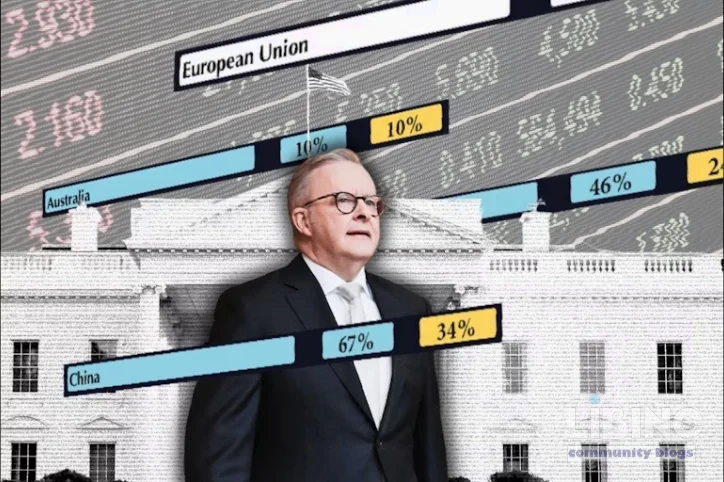
Trump's tariff regime rewrites a familiar script of global trade, extending across all products entering the US and dragging along unforeseeable costs for partners. Australia faces a 10% tariff on exports effective April 5, while 60 countries confront punitive rates that exceed the terms of existing agreements. The package includes a 25% auto tariff extension to auto parts by May 3, and steep 34% tariffs on Chinese goods and 46% on Vietnamese imports. For Australia, the penalties are not merely headline numbers; they translate into higher input costs, disrupted supply chains, and shifts in market demand that ripple through regional economies. The largest Australian export to the US is meat products, valued at about A$4 billion in 2024, a figure that could shrink if producers redirect flows or reduce output. The stakes extend beyond one nation: global supply chains tremble, prices rise, and policy leverage shifts toward protectionism.
Table of Contents
- Analytics of US tariffs Frontier
- Contrasts in policy and markets
- Causal chains and economic spillovers
- Policy reconstruction: options and strategies
Analytics of US tariffs Frontier
The tariffs announced by the US administration cast a broad net, reaching beyond the classic tariff walls to reshape incentives across production and procurement. The 10% levy on Australian imports is not merely a line item; it signals a willingness to elevate price-based barriers when policy goals demand structural change. The 34% rate on China and 46% on Vietnam reflect a deliberate targeting of suppliers that dominate global manufacturing and assembly chains. In parallel, the 25% auto tariff, now extended to auto parts by May 3, creates a cascade of cost increases that propagates through the entire vehicle ecosystem. These moves intensify what economists call non-tariff barriers in disguise: paperwork, compliance, and regulatory hurdles that deter market access even when a product technically qualifies for entry.
Across the globe, these measures matter as much for the signals they send as for the prices they impose. The US tariff regime accelerates a trend toward regionalization of supply chains, where firms replicate multiple sourcing options to dampen exposure to single-country policy shocks. Global value chains become more brittle as firms respond to tariff-induced price gaps with reconfiguration and re-pricing. For Australia, this means the importance of regulatory alignment with key partners rises at the same time as protective safeguards in sectors like biosecurity and pharmaceuticals sharpen. The result is a more complex, more costly, but potentially more robust system if managed with foresight and coordination across sectors and borders.
- The largest export is meat products worth about A$4 billion in 2024, with potential diversion pressures if demand in the US softens due to higher landed costs.
- Tariffs on major partners, notably China, Japan and Korea, create regional spillovers that affect demand for Australian iron ore, coal and gas.
Australia's beef sector faces a direct test: price competitiveness versus new sourcing options that emerge in response to higher US prices. The tariff regime interacts with existing non-tariff barriers, increasing the friction for cross-border movements and heightening the importance of biosecurity, food safety, and regulatory compatibility. In short, US tariffs rewire the cost structure of regional trade and require a re-evaluation of which markets offer the best risk-adjusted returns for Australian producers.
Investors reacted quickly. In the first hour of trading after the tariff announcement, the S&P/ASX 200 fell roughly 2.1%, a reminder that financial markets price policy uncertainty and real economy exposure in tandem. The broader implication is not just a one-off hit to equity values, but a signal that supply chain disruptions will translate into longer-term capital allocation decisions. For the Australian economy, the tariff shock compounds existing pressures from global monetary shifts and regional demand cycles, pressuring exporters and domestic manufacturers to accelerate resilience-building and diversification of markets and inputs.
Beyond the near-term costs, the policy package places Australia in a quasi-labyrinthine position: defend core industries while avoiding price increases for domestic consumers, and at the same time pursue a broader, more resilient trade architecture. The risk is not only price or volume; it is the probability of a sustained re-pricing across industries and the potential for a renegotiation of terms with major partners under evolving strategic frameworks. As a result, policymakers must weigh short-run relief against long-run structural adaptation—an exercise that tests the country’s capacity to align regulatory policy, export strategy, and industrial policy with a shifting global regime of tariffs and trade barriers.
In this analytics block, the key takeaway is not simply that tariffs exist, but how they restructure incentives, flows, and expectations across a compact, highly interconnected region. The US tariffs, while framed as a domestic tool, become a global pricing and procurement signal, forcing exporters to recalculate margins and governments to recalibrate industrial policy in ways that could outlive the immediate tariff cycle.
Contrasts in policy and markets
Australia’s preferred path centers on securing exemptions through negotiation rather than resorting to reciprocal tariffs. Prime Minister Anthony Albanese and Opposition Leader Peter Dutton have pledged that Australian policy will not be for sale and that sensitive areas—biosecurity, the Pharmaceutical Benefits Scheme (PBS) approvals, and the News Media Bargaining Code—will not be compromised. The government has framed a targeted exemption as the most credible route to preserve existing price levels for consumers while maintaining access for Australian producers to critical markets. Simultaneously, Canberra is signaling a broader policy stance that emphasizes market diversification, anti-dumping tools, and disciplined fiscal support to help households and firms weather the disruption.
Beef, as the focal Australian commodity, offers a concrete lens on the policy contest. Latest data show exports to China increasing by 43% from January, with Japan up 27% and South Korea up 60% from the previous month. These shifts illustrate both resilience and vulnerability: a diversified portfolio of destinations can cushion shocks, yet heavy reliance on any one market creates a new exposure that tariffs can magnify. Australia’s response, therefore, must balance a strategic push for new destinations with the need to safeguard access to existing partners, ensuring that diversification does not come at the expense of reliability or quality standards.
The dispute resolution track offers a potential pressure valve. WTO channels remain a consistent point of reference for multilateral trade discipline, even as the US has shown willingness to sideline the body in some moments. Australia’s options also include formal consultations under the Australia-US Free Trade Agreement, which provides dispute-resolution mechanisms and a calibrated pathway to exemptions or timelines for relief. However, neither path promises immediate relief, and both demand careful legal and diplomatic choreography to avoid escalation and to preserve the broader alliance framework that underpins regional security and economic stability.
From a market perspective, the contrast between direct exemptions and broader trade diversification becomes a central strategic decision. Targeted relief that shields the most vulnerable sectors must be weighed against the benefits of expanding Australia’s footprint in high-growth markets with lower tariff exposure. The beef sector’s diversification drive—supported by a $50 million responsiveness package—illustrates a pragmatic blend of policy tools designed to expand access without incurring unintended protectionist retaliation. In parallel, the government’s plan to strengthen anti-dumping provisions on steel, aluminum and other manufacturing aligns with a rules-based approach that can preserve competitive balance while avoiding sweeping tariffs that would trigger consumer price effects.
These contrasts underscore a broader calculus: policymakers must manage a delicate trade-off between defending domestic welfare and maintaining credibility with global partners. The strategic question is whether exemptions and selective protections can achieve policy aims without undermining the international regime that has supported economic integration for decades. In short, the Australian response is anchored in selective diplomacy, market diversification, and targeted policy tools that preserve both competitiveness and consumer welfare.
Causal chains and economic spillovers
Tariffs generate a cascade of price and demand effects that ripple through the economy. When import taxes rise landed costs for US buyers and intermediaries alike, price signals shift, reducing demand where substitutes exist and encouraging buyers to switch suppliers or reconfigure procurement strategies. The immediate effect is higher consumer prices and tighter margins for importers, but the longer-run impact includes altered investment plans, with firms seeking lower-cost or more stable regions and suppliers that offer greater price certainty. These dynamics extend far beyond the tariffed goods, because the same price pressures apply to inputs and inputs’ substitutes across industries.
Supply chains respond through nearshoring and regionalization, a process that reshapes cost structures and reliability over the medium term. As firms rebalance sourcing, non-tariff barriers—whether regulatory frictions, customs procedures, or biosecurity checks—become more salient in determining actual accessibility and lead times. The volatility introduced by tariff shocks also feeds into commodity prices and risk premia, complicating hedging decisions for producers and traders who rely on predictable margins in a volatile environment.
Geopolitically, the tariff regime tests the credibility of multilateral institutions that have long underpinned the rules-based order. The US has sidelined the WTO in recent years, reducing the predictability of dispute settlement and the deterrent effect of potential retaliation. In developing economies, tariff-driven revenue and export earnings shifts can intensify poverty risks if adaptation fails, highlighting a critical equilibrium between protectionist posture and the duty to support development through predictable access to markets. This tension underlines why trade defense instruments—such as countervailing duties and anti-dumping measures—appear more relevant than ever in defending fair competition without triggering reciprocal retaliation that would harm domestic consumers and industries alike.
These causal chains illuminate the risk of a self-reinforcing cycle: tariff-induced price increases dampen demand, which triggers investment retrenchment and lower technology transfer, reinforcing a slower growth trajectory for impacted sectors. The central challenge is to design policy tools that dampen volatility, maintain incentives for export diversification, and preserve a functioning, rules-based trading system that countries can rely on during periods of policy experimentation and realignment.
From the Australian vantage point, the real-world implication is to align domestic policy instruments with a credible, diversified external strategy. This means coupling targeted exemptions with robust anti-dumping actions, expanding market access through new partnerships, and investing in productivity-enhancing capabilities to offset higher import costs. The ultimate objective is to minimize the time between policy shocks and economic adjustment, ensuring that Australian producers can adapt without eroding living standards or eroding the country’s strategic relationships.
In sum, the causal chain here is a reminder that tariffs operate like a hydraulic press: apply pressure in one place, and the system redistributes loads elsewhere. The ability to anticipate and manage these shifts—through diversified markets, improved supply-chain resilience, and disciplined defense of domestic policy integrity—will determine the cost and speed of Australia’s adjustment to a world with higher and more complex tariff barriers.
Policy reconstruction: options and strategies
The immediate pathway rests on diplomacy to secure a targeted exemption that preserves Australia’s core advantages while maintaining policy autonomy in sensitive areas. Negotiations with the United States can be designed to isolate the exemption to specific sectors or products, preserving overall market access and avoiding a broader set of retaliatory dynamics. If direct exemptions prove elusive, Australia can escalate the matter through dispute-resolution mechanisms inside the Australia-US Free Trade Agreement, while simultaneously signaling readiness to pursue a World Trade Organization process if necessary to demonstrate commitment to a predictable rules-based order.
Longer-term resilience requires deliberate diversification of markets, investment in value-added manufacturing, and the development of shorter, more reliable supply chains that reduce exposure to tariff shocks. The government could deploy targeted support for farmers and manufacturers to retool for new destinations, backed by export-credit facilities and market-intelligence programs that raise competitiveness in high-growth regions. This approach is complemented by a pragmatic strengthening of anti-dumping and countervailing duties, ensuring that low-cost imports do not erode domestic capability while avoiding a spiral of tariff retaliation that could hurt consumers.
Policy coherence across biosecurity, regulatory approvals for pharmaceuticals, and media policy must accompany the trade toolkit to avoid unintended frictions that could trigger new barriers or escalate tensions with partners. A robust domestic policy framework that reinforces product safety and consumer protection while preserving efficient trade flows will be essential to maintaining trust with international partners during a period of tariff realignment. The strategic objective is to build a more resilient export economy that can withstand policy shocks while maintaining the affordability and reliability that households and businesses rely on.
Ultimately, Australia’s response will hinge on balancing four core aims: maintain essential access to key markets, prevent prices from rising for Australian households, support productive sectors through targeted investment, and preserve the credibility of the global trading system. The tactical mix—exemption negotiations, selective retaliatory options avoided, market diversification, and enhanced trade defense—offers a pragmatic path forward. By integrating policy coherence with proactive market development, Australia can withstand a cycle of tariff shocks while maintaining its role as a reliable partner in a dynamic, evolving regional economy.
In the end, the US tariffs test Australia’s capacity to manage risk without sacrificing growth. The country’s best path blends diplomacy with concrete supply-chain and market strategies, leveraging the strength of existing alliances while expanding access to new customers. If executed with discipline, this approach can transform a sudden policy shock into an opportunity to strengthen economic resilience, improve competitive positioning, and reinforce Australia’s reputation as a dependable participant in global trade.
Be mindful that the road will require steady, evidence-based policy work and a willingness to adapt as the tariff landscape evolves. The outcome will depend on timely action, credible diplomacy, and a clear-eyed view of how to translate protectionist pressures into durable gains for Australian producers, workers, and households.
To conclude, the current tariff wave tests both policy design and strategic clarity. Australia’s response should be a model of restraint paired with proactive diversification, leveraging selective exemptions where feasible and pursuing aggressive market expansion where tariff exposure is lowest. If the country can marry policy integrity with market dynamism, it can withstand the shock of US tariffs while laying the groundwork for a more resilient trade architecture for the decade ahead.
Ultimately, the strategic takeaway is straightforward: US tariffs are not just a bilateral issue; they illuminate a broader shift in how nations manage economic interdependence. Australia’s ability to respond—protecting vulnerable sectors, expanding to new buyers, and maintaining credible governance—will determine whether this episode becomes a catalyst for durable competitiveness or a persistent drag on growth. The choice lies in policy design, execution, and the willingness to pursue a diversified, resilient approach to regional trade and global value creation.
In sum, the coming years will reveal how effectively Australia can translate the shock of US tariffs into a more robust, diversified, and resilient trade economy, capable of withstanding the volatility that accompanies a rapidly shifting tariff landscape.
Final assessment: US tariffs create a crucible for Australia, testing regulatory coherence, export strategy, and the willingness to engage with allies to defend a rules-based system. The country now faces a critical opportunity to demonstrate that prudent, well-targeted policy work can shield households from immediate price pressures while laying the groundwork for longer-term economic strength in a more complex global trading environment.
Practical steps to reinforce Australian resilience
While targeted exemptions and market diversification are essential, a concrete action plan helps firms convert policy signals into stable margins. The following steps show how beef, manufacturing, and input suppliers can reduce landed costs and preserve competitiveness in a higher-tariff environment.
| Sector | Tariff/Impact | Estimated landed cost rise | Quick wins | Longer-term actions |
|---|---|---|---|---|
| Beef and meat products | 10% US tariff | Moderate price rise in US markets; substitution risk | Lock in multi-year supply contracts; explore alternative buyers | Diversify destinations; add value-added processing |
| Automotive components | 25% auto tariff extension | Higher input costs for US-assembled vehicles | Develop local assembly or regional supply hubs | Strengthen regional supply chains with partner plants |
| Iron ore and energy inputs | Indirect exposure via supplier prices | Possible price pass-through to manufacturers | Secure long-term energy contracts; diversify buyers | Coordinate with exporters in non-tariff regions |
| Pharma and biosecurity inputs | Potential exemptions; risk if expanded | Stable if exemptions succeed | Invest in local safety testing and compliance | Strengthen regulatory coherence with allies |
| Agricultural inputs and feed | 10% tariff signal | Higher production costs for farmers | Co-op purchasing; regional sourcing | Smaller, more frequent shipments to reduce expense |
| Manufactured goods | Various tariffs | Marginal price shifts | Digitize supply chains; improve demand forecasting | Invest in automation to offset costs |
Practically, firms should map supply chains to identify the most exposed nodes, then pursue two tracks in parallel: lock in stable, diversified buyers where possible and build capacity for regional sourcing. In beef, for example, forward contracts with buyers in Japan and Korea can smooth volumes even if US demand wobbles. In manufacturing, joint ventures with nearby partners can shorten supply lines and reduce exposure to distant tariffs. The objective is clear: reduce cost volatility while expanding access to reliable markets that offer price transparency and predictable demand.
Strategic steps for resilience are practical and incremental: diversify destinations, build dual sourcing, and pursue targeted exemptions where feasible. A simple flow can guide a team: map exposure, negotiate with partners, and invest in productivity gains that lower unit costs. This approach helps ensure households still benefit from price stability while the economy captures new growth opportunities across a broader regional footprint.
Strategic steps for resilience
- Market diversification
- Expand destinations to Japan, Korea, Southeast Asia
- Develop new product lines for these markets
- Supply-chain resilience
- Nearshoring, dual sourcing, inventory buffers
- Policy coordination
- Targeted exemptions, robust trade defense
Ultimately, Australia can convert a tariff shock into a catalyst for structural upgrade by aligning export strategies with capable domestic policy, ensuring that households feel minimal price impact while the economy gains productivity.
What are the main US tariff measures affecting Australia?
The measures include a 10% tariff on Australian imports, a 25% extension to auto tariffs including auto parts by May 3, and broader punitive rates such as 34% on Chinese goods and 46% on Vietnamese imports. These signals aim to recalibrate global supply chains and pricing.
In practice, the combined policy moves raise input costs and encourage firms to rethink sourcing, while governments pursue exemptions or retaliation-balanced reform to shield domestic consumers from abrupt price shifts.
How can Australian exporters diversify markets to reduce risk?
Exporters can pursue new destinations (Japan, Korea, Southeast Asia) and expand product lines tailored to those markets. Building partnerships with distributors, investing in compliance, and leveraging export-credit facilities help stabilize margins as tariff dynamics evolve.
Diversification lowers reliance on a single market and reduces vulnerability to tariff oscillations or policy shocks.
What are the potential impacts on Australian beef exports to the US?
Higher landed costs in the US could reduce demand or shift preferences toward cheaper imports. Producers can offset this by winning exemptions for core products, targeting new buyers, and increasing efficiency to maintain competitiveness in other markets.
Diversifying buyers beyond the US and improving value-added processing can cushion earnings and support steady output levels.
What policy options exist to secure exemptions?
Targeted exemptions negotiated bilaterally remain central, complemented by formal dispute-resolution channels and, if needed, WTO processes. Clear product or sector qualifications and credible timelines improve the odds of relief without broad market disruption.
Policy coherence across biosecurity and regulatory approvals also supports sustained access to major markets while reducing friction with partners.
How do tariffs shape supply chain resilience?
Tariffs incentivize nearshoring, regional sourcing, and inventory buffers. Firms map exposure, diversify suppliers, and invest in automation to offset higher costs, creating a more robust but complex network that can better absorb shocks.
Resilience comes from deliberate planning, not ad hoc responses, and from sustaining productive capacity even when prices rise.
What is the role of anti-dumping rules?
Anti-dumping measures defend domestic producers from artificially low-priced imports, helping maintain fair competition. They are a key tool to balance openness with protection for high-value sectors, provided enforcement remains rules-based and transparent.






Add a comment
To comment, you need to register and authorize
Comments
From a policy design standpoint, the tension is between shielding consumer welfare and preserving incentives for export-oriented investment. The proposed path of selective exemptions combined with market diversification offers a middle ground, but it rests on a credible commitment to rules-based conduct in trade and a credible governance framework for anti-dumping actions. The article hints at a wider strategic shift toward regionalization of supply chains, which has both costs and benefits. On the one hand, firms can reduce exposure to a single policy shock by sourcing from multiple partners. On the other hand, regional supply networks can become more fragile if regulatory alignments diverge or if common standards fail to keep pace with product safety, biosecurity, or environmental requirements.
A fruitful line of discussion is how to operationalize resilience without eroding price discipline. Should Australia invest more in export credit facilities, market intelligence, and local value-added capacity to offset higher input costs? How can policymakers coordinate with biosecurity, pharmaceutical approvals, and media policy to prevent new friction from arising as the tariff landscape evolves? The article’s emphasis on diplomacy, dispute resolution, and selective relief invites debate about the timelines and credibility of relief. If exemptions prove elusive, will WTO mechanisms or bilateral channels provide timely relief, or risk becoming protracted avenues that leave communities exposed longer than necessary? Finally, the piece underscores the role of governance and communication: protecting households while preserving the credibility of the alliance requires careful messaging, transparent criteria for exemptions, and a clear sense of how short-term relief translates into long-run competitiveness.