

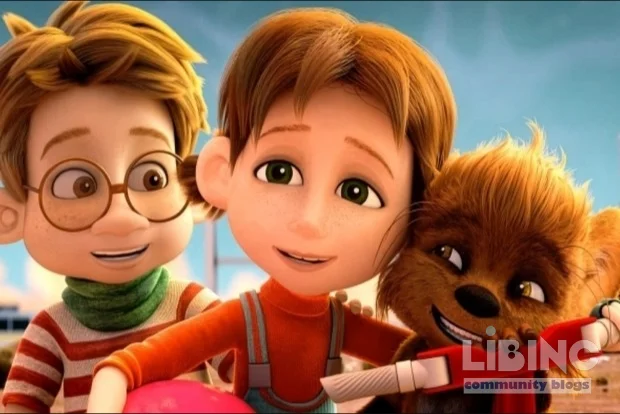
The Crystal Planet: An Analytical Exploration of Eco-Ethics in a Croatian Animation Project
The Crystal Planet enters the contemporary animated landscape as a bold experiment in eco-ethics wrapped inside a family-friendly adventure. The film translates a century of animation history into a modern case study: a Croatian-led project that survived a difficult gestation, inherited a legacy from Dušan Vukotić, and finally arrived on screen with a global release plan. This analysis treats The Crystal Planet as more than a narrative about pollution and political intrigue. It tests how production choices, cross-border collaboration, and stylistic decisions shape the delivery of environmental messaging to a diverse audience. The result is a film that claims clarity through directness while remaining a touchstone for broader questions about responsibility in cinema.
Problem framing centers on whether eco-themed animation can achieve both accessibility for younger viewers and stakes meaningful enough to prompt reflection. The Crystal Planet answers with a three-pronged tactic: a straightforward plot, recognizably human motivations, and a visible ecological tension that drives every turning point. Stakes arise not only from the plot on screen but from the production history that reassembled an unfinished dream into a market-ready feature. Hidden within is the conflict between legacy and reinvention: can a cinema tradition rooted in art-house courage adapt to global audiences without diluting its ecological purpose? The ensuing sections unpack this tension through four analytical lenses, each revealing how the film earns its place in modern animation while exposing its limits.
Analytics-driven reading of The Crystal Planet
The Crystal Planet builds an explicit ecological and political axis. Rea, a young girl, relocates with her engineer father Val to a crystal planet ruled by Mordokan. The narrative clamps onto the tension between environmental stewardship and political ambition, using the election as a lever to show how policy translates into practice. The central question becomes not only what happens to the planet, but who is empowered to decide its future. The film camps around a simple moral map: ecological well-being aligns with collective care, while unchecked governance cultivates corruption and waste. This clarity matters because it makes the eco-message legible to children without sacrificing the film’s broader social implications.
LSI signals populate this analytic layer: eco-themed animation, environmental messaging in children’s cinema, cross-border animation production, and the interface between ecological drama and political storytelling. The Crystal Planet uses these terms as a scaffold to translate abstract environmental risks into tangible, cinematic events—a cub’s rescue, a polluted river, a factory line that hums like a threat. The method is pragmatic: keep ecological risk tangible, translate it into action, and let the personal bond between Rea and Andy humanize the stakes. This alignment between environment and character motivation helps sustain engagement while maintaining a clear ethical frame, a crucial factor for audience retention and message retention in a crowded market.
The script, co-authored by Arsen Anton Ostojić, Aleksandar Žiljak, and Brett Shumway, leans into a familiar rhythm of discovery and escalation. The Crystal Planet adheres to a globalized pacing that appeals to international distributors and festival juries. Yet the text preserves a distinctly European sensibility: a slower, more observant beat that foregrounds character dynamics and ecosystem texture alongside plot propulsion. The eco-ethics framework remains transparent enough for younger viewers, while the political subtext and corporate critique invite older listeners to consider governance and accountability. The result is a film that functions as a multi-layered object: entertaining on the surface and instructive in its underlying argument about responsibility toward living systems.
- Clear ecological stakes embedded in a child-friendly adventure
- Global collaboration shaping narrative and market strategy
- Strategic use of hunts for truth to energize audience empathy
Contrasts in storytelling
The Crystal Planet situates itself in a space where allegory and direct reportage of environmental issues coexist. The film leans toward a US-like cadence of acts, transitions, and musical interludes, yet it preserves a European sensitivity to social responsibility. The contrast yields both advantages and drawbacks. On one hand, the explicit alignment of heroism with environmental protection offers a straightforward moral engine that travels well across languages and cultures. On the other hand, the bluntness of the message can flatten nuanced debate: the lines between good and evil appear plainly drawn, and inner conflicts remain largely exteriorized rather than explored as complex psychological drives.
LSI terms and cross-cultural considerations appear here as well: audience accessibility, straightforward allegory, and political symbolism in animation. The Crystal Planet uses a familiar dichotomy in which Mordokan embodies industrial expansion and Sandra channels environmental reform. The two candidate leaders function as caricatures rather than multifaceted figures, which makes the opposition legible for younger viewers but reduces scope for a more layered discussion about policy trade-offs. This design choice aligns with a strategic aim to maximize international appeal while maintaining a modest but steady engagement with the ecological premise. The end result is a film that lands with clarity but invites questions about the depth of its critique and the maturation of its political argument for future installments.
Comparative tension emerges when stacked against more ambivalent eco-animations. The Crystal Planet deliberately avoids ambiguity in favor of a tidy moral map, which helps in educational contexts but risks oversimplifying the political economy behind environmental degradation. Yet this simplification is not merely a flaw; it is a deliberate editorial choice that mirrors the target audience and festival ecosystems where the project seeks traction. The film thus positions itself as a didactic fable rather than a panoramic satire, balancing earnestness with accessibility and, in doing so, carving a niche within the broader spectrum of environmental cinema aimed at youth.
Cause and effect in plot and production
The Crystal Planet uses a chain of cause and effect that links personal decisions to planetary outcomes. Val's move to a new job and Mordokan's governance framework trigger a sequence in which technology and policy interact to shape ecological risk. The cub of a local animal species acts as a catalyst, turning a private discovery into a public revelation that forces the protagonists to reassess the rules governing their new world. The political stakes—an upcoming election—provide a pressure cooker wherein environmental considerations collide with electoral arithmetic. The film makes the logic explicit: pollution worsens, governance becomes more brittle, and only a coalition of empathetic citizens can reframe the rules of engagement.
LSI phrase: environmental policy, governance, ecological crisis and audience action. The Crystal Planet uses a straightforward causal chain that presents a teachable model for how environmental destruction propagates through institutions and everyday life. The plot’s turning points arise not from random twists but from a deliberate alignment of care, curiosity, and courage. This cause-and-effect clarity helps the film communicate its eco-ethics rapidly to diverse viewers, yet it also invites critical questions about the depth of causal exploration. Do the characters’ choices fully explain systemic failure, or do structural forces require more complex treatment? The answer depends on the viewer's expectations and the film's future iterations.
In parallel, production decisions mirror this causal logic. The Crystal Planet blends model-based animation with CGI, a technique choice that ensures action clarity and visual readability across markets. Tomáš Sysel's cinematography crafts a convincing planet-scale panorama that remains legible during action sequences. Lucie Haladová's editing tightens the pacing to fit a 90-minute runtime while preserving a cinematic rhythm that aligns with international distribution demands. These technical influences matter because they shape how cause and effect unfold on screen. They ensure the narrative chain remains accessible, even as the story tacks toward a few well-worn plot devices, such as deus ex machina moments that critics rightly flag as narratively convenient rather than earned.
- Explicit causal chain from personal acts to planetary outcomes
- Electoral politics as a pressure mechanism for environmental policy
- Production choices that preserve legibility and pacing across audiences
Expert reconstruction and outlook
The Crystal Planet emerges from a unique production arc. Dušan Vukotić, the Yugoslav Oscar winner for The Substitute in 1961, left an unfinished feature that passed into the hands of Arsen Anton Ostojić. It took a decade for Ostojić to secure the rights and start shaping the project anew, and another decade to bring it to completion. The result is a co-production trio—Croatia, the Czech Republic, Slovakia—through Filmosaurus Rex, Alkay, and Bfilm, with Czech Television participating. The distribution strategy hinges on solid international partnerships, with Sola Media handling sales and a multilingual ecosystem that includes an English-language version featuring renowned voice talent. This backdrop matters because it explains the film's form and market trajectory as much as its narrative content: a European vision engineered for global reach.
The Crystal Planet earns praise for technical cohesion. The synthesis of model-based animation and CGI yields a seamless visual texture, with Tomáš Sysel capturing a tactile sense of environment that supports world-building and action. The directing by Ostojić demonstrates a confident command of animation language, particularly for a first-time feature director who previously co-produced The Oddsockeaters. The editing by Haladová sustains a steady tempo, keeping the audience oriented amid a plot that occasionally leans on familiar turns. Taken together, these choices reveal a pragmatic approach to making a complex ecological fable palatable without diluting its core message.
From an industry perspective, The Crystal Planet signals several forward-looking trends. First, the project demonstrates how legacy figures from early European animation can mentor contemporary cross-border productions. Second, the film underscores the potential for animated features to address environmental themes without sacrificing entertainment value. Third, the multilingual, multinational release plan suggests a viable model for small-to-mid-sized national cinemas seeking global audiences. For Croatian animation, the film marks a milestone in reviving a feature-length tradition for younger viewers, with potential spillover benefits for talent development, festival visibility, and co-production pipelines.
- Legacy-informed reboot of an unfinished dream into a market-ready feature
- Cross-border collaboration as a blueprint for niche European cinema
- Strategic use of English dubbing to maximize global reach
Looking ahead, The Crystal Planet invites further refinements. Critics might wish for deeper character interiority and more nuanced political critique that avoids simplifying the governance conflict to a single villain. Yet the film’s ambition—to blend educational clarity with emotional warmth and technical polish—remains compelling. If future installments honor the ecological premise with greater complexity while preserving accessibility, this project could anchor a sustainable arc in European animation for younger audiences. The Crystal Planet thus stands not merely as a finished film, but as a strategic case study in the evolving ecology of global animation production.
In sum, The Crystal Planet embodies a high-stakes experiment: to fuse a legible eco-message with ambitious craft, traversing cultural boundaries while staying faithful to a core ethical vision. Its success rests on the balance between explicit ecological storytelling and the longevity of character-driven engagement. The film delivers a sincere voice that speaks to the urgent questions of our time, while offering a replicable model for future collaborations in the evolving landscape of animated cinema.
Keywords: The Crystal Planet, animated feature, eco-themed animation, Arsen Anton Ostojić, Dušan Vukotić, Croatian animation, environmental cinema, co-production Croatia Czech Republic Slovakia, model-based animation CGI, children's animation
Closing the audience-impact gap with studio-to-classroom tools
To translate eco-ethics from screen to real action, this section outlines practical pathways for educators, distributors, and streaming platforms to convert a clear message into measurable engagement. By pairing a classroom-ready toolkit with a release strategy that respects cross-border nuance, The Crystal Planet can extend its ecological conversation beyond theaters and festivals.
Table: Audience engagement tools by stage
| Stage | Objective | Resource | Example | Timeframe | Outcome |
|---|---|---|---|---|---|
| Pre-release | Raise awareness | Trailer + educator guide | 1-min clip in teacher lounges | 2 months | Curiosity spike |
| Release | Link to curricula | Discussion prompts | Classroom debate on policy trade-offs | 6 weeks | Active participation |
| Post-release | Sustain engagement | Citizen-action prompts | School-led clean-up day | Ongoing | Measurable impact |
| Festival partners | Global reach | Dubbing in multiple languages | Q&A with producers | 1 year | Expanded audience |
| Streaming | Companion resources | Interactive map of ecological themes | Teacher-led assignments | Ongoing | Learning continuity |
| Market feedback | Improve materials | Surveys | Teacher/staff feedback sessions | Monthly | Iterative updates |
| Community events | Public engagement | Open screenings | Panel on ecological policy | Seasonal | Broad dialogue |
Educators can use these materials in activities that make policy concerns concrete: students draft local environmental action plans, compare regional governance models, or simulate a stakeholder meeting with roles for scientists, officials, and citizens. Distributors can pair the toolkit with classroom kits, while streaming services can host multilingual discussion guides and activity prompts for home viewing.
Hierarchical pathway for audience engagement
- Pre-release
- Teacher packs, trailers, and educator webinars
- Release
- Curriculum ties, classroom screenings, and Q&As
- Post-release
- Citizen-action prompts and community projects
Key impact snapshots
The practical upshot is a repeatable model: combine a clear eco-ethics message with accessible classroom tools, and support it with multilingual distribution that respects regional realities. The results are not just entertainment but a framework for ongoing environmental learning.
What makes The Crystal Planet stand out as eco-ethics in animation?
The Crystal Planet stands out in eco-ethics within animation because it ties a clear, family-friendly adventure to a sustained inquiry about how communities govern shared resources, how production choices affect ecological footprints, and how different cultural perspectives shape responsibility, all through Rea's curiosity, Val's technical problem-solving, and Mordokan's political calculus, while the cross-border team demonstrates feasibility by showing how collaboration can preserve ecological purpose without diluting storytelling. It offers a model where environmental ideas stay central without losing emotional warmth or entertainment value.
How does cross-border production influence environmental messaging?
In practice, cross-border production spreads the ecological message across languages, markets, and cultural sensibilities, forcing the team to choose wording, visuals, and pacing that remain clear yet nuanced. The collaboration encourages designers to produce consistent ecological cues—pollution imagery, river health, waste streams—while tailoring examples to regional contexts, ensuring the message remains accessible to both coastal and inland communities.
How can educators use The Crystal Planet in classrooms?
Educators can leverage the film by pairing it with guided questions, project-based assignments, and local case studies that connect the narrative to real-life environmental issues, such as waste management or water cleanups. The teacher pack might include a lesson plan, a set of role cards for a mock council, and a simple assessment rubric to track shifts in students’ understanding of environmental governance.
What production choices most affect audience readability and engagement?
The most impactful choices are the visual clarity of the planet and action sequences, the pacing that blends discovery with tension, and the language accessibility provided by multilingual dubbing and subtitles. These decisions help audiences across ages stay oriented, grasp ecological stakes quickly, and remain emotionally invested as characters negotiate policy risks and personal courage.
What future directions could extend the ecological conversation?
Future iterations can deepen character interiority and broaden policy debate, inviting viewers to weigh trade-offs among eco-innovation, economic needs, and social equity. Expanding the world with more nuanced leaders, more varied ecosystems, and interactive educational tools—like classroom simulations and citizen science prompts—could transform the film into a durable platform for ongoing environmental learning.





Add a comment
To comment, you need to register and authorize
Comments