

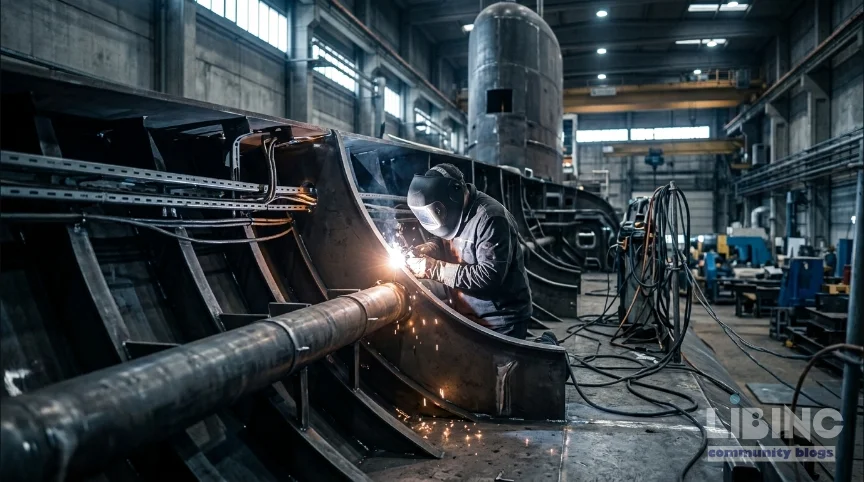
The submarine industrial base is remaking U.S. skilled trades markets for a generation
The submarine industrial base is remaking U.S. skilled trades markets for a generation. The U.S. Navy's submarine program has quietly become the largest sustained skilled-trades hiring effort in American manufacturing in a generation, drawing candidates from the same metro areas that fuel CHIPS-Act fabs and EV battery plants. The problem is not a lack of steel, castings, or shipyard space. The binding constraint is people: welders, pipefitters, electricians, machinists, and nuclear-qualified trades who can complete long training pipelines and enter regulated work on schedule. The stakes are high: wage discipline in surrounding sectors tightens, supplier capacity shifts under defense priority rules, and a structural reshaping of regional labor pools begins to lock in a multi-decade advantage for the submarine program. The direction of this article is to dissect the dynamics, contrast them with adjacent buildouts, and propose concrete moves for adjacent manufacturers to survive and prosper in this new normal.
Analytics: demand, supply, and the architecture of the submarine labor market
The submarine programs run in parallel: Columbia-class ballistic-missile submarines (SSBNs), Virginia-class attack submarines (SSNs), and Virginia-class sales to Australia under AUKUS Pillar 1. Columbia remains the Navy's top acquisition priority, with the first-of-class USS District of Columbia (SSBN-826) under construction at General Dynamics Electric Boat as lead yard and major modules flowing from HII's Newport News Shipbuilding. The public target is roughly 100,000-plus new skilled tradespeople across the submarine industrial base over a decade. Yet the cadence hinges on a pipeline that can deliver qualified workers who complete 12-to-24-month training programs and obtain security clearances before they can contribute productively to regulated work. In other words, the bottleneck is the availability of capable people, not raw materials or shop-floor capacity. This dynamic creates a structural shift in regional labor markets, elevates wage baselines in head-of-line metros, and reorders supplier relationships to defense priority queues. BlueForge Alliance, the Navy-designated integrator for the Submarine Industrial Base (SIB), channels candidates through BuildSubmarines.com to Electric Boat, Newport News, and a supplier base that spans roughly 16,000 companies across all 50 states. The result is a labor market that is both geographically concentrated and chronically understaffed for the specialized skill set demanded by Columbia and Virginia production.
To understand the pressure points, consider three realities that shape the submarine labor market today:
- Skilled trades require extended training pipelines. Nuclear-qualified welding and pipefitting demand not only craftsmanship but rigorous safety and regulatory compliance, extending productive ramp-up well beyond simple wage adjustments.
- Wage signals alone do not translate into productivity. Short-term pay bumps attract bodies, but they do not instantly deliver the 12-to-24-month training maturities needed for regulated work, especially in high-safety environments.
- Competition for the same trades is intensifying. CHIPS-Act-funded fabs and IRA-driven EV builds pull from overlapping metro labor pools, creating cross-market wage pressures that become structural if demand persists.
Three forces unite to shape the trajectory of the submarine industrial base workforce. First, the scale of Columbia and Virginia production, and the AUKUS Pillar 1 demand, keep a long horizon of labor demand intact into the 2030s. Second, the nature of the required skills means a leaky transfer of workers between defense and commercial sectors reduces overall workforce stability. Third, suppliers, and the yards that depend on them, operate under Defense Priorities and Allocations System (DPAS) protections that tilt the playing field toward defense orders even when commercial demand is high. These three levers together enforce a structural reallocation of skilled-trades labor toward the submarine industrial base, rather than a temporary surge that will subside with the next budget cycle.
Contrasts with adjacent tech-buildouts: EVs, CHIPS Act, and their labor markets
The submarine labor market sits in the epicenter of a broader industrial reallocation that includes CHIPS-Act-funded fabs and IRA-driven EV manufacturing. The key contrasts are instructive:
- Time horizon and cadence: Submarine production is a multi-decade pipeline, anchored by strategic security needs and long training cycles. In contrast, many commercial fabs and EV plants operate on shorter project cadences with more fluid labor turnover.
- Priority regime: DPAS-rated submarine orders pre-empt common suppliers, forcing commercial orders to yield to defense demand when capacity is scarce. This mechanism converts fought-for capacity into a quasi-public good for defense goals, compressing the availability of the same trades for non-defense projects.
- Geographic clustering: Submarine work concentrates in Groton/New London, Quonset Point, and Newport News, with a spillover into broader Mid-Atlantic and Gulf Coast ecosystems. EV and CHIPS sites cluster around different metro areas, creating competing pull for the same pool of skilled workers.
- Training intensity: The submarine base demands high fidelity, safety-critical training that constrains onboarding speed. While chip and EV buildouts accelerate general manufacturing hiring, they lack the same level of regulated qualification cadence required for nuclear trades.
These contrasts are not merely academic. They explain why simply raising wages in isolation does not resolve the talent bottleneck for the submarine base. The labor market is being reorganized around a core set of trades with long training horizons, where incremental capacity must be built in tandem with workforce development pipelines. The practical takeaway for adjacent manufacturers is that wage competition is a symptom, not a cure, and must be coupled with deliberate capacity planning and supplier risk management.
Causes and effects: how DPAS and attrition shape delivery cadence
The cadence problem in Virginia-class production and the schedule risk in Columbia are not primarily about material shortages. Workforce attrition, hours-per-ship productivity, and supplier on-time delivery recur as the dominant themes in independent assessments by GAO and CRS. At the heart of these dynamics lies the DPAS framework and the way it interacts with a constrained skilled-trades workforce.
- DPAS leverage: The Defense Priorities and Allocations System empowers the Department of Commerce to assign priority to defense orders. A DX-rated submarine subcontract can outrun a commercial order at a given facility, forcing suppliers to reallocate capacity in real time. This means a single critical casting or valve can drive a cascade of production delays down the chain when a defense order blocks commercial work.
- Builder-readiness and attrition: The submarine base relies on a curated talent pipeline. Attrition at any point—during apprenticeship, certification, or on-the-job training—reduces the available pool for the next boat. This dynamic compounds schedule risk as the Navy pushes toward higher output, especially when productivity metrics lag behind expectations.
- Sub-tier supplier capacity: DPAI investments through the Submarine Industrial Base Council and Title III programs push capacity into castings, forgings, and additive manufacturing. But much of that capacity is being consumed by submarine programs before it relieves the broader commercial queue, delaying relief for adjacent manufacturers.
- Delivery cadence indicators: Independent observers consistently flag Virginia-class cadence slipping below planned two per year, with Columbia facing meaningful schedule risk. The root causes are persistent, not episodic: underinvestment in training pipelines, workforce churn, and in-line productivity inefficiencies.
In sum, the problem is structural rather than cyclical. The submarine industrial base must contend with a labor market that is both skill-constrained and defense-priority saturated. That combination produces a new normal: wage signals matter, but only as part of a broader strategy that includes capacity planning, supplier risk management, and training acceleration. For executives in adjacent sectors, the implication is clear: treat submarine workforce demand as a permanent input to wage modeling and supplier risk assessments, not a temporary spike to be absorbed and forgotten.
Expert reconstruction: practical moves for manufacturers
Looking ahead, three concrete moves can reduce risk and align commercial growth with submarine-demand realities. Each step integrates wage dynamics, supplier relationships, and capacity planning into a coherent risk-management framework.
- Audit supplier exposure: Identify which of your tier-1 and tier-2 vendors hold DX- or DO-rated submarine subcontracts. Model the queue risk on commercial orders that share their lines, and quantify the potential impact on your own delivery commitments. Build scenarios that translate DPAS priority into concrete lead-time shifts, so you can proactively adjust sourcing and inventory strategies.
- Model wage pressure in target MSAs: Map Groton/New London, Quonset Point, Newport News, and the broader Mid-Atlantic, New England, and Gulf Coast clusters against CHIPS-Act fab and IRA-driven EV footprints. Develop wage-forecast bands that incorporate training maturation times, apprenticeship completion rates, and the likely pace of productivity gains. Use these models to inform compensation strategy, location decisions, and supplier negotiations.
- Plan capacity 18–36 months out: Align hiring plans with the long horizon of submarine demand. Expand training pipelines, accelerate onboarding where possible, and coordinate with BlueForge Alliance and prime yards to ensure apprentices graduate into productive roles as boats come online. Build formal partnerships with community colleges and vocational schools to scale the pipeline for welding, pipefitting, and nuclear-qualified trades without compromising safety standards.
Outlook: AUKUS Pillar 1 sustains an upward demand curve into the 2030s while Columbia’s construction window overlaps with the same horizon. This represents a structural reallocation of skilled-trades labor toward the submarine base, layered on top of CHIPS- and IRA-driven industrial buildouts that have not yet reached steady-state staffing. For operators outside defense, the practical posture is to treat submarine workforce demand as a permanent input to wage modeling and supplier risk, not a temporary surge to be managed away with a few one-off pay raises.
In practical terms, the submarine industrial base’s labor story will hinge on consistent investment in training, disciplined supplier risk management, and collaboration across the primes, BlueForge, and the Navy. The long-run effect could be a more mature, resilient skilled-trades ecosystem in which workflows, wages, and productivity are synchronized with multi-decade national-security needs rather than year-to-year budget cycles.
As the workforce evolves, the central question becomes how to align competing demand signals from defense, semiconductors, and EVs without sacrificing safety or quality. The answer lies in explicit capacity planning, diversified training pipelines, and a DPAS-aware supplier strategy that recognizes the submarine base as a permanent driver of wage and labor-market dynamics rather than a temporary anomaly.
Looking forward, the submarine industrial base will continue to pull labor from surrounding regions, reweighting wage benchmarks and reshaping supplier ecosystems. The prudent course for suppliers and adjacent manufacturers is to invest in capabilities today that guarantee performance tomorrow—training, certification, and cross-functional pipelines that keep skilled workers productive across multiple high-stakes environments.
In short, the submarine industrial base is not a one-off surge. It is a structural realignment of skilled-trades labor toward essential national-security programs, with implications that extend well beyond naval yards and into the broader fabric of American manufacturing.
Strengthening the pipeline: concrete, scalable training and supplier risk management
In the submarine base, the pace of skilled-trades development and regulated onboarding determines cadence more than metal or machines. To close this gap, leaders can couple long-horizon training with DPAS-aware sourcing. Three practical levers translate demand into capacity: structured apprenticeship planning, diversified supplier options, and wage strategies aligned to training milestones. Examples below illustrate how these moves work in real settings and with CHIPS Act fabs and IRA-driven EV programs nearby.
Analytical snapshot: training life-cycle
| Trade | Apprenticeship (mo) | Onboard lead time (wk) | Milestones | DPAS impact | Mitigation |
|---|---|---|---|---|---|
| Welder | 12–24 | 6–8 | Certification | High | Local programs |
| Pipefitter | 12–24 | 6–8 | Safety | Med | Cross-training |
| Electrician | 12–18 | 4–6 | Licensing | Med | Joint appt. |
| Machinist | 12–18 | 4–6 | QA-ready | Med | Shift-plans |
| Nuclear Welder | 24–36 | 8–12 | Clearance | Very high | Dedicated pipeline |
| QA Inspector | 12–16 | 4 | Certification | Low | Remote training |
Examples: a Mid-Atlantic yard partners with a college to speed pipefitting cohorts; another expands nuclear-welder intake with early site placement once clearance is granted.
- 100k+ skilled trades needed over a decade
- 12–24 months to qualified roles
- DPAS share of capacity affects commercial timelines
Capture the dynamics with supplier-risk plans and a wage model tied to training milestones, not just headcount.
Three mitigations
- Supply-chain resilience
- Audit DPAS exposure
- Dual-sourcing plans
- Workforce development
- Community-college partnerships
- Pre-apprenticeships
- Wage alignment
- Forecast MSAs by milestones
- Job placement with primes
This section intentionally uses real-world scenarios to show how long-horizon planning, DPAS-aware procurement, and a diversified training pipeline can sustain output even as CHIPS and EV activity fluctuate in parallel markets.
How does the DPAS framework affect submarine production and labor markets?
DPAS, the Defense Priorities and Allocations System, prioritizes defense orders so suppliers reallocate scarce resources—labor hours, machine time, and shop space—toward submarine work even when civilian demand is high. This creates a predictable but constraining cadence that protects national-security output while compressing capacity for CHIPS fabs, EV programs, and other civilian projects in overlapping metros. Practically, it shifts wage signals and scheduling risk across the broader manufacturing ecosystem, making DPAS-aware planning essential for both defense and commercial outcomes.
Analysts emphasize that this prioritization sustains critical national-security goals but can elevate delivery risk for non-defense programs. Firms should embed DPAS-driven lead times into contracts, inventory strategies, and workforce plans to reduce volatility and maintain safe, compliant operations.
Which trades are most in demand in the submarine industrial base, and why?
The core trades—welding, pipefitting, electrical, machining, and nuclear-qualified roles—are in highest demand because they carry long training cycles, safety constraints, and regulatory clearances. These skills underpin critical submarine production stages, from hull fabrication to propulsion integration, where precision and compliance directly impact safety and schedule. In practice, demand concentrates in regions hosting yards and suppliers, with spillovers into adjacent metros via apprenticeship pipelines and relocation programs.
Strategic hiring and training that align with boat calendars and clearance timelines can mitigate cycle-length risks and sustain throughput even as adjacent sectors compete for the same talent pool.
How long does it take to train a nuclear-qualified welder, and why does it matter for delivery cadence?
The path to a nuclear-qualified welder typically spans 24–36 months of combined apprenticeship, on-the-job training, and security-clearance processes. This duration matters because it defines the minimum lag between hiring and productive capacity, directly shaping the cadence of Columbia and Virginia-class production lines. Any acceleration in entry-to-qualification must be matched by parallel improvements in onboarding efficiency, clearance processing, and shift-based training throughput to avoid schedule slippage.
Practical mitigation includes parallel tracks for clearance-ready candidates, early on-site placements, and cross-training to shorten the time from hire to readiness without compromising safety.
What strategies can manufacturers adopt to mitigate risk and align with submarine demand?
Manufacturers should integrate DPAS-aware planning with long-horizon workforce development, focusing on three pillars: supplier diversification to reduce single-point capacity risk, formal partnerships with community colleges for scalable pipelines, and wage strategies synchronized with apprenticeship milestones. This combination dampens volatility by ensuring a continuous, qualified workforce while preserving safety and compliance. Real-world applications include multi-site apprenticeship cohorts, shared training facilities, and contingency procurement plans that protect delivery cadences across defense and civilian programs.
What role do public-private partnerships (BlueForge Alliance, primes, Navy) play in expanding capacity?
Public-private efforts coordinate training pipelines, standardize qualifications, and align supplier capacity with Navy priorities. BlueForge Alliance acts as an integrator, guiding candidates through BuildSubmarines.com to yards and suppliers, while prime contractors harmonize schedules, tooling, and inspection regimes. These partnerships reduce onboarding times, improve throughput visibility, and catalyze investment in regional training ecosystems, creating a more resilient labor market that can absorb surges from the submarine program without unduly displacing civilian industries.






Add a comment
To comment, you need to register and authorize
Comments