

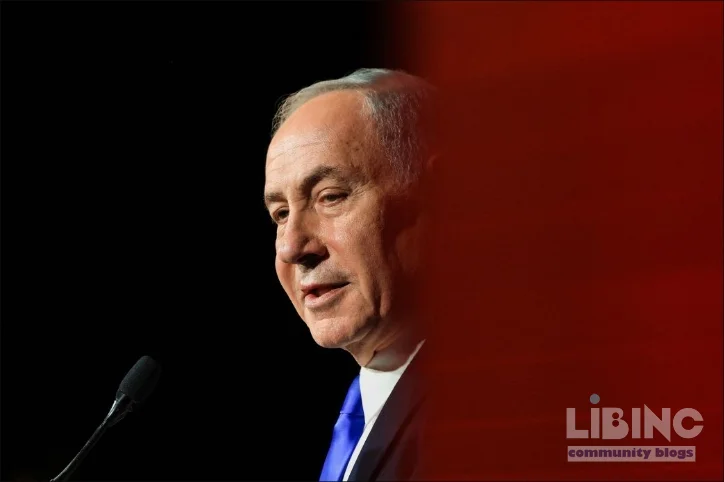
Trump-Netanyahu Gambit and the Democratic Party Divide: A Midterm Narrative in the Making
Table of contents
- Trump-Netanyahu clash: analytics frame
- Contrasts within the Democratic spectrum
- Causes and effects: Netanyahu as catalyst
- Expert reconstruction and implications
Lead: The Trump-Netanyahu clash is not merely a clash over a foreign leader; it is a crafted signal designed to recalibrate domestic politics. President Trump, whose approval numbers may wobble, treats every public row as an opportunity to define the Democratic Party as excessively anti-Israel, while presenting an alternative vision that layers nationalism, security, and cultural grievance. The immediate firing line is New York Mayor Zohran Mamdani, whose refusal to roll back a campaign pledge to arrest Netanyahu if he visited the city becomes a proxy for a broader debate: should American policy toward Israel ride with a broad-based consensus or fracture along progressive lines that cast Netanyahu as a war criminal? Seen through this lens, the fight serves a larger purpose: it reframes the midterm narrative around who leads on security and who controls the political agenda. The Trump-Netanyahu clash thus functions as a signaling device as much as a policy dispute, reframing the stakes of the 2024 cycle and offering a window into how the Democratic Party is evolving under pressure from its base and from a president eager to maintain control of the national conversation.
Trump-Netanyahu clash: analytics frame
At its core, the Trump-Netanyahu clash operates as a multipoint signal. It links foreign policy with domestic identity politics, binds a foreign leader to a domestic political tribe, and exploits a caucus-wide discomfort with hawkish rhetoric that has grown loud within progressive circles. The mechanism is not simple endorsement; it is strategic provocation aimed at maximizing political energy along three axes:
- Mobilizing core constituencies with high political engagement—evangelical conservatives, defense hawks, and political independents wary of coastal elites; and
- Framing the opposition as out-of-step with ordinary voters who seek safety, affordability, and steadier governance; and
- Shaping the policy discourse so that Israel’s fate becomes a proxy for broader debates about governance, fiscal priorities, and the direction of civil-liberties strategy.
These signals rely on a narrative continuity that ties Netanyahu’s perceived war crimes to a domestic charge: that the Democratic Party has drifted toward a posture that appears to excuse or overlook human-rights concerns in pursuit of a narrower coalition’s priorities. The strategic value of this framing is not whether Netanyahu would be detained in New York, but whether the fight itself changes the political mood by elevating questions about moral legitimacy, U.S. taxpayer priorities, and the fate of Israel in American political life. In this sense, the Trump-Netanyahu clash is a theater for testing the elasticity of party loyalties and for calibrating messages to different audiences within the same coalition.
From a data and signaling perspective, the exchange blends three core dynamics: polarization, issue ownership, and media amplification. The more Trump frames Netanyahu as a proxy for “the entire Democratic Party,” the more the campaign narrative shifts toward a binary choice—strong borders and strong allies versus a party that would “abdicate” in defense of Palestinian civilians. This is a stark simplification, but it is precisely the simplification that can dominate political psychology during a midterm cycle when economic concerns compete with cultural flashpoints. The underlying reality, however, is more nuanced: U.S. strategic interests in the Middle East, the domestic political cost of Israel-related spending, and the evolving sentiment among younger voters about foreign policy all intersect with the domestic fiscal and governance agenda. The result is a layered signal that requires careful parsing to separate rhetorical effects from measurable political consequences.
In practical terms, the immediate consequences are tactical rather than decisive. The broader question is whether this narrative can sustain momentum through the autumn campaign season or if it will collide with real-world policy debates—such as budget allocations, immigration, and healthcare—that define everyday voter concerns. The tension between mobilizing base voters and persuading swing voters is at the heart of the Trump-Netanyahu clash. Without a credible plan to translate the rhetoric into policy wins, the approach risks becoming a cul-de-sac of grievance rather than a pathway to durable political power. This gap between signal and policy outcome is the central analytic challenge of the episode: the tactic may generate short-term energy, but its longer-term value depends on how it reshapes the electoral landscape and party identity.
Contrasts within the Democratic spectrum
The GOP framing of Israel as a litmus test collides with a Democratic Party that is increasingly split on the issue. On one side, senior moderates emphasize stable alliances and pragmatic policies that resist converts into broad anti-Israel platforms; on the other, a rising cadre of progressives treats Netanyahu’s alleged actions as a trigger for broader humanitarian and anti-genocide concerns. This split is not cosmetic. It maps onto core questions about political culture, foreign aid allocations, and the balance between civil liberties and national security. The dynamic is visible in state-level campaigns, where candidates facing Republican opponents try to harness or defuse the Israel debate to align with local economic concerns and social justice priorities.
- Moderate Democrats in battleground districts push for a stable, ally-centered foreign policy and resist sweeping branding of all opponents as anti-Israel;
- Progressive Democrats lean into anti-occupation rhetoric and human-rights criticisms that challenge traditional bipartisan lines on Israel;
- National figures attempt to mediate the tension by invoking domestic priorities—health care, schools, jobs—while keeping Israel-related debates relevant to the party’s long-term foreign-policy identity.
In this context, the Mamdani appearance in the Oval Office and his later stance become a test case for how Democratic primaries are shaping the national platform. When a candidate publicly rejects detaching Netanyahu from U.S. national-interest calculations, they signal a willingness to preserve a certain level of muscular alliance politics. Conversely, when others draw sharp lines against Netanyahu or the broader Israeli government, they signal a willingness to subordinate foreign policy to humanitarian and anti-genocide concerns. The clash thus reveals a party that is learning to negotiate its own ideological topology while balancing donor expectations, activist pressure, and the calculus of national security messaging.
The domestic consequence of this may be a reconfiguration of where political energy concentrates within the Democratic coalition. If the narrative continues to tilt toward the idea that the party is failing to defend moderate voters on bread-and-butter concerns, it risks eroding cross-cutting coalitions that helped Democrats win suburban districts in recent cycles. If, instead, the conversation remains focused on moral accountability and human rights, the party could mobilize younger voters who prioritize these issues, even if it alienates some traditional allies. Either way, the Netanyahu thread is likely to become a litmus test for how Democrats reconcile foreign policy with middle-class affordability and domestic governance—an essential question as the party looks toward broader electoral horizons beyond the next midterms.
Causes and effects: Netanyahu as catalyst
To understand the potential trajectory, it helps to separate causation from correlation. Netanyahu’s legal status and the ongoing Gaza conflict function as a catalyst, not the sole driver, of political realignment. Domestic drivers—rising costs of living, wage stagnation, and perceived declines in middle-class safety—shape how voters weigh foreign policy signals against economic performance. When a candidate like Abdul El-Sayed foregrounds Michigan’s tax dollars as a symbol of domestic priorities, the argument gains credibility with working-class voters who feel left behind by the Beltway calculus. The Netanyahu debate therefore becomes a proxy for broader questions about who controls public purse strings and who bears responsibility for national security and humanitarian outcomes.
- External factor: Gaza war and ICC proceedings provide a provocative backdrop for domestic messaging;
- Internal factor: the party’s evolving stance on Israel affects donor alignment and voter loyalty;
- Electoral factor: the debate becomes a proxy for how voters weigh security commitments against cost of living and social programs.
The domestic effects are clearest in political mobilization patterns. Evangelical and hawkish segments intensify their support for leadership that casts the Democratic stance as dangerously permissive toward adversaries. White working-class voters—especially in industrial states—are targeted with frames that tie tax dollars to defense priorities and to the credibility of U.S. commitments abroad. The risk for Democrats is the polarization trap: as the party splits internally, even broad consensus on ends (security, stability) may fray on means (military spending, humanitarian policy, oversight of allies’ behavior). The strategic implication is straightforward: if the midterms hinge on who can deliver both economic relief at home and credible security policy abroad, the Netanyahu angle becomes a decisive variable, not merely a secondary subplot.
Expert reconstruction and implications
Experts increasingly treat the Netanyahu dynamic as a symptom of a broader political realignment rather than a one-off tactic. If the trend continues, several implications emerge for both parties heading into 2028:
- The Democratic Party may need to craft a nuanced narrative that defends humanitarian concerns without conceding vital strategic interests, thereby securing a broader cross-partisan base while maintaining an energetic progressive wing.
- The Republican stance could intensify around a simplified binary—support for a hardline ally versus opposition that conflates foreign policy with domestic discontent—potentially widening the cultural-identity gap in swing states.
- Electoral campaigns will increasingly rely on tailored messages for different geographies—midwestern industrial belts versus coastal urban centers—while maintaining a cohesive national frame.
- Policy implications include rethinking foreign-aid allocations, defense spending, and humanitarian exemptions in a way that keeps voting blocs aligned with perceived national interests and domestic priorities.
From an expert standpoint, the most consequential question is whether the Trump-Netanyahu clash can convert into durable political capital. Will it drive policy wins that demonstrate competence and coherence, or will it harden divisions, making it harder for either party to govern effectively? The answer will depend on the ability of leaders to translate signaling into concrete outcomes—jobs growth, price relief, and credible security guarantees—without eroding the ethical foundations that increasingly define the political landscape. If the signal-to-action gap remains large, the episode will be remembered as a tactical flare rather than a strategic pivot, with uncertain implications for 2028 and beyond.
In sum, the Netanyahu episode is less about the odds of arrest or a single foreign-policy decision than about how political actors deploy foreign policy symbolism to shape domestic politics. It reveals a party realignment in slow motion, where the center of gravity shifts toward issues of class, security, and human rights, and where the way leaders frame a foreign leader can become the most potent instrument of electoral persuasion in a polarized era.
Ultimately, the Trump-Netanyahu clash is a test of narrative durability. If the opposition can weather the storm by offering credible, policy-driven responses to the economic and social anxieties of a broad electorate, the episode may illuminate a path toward a more stable, issue-driven political competition. If not, it risks becoming a recurrent pattern—an ongoing culture-war reflex that reinforces factional identities at the expense of governing competence.
As the midterms approach, the central question remains: who can articulate a convincing synthesis of security, economy, and social welfare? The Trump-Netanyahu clash provides a crucible in which Democrats and Republicans alike must demonstrate whether they can balance tough-minded foreign policy with domestic credibility. The outcome will tell us not only which party lands a persuasive national narrative but also how American politics defines its own identity in a time of global volatility and domestic strain.
Closing the practical disconnect: turning signals into policy wins
The current exchange often signals intentions more than it delivers concrete steps. The missing practical bridge is how to convert messaging into tangible policy gains that voters can feel in daily life.
This section closes that link by outlining actionable steps and concrete scenarios illustrating how messaging can align with budget and governance realities.
Beyond signals, the path to credibility lies in three lanes: domestic relief, smart defense priorities, and humane oversight that still respects allies. Consider these practical steps:
- Messaging alignment: synchronize foreign-policy lines with economic messages in campaign collateral.
- Policy pilots: pilot small-scale aid reforms tied to domestic affordability.
- Data-driven refutations: publish quarterly cost-of-action analyses to show trade-offs.
In the Midwest and Rust Belt, for example, a candidate could frame security spending as a multiplier for jobs through local defense supply chains, while backing climate-resilient infrastructure that lowers living costs. In coastal markets, emphasize humanitarian accountability alongside stable alliances. This dual framing reduces the risk of alienating voters who care about both security and everyday costs.
Table below shows a compact comparison of messaging focus across regions:
| Region | Messaging Focus | Key Action |
|---|---|---|
| Midwest | Jobs + Security | Defense supply chain incentives |
| Coast | Human rights + Stability | Transparent aid oversight |
Stakeholder map clarifies who is affected and how messages land:
- Voters
- Cost of living, jobs, and security
- Perceived integrity of leadership
- Donors
- Preference for pragmatic, fundable policies
- Support for coalition-building
- Advocacy groups
- Human rights and humanitarian concerns
- Foreign-aid accountability
These three lanes help turn signaling into policy wins that voters can experience, rather than leaving audiences with abstract slogans.
What does the Trump-Netanyahu clash reveal about domestic politics?
The clash signals how foreign-policy symbolism is used to mobilize base voters while testing cross-partisan appeal. It highlights tensions between security priorities and cost-of-living concerns, and shows how messaging can shift attention across regions. Analytically, it demonstrates signal-to-vote dynamics where narrative framing can shape perceptions of competence and credibility.
How can campaigns translate foreign policy signals into policy wins?
Campaigns must connect rhetoric to tangible steps, such as pilot programs, transparent budgeting, and region-specific messages that align with local priorities. Practically, that means pairing defense commitments with domestic investments, and publishing regular assessments of trade-offs to maintain accountability and trust.
What role do donors and activist groups play in this dynamic?
Donors often seek a balance between principled positions and political viability, encouraging messaging that pools broad support. Activist groups push for humanitarian accountability, which can push candidates to adopt policies that safeguard human rights while preserving strategic alliances.
What will swing-state campaigns focus on in this debate?
Swing-state messaging will likely emphasize cost-of-living relief, job security, and credible security guarantees. Campaigns will test cross-cutting frames that appeal to working-class voters while maintaining alliance credibility on the world stage.
How can parties measure the impact of signaling on policy outcomes?
Parties should track metrics such as cost-of-action analyses, policy pilot results, and voter sentiment polls across regions. The key is to tie each signal to a measurable policy outcome that voters can experience within a campaign cycle.
What are the long-term implications for 2028?
If signaling translates into credible policy wins, parties could establish a pattern of issue-driven elections where security and economy are jointly addressed. Conversely, persistent misalignment risks deepening polarization and eroding governing effectiveness.





Add a comment
To comment, you need to register and authorize
Comments