

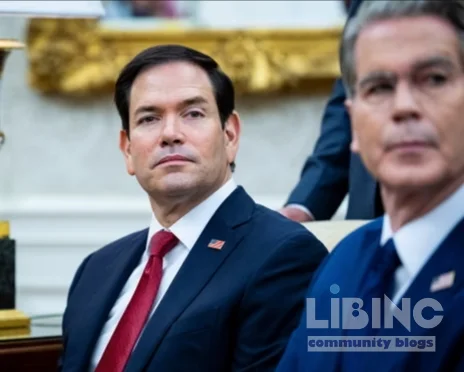
ICC Territorial Jurisdiction and Sovereignty: Unmasking the US-ICC Confrontation
Table of Contents
The debate over the International Criminal Court (ICC) is not a quaint dispute about distant tribunals. It is a confrontation about how the world should respond to mass atrocities, and who bears the cost when accountability collapses. The Trump administration has weaponized rhetoric against the ICC, casting it as a sovereignty threat while pursuing a policy that would shield its own personnel from timely accountability. The core issue is territorial jurisdiction: the ICC’s ability to reach crimes committed on the soil of ICC member states, and by nationals of non-member states. This is not an abstract legal question. It shapes the practical means by which the international community can deter, investigate, and prosecute mass crimes. The lead question is whether sovereignty should immunize states and individuals from international scrutiny, or whether it should be subordinated to a basic standard of human rights and humanitarian law.
Analytics
To understand the current clash, we must first map how territorial jurisdiction operates within the ICC framework. The Rome Statute grants the ICC jurisdiction over crimes committed on the territory of a state party or by a national of a state party. This is not a claim of universal conquest; it is a structured regime of consent and cooperation that emerges from treaty law and customary practice. The jurisdiction is not boundless or automatic; it requires ratification or incorporation by states and, crucially, relies on state cooperation for investigations and arrests. The result is a legal architecture that constrains impunity while balancing state sovereignty with international accountability. This balance is precisely what Rubio and the current administration deride as a threat to sovereignty, even as they demand freedom from international legal checks when crimes are committed by their own agents or allies.
In this architecture the ICC’s territorial jurisdiction interacts with the Geneva Conventions and the Genocide Convention, which the United States has ratified or incorporated into military manuals. The significance is not merely procedural; it shapes the admissibility of cases, the sourcing of evidence, and the path from preliminary inquiry to potential prosecution. When the ICC asserts territorial jurisdiction, it asserts a form of jurisdiction that can span borders and hold state and non-state actors accountable for crimes committed on foreign soil. The practical upshot is that a national of a non-member state could face charges if crimes occur within the territory of a member state. That is the logic Rubio laments, even as he relies on international law to fuel his critique of the ICC’s reach.
Another analytic hinge concerns the veto power in the UN Security Council. The United States has wielded its veto to shield allies or to block actions that would undermine its strategic priorities. Critics point out that security council dynamics create a two-tier system: a mechanism to energize accountability when it suits Western priorities, and a reluctance to embrace accountability when it would disrupt strategic partnerships or political grandstanding. This selective enforcement undercuts the universality of international law and invites the counterclaim that territorial jurisdiction is weaponized as a political tool. The deeper question is whether legal norms should be contingent on geopolitical convenience or anchored in universal moral and legal commitments, especially regarding war crimes and crimes against humanity.
The Putin case in March 2023 illustrates the asymmetry that animates the current debate. The ICC charged Vladimir Putin for kidnapping Ukrainian children after Ukraine joined the court, and the United States shifted its stance, endorsing the jurisdiction in that instance. The sequence reveals a pattern: territorial jurisdiction becomes a tool of convenience, deployed when it serves a preferred policy outcome and discarded when it threatens a preferred ally or national interest. Such flipping undermines the credibility of international law and fuels the charge that the ICC is anything but impartial. The systemic issue is not a single decision but a consistency problem: if jurisdiction is selective, then so, too, is accountability.
Rubio’s broader rhetoric imagines a dystopia in which local American officials could be dragged before a court by judges from random foreign nations, a scenario that ignores the structure of international law and treaty-based cooperation. It also ignores the fact that the ICC cannot prosecute crimes committed on U.S. soil absent the proper jurisdictional triggers—territory under ICC member states or guilt by affiliation that has clear procedural thresholds. The critical question is not whether the Court should be praised uncritically, but whether the opponent’s caricature reflects the legal reality. The objective standard remains: territorial jurisdiction is a mechanism to ensure that atrocity crimes do not go unpunished simply because they occur beyond domestic borders. This is not an act of conquest by external powers; it is the procedural embodiment of accountability for mass wrongdoing.
Contrast
The contrast between the rhetoric that frames the ICC as a foreign-imposed threat and the reality of how territorial jurisdiction operates reveals a persistent inconsistency in the US position. American officials defend sovereignty when it suits them and invoke international law when it serves a strategic narrative. The Israel-Gaza case offers a telling counterpoint. In November 2024 the ICC charged Israeli leaders, triggering a sharp public outcry from Washington that the court was overstepping. Yet the same court used territorial jurisdiction in Putin’s case, despite Russia not being a member state. The inconsistency is not a technicality; it is a predictable pattern where sovereignty is invoked selectively to constrain accountability when it involves allies, and embraced when it reduces political or military risk. This double standard erodes the perceived legitimacy of international law and weakens deterrence against future abuses.
The European context further complicates the picture. Most ICC member states in Europe do not treat territorial jurisdiction as a weapon of imperial intrusion, but as a pragmatic instrument to deter and punish mass atrocities. Their governments have ratified or incorporated the Rome Statute, viewing the court as a universal safety net for victims of mass violence. The US position reads as a rejection of that universal safety net, wrapped in a defensive rhetoric about sovereignty while pursuing policies that sometimes rely on extraterritorial actions or targeted sanctions against international prosecutors. If sovereignty means protecting officials who commit grave crimes, it becomes a shield against moral accountability rather than a principled assertion of national independence. The contrast is not about ethics alone; it is about the long-term stability of international law and the norms that keep power in check.
Rubio also invoked a broader narrative that portrays the ICC as a bloc of hostile Third World governments united against the US. The truth, however, is more nuanced: 125 states are part of the ICC framework, including many European democracies, which demonstrates broad international investment in a rules-based order. The balance of power within the ICC reflects a world where accountability is not simply a Western prerogative; it is a shared institutional project. The counterpoint to the caricature is that territorial jurisdiction aligns with a mainstream understanding of how international law binds states and individuals who operate within or across state boundaries. When contrasted with the selective application alleged in the current discourse, the ICC’s jurisprudence appears more even-handed than the politics surrounding it would suggest.
In sum, the contrast exposes a central contradiction: sovereignty is celebrated when it protects national actors from external scrutiny, but denounced when it would prevent impunity for crimes committed on the territory of a member state. This is not simply a disagreement about procedure; it is a fundamental dispute about the legitimacy of international law as a constraint on state power. The practical consequence is a chilling effect on cooperation with international mechanisms to investigate war crimes. If states believe they can bypass or weaponize international norms without consequence, the deterrent value of those norms declines, and atrocity crimes become more likely to recur.
Causes and Effects
The precipitating cause of the current crisis is not a sudden legal defect in the ICC, but a political choice: to subordinate international accountability to now-dominant visions of sovereignty that resist constraint. The effect is a layered, cascading risk to the rule of law. First, the rhetoric makes it harder for ICC investigations to gain political traction in other states. Governments may fear diplomatic backlash, or they may fear domestic political costs if their security establishments are implicated. Second, the selective enforcement of territorial jurisdiction incentivizes non-state actors and non-member states to test boundaries, knowing that the costs of challenging the ICC may be tolerable for the sake of strategic advantage. Third, the vagueness around sovereignty and jurisdiction creates a chilling effect on international prosecutorial capacity, which weakens preventive diplomacy and undermines deterrence against mass atrocities.
The domestic optics matter. In the United States, political actors can cast ICC proceedings as a threat to national sovereignty, even as they rely on comparable legal mechanisms—such as extradition treaties or universal jurisdiction in some contexts—to pursue certain cases. This selective usage undermines the credibility of international law, which rests on predictable norms and reciprocal obligations. If the ICC’s territorial reach is viewed as a general threat, states may hesitate to cooperate on investigations, share critical evidence, or allow for arrests. The broader consequence is a weakening of the international justice architecture that aims to constrain violence and mass atrocity, including the use of arms, mercenaries, and military aid in conflict zones. In the long run, that reduces the international community’s capacity to respond swiftly to evolving humanitarian catastrophes and violates the basic idea that justice travels with humanity, not with political expediency.
Within this cascade, the role of the UN Security Council remains pivotal. The US approach to the ICC is often entangled with broader veto politics, which means that territorial jurisdiction can be both a tool and a hazard. When it serves strategic interests, it becomes a cudgel; when it would oblige a state to face its own complicity in war crimes, it becomes an unacceptable intrusion. The effect is not only legal but strategic: it redefines what counts as legitimate international oversight and who bears responsibility when international norms fail to constrain aggression. The inevitable question is whether a system built on consent can survive if powerful states routinely cherry-pick obligations to suit their policy goals, or whether we need a rebalanced model that better internalizes the principle that sovereignty is not absolute and that accountability is a universal standard.
Another cause-and-effect thread concerns regional dynamics. In Israel, Palestine, and surrounding theaters, the ICC’s territorial jurisdiction becomes a litmus test for how the international community responds to allegations of state-backed violence. When the court steps into territories where host states exist but are not ICC members, the decision to proceed triggers political friction rather than purely legal evaluation. The effect is to push the ICC into a political arena where its judgments can be dismissed as biased or as a manipulation of power, rather than as principled enforcement of the law. This dynamic undermines the court’s legitimacy and complicates future cooperation from states that might otherwise participate in investigations. The integrity of the system depends on maintaining a consistent approach to territorial jurisdiction that is resistant to partisan manipulation and that respects the dignity of victims across all regions.
Ultimately, territorial jurisdiction anchors a core question: should international law be designed to deter atrocity irrespective of geographic or political affiliation, or should it bend to the strategic interests of powerful states? The evidence suggests that a robust, credible ICC requires a stable, predictable application of territorial jurisdiction, supported by genuine and consistent political will among states to embrace accountability as a universal norm. Without that, the legitimacy of international criminal law erodes, and with it the capacity to deter, investigate, and prosecute the gravest crimes, wherever they occur, and whoever commits them.
Expert Reconstruction
Kenneth Roth, Guardian US columnist and former HRW executive, offers a lens through which to reconstruct a more coherent policy path. He has argued that territorial jurisdiction is essential for prosecuting mass atrocities when perpetrated on the territory of ICC members, including cases where non-member nationals act abroad. The reconstruction begins with a recommitment to a rules-based order: reaffirm the universality of core norms such as the Genocide Convention and the Geneva Conventions, and translate that commitment into enforceable, predictable mechanisms for accountability. The ICC’s territorial jurisdiction should be viewed not as an instrument of Western coercion but as a necessary safeguard against impunity that transcends borders and political convenience.
From this perspective, the trajectory would emphasize four concrete steps. First, codify a non-discretionary baseline for territorial jurisdiction that aligns with the Rome Statute and UN resolutions, reinforced by a transparent and accountable compliance regime. Second, strengthen cooperation channels with states that have not ratified the ICC by offering clear, beneficial pathways to join or cooperate without coercive mechanisms. Third, preserve a robust security council framework where geopolitical realities are acknowledged but accountability remains non-negotiable—no selective exemptions for friends or foes. Fourth, develop a policy toolkit that distinguishes legitimate uses of coercive action from reflexive punitive measures, ensuring that sanctions or political pressure do not become substitutes for due process or undermine the neutrality of prosecutorial bodies.
In practical terms, this reconstruction would not require surrendering sovereignty, but reconfiguring sovereignty as a shared responsibility. The aim is to create a durable system where territorial jurisdiction is understood as a commitment to victims and a check on the most powerful actors. It would also reinstate the perception of international law as a universal standard rather than a bargaining chip. The result would be a more credible ICC—one that can effectively deter gross violations, withstand political backlash, and command genuine respect from both member and non-member states. This is not a utopian reform; it is a necessary recalibration to ensure that the legal architecture designed to restrain mass atrocities actually functions when it matters most.
As a final note, the discussion around the ICC and territorial jurisdiction should foreground victims and their rights. The law exists to protect those who cannot protect themselves. Where sovereignty serves as a shield for the powerful, international law must reaffirm its role as a universal standard that binds all states and actors equitably. The path forward requires courage to embrace accountability as a shared duty, not as a weapon to punish political rivals. The legitimacy of international justice rests on how consistently we apply these principles, especially in moments when the temptation to shield allies is strongest.
In the end, ICC territorial jurisdiction is less about foreign interference than about domestic moral responsibility—responsibility that every state, including the United States, must recognize if it seeks a stable, rules-based international order. The debate is not simply about which laws apply to whom; it is about whether the global community will insist on a universal standard that protects human dignity, regardless of borders or power. That is the core meaning of accountability in the twenty-first century, and it is the benchmark by which we should measure any critique of the ICC and its territorial jurisdiction.
A critical gap in the current narrative is the absence of a concrete, transferrable governance framework that translates territorial jurisdiction into predictable, universally fair practice while protecting victims’ rights and preserving genuine sovereignty. This section closes that gap by outlining an actionable model built on four non-negotiable pillars: baseline jurisdiction anchored in the Rome Statute, non-discretionary triggers, enhanced cooperation channels, and a transparent accountability toolkit that guards due process across borders.
| Aspect | Current ICC Practice | Proposed Reform |
|---|---|---|
| Baseline Jurisdiction | Territory of member states or nationals of member states | Explicit baseline for any crime on member territory or by member nationals, with automatic triggers for crimes against humanity and genocide |
| Consent & Cooperation | Duty to cooperate; variable enforcement depending on politics | Non-discretionary cooperation timelines and clear consequence mechanisms for non-cooperation |
| Non-member States | Limited direct reach without sovereign consent | Structured pathways for non-member states to opt in, with benefits like aid and technical assistance |
| Victim Protection | Often secondary to prosecutorial priorities | Victim-centered procedures, including safe evidence gathering and redress channels |
| Due Process | Perceived bias concerns in politically charged cases | Independent reaffirmation of impartiality with independent review in high-profile cases |
Implementing these reforms would recalibrate the ICC from a politicized instrument into a steadier guardian of international justice, where decisions are anchored in law rather than alliance politics and where all victims receive a consistent standard of accountability.
These steps provide a clear roadmap for practitioners, policymakers, and civil society to hold the ICC to universal standards while preserving state sovereignty as a principle of shared responsibility rather than a shield for impunity.
- Step 1: Codify a universal baseline for territorial jurisdiction aligned with Rome Statute interpretations and UN resolutions, with explicit timelines for action.
- Step 2: Create formal cooperation channels with non-member states, including opt-in incentives and non-coercive compliance frameworks.
- Step 3: Establish a standing independent review body to oversee high-profile investigations and ensure impartiality across regions.
- Step 4: Develop a victim-centered evidence protocol that protects witnesses, preserves safety, and ensures redress pathways.
With these elements, the ICC can become a credible, predictable mechanism for accountability that transcends political cycles and geographic divides.
What is ICC territorial jurisdiction and why does it matter for accountability?
The ICC’s territorial jurisdiction determines when the Court can investigate crimes on the territory of a State Party or when a national of a State Party commits crimes abroad, and it matters because it creates a predictable route to accountability for atrocity crimes that might otherwise go unpunished, while respecting sovereignty. This framework shapes how evidence is gathered, how suspects are named, and how prosecutions move from inquiry to trial. It balances universal norms with treaty-based cooperation, ensuring that jurisdiction is not arbitrary but bound by consent and due process.
In practice, credible jurisdiction reduces impunity by making it harder for the most powerful actors to evade scrutiny, and it strengthens preventive diplomacy by signaling that mass atrocities will attract legal consequences regardless of where they occur. It also creates a durable standard for victims, prosecutors, and states to coordinate steps across borders, reinforcing the legitimacy of international justice. This is essential for long-term deterrence and for building confidence in the rule of law.
How does sovereignty interact with ICC jurisdiction in real cases?
The relationship is a balance: sovereignty protects states from external coercion, while ICC jurisdiction obliges states and actors to account for grave crimes. In practice, this means consent-based cooperation, with triggers that activate investigations when crimes occur on member territory or involve member nationals. Sovereignty is not erased, but its limits are defined by universal norms against mass violence. The Putin and Israel-Gaza cases show that the Court can act where the political composition of the case is favorable, raising concerns about consistency; the reform aim is to reduce this variability through non-discretionary procedures and transparent review while maintaining legitimate state interests.
What concrete steps could strengthen ICC credibility without compromising sovereignty?
First, codify a baseline territorial jurisdiction that aligns with Rome Statute and UN resolutions, with clear procedural triggers for investigations. Second, establish non-discretionary cooperation timelines and penalties for non-compliance. Third, create formal pathways for non-member states to join or cooperate, coupled with incentives such as technical assistance and judicial capacity building. Fourth, implement a victim-centered evidence framework that protects witnesses and ensures accessible remedies. These steps preserve sovereignty as a shared responsibility rather than a shield for impunity, and they promote predictable enforcement that transcends political agendas.
How do UN Security Council dynamics affect ICC decisions on jurisdiction?
The Security Council can empower or obstruct ICC actions through veto power and political bargaining, creating a two-tier dynamic where accountability is selective. Reforming this area would entail insulating certain core norms from political vetoes, or establishing a parallel accountability mechanism protected from short-term geopolitical calculations. The goal is to preserve a baseline of universal accountability while recognizing legitimate security concerns, thereby preventing weaponization of jurisdiction for strategic ends. A more transparent, consultation-driven process would help maintain legitimacy and deter manipulation of legal norms for political gain.
Can non-member states participate in ICC processes, and if so, how?
Yes. Non-member states can participate through formal cooperation agreements, extradition arrangements, or by joining the Rome Statute. The practical pathway involves staged incentives: capacity-building support, technical assistance for investigations, and reciprocal access to legal tools. This approach expands the court’s reach while respecting the sovereignty of states that choose to participate, and it reinforces the universality of the norm that atrocity crimes require accountability regardless of a state's formal status within the ICC. It also signals a commitment to victims that justice should travel beyond borders.






Add a comment
To comment, you need to register and authorize
Comments
The article rightly anchors the debate in the Rome Statute’s architecture, which rests on consent, cooperation, and the practical realities of arrest and evidence gathering. This is not an abstract regime that operates in a vacuum; it rests on the willingness of states to allow foreign investigators into their territories, share critical information, and confront political leaders with accountability. The insistence that territorial jurisdiction be exercised only when it serves universal norms risks eroding the legitimacy of the court. Instead, the challenge is to defend a coherent, non discretionary baseline for jurisdiction that can withstand political pushback and is reinforced by robust oversight and transparency. A related tension is the treaty’s interaction with established instruments such as the Genocide Convention and the Geneva Conventions. These are not optional addenda; they create obligations that should, in principle, travel with perpetrators and their networks, whether or not the offender happens to be a citizen of a party state or present on foreign soil.
A further dimension is the role of the UN Security Council. The article highlights how veto power can convert territorial jurisdiction into a political weapon, granting impunity when strategic interests align and imposing accountability when they do not. This is not a hypothetical risk; it is a structural flaw that threatens universal norms if left unaddressed. A robust reform conversation should consider how to decouple accountability from the polemics of great power politics without surrendering legitimate security concerns. One avenue could be enhanced regional or multilateral mechanisms for initiating inquiries that preserve due process while reducing the leverage of a single veto actor. The core question is whether the international community can reconcile genuine sovereignty with an enduring obligation to pursue justice when atrocities occur, irrespective of who commits them. If the answer is yes, then reforms must establish credible channels for cooperation that are predictable, non coercive, and resilient to political swings. If the answer is no, the legitimacy of international criminal law will continue to drift toward a fragile equilibrium where power, not principle, determines who is answerable. What are concrete steps that can be taken to ensure the ICC operates with the seriousness and consistency needed to deter atrocity while maintaining the trust of both member and non member states? And how can victims’ voices be placed at the center of this restorative architecture, so that accountability remains focused on protection and redress rather than prestige or punishment of political rivals?