

Nightstands Reimagined: An Analytical Guide to Choosing the Right Bedside Storage for Any Style and Budget
Table of contents
- Analytics: how top nightstands balance form and function
- Contrast: budget vs. premium, materials, and design language
- Cause and effect: how features shape daily use and room aesthetics
- Expert reconstruction: practical synthesis from editors
The nightstand is a critical node in the bedroom ecosystem. It supports a night-time routine, hides cables, and keeps essentials within arm’s reach. The problem is not simply choosing a pretty surface; it’s selecting a compact storage system that remains usable as technology evolves and rooms change. The stakes are real: a miscalibrated height or insufficient outlets can turn a simple bedside table into a daily friction point, forcing compromises between aesthetics and practicality. Hidden conflicts arise when price, durability, and design language pull you in different directions. This analysis follows a structured path: evaluating proven picks, contrasting options by budget and material, mapping cause-and-effect relationships between features and daily use, and then reconstructing a set of editor-informed recommendations for real rooms.
Analytics: how top nightstands balance form and function
To understand what makes a nightstand truly effective, we dissect performance along four axes: storage capacity, cable management, charging versatility, and alignment with bed geometry. The data is drawn from editor-tested candidates that span wood, veneer, MDF, and bamboo, and from features that translate into everyday utility.
Key metrics and representative picks include:
- Birch Lane Colleen 2-Drawer Nightstand: durable wood construction, two drawers, a back charging port, and a shelf. It blends organic modern with traditional cues, offering a robust surface for a lamp and bedtime essentials while keeping cables discreet.
- Nathan James Rattan & Wood Storage Nightstand: budget-friendly pair, compact footprint, and practical storage that suits guest rooms or tight spaces without sacrificing function.
- Wade Logan Arvester Floating Bedroom Nightstand: space-saving design, wall-mounted form, and a profile under $100 that proves you can pair affordability with contemporary aesthetics.
- Better Homes & Gardens Lillian Fluted 2-Drawer Nightstand with USB: economical pair, integrated USB, and classic fluting that reads as timeless rather than trendy.
- Lab Cosi Fluted Nightstand: open shelf plus drawer in a chic, curved silhouette under $150, offering an affordable way to display books yet tuck items away.
- Nectar Bamboo Nightstand: eco-friendly material with dovetailed drawers, easy assembly, and a partner set for a coordinated bedroom look.
From a performance standpoint, the editors consistently favor nightstands that offer true wire management—concealed outlets or recessed back panels—paired with at least one drawer for remotes, cables, and chargers. Solid wood variants typically outperform MDF or particleboard in long-term durability, especially when drawers employ dovetail joinery for smooth operation under repeated use.
Why wire management matters goes beyond aesthetics. A well-designed back panel or built-in charging hub minimizes clutter and signal the user that the piece is engineered for real bedside life. Nightstands with a dedicated charging port reduce the need for dangling cords and keep the top surface available for a glass of water, a book, or a nightlight. These practical considerations aren’t merely about organization; they influence how often people actually reach for their devices in the middle of the night, which in turn affects sleep quality and morning routines.
Two more data points worth noting relate to scale and mounting strategy. Floating or wall-mounted nightstands, like the Wade Logan Arvester, demonstrate how scale interacts with room size—opening floor space and visually expanding a compact bedroom. Solid-wood options, such as Birch Lane Colleen or other vintage-inspired silhouettes, show how material choices influence perceived value and longevity, even in spaces that emphasize lightness and airiness. Finally, designer-inspired details—fluting, curves, and subtle chamfers—change perceived weight and can shift a room’s mood without altering function.
Contrast: budget vs premium, materials, and design language
Not all nightstands are created equal in terms of construction, finish, or longevity. The choice often boils down to a triad: price, durability, and aesthetic resonance with the bed and the room. Here we contrast typical segments, illustrating how different paths lead to distinct sleep-zone experiences.
- Budget-tier options
- Nathan James Rattan & Wood Storage Nightstand (paired set): practical, cost-conscious, and quick to deliver a cohesive look for guest rooms or starter bedrooms.
- Wade Logan Arvester Floating Nightstand: sub-$100, space-saving, and ideal for ultra-minimalist or multi-use rooms where floor real estate matters.
- Better Homes & Gardens Lillian Fluted 2-Drawer Nightstand with USB: value-driven with integrated USB ports for modern charging needs.
- Mid-range picks
- Birch Lane Colleen 2-Drawer Nightstand: a balanced blend of traditional craftsmanship and contemporary form; the built-in charging port hides cables while maintaining surface usability.
- Lab Cosi Fluted Nightstand: decor-forward without breaking the bank; its rounded silhouette adds softness to both rustic and modern schemes.
- Premium wood and integrated systems
- Thuma Nest Nightstand (solid wood, classic styling): demonstrates the durability and natural wood grain that elevates a room with simple, timeless lines.
- Pottery Barn and similar solid-wood options: higher price tags reflect not just wood species but construction details, such as hand-finished surfaces and robust drawer boxes.
- Crate & Barrel Ivy Bronx Cathriona 2-Drawer Nightstand: design-forward with wireless charging and a soft-touch top drawer for keys, remotes, or a small speaker.
From a design language perspective, the contrast between minimalist floating styles and more ornate wooded pairs is instructive. A floating nightstand visually enlarges a small room and emphasizes a clean, modern ceiling-to-floor line. Traditional options favor solid wood with visible joinery and curved profiles, projecting a sense of warmth and heritage. The best approach is to align the nightstand’s language with the bed frame and the room’s broader style narrative, rather than treating it as an isolated accessory.
Another axis of contrast lies in functionality. Open shelves simplify book rotation and quick access to bedside items; drawers reduce visible clutter but can constrain access to frequently used items if not sized correctly. Integrated charging stations are a luxury for wired rooms but can become outdated if the platform eliminates the need for visible outlets or if the wireless charging surface interferes with the placement of small items. In short, the design language should harmonize with everyday use—no trade-off between aesthetics and practicalities is worth accepting over time.
Cause and effect: how features shape daily use and room aesthetics
Understanding cause and effect in nightstand selection helps translate design into lived experience. This block connects features to outcomes and then demonstrates how those outcomes ripple through the bedroom’s function and mood.
- Height relative to mattress
- Right height improves reach and reduces the need to lean. This increases sleep comfort and reduces morning strain on arms and shoulders.
- Too-tall or too-short profiles disrupt ergonomic consistency with the bed, causing awkward retrieval of glasses or phones and undermining the intended bedside ritual.
- Storage configuration
- Drawers anchor clutter control, especially when deeper drawers accommodate chargers, eye masks, and sleep aids with room to spare for remote controls.
- Open shelves encourage visible organization and quick access to books, but risk visual noise if cables are not disciplined.
- Integrated charging and outlets
- Units with built-in USB and USB-C ports consolidate power management, reducing cable sprawl and making nightly device rituals more predictable.
- Wireless charging surfaces are convenient but can invite the placement of non-conforming items, potentially reducing surface usability.
- Material and finish
- Solid wood with tight joinery (e.g., dovetail drawers) tends to endure heavier use and resist sagging over time, supporting long-term bedside storage needs.
- Veneered or MDF constructions can maintain a striking appearance at a lower price, but weight-bearing tests and moisture exposure should influence selection in rooms with high humidity or spills.
When these cause-and-effect threads are aligned, the nightstand becomes more than a decorative object. It becomes a calibrated tool for daily routines, supporting reading, charging, and organization without drawing attention away from the bed or the room’s overall composition.
Consider the practical choreography of a nightstand in a typical room: a lamp on the left or right, a glass of water, a reader, a remote, and a couple of charging devices. The best configurations anticipate these actions and provide dedicated storage zones. This reduces search time, minimizes clutter, and sustains a calm, sleep-conducive environment. In this sense, the nightstand’s design is a performance instrument: the more it helps you complete a nightly routine efficiently, the stronger its value proposition.
Expert reconstruction: practical synthesis from editors
To synthesize editor-driven insights into actionable guidance, we reconstruct a set of recommendations that translate the analysis into room-ready decisions. The aim is to present a framework you can apply regardless of actual product names or retailers, while preserving the nuance from the source picks.
- Start with a bed-bracket match
- Choose a nightstand height that aligns with your mattress top surface, ideally within 1–2 inches for ergonomic reach. Platform beds or low-profile frames call for lower-profile nightstands; taller mattresses can accommodate a broader range.
- For floating designs, ensure the wall mounting reinforces clean sightlines and does not conflict with wall decor or outlets behind the bed.
- Choose storage that fits your tech and reading habits
- If you keep remotes, glasses, and a book nearby, favor a drawer pair with a shallow top drawer for quickly accessible items and a deeper bottom drawer for cables and chargers.
- For book lovers, an open shelf can display current reads while drawers hide charging gear and clutter.
- Integrate charging strategically
- Prioritize at least one power outlet with USB ports; USB-C is a plus for newer devices, and wireless charging is a bonus if it sits flush and unobtrusive.
- Test the accessibility of the charging port: a back-panel outlet is less obstructive but can be harder to reach than a front-facing USB hub.
- Material, durability, and finish choices
- Solid wood options offer longevity and tactile richness, especially in rooms where natural textures are a backbone of the design language.
- Veneer or MDF variants provide a balance of price and appearance, but examine drawer hardware (dovetail joints indicate durability).
- Pairing and cohesion
- Consider a matching pair for symmetry on either side of the bed, or mix-and-match for an eclectic, designer-inspired look—consistent hardware and a common finish help unify the ensemble.
- In a larger room, explore accent bedside tables in contrasting materials to create a designed asymmetry that remains cohesive.
In practice, the editor-tested picks show that there is no single best path. The Birch Lane Colleen 2-Drawer Nightstand remains our top overall pick because it blends curves, storage, and a built-in charging port with durability. For budget-conscious shoppers, the Wade Logan Arvester Floating Nightstand demonstrates how a minimal footprint and wall-mounting can preserve floor space without sacrificing function. For those prioritizing wood texture and a timeless look, solid-wood options like those from Pottery Barn or Thuma offer longevity and a rich grain pattern that ages gracefully in place. The core lesson is simple: the best nightstand is the one that makes the bedside ritual feel effortless, organized, and visually integrated with the bed and room as a whole.
Final thought: the nightstand should act as a bridge between sleep and technology, not a barrier. When you choose pieces with strong construction, purposeful storage, and integrated charging in a design language that resonates with your bed and room, you’ll notice the difference in daily routines—and in the room’s enduring vibe.
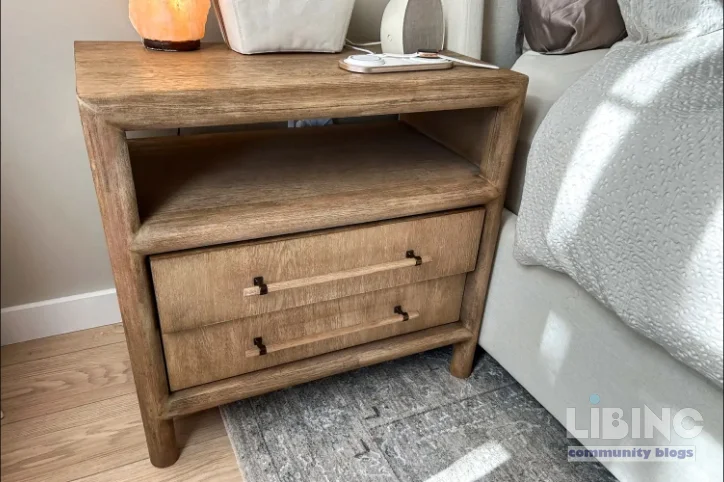
Media note: The following inline figure illustrates a representative nightstand silhouette and its key functional zones.
Conclusion
The nightstand landscape is not monolithic. It ranges from floating platforms to solid-wood classics, from drawer-dominated designs to open-shelf statements. The best choice hinges on a precise fit with your bed geometry, daily routines, and the room’s design language. With a structured approach—analytics of performance, contrasts in materials and price, cause-and-effect reasoning for features, and expert reconstruction—you can select nightstands that are both functional and timeless.
Practical sizing and room-ready layout
Bridging the prior analysis to real rooms requires a concise, repeatable sizing framework. The critical action is to align the nightstand top with the mattress edge for ergonomic reach, while preserving surface area for a lamp, a glass, and devices. A clear measurement routine helps you avoid mismatches that create daily friction and visual imbalance.
| Mattress height (in) | Ideal nightstand top height (in) | Rationale |
|---|---|---|
| 10–12 | 24–26 | Balanced reach for reading and quick remotes. |
| 14–16 | 26–28 | Smooth line from bed surface to table top. |
| 18 | 28–30 | Considers taller bed frames and deeper drawers. |
| Floating bed setups | Variable, typically 26–30 | Maintain sightlines and ease of cable routing. |
| Very shallow frames | 22–24 | Prevents overreaching while keeping room for a lamp base. |
Next, map storage depth and cable pathways to your tech habits. If you habitually charge multiple devices, favor a top drawer for remotes and masks and a deeper drawer or shelf for cables and adapters. If you prefer open access to books or almanacs, an open shelf minimizes visual clutter but requires disciplined cable routing to avoid tangling.
- Step 1: measure mattress height Record the distance from floor to top surface. Use a tape measure at the head and foot to verify uniformity, then pick a nightstand top height within 1–2 inches of that measurement for ergonomic consistency.
- Step 2: choose mounting type Standalone nightstands work in classic layouts; wall-mounted variants save floor space in tight bedrooms. Ensure front accessibility to outlets and cables before finalizing.
- Step 3: assign storage zones Top shallow drawer for essentials; bottom deeper drawer or shelf for chargers, power bricks, and bulky remotes. Open shelves suit readers; drawers curb visual noise.
With height and storage mapped, you can choose a design language that harmonizes with your bed and room—then test the setup by placing a lamp, a glass, and a book on the top surface to confirm clear reach and comfortable posture.
How tall should a nightstand be relative to your mattress?
On an ergonomic footing, the ideal nightstand top surface should sit within about 1–2 inches of the mattress top, creating a smooth vertical line from bed to table. This alignment reduces reach fatigue when you reach for a glass or a book and supports a comfortable bedside ritual. In practice, adjust within a 1–3 inch window to account for bed frame height, mattress thickness, and any added platform or headboard. If you use a reading light, ensure the lamp base clears the top surface without forcing you to lean forward. This simple alignment often improves sleep quality by simplifying nightly routines.
In addition, consider your room's scale: in smaller bedrooms, a slightly lower surface with a slim profile can preserve floor space while maintaining usability. In larger suites, you can lean toward a taller top surface if the bed sits higher. The key is to test with actual objects you keep bedside and to maintain a gentle visual bridge between bed and table.
What storage layout best supports nightly routines?
The most practical layouts combine a shallow top drawer for remotes, glasses, and masks with a deeper bottom drawer or open shelf for chargers, cables, and larger devices. Open shelves are ideal for quick access to current reads, while drawers reduce visible clutter but can constrain item retrieval if poorly sized. A mixed approach—top drawer plus bottom drawer or shelf—offers both quick access and concealed storage, supporting a calm, organized bedside environment that promotes consistent routines and easier nightly wind-down.
Are built-in charging ports worth the extra cost?
Built-in USB ports and wireless charging pads can dramatically reduce cable sprawl on the nightstand surface, creating a cleaner top for water, a book, and a lamp. They also provide a predictable charging cadence, which helps devices reach full charge by morning. However, ensure the outlets are easily accessible from bed and that wireless pads accommodate the majority of your devices without blocking the surface. If you upgrade in the future to different devices, verify port types (USB-A, USB-C, or wireless) and consider a modular hub as a flexible alternative.
Is a floating nightstand better for small rooms?
Floating nightstands are advantageous when floor space is at a premium, as they visually open the lower area and keep sightlines unbroken. They can simplify cable routing behind the bed and reduce risk of bumping edges in tight spaces. The trade-off is sometimes reduced surface area and potential difficulty accessing back-edge outlets. In small rooms, pairing a floating option with a wall-mounted lamps or shelf system often yields the cleanest, most functional bedside zone, while preserving a breathable footprint.
How do materials affect durability and feel?
Solid wood offers long-term durability and tactile warmth that ages gracefully, especially in rooms with natural textures or traditional lines. Veneer and MDF variants deliver a compelling look at a lower price point but may show wear faster under heavy daily use or moisture exposure. Check hardware quality (soft-close drawers, dovetail joints) and ensure joints are well-sealed to resist racking or sagging over time. For frequently used drawers, prioritize solid joints and robust slides to maintain performance year after year.
How should I match nightstand style with bed frame?
Style harmony comes from aligning the nightstand’s design language with the bed frame and room mood. A minimalist, floating nightstand pairs well with a low-profile platform bed and contemporary textiles; a traditional solid-wood nightstand with fluting or chamfered edges complements a carved or upholstered bed. Aim for consistent hardware finishes, such as metal pulls or hidden soft-close systems, and a coherent finish family (natural wood, painted, or veneered) to create a unified, calming bedroom vignette.





Add a comment
To comment, you need to register and authorize
Comments