

Tariffs in the real economy: how import duties work, who they hurt, and what policy design can improve outcomes
Table of contents
Tariffs have long sat at the intersection of economics and politics. They are straightforward on the surface—a tax on goods imported into a country—but the consequences ripple through prices, production choices, and the very structure of economies. The contemporary tariff debate speaks to a broader question: when does protectionism help a polity, and when does it impose costs that outweigh the gains? This analysis uses the tariff as a lens to ask not just what happens at the border, but how buyers, sellers, workers, and governments fare as trade policies become more or less restrictive. With a focus on mechanism, distribution, and empirical outcomes, we explore how tariffs operate, who pays, and what policy design can realistically achieve in peacetime markets and in moments of geopolitical stress.
Tariffs in theory and practice: how they work
Tariffs are a form of fiscal instrument that modifies the price signals that determine trade flows. The basic mechanics remain constant regardless of country, sector, or time period, but the effects depend on context: the structure of supply chains, the elasticity of demand for imports, and the availability of domestic substitutes. The central dynamics revolve around four channels: revenue, price, production structure, and incentives for efficiency.
- Revenue channel: Tariffs raise government revenue by collecting duties at the border. This revenue can be substantial in countries with large import shares and limited alternative tax bases. Revenue alone, however, is not a justification for tariffs; it reflects fiscal needs and political choices rather than economic welfare gains.
- Price channel: A tariff raises the cost of imported goods. If the tariff is levied on a washing machine worth $1,200, a 10% tariff adds $120, making the landed price $1,320, assuming perfect pass-through. The higher price reduces quantity demanded for the import and can shift demand toward domestically produced substitutes or toward other imports with lower or no duties.
- Production structure channel: Tariffs can redraw the domestic production mix by raising the relative cost of foreign goods. Domestic firms in protected sectors may gain market share, while sectors that rely on imported inputs face higher input costs. The net effect on total output and employment depends on whether the economy reallocates resources toward more productive activities or preserves less efficient producers.
- Efficiency and incentives channel: Tariffs can distort comparative advantage by shielding weaker producers from foreign competition. Over time, this can reduce productivity growth and innovation in the protected sectors, as the pressure to reform and upgrade lapsed. Conversely, defenders argue tariffs protect viable industries during transition or adjustment shocks.
In practice, the effects are not neutral. Domestic consumers typically bear a portion of the tariff through higher prices. Firms depending on imported inputs face higher costs, which can erode competitiveness in export markets or trigger price-adjustment strategies. In some cases, tariffs bolster employment in import-competing sectors, but this is rarely uniform across the entire economy. The data from recent policy episodes underscore a crucial point: tariffs are redistributional policies that shift welfare rather than create new wealth—often transferring from consumers and broad-based producers to protected firms and government treasuries.
To anchor these ideas in concrete terms, consider a familiar example: a 10% tariff on washing machines imported from abroad. If the machine costs $1,200 at the border, the consumer faces $1,320 landed price. If a domestic producer can offer a similar machine at a slightly higher price without facing foreign competition, consumers may still buy the domestic product—but only if the domestic price remains competitive after accounting for the tariff. In many cases, the tariff merely preserves a slice of the foreign market for a domestic entrant or incumbent, while raising the overall cost of living for households and firms that rely on imported appliances or their components.
Beyond direct price effects, the tax revenue dimension matters, but it interacts with broader macroeconomic goals. Governments face a choice: use tariff revenue for fiscal balance, social spending, or to cushion the adjustment costs faced by workers in import-competing industries. The design question is whether the revenue is a primary objective or if its presence in any tariff regime is just a by-product of strategic policy choices. The answer matters because revenue orientation can entrench protectionist incentives—politically tempting when unemployment or industrial decline are salient—and reduce the willingness to pursue structural reforms that would raise productivity in the long run.
Two non-tariff counterparts are worth noting. First, import quotas directly constrain volumes and can yield price floors or ceilings that mimic tariff effects. Second, administrative barriers—labelling standards, safety checks, or customs procedures—can have effects similar to tariffs by raising effective costs, slowing trade, and reducing variety. In policy terms, tariffs are one instrument among a broader toolbox of trade barriers. The choice among them reflects administrative capacity, bargaining power, and the political economy of the moment.
Tariffs as protectionism vs. the free-trade case
Proponents of tariffs—often citing protection of workers, strategic industries, or national security—present them as a way to realign domestic incentives with a country’s longer-run interests. They argue that in the presence of foreign competition, tariffs can boost local employment and wage levels by preserving demand for domestically produced goods. In theory, tariffs can act as a negotiated bargaining chip that helps secure concessions in trade talks, while granting policymakers flexibility to respond to asymmetries in market access or to protect critical sectors from disruptive shocks.
- Protective argument: Tariffs shield vulnerable workers and industries from foreign competition, supporting domestic employment and potentially sustaining higher wages in those sectors.
- Negotiation and bargaining: Tariffs can serve as leverage in trade negotiations, allowing a country to demand better access for its services, agriculture, or manufacturing in exchange for tariff concessions elsewhere.
- Strategic considerations: In some contexts, tariffs aim to preserve national security or supply-chain resilience by preventing over-reliance on a single external supplier or country.
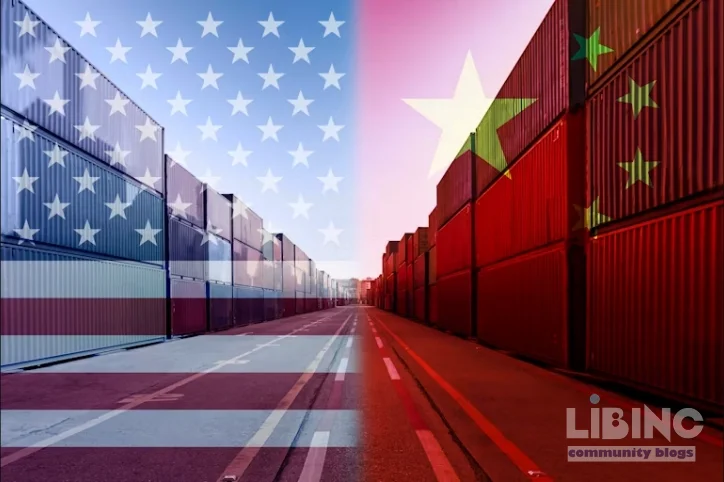
Several empirical studies challenge the universal efficacy of tariffs. In the United States, the tariffs implemented in 2018–2019 on about $350 billion of Chinese goods did not deliver the targeted employment gains in the sectors they were meant to protect. Instead, the burden largely fell on domestic consumers and businesses reliant on imported inputs. Moreover, the retaliatory tariffs that followed reduced employment in export sectors such as agriculture. The broader pattern across many economies is that while some workers in import-competing industries may gain—through higher wages or reallocation—consumers pay higher prices, and total productivity can fall when resources are diverted from areas of comparative advantage to politically shielded sectors.
The free-trade case emphasizes efficiency and dynamic gains. Removing barriers tends to allocate resources toward sectors where a country has a comparative advantage, raising total welfare and—in the long run—potentially boosting innovation, productivity, and real wages. The counterargument is that free trade can generate dislocations, and that without adequate social safety nets or transition policies, certain communities can bear disproportionate costs. The modern core of the debate is not a binary choice between all tariffs and no tariffs but a question of design: how to limit distortion, preserve essential domestic capacities, and manage adjustment costs without sacrificing the efficiency gains of open markets.
From policy shocks to the economy: cause and effect
Trade policy shocks through tariffs create a cascade of cause-and-effect relationships. The sequence begins with price changes at the border and ends with broader macroeconomic consequences. The critical point is not whether tariffs can raise revenue or protect specific firms in isolation, but how their effects propagate through consumers, producers, and governments across the economy.
- Immediate price effects: Tariffs raise the landed cost of imports, directly lifting consumer prices and the cost of intermediate goods used by domestic manufacturers. The pass-through rate depends on competition, substitutes, and the elasticity of demand for imports.
- Demand and substitution: Higher import prices can shift demand toward domestic goods, but only if domestic substitutes exist and are competitively priced. If substitutes are imperfect or scarce, households accept higher total expenditures or cut back on consumption.
- Input costs and production decisions: Tariffs on intermediate goods raise production costs for exporters that rely on those inputs, potentially offsetting any gains from protecting final-goods producers. This can dampen export competitiveness, particularly in industries integrated into global value chains.
- Employment and wages: Employment effects depend on whether protected sectors hire more workers or whether displacement in other sectors occurs due to higher costs and reduced demand. In many cases, net employment gains are modest or non-existent, while wages in the affected sectors can be pressured by higher input costs and reduced productivity growth.
- Prices, inflation, and monetary policy: Higher consumer prices feed into measured inflation, influencing monetary policy settings. A tariff-driven inflation spike can complicate central-bank objectives and fiscal policy, particularly if the government relies on tariff revenue to fund spending or deficits.
- Trade volumes and retaliation: Tariffs often invite retaliatory measures, which can decrease export volumes, intensify sectoral job losses, and shrink overall economic welfare. The political economy of retaliation can become a self-reinforcing cycle, as countries attempt to offset domestic losses by tightening trade barriers elsewhere.
These causal links are not merely academic. They manifest in real-world episodes where broad-based tariff proposals lead to higher consumer prices, more expensive inputs for manufacturers, and shifted investment incentives. The experience from the Trump administration’s tariff surge illustrates a recurring pattern: the eventual welfare effects concentrate costs on consumers and business users of imported inputs, while benefits to protected sectors are often smaller and temporary. The result is a complicated equilibrium in which the total effect on employment, productivity, and long-run growth is ambiguous at the macro level, even when some pockets of protection appear to gain temporarily.
Understanding these causal channels also matters for policy design. If the aim is to preserve domestic industries without compromising overall welfare, tariffs would need careful calibration—targeted, time-bound, and accompanied by domestic investment in productivity, retraining, and supply-chain diversification. Absent such accompaniment, tariffs risk simply moving an economy from one distortion to another, with limited net gains for workers and households outside protected sectors.
Expert reconstruction: policy options and implications
Given the mixed empirical record of tariffs as a tool for improving welfare, policymakers face a practical choice: if tariffs are to be used, how should they be designed to minimize harm and maximize the likelihood of desirable outcomes? The following reconstruction emerges from economic reasoning and observed outcomes across economies that have experimented with tariff policy in recent decades.
- Targeted, time-limited measures: Rather than broad, permanent tariffs, targeted duties aimed at specific distortions or practices (such as anti-dumping or safeguard measures) can be justified as temporary responses to identified market failures. Sunset clauses and regular reviews help prevent chronic protectionism.
- Tariff-rate quotas and phase-ins: When a domestic industry is viable but vulnerable to short-term shocks, tariff-rate quotas allow controlled access for lower-priced imports and gradually increase domestic capacity and resilience, while avoiding abrupt price spikes for consumers.
- Complementary domestic policies: Tariffs should be paired with active industrial policies—upskilling workers, investing in productivity-enhancing technologies, and supporting innovation in sectors with genuine comparative advantage. Without these, protection becomes a tax on progress rather than a strategy for growth.
- Non-tariff barriers with transparency: If the goal is to address specific concerns (e.g., safety, environmental standards, or intellectual property protection), non-tariff measures can be designed transparently and with mutually agreed rules to avoid unnecessary frictions that mimic tariff effects.
- Rules-based multilateral approaches: Engaging in predictable rules-based trade, through alliances and agreements, tends to reduce the uncertainty and retaliation that accompany unilateral tariff hikes. A credible commitment to open markets, while allowing for calibrated safeguards, can stabilize investment and supply chains.
- Revenue-use discipline: When tariffs generate government revenue, the fiscal use should align with efficiency and equity goals. Relying on tariff revenue to fund broad welfare improvements can help counterbalance the distributional drawbacks of higher import prices, but it remains not a substitute for productivity-enhancing reforms.
There is no one-size-fits-all answer. A measured approach to tariffs recognizes that the economic costs of broad protection often exceed the short-term gains to a protected industry. It also acknowledges that global supply chains have become deeply integrated; broad, indiscriminate barriers can impose costs that ripple through households and firms across the economy. For advanced economies with diversified industrial bases, the safer path tends to emphasize structural reforms and resilient trade partnerships rather than sweeping import duties.
From the vantage point of a country like Australia, the implications are instructive. Australia participates in a highly open trade regime with strong exposure to global value chains. The incentive to deploy broad tariffs is limited by the risk of raising consumer prices and inviting retaliatory barriers elsewhere. A more prudent path emphasizes targeted protections during structural adjustments, investments in human capital and infrastructure, and deepening trade agreements that secure preferential access while maintaining open markets for the broad range of goods and services that underpin prosperity.
In sum, tariffs can be a tool of last resort rather than first principle. When used, they benefit from clear objectives, time-bound constraints, and robust support for domestic adaptation. Absent these conditions, the broader economic costs—higher prices for consumers, reduced productivity, and potential damage to export sectors through retaliation—tend to overwhelm any short-run gains in employment or local industry protection.
What all this implies is a practical, if sometimes uncomfortable, conclusion: tariffs are a blunt instrument that can reshape prices, production, and political economies in ways that are not easily reversed. The path to sustainable, inclusive growth lies less in shielding industries from competition and more in enabling workers and firms to compete—through skills, innovation, and well-designed policy support. The debate will continue, but the most convincing policy design is the one that blends disciplined protection with credible commitments to openness, while prioritizing long-run productivity and resilience over short-run political wins.
Looking ahead, the coming years will test whether tariff appetite translates into meaningful improvements in living standards or simply reshapes the map of global trade. The most informative indicators will be not only the headline tariff rates but the extent to which economies upgrade their productive capabilities, diversify their supply chains, and maintain consumer welfare while pursuing strategic protections selectively and temporarily.
Policy design blueprint for tariffs: actionable steps
Tariff design gaps include the absence of a disciplined framework that ties measures to measurable welfare outcomes. This blueprint offers concrete design actions that align with long-run productivity and resilience.
| Policy feature | Impact on price | Policy object | Risks |
|---|---|---|---|
| Targeted duties | Moderate price impact | Address distortions | Sunset risk |
| Tariff-rate quotas | Controlled inflows | Manage supply | Quota administration |
| Sunset clauses | Short-term spikes | Anchor reforms | Reversion risk |
Complementary policies include skills training, investment in productivity, and diversification of supply chains to reduce risk. These measures should be assessed with a simple dashboard: pass-through, consumer price inflation, domestic investment, and employment in protected sectors.
Examples: targeted duties, tariff-rate quotas, and sunset clauses can evolve into a measured toolkit. Scenario A: a temporary safeguard for textiles with a sunset after 18 months; Scenario B: a phased-in tariff on electronics inputs paired with retraining; Scenario C: a transparent quota with gradual expansion to diversify suppliers.
- Is the market failure clearly identified? If yes, select a targeted measure.
- Will the measure be time-limited? Set sunset clause and review date.
- Are complementary policies in place (training, investment) to offset efficiency losses?
- What are the expected pass-through and inflation implications?
Finally, implement a transparent evaluation framework with public data on pass-through, inflation, and employment effects to build trust and deter creeping protectionism.
What are tariffs and how do they affect prices?
Tariffs are taxes on imports that raise the landed price of foreign goods, leading to higher consumer prices and potential inflation. Pass-through depends on competition, substitutes, and market structure. In practice, the price impact is larger when domestic substitutes are weak or when supply chains rely heavily on imported inputs.
Analysts monitor pass-through and inflation to gauge whether a tariff achieves its stated goals without costing too much to households.
How do tariffs impact jobs and wages?
Tariffs can protect some workers in import-competing sectors, but broad employment gains are often limited and may shift employment to other sectors. Wages in protected firms can rise temporarily, yet overall productivity growth and long-run living standards may be unchanged or even reduced if efficiency suffers.
Policy design that includes retraining and diversification tends to cushion workers against dislocation.
What is a good tariff design for macro stability?
A sound design uses targeted, time-limited measures (sunsets), complements with productivity-enhancing investments, and relies on transparent rules. It seeks to limit pass-through to households and avoid broad price shocks that spill into inflation expectations.
Regular reviews and multilateral coordination reduce uncertainty and retaliation risks.
How do tariff-rate quotas work?
Tariff-rate quotas (TRQs) combine controlled access with preferential treatment for a quantity threshold. They allow cheaper imports up to a point while protecting domestic supply, then gradually restrict or adjust the tariff as domestic capacity expands.
TRQs help balance price stability with the need to preserve consumer choice and supplier diversity.
What role do non-tariff barriers play?
Standards, labeling, and other non-tariff barriers can raise costs similarly to tariffs. When designed transparently and aligned with mutual rules, they address legitimate concerns (safety, IP protection) without creating unnecessary frictions.
Clear rules reduce compliance costs and support smoother trade while achieving policy aims.
How can policymakers evaluate tariff policy effects?
A simple dashboard tracking pass-through, inflation, employment, and investment offers a practical way to assess welfare outcomes. Regular data releases and independent analyses improve accountability and guide adjustments.







Add a comment
To comment, you need to register and authorize
Comments