

Table of Contents
- Pink Candle Magic: Analytical View
- Contrast: Pink Candle Magic vs Other Modalities
- Cause and Effect in Pink Candle Magic
- Expert Reconstruction: Practice, Safety, and Ethics
Pink candle magic has gained popularity as a gentle entry into practical witchcraft, yet its effectiveness rests on more than sentiment. This analysis treats pink candle work as a structured practice that translates intention into measurable, though often subtle, shifts in emotion, behavior, and relationship dynamics. By unpacking color correspondences, energy concepts, and procedural discipline, we illuminate why pink candles work for self love, tender romance, and friendship without resorting to vague promises. The aim is to provide a rigorous, skeptical framework that practitioners can test, adapt, and refine within ethical boundaries.
Pink Candle Magic: Analytical View
At its core, pink candle magic leverages color frequency, symbolic resonance, and ritual structure to harmonize internal states with external possibilities. The analytical lens asks not only what happens when a pink candle is lit, but why the ritual can catalyze change when conditions align. The practice rests on three pillars that interact like gears: intentional focus, the transformative energy of flame, and sustained presence during the spell. This triad is not magical superstition alone; it reflects how cognitive reframing, emotional signaling, and behavioral commitment converge in practice.
The color pink sits between red and white in the spectrum and channels a specific experiential frequency tied to Venus energy and the heart center. This frequency is most compatible with soft-edged desires—self compassion, relational openness, and authentic affection—rather than overt conquest. The analytic logic is straightforward: intentions embedded in pink candle work tend to accrue through repeated cycles of focus, ritual action, and reflective feedback. Over time, these cycles can re-pattern attention, increase willingness to engage in vulnerable communication, and surface opportunities for compassionate connection. In short, pink candle magic becomes a practical amplifier of heart-centered behavior when the practitioner maintains clear intent and disciplined presence.
Mechanistically, pink candle magic aligns with widely observed cognitive and behavioral dynamics rather than invoking a mysterious external force. The heart’s neurophysiology responds to social cues and self narrative; the ritual yields an experiential cue that reinforces self worth and relational safety. This is why pink tends to be forgiving for beginners: the practice does not demand extreme outcomes or dramatic transformations. Instead, it fosters small, consistent shifts that compound over time. Color correspondences, expressed through cultural symbolism and personal association, function as a cognitive anchor enabling sustained attention to the desired emotional state. In this sense, pink candle magic operates through plausible psycho-spiritual mechanisms rather than unverified metaphysical claims.
Color and energy theory, while contested in some circles, offers a robust frame for describing how intention interacts with perception. When a pink candle burns, the candle acts as a ceremonial focal point that anchors attention on self-worth, tenderness, and relational openness. The symbolic language of this color, rooted in Venusian ideals of grace and generosity, helps practitioners articulate goals in a measurable way. The practical upshot is not a guarantee of a specific person or outcome but an increased likelihood that the practitioner will respond in alignment with their stated intention. This is where the most solid progress occurs: the ritual cultivates congruence between inner aim and outward action, creating a perceptual environment in which love can arise more readily.
Key takeaway for practitioners: pink candle magic is a structured ritual that translates inner desires into intentional behavior. It is not a magical shortcut but a behavioral framework that leverages color symbolism, ritual timing, and mindful attention to foster heart-centered change. When implemented with clarity, patience, and ethical intent, pink candle magic can deepen self-love, attract authentic affection, and strengthen friendships without coercion or manipulation.
Color, Chakra, and Emotion: The LSI Thread
Beyond symbolism, pink candle magic interfaces with the heart chakra and emotional regulation systems. The Anahata chakra is conceptually linked to compassion, forgiveness, and open-hearted perception, while Venus energy informs relational aesthetics and beauty as a form of ethical resonance. The practical implication is that the ritual is most effective when combined with heart-centered breathwork, journal prompts, and gentle visualization. The synergy between candle action and inner work creates a loop where external symbols reflect internal states and, in turn, nudge those states toward greater coherence.
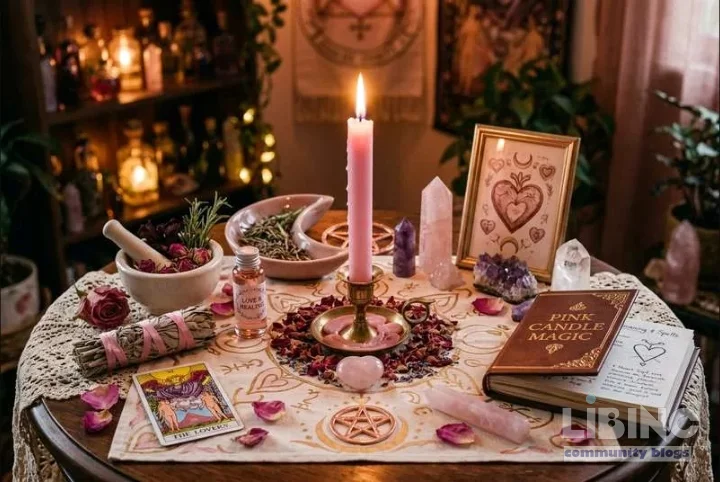
From a ritual design standpoint, the act of dressing a pink candle—anointing with love-aligned oils, rolling in rose petals, and placing rose quartz nearby—serves to codify the intention in a tangible artifact. This artifact becomes a memory cue that sustains attention to the goal and supports ongoing commitment. In the language of energy work, the oil, petals, and crystals function as focal enhancers that embed the intention into sensory channels—sight, touch, scent—heightening predictability of the ritual outcome through heightened state-dependent perception.
Contrast: Pink Candle Magic vs Other Modalities
To contextualize pink candle magic, it helps to compare it with other color traditions, ritual modalities, and non ritual approaches to emotional alignment. The contrasts reveal both the strengths and the limits of pink work, clarifying where it excels and where it risks overreach. This section will map the differences in energy profile, target outcomes, and ethical considerations compared to red, white, and green candle practices, as well as to non-symbolic self-help methods.
Pink versus Red: Tenderness versus Passion
Red candle work emphasizes intensity, drive, and erotic charge. Red energy is potent for magnetizing desire and physical arousal but can blur boundaries if misapplied. Pink, in contrast, moderates desire with tenderness and consent, prioritizing emotional resonance over sheer attraction. When a practitioner blends pink and red, the result can be a balanced trajectory from initial attraction to a more secure, emotionally nuanced relationship. The strategic use of pink keeps passion anchored in communication and mutual care, reducing the risk of coercive or chaotic outcomes. This contrast is crucial for ethical practice and long-term relationship health.
Pink versus White: Heartfelt Connection versus Pure Intention
White candle magic is traditionally associated with purification, clarity, and universal blessing. It offers a broad, non-specific auspice that can benefit multiple goals. Pink narrows this field to heart-centered aims, which can yield more precise alignment with self-love and intimate bonds. Practitioners often exchange white for pink when the aim is to deepen empathy and authenticity within a specific relationship or within self-care routines. The white candle supplies a clean slate, whereas pink supplies a compassionate direction. Used together in a layered ritual, they can complement each other if boundaries and consent are clear.
Pink versus Green: Love and Abundance versus Growth and Prosperity
Green candle magic is tied to growth, prosperity, and outward expansion in worldly terms. When love is the desired outcome, green can support abundance in relationships if rooted in value exchange and mutual benefit. Pink keeps the emotional substrate stable, ensuring that growth does not outpace respect or consent. In practice, a hybrid approach can yield sustainable outcomes: pink establishes emotional safety, while green attends to practical aspects of shared life, such as finances, living arrangements, and joint goals. The combination should always respect ethical boundaries and avoid coercion or manipulation.
Ethical Considerations Across Modalities
Across color modalities, the highest standard is to avoid manipulating free will. Effective pink candle magic respects autonomy, prioritizes self-improvement, and seeks relationships that are reciprocal and voluntary. The most reliable ethical frame centers on consent, transparency in aims, and the willingness to release attachment to a preferred outcome. This ethical stance distinguishes responsible practice from vanity or control, and it safeguards against karmic costs associated with coercive directives.
Cause and Effect in Pink Candle Magic
Understanding cause and effect in pink candle magic requires more than listing steps. It demands tracing how each component of the ritual influences a chain of internal and external responses. The cause is the intentional setup—clarity of desire, the act of dressing, and the precise lighting of the wick. The effect is a spectrum that includes shifts in self perception, behavior alignment with stated aims, and the emergence of opportunities for meaningful connection. The practical question is how to diagnose progress and adjust your approach without breaking the integrity of the ritual.
Intentional Framing as a Causal Trigger
Intentional framing creates a cognitive anchor that orients perception and action. When you articulate a specific aim in the context of pink candle magic, you commit to a narrative you will rehearse in your daily life. This commitment alters attention bias, heightens awareness of relevant cues, and increases the likelihood that you take steps toward relational or self-directed goals. The effect is not magical in isolation; it is the interplay of mental framing, social feedback, and improved self-regulation that yields results over time. In practice, a clear aim reduces ambiguity and accelerates meaningful choices aligned with your values.
Flame dynamics also contribute as a feedback channel. A steady flame often signals that internal alignment is stable and that external conditions are cooperative enough to support progress. A flickering or erratic flame can indicate internal doubt, boundary testing by others, or misalignment between goal and method. The wax behavior likewise serves as a secondary indicator: smooth pooling suggests momentum and momentum accumulation, while tunneling may point to attachment to a specific outcome that requires release. Reading these cues encourages timely course corrections without abandoning the ritual's core purpose.
Presence, or the quality of focused attention during the spell, functions as a control variable in the causal system. When practitioners illuminate the candle with disciplined stillness, they create a neural and emotional environment conducive to change. Absent presence, intention loses coherence, and the ritual risks becoming symbolic theater rather than a mechanism for personal growth. The causal model is simple yet robust: intention plus process plus present attention yields measurable shifts in self-representation and relational dynamics over time.
Over the long term, the most reliable pink candle magic outcomes emerge from iterative cycles. Each session reinforces the previous one, producing a compounding effect akin to habit formation. The cumulative effect tends to surface as more consistent self-care, improved communication, and better boundary setting. In this sense, pink candle magic operates as a structured behavioral strategy, not an instantaneous cure. It is the disciplined repetition that transforms hopeful symbolism into real-world skill and healthier relationships.
Flame and wax readings offer a practical diagnostic toolkit. A steady flame paired with smooth wax flow suggests clear alignment and forward motion. Slight fluctuation invites reflection and potential adjustment of intention. Minimal flame strength or a chaotic wax pattern may signal the need for recalibration, whether that means refining your aim, increasing commitment, or addressing emotional blocks before continuing. The diagnostic language is simple, but its value lies in the disciplined observation it demands from the practitioner.
Expert Reconstruction: Best Practices, Safety, and Ethics
Building a robust pink candle magic practice requires disciplined preparation, precise technique, and a mature ethical stance. The following reconstruction synthesizes established ritual craft with contemporary insights from psychology and ritual studies. It is designed for practitioners who want repeatable, transparent processes that respect both personal boundaries and the autonomy of others.
Preparation and Dressing: Turning Intent into a Physical Vessel
The dressing ritual primes the candle to carry your intention with clarity and resonance. The following steps disassemble into a repeatable workflow that minimizes ambiguity and maximizes energy coupling with your goal.
- Space cleansing: clear the space with airflow and sound to remove stagnant energy and invite fresh resonance.
- Intention crystallization: sit quietly and name a specific, measurable aim tied to heart centered outcomes.
- Anointing with oil: apply a light layer from the middle toward the top and bottom to pull the intention toward you.
- Herbal and crystal layering: roll the oiled candle in dried rose petals, lavender, or jasmine; place rose quartz or clear quartz nearby for amplification.
- Mindful lighting: light with deliberate, slow breath, grounding into the present moment before the flame rises.
This dressing sequence creates a tangible interface between intention and action. It is the procedural core that transforms wishful thinking into a directed practice rather than a passive hope. The oils, petals, and crystals function as energetic signposts that engage the senses and reinforce the emotional state the spell seeks to cultivate. The practice remains flexible but its reliability grows when each component is executed with attention and patience.
Timing, Phases, and Planetary Rhyme
Moon phase and day selection shape the energetic scaffolding of pink candle magic. The lunar cycle offers a rhythm that can either accelerate or refine outcomes when aligned with intention. A practical framework follows:
- Waxing Moon: ideal for attracting love and deepening connection, aligning growth with increasing light.
- Full Moon: maximum illumination and magnetism; use for clear, visible shifts or rapid breakthroughs.
- Waning Moon: release old patterns that block love or self-worth; this is good for healing and letting go.
- New Moon: fresh starts; initiate self-love practices or begin a new kind of relationship dynamic.
Venus rulership and earthbound signs such as Taurus and Libra offer extra resonance for pink candle work. Taurus anchors self-worth and sustainable values, while Libra enhances harmony, fairness, and relational diplomacy. If your chart highlights these energies, pink candle spells often respond with greater ease and reciprocity. This astrological alignment is not a guarantee, but it does provide a probabilistic advantage for heart-centered aims when paired with ethical intention and consistent practice.
Moon Phase and Day Scheduling: Practical Guidelines
Beyond the abstract alignment, pragmatic scheduling matters. When possible, attempt to work on a Friday, the day ruled by Venus, to reinforce love oriented intent. If the goal requires a faster result or a specific turning point in a relationship, plan a full moon session that coincides with a clear, ethical aim for fast illumination without coercion. For personal self-love, new moon windows can anchor a new habit or a commitment to compassionate self-talk and daily care. The simplest rule is to pair the emotional aim with a phase that reinforces growth (waxing), clarity (full moon), release (waning), or renewal (new moon).
Spiritual Ethics and Boundaries: The Core Principle
The ethical center of pink candle magic is consent and autonomy. Spells that attempt to manipulate a specific person into loving you are ethically fraught and energetically destabilizing. The responsible approach emphasizes attracting compatible partners who freely choose closeness and emotional honesty. Self-work, boundary setting, and compassionate communication are integral outcomes that support healthier relationships and reduce karmic risk. The ethical discipline must accompany any practice to prevent harm and maintain spiritual integrity.
Reading the Flame and Wax: Feedback for Practice
Flame reading and wax reading provide a practical feedback loop to track progress without forcing outcomes. Use the following interpretive notes as a guide:
- Flame steady and bright: clear alignment, forward momentum, stable environment for love to enter with consent.
- Flame flicker or dance: signals movement behind the scenes; adjust intention or timing and observe potential relational signals.
- Very small flame or wax tunneling: suggests attachment or fear around the outcome; reframe and reclarify goals.
These readings are pragmatic tools, not absolute truths. Use them to calibrate, not to lock in a predetermined result. The goal is ongoing alignment between inner aim and outer reality, not theatrical spectacle.
A Simple Pink Candle Magic Spell You Can Try Tonight
The following beginner friendly spell can be done in under 10 minutes and requires only a pink candle and a quiet space. It is designed to cultivate self love and gentle connection with others, while remaining ethically grounded.
- What you need: 1 pink candle, rose oil (optional), rose quartz (optional), a quiet space.
- Ground yourself: sit comfortably and take three deep breaths, feeling the earth beneath you.
- State your intention aloud: I light this candle to honor the love I deserve. I am worthy of kindness, gentleness, and compassion especially from myself.
- Anoint the candle: if you have oil, rub a drop from the middle toward the top and bottom while visualizing pink light emanating outward.
- Dress with herbs or crystals: roll the oiled candle in rose petals or place rose quartz nearby to amplify loving energy.
- Light with presence: breathe deeply and watch the flame; let the intention nourish your heart center for 5–10 minutes.
- Close the spell: say so it is or amen, then extinguish the flame or allow it to burn safely if you have permission and resources to do so.
After the spell, observe your responses over the next days with gentle curiosity. Subtle shifts in self talk, empathy, or openness to friendship often signal soft but meaningful progress. The spell is not a quick fix but a relational stance you adopt toward yourself and others. Revisit as needed, keeping attachment in check and honoring consent in every step.
Safety and Practical Considerations
Even for gentle magics, practical safety matters. Do not leave burning candles unattended. Use a stable holder and a flame safe surface. Trim wicks to about 1/4 inch to minimize smoke and soot. Ventilate the space to avoid buildup of fumes. If you must pause, extinguish the candle and relight later to preserve the ritual’s integrity. These practices reduce risk and maintain a respectful container for your work.
Closing Reflections: Self-Work as Core Result
Pink candle magic continually returns to one principle: meaningful change starts with the self. When your heart grows softer, your boundaries become clearer, and your communication becomes more sincere, the world rearranges to accommodate healthier dynamics. The candle is a symbol that supports practice, not a guarantee of outcomes. The true measure is your ongoing devotion to self love, to authentic connection, and to ethical action that honors the freedom of others.
Final Reflections: Integrating Practice into Daily Life
Any robust magical practice must translate into tangible, sustainable behavior. Pink candle magic provides a reliable scaffold for cultivating inner worth and compassionate relationships, but it remains most effective when embedded in everyday routines. Pair the ritual with journaling to track emotional states, conversations, and boundary setting. Use the ritual to anchor daily acts of self care, honest dialogue, and the generosity you wish to receive. The result is not merely a momentary shift during a spell but a durable reorientation toward heart centered living.
Progress Measurement for Heart-Centered Rituals
To close the loop between intention and lived outcomes, practitioners benefit from a simple, repeatable tracking framework. This practical section adds concrete metrics that reflect inner shifts and outward behavior, while staying anchored in ethical practice and self-respect. The goal is to transform subtle mood changes into observable actions and healthier relationship dynamics, not to pursue dramatic miracles. The core signals to monitor are self-compassion, communication quality, and boundary integrity, each supported by everyday data points that anyone can collect.
Step-to-Outcome Matrix
| Ritual Phase | Action | Observable Outcome | Timeframe |
|---|---|---|---|
| Dressing and Lighting | Apply oil, petals, and set a clear intention; light with presence | Calm focus; repeated reminder of goal; reduced inner noise | Same day |
| Intent Reinforcement | Daily journaling prompts tied to the aim | More precise self-talk; language aligns with goal | 1–2 weeks |
| Interaction Window | Initiate one compassionate conversation or boundary check | Increased openness; consent-centered dialogue | 2–4 weeks |
| Reflection Pulse | Review the day’s responses; note what worked and what didn't | Identify patterns; adjust wording or timing | 3–6 weeks |
Key insight: Small, consistent actions weave into habits that reframe self-worth and relational dynamics. Tracking clarity reduces guesswork and strengthens ethical practice by making progress visible without chasing specific outcomes.
Infographic: Pathway from Intention to Habit
Visual progression from intention to habit through dressing, lighting, and mindful presence.FAQ
How does pink candle magic differ from other self-help approaches in practical terms?
Pink candle magic channels heart-centered aims through a structured ritual, pairing symbolic focus with daily behaviors. In practice, this approach translates intention into concrete actions such as compassionate conversations, clearer boundaries, and regular self-care, while emphasizing consent and autonomy. It offers a tangible ritual scaffold that complements journaling, therapy, or relationship coaching by providing a consistent cue to align inner work with daily interactions.
From a behavioral perspective, it acts as an external reminder that anchors attention and supports habit formation. The emphasis on presence during the ritual helps sustain cognitive resources for subsequent actions, reducing cognitive load for emotional tasks outside the ritual window.
What are realistic expectations for outcomes from pink candle work?
Realistic outcomes focus on self-perception, communication quality, and relational safety rather than guarantee of a person or a specific result. A well-executed practice tends to improve how you show up in relationships, increase self-worth, and create opportunities for mutual choice and respectful connection. Over weeks to months, this can translate into healthier dating dynamics, stronger friendships, and more stable self-regulation during conflicts.
Its strength lies in consistency: repeated cycles of intention, action, and reflection produce cumulative benefits that are compatible with ethical boundaries and free will.
Which tools most reliably support pink candle rituals?
Keep the ritual simple and repeatable: a pink candle, a clean space, and a short intention statement. Complement with grounding breaths, a journaling habit, and optional items like rose oil, rose quartz, or petals to reinforce sensory cues. The key is to maintain safety and consent, using tools to enhance focus rather than to force outcomes.
From a practice perspective, these tools function as sensory anchors that help sustain presence and openness during the ritual and in daily life afterward.
How should I time pink candle work with lunar cycles?
Moon phases offer a rhythm that can amplify or refine outcomes. For attracting warmth and self-love, align with the Waxing Moon. For releasing old patterns, use the Waning Moon. The New Moon supports beginnings in self-care, while the Full Moon can accompany moments of clear insight or relationship breakthroughs. Practical scheduling means planning sessions around these phases instead of forcing urgent results, ensuring ethical boundaries remain intact.
In practice, syncing intention with lunar rhythms helps structure practice while preserving autonomy in relationships and daily life.
Can pink candle magic be safely used around others in shared spaces?
Yes, with clear consent and boundaries. Communicate your aims and feelings openly, avoid coercive language, and ensure that rituals do not pressure others to act in ways they don’t choose. In shared spaces, practice should respect safety, avoid extracting personal energy from others, and focus on self-work and mutual care.
Ethical execution reduces risk and preserves the integrity of the relationship dynamics involved.
What role does journaling play in sustaining pink candle practice?
Journaling serves as a maintenance tool that tracks shifts in self-talk, behavior, and relationship cues. Regular entries help you notice patterns, celebrate small wins, and recognize when adjustments to intention or timing are needed. It also provides a private space to reflect on consent and autonomy, reinforcing ethical practice.
When combined with presence during the ritual, journaling becomes a powerful feedback loop for lasting change.





Add a comment
To comment, you need to register and authorize
Comments