

Palestinian Education in East Jerusalem Under Fire: An Analytical Look at Israelisation and State Campaigns
Table of contents
- Analytical view: the mechanism and stakes
- Contrast: policy context and regional dynamics
- Cause and effect: education, law, and daily impact
- Expert reconstruction: lawfare, courts, and international pressure
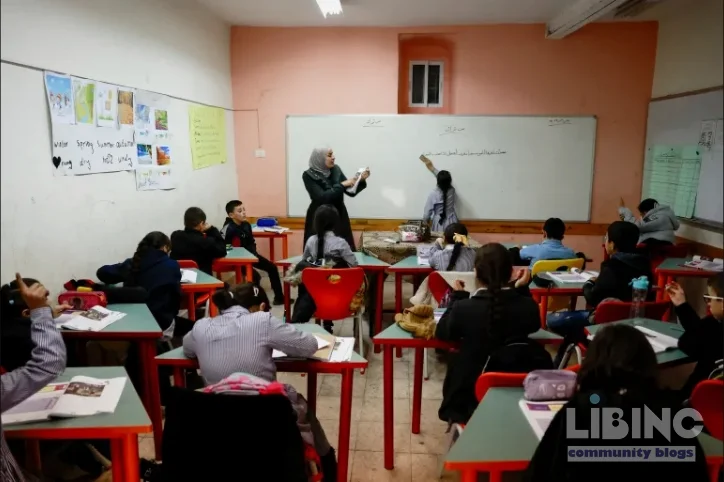
On Tuesday, Zvi Sukkot, chair of the Knesset Education Committee and a member of the far-right Religious Zionist Party, arrived at a Palestinian school in East Jerusalem for a surprise visit. It was his second such appearance in two weeks. He did not come to appraise pedagogy, classrooms, or student needs. Instead, he smashed the school entrance sign because it carried a Palestinian flag and publicly pledged to shut the institution down. This action is portrayed as a publicity stunt in the service of a political base, but it also embodies a broader, systemic effort: a state campaign to undermine and suppress Palestinian education in the occupied and annexed terrain of East Jerusalem. Sukkot’s use of office as a policing instrument signals a broader pattern in which education becomes a battleground for sovereignty, identity, and control.
Beyond personal theatrics, this incident sits inside a legislative climate designed to reshape who can teach, what can be taught, and where education can occur. In January 2026, a law banned graduates of Palestinian universities in the West Bank from working as teachers in Israel and East Jerusalem. Its proponents framed it as preventing what they called a dangerous “israelisation” of students, but the effect is to deny Palestinian-identity schooling, constrain the teacher workforce, and deepen educational disparities. In November 2024, another measure—widely referred to as the Silencing Law—gave the Ministry of Education broad discretion to suspend or dismiss teachers through a fast-track process, targeting speech deemed incitement to terrorism under the Counter-Terrorism Law. Taken together, these statutes illuminate a deliberate state strategy: to roll back Palestinian education while presenting the policy as security necessity.
Adalah, the Legal Center for Arab Minority Rights in Israel, has challenged these laws before the Israeli Supreme Court, alongside petitions against the ban on Palestinian university graduates and the anti-UNRWA framework. The organization frames the legal contest as a test of democratic norms and minority rights under occupation, while critics warn that legal challenges will not immediately reverse existing closures or policing practices. The convergence of physical vandalism, legislative tightening, and court battles highlights a clash between rights-based claims and a state project of “Israelisation” of education in East Jerusalem. The stakes are not abstract: thousands of Palestinian students depend on schools that are chronically underfunded, understaffed, and repeatedly exposed to policy-driven interruption. The outcome of this clash will shape not only access to education but the dignity and cultural survival of a community living under occupation.
Analytical view: the mechanism and stakes
The incident at the Palestinian school is best understood as a multi-layered tactic: public intimidation, policy consolidation, and structural reform synchronized across branches of government. The action channels political rhetoric into institutional practice, converting symbols—like a school sign bearing a Palestinian flag—into concrete policy instruments that degrade educational access. The objective is not merely to punish or deter dissent; it is to reframe the educational landscape so that Palestinian students internalize a state-defined narrative while the system privileges a mainstream, exclusionary model of national identity. In this sense, the event is a microcosm of a broader strategy: to govern by displacing Palestinian pedagogical needs with security framings and nationalist pedagogy.
The core mechanism rests on two interlocking levers: (1) exclusionary hiring and credentialing that limits who can teach Palestinian education in East Jerusalem, and (2) aggressive oversight that criminalizes speech and inquiry deemed politically risky. The 2026 law restricting West Bank Palestinian university graduates from teaching in Israel or East Jerusalem is a structural constraint on the supply side of education. It deprives Palestinian classrooms of qualified instructors and reinforces a gendered labor dynamic, given that West Bank graduates are predominantly women in the teaching profession. This is not an accident of policy; it is a deliberate design to alter the student-teacher ratio, force recruitment from different pools, and standardize a teaching culture aligned with state narratives. The result compounds educational fragility for Palestinian communities already navigating restricted access to resources and space for cultural expression.
From a governance perspective, the state’s involvement in schooling extends beyond curriculum or assessment. It encompasses policing of speech, oversight of school funding, and the authority to shutter institutions on political grounds through legal instruments. The Silencing Law, by enabling fast-track administrative action against teachers for incitement, converts pedagogical disagreement into potential administrative extinction. The cumulative impact is a paradox: while education is a universal right, its realization becomes contingent on political compliance with a dominant national narrative. This alignment between policy and practice reveals how the state leverages both formal law and informal coercion to re-create the boundaries of permissible education in East Jerusalem.
At the heart of this mechanism lies a central question: what constitutes legitimate education in a milieu of occupation and contested sovereignty? The answer offered by proponents is security-first and identity-aligned schooling. Opponents argue that such framing erodes core human rights, undermines the right to education, and weaponizes administrative tools to penalize a minority group’s cultural and linguistic identity. The tension between those positions defines the current crisis in Palestinian education in East Jerusalem, where the state leverages law, enforcement, and symbolic acts to reconfigure the educational landscape for a generation already navigating structural barriers.
Contrast: policy context and regional dynamics
To understand the implications for Palestinian education in East Jerusalem, it helps to compare this moment with other governance contexts. In a system that prioritizes universal access to education, states typically separate security prerogatives from pedagogical autonomy. The Israeli approach here blends these domains, treating classrooms as sites where security concerns trump educational liberties. This fusion makes the Palestinian education system in East Jerusalem vulnerable to politicized evaluation and funding cuts, which have cascading effects on student enrollment, school infrastructure, and teacher retention. It also reframes education as a battleground over identity, rather than a neutral space for learning and social mobility.
In broader regional terms, East Jerusalem sits at the crossroads of occupation, annexation rhetoric, and international legal contention. The use of legal bars against Palestinian university graduates aligns with a larger regional trend where higher education is weaponized or constrained in conflict zones. While some states in similar conflicts emphasize reform through inclusive curricula and minority rights protections, the current trajectory in East Jerusalem emphasizes exclusionary routines, surveillance, and punitive measures that curtail Palestinian self-expression in schools. The difference is not merely rhetorical: it translates into measurable disparities in teacher supply, classroom quality, and student outcomes, creating a persistent gap in educational equity between Palestinian and Jewish-Israeli communities within the same geographic space.
Another contrast lies in the role of international law and rights-based advocacy. While many conflict-affected education systems rely on international bodies and bilateral diplomacy to safeguard access to education, the Israeli-penned framework here relies on domestic legislative power to define acceptable schooling. This raises questions about how international law can interface with domestic governance to protect the right to education in occupied territories. If international actors insist on accountability for education rights, they face the challenge of translating global norms into enforceable pressure within a domestic political system that combines security arguments with nationalist ideology.
Cause and effect: education, law, and daily impact
The causal chain linking policy to daily realities in East Jerusalem’s Palestinian schools begins with the 2024–2025 anti-UNRWA laws and extends through to 2026 legislative actions and on-the-ground policing. First, the anti-UNRWA measures reduce the organization’s operating bandwidth, affecting the continuity of schooling for many Palestinian children who rely on UNRWA facilities and services. Second, the Silencing Law creates a formal pathway to suspend or dismiss educators for political speech, which discourages classroom discussions about history, identity, or human rights that do not align with the official narrative. Third, the ban on Palestinian university graduates curtails the pipeline of skilled teachers, particularly affecting schools in East Jerusalem that already contend with staff shortages and limited classroom capacity.
The consequences cascade in concrete terms. Closures in 2025 eliminated access to education for roughly 800 Palestinian students, revealing the fragility of schooling in a context where institutions are inseparable from political contestation. When schools close, the ripple effects are immediate: disrupted academic calendars, lost instructional time, deferred graduation plans, and increased reliance on substitute teaching that may lack continuity. Over time, these disruptions contribute to broader educational disengagement, lowered expectations, and a sense of instability among students who already inhabit a liminal space between two legal regimes. The staff shortages amplify workload pressures on remaining teachers, increasing burnout and further eroding instructional quality. These dynamics threaten not only academic achievement but the long-term prospects for Palestinian youth in East Jerusalem to pursue higher education or stable employment within a constrained labor market.
Importantly, the political economy of these policies intersects with gender dynamics. West Bank university graduates, who are predominantly women, face professional exclusion at multiple levels, from recruitment to salary progression. This gendered dimension compounds the effects of policy on family life, economic independence, and community leadership. When women are systematically pushed out of the teaching workforce, the ripple effects extend beyond classrooms into households and local governance structures, diminishing the capacity for community resilience and advocacy. The cumulative effect is a pernicious form of educational disenfranchisement that persists even when students are physically present in classrooms, as the learning environment is shaped by a climate of fear, intimidation, and bureaucratic constraint.
Expert reconstruction: lawfare, courts, and international pressure
Legal organs, civil society, and international actors all play roles in contesting this trajectory. Adalah has filed petitions challenging the ban on Palestinian university graduates, the Silencing Law, and the anti-UNRWA provisions, arguing that these measures violate fundamental rights and breach international norms on education in occupied territories. The Supreme Court proceedings illuminate a central tension: courts can adjudicate the legality and proportionality of state actions, yet their rulings may depend on evolving constitutional interpretations and the balance of security versus rights. The legal challenge is part of a broader strategy to uphold the right to education while recognizing state security concerns, a balance that is difficult to achieve in a context of ongoing occupation and political contestation.
Beyond the courtroom, international pressure remains a critical lever. Human rights organizations emphasize that protecting Palestinian education in East Jerusalem requires sustained diplomatic engagement, monitoring of enforcement practices, and remedies that address structural barriers to access. The international dimension is not merely performative; it is essential to mobilize accountability mechanisms that can constrain discriminatory practices and incentivize equitable resource allocation. Yet the prospect of effective international intervention rests on credible political will, coordinated advocacy, and a shared understanding of the educational rights at stake. The coming months will likely test the resilience of legal challenges and the capacity of global actors to translate obligations into concrete protections for Palestinian students and teachers.
The current landscape of Palestinian education in East Jerusalem thus presents a paradox: a right that is repeatedly foregrounded in international discourse is simultaneously constrained by domestic policies that privilege security-oriented and nationalist narratives. The universities, schools, and communities affected by these measures require a durable strategy that combines legal resistance with policy reform and international accountability. The road ahead demands not only courtroom victories but also a reimagining of how education serves as a site of empowerment rather than exclusion. Only through a comprehensive approach—equal access to qualified teachers, safeguarding of guardians' and students' rights, and robust international collaboration—can the trajectory shift toward preserving Palestinian education in East Jerusalem as a living, dignified right rather than a casualty of politics.
What this implies for policy makers is stark: prioritizing education rights in East Jerusalem over punitive security-based interventions is essential for long-term stability and human development. The interplay of law, governance, and civil society determines whether Palestinian education in East Jerusalem becomes a platform for resilience or a casualty of political warfare. The responsibility to protect education rests not only with Israeli authorities but with the international community that bears a duty to uphold universal rights even in contested spaces. The ongoing petitions, legislative debates, and public accountability campaigns will reveal whether a different, rights-respecting path is feasible within a framework that currently treats education as a strategic asset in a broader struggle over sovereignty and identity.
Ultimately, the fate of Palestinian education in East Jerusalem will be judged by how policies translate into lived experiences for students and teachers. Across classrooms that still strive for normalcy amid disruption, the insistence on safeguarding educational integrity—free of politicized coercion—remains the decisive test. The coming years will prove whether the state’s measures can be recalibrated toward inclusive schooling or whether persistent advocacy and international engagement will compel a reorientation toward a more just educational landscape for Palestinian youth in East Jerusalem.
Practical roadmap: safeguarding Palestinian education in East Jerusalem
The most critical gap identified in the broader analysis is a concrete, rights-centered plan that translates policy debates into protections on the ground. This compact framework links security concerns with the right to education, using three levers—funding continuity, teacher pipelines, and transparent oversight—as practical tools. It emphasizes terms like Palestinian education rights, East Jerusalem schools, and teacher recruitment challenges in tangible terms for policymakers, educators, and communities.
The following elements show how these levers can work in real settings, with scenarios that schools or communities could implement today to keep classrooms open and learning meaningful.
- Preserve funding for Palestinian schools and UNRWA services, with monthly dashboards and independent audits to prevent resource erosion.
- Protect teacher pipelines by fast-tracking credentials for Palestinian graduates and supporting cross-border teacher networks, while monitoring gender impacts and retention.
- Uphold curriculum autonomy by safeguarding rights-respecting pedagogy and enabling community school councils to participate in budgeting and oversight.
Illustrative scenarios:
- A school maintains lessons through a digital learning hub that connects with teachers outside East Jerusalem during suspensions.
- A parent-teacher council negotiates with the Ministry to protect mid-year funds, ensuring uninterrupted instruction for affected cohorts.
| Policy component | Target group | Practical impact | Timeframe |
|---|---|---|---|
| Education funding | Palestinian students and schools | Continuity amid closures | 12-24 months |
| Teacher credentialing | Palestinian graduates | Expanded teaching workforce | 6-12 months |
| Curriculum safeguards | Students and teachers | Rights-based pedagogy | 12-18 months |
2025: around 800 students affected by closures; a notable share of West Bank graduates face teaching bans, with ripple effects on family labor and community leadership.
Infographic-style recap (compact):
| Action | Who it helps | Immediate effect |
|---|---|---|
| Funding dashboards | Schools, UNRWA | Transparency |
| Credential fast-tracks | Palestinian graduates | Teacher availability |
| Community oversight | Students, families | Accountability |
Frequently Asked Questions
What are the main policy changes affecting Palestinian education in East Jerusalem?
Politically, the changes center security arguments while narrowing classroom speech and qualifications. The 2026 ban on West Bank Palestinian university graduates teaching in Israel or East Jerusalem directly reduces the pool of qualified teachers in Palestinian schools, elevating substitute staffing and increasing class sizes. It shifts recruitment toward groups with easier eligibility, disrupting continuity in instruction and undermining long-term career prospects for Palestinian educators, many of whom are women. The Silencing Law compounds this by enabling rapid suspensions for statements deemed incitement, chilling discussions about history, rights, or national identity in ways that dampen critical thinking and civic engagement. Taken together, these measures reshape schooling as a security-first project.
In practice, schools must navigate staffing shortages, policy pressure, and the need to protect student well-being while preserving core educational rights.
How does the Silencing Law affect daily classroom discourse?
Silencing Law creates a fast-track path to discipline teachers for political speech, elevating administrative processes over pedagogical autonomy. In practice, a single social media post or classroom remark can trigger suspensions, disrupting lessons for weeks. This mechanism pressures educators to avoid topics related to occupation, rights, or resistance, narrowing curricula and suppressing student inquiry. The broader effect is a chilling atmosphere that undermines trust between teachers, students, and families, making schools into arenas of compliance rather than spaces for critical learning. Critics warn that such measures blur the line between security and academic freedoms, with long-term costs for youth civic development.
What practical steps can be taken to protect education rights in East Jerusalem today?
Practical steps include safeguarding funding with public dashboards and independent audits; enabling credentialing reform to expand the pool of Palestinian teachers with protective oversight; upholding curricular autonomy and creating community oversight mechanisms; and strengthening international oversight via multilateral monitoring and transparent reporting. Implementations at the school level combine annual budgets, teacher exchanges, and community education councils with budget and curriculum rights. The aim is to separate security concerns from pedagogy while maintaining safety.
What role do courts and Adalah play in challenging these measures?
Courts test legality and proportionality, balancing rights to education and free expression with security prerogatives. Rulings can constrain enforcement or require remedies, but effectiveness depends on the political climate and enforcement capacity. Adalah’s petitions highlight tensions between domestic security powers and minority rights, illustrating how legal avenues can constrain policy but not automatically reverse on-the-ground practices. The legal process matters for defining the boundaries of permissible state action and shaping future policy considerations.
How can international actors contribute to safeguarding Palestinian education?
International actors can combine diplomacy, funding, and monitoring to uphold education rights. Effective engagement links aid to rights protections, supports UNRWA and partner organizations, and promotes transparency through public data on enrollment and staffing. Vertical pressure and coordinated advocacy can incentivize reforms that sustain inclusive schooling and counter discriminatory measures, while remaining attentive to sovereignty concerns. In practice, sustained international attention complements local advocacy by elevating accountability and resource security for Palestinian schools in East Jerusalem.
What does the data suggest about the impact on students and teachers?
Recent data show that policy shifts translate into concrete disruption: school closures affect hundreds of students, and staffing constraints limit continuity. For example, 2025 saw roughly 800 students affected by closures, while a significant share of West Bank graduates face teaching barriers. These dynamics undermine learning continuity, increase teacher burnout, and widen gaps in educational outcomes. The broader lesson is that protecting education requires steady funding, expanded teacher pipelines, and preserving a rights-respecting curriculum to sustain learning opportunities and community confidence.





Add a comment
To comment, you need to register and authorize
Comments