

Table of Contents
- Analytical overview: makeup artistry today and why it matters
- Contrast: old guard versus the new wave
- Causes and effects: how social media and editors reshape careers
- Expert reconstruction: trajectories, risks, and the road ahead
Not so long ago, makeup artistry existed largely in the shadows of fashion shoots and backstage b-roll. Then came the 1990s, a Golden Age of fashion when figures like Pat McGrath, Charlotte Tilbury, Kevyn Aucoin, and Bobbi Brown turned backstage wisdom into public legend. They built legacies over decades, shaped the cosmetic industry, and launched namesake lines that still define standards of beauty. Today, the pipeline to stardom has evolved: a crowded field, accelerated by social media, where fresh talents are discovered, tested, and branded in months rather than decades. The result is a new generation that could redefine the future of makeup artistry while navigating the tension between commercial demands and personal vision.
At stake is not just who gets the spotlight, but what makeup artistry stands for in a culture increasingly saturated with images and data. The industry has always balanced artistry and commerce; now it wrestles with a democratized audition process where millions of aspirants showcase work nightly on screens, and where agencies, magazines, and brands scout talent across borders. The consequence is a market that rewards speed and narrative as much as technique, while still demanding precision, texture, and an original point of view. In this environment, the most interesting artists are those who can translate complex ideas into faces that read clearly on a camera and in high-stakes moments on stage or on set.
What follows argues that makeup artistry in the social era is not a single career path but a ecosystem of overlapping currents: editorial experimentation, brand partnerships, and the ability to craft a personal mythology. It maps how a newcomer’s Instagram feed can become a voting booth for collaborations, how editors cultivate certain looks as visual language, and how brands seek voices that can translate mood into mass appeal. The analysis is not about personal success stories alone; it’s about how talent, opportunity, and platforms intersect to produce a new kind of artist—one who can operate across fashion, film, music, and publishing with equal fluency.
Analytical overview: makeup artistry today and why it matters
From a macro perspective, makeup artistry now resembles a multidisciplinary craft that blends painting, storytelling, and branding. It is less about a single technique and more about a consistent ability to convey a concept through makeup as a primary expressive channel. This shift is visible in the rise of artists who routinely steward campaigns, curate looks for press tours, and author editorial stories that travel across magazines, billboards, and social feeds. The central question is not only who can recreate a look, but who can shape a look as a language—how color, texture, and form work together to carry a narrative about a person, a brand, or a moment in time.
- Editorial literacy as a core competence: the ability to plan, execute, and communicate a concept in multiple formats
- Cross-platform fluency: makeup as a signature asset in campaigns, music videos, and concerts
- Brand storytelling: artists acting as visual directors who translate mood into product and image
Within this framework, the younger cohort—operating at the intersection of fashion, pop culture, and digital media—must balance several demands at once. They must deliver on-set performance for photographers and directors, adapt looks for editorial spreads that travel globally, and maintain a personal voice that resonates with fans online. The result is less a linear ladder and more a network of opportunities that can propel a talent from a single shoot to a global brand ambassadorship within a few years.
Why does this matter to the broader industry? Because makeup artistry now helps set the tone for entire brands, seasons, and narratives. When an artist creates the look for a tour, a film premiere, or a red carpet, they do more than apply cosmetics: they author a moment that can be remembered, shared, and emulated. The most influential artists act as curators of a visual language—one that editors, photographers, and marketers rely on to connect with audiences who demand immediacy, novelty, and authenticity. This is the core of the modern makeup artistry equation: expertise plus storytelling plus platform power equals cultural influence.
Analytical overview: how the new cohort navigates opportunity and risk
The new generation navigates a different risk landscape than the earlier icons faced. A decade ago, mentorship and in-house collaborations were often built through long-standing relationships with fashion houses and magazines. Today, many artists cultivate a portfolio across editors, lovers of culture, and global brands, often leveraging social media as a primary discovery engine. This changes both pace and accountability: a misstep can be amplified instantly, but a breakthrough can occur just as quickly, with a new client pool following the artist into campaigns, publishing, and even product development.
Consider the operational logic behind a modern makeup artist’s career: a makeup artist who builds a personal dossier of looks—tests for photographers, shoots for magazines, and a steady stream of social content—lands a broader role as a consultant or ambassador. This requires a distinctive tactical approach: curating a consistent aesthetic, understanding product narratives, and maintaining a flexible schedule that accommodates runways, shoots, and press rounds. The advantage is material leverage: a robust body of work that can be ported into brand-building partnerships, whereas the cost is visibility risk and the need to protect core aesthetic choices while pleasing a diverse set of clients.
Contrast: old guard versus the new wave
The canonical makeup artists of the pre-social era built empires around several core platforms: the fashion runway, major cosmetics houses, and a handful of glossy publications. They cultivated reputations through sustained collaborations, often with a singular philosophy or a signature look. The new wave arrives with amplified speed and multi-platform relevance. Social media democratizes discovery, but it also demands rapid adaptation, constant experimentation, and an ability to translate personal storytelling into a public persona that remains credible across markets and media formats.
Where the old guard often pursued refinement through studio-level control and long-term partnerships, the new wave blends editorial experimentation with direct-to-audience engagement. The conversations themselves evolve—from the language of a single look to a dialogue about identity, culture, and belonging. The practical implication is that the best makeup artistry now requires both a deep technical vocabulary and a social-sophistication that translates into broader brand resonance and audience loyalty.
Contrast: the economics of visibility and the craft of consent
Visibility today is earned through a combination of portfolio breadth and audience reach. Artists who can maintain editorial credibility while collaborating with major brands create a unique elasticity: they can switch between high-fashion shoots and mass-market campaigns without losing the integrity of their craft. The risk here is not merely about keeping a portfolio cohesive; it is about managing expectations about creative control, product alignment, and the pace of releases in a world that demands constant novelty. These negotiates are themselves a skill set as important as the brushwork or color theory that anchors the practice.
From the perspective of the market, the new makeup artistry generation is less a single career arc and more a continual negotiation among personal vision, client expectations, and platform dynamics. The consequence is a workforce that adapts quickly to changing brand needs, shifts in consumer trends, and the ongoing redefinition of what “red carpet” or “editorial” means in a digital age. The result is both a broader opportunity set and a heightened imperative to articulate a coherent creative voice that travels beyond a single project or season.
Causes and effects: how social media and editors reshape careers
The social-media era acts as a catalyst and a gatekeeper at once. It accelerates discovery, enabling aspiring makeup artists to demonstrate technique, mood, and collaboration with photographers and musicians in a way that traditional channels never fully realized. At the same time, editors and beauty directors curate looks that translate well across print and digital formats, shaping a visual language that aspiring makeup artists aspire to master. The dynamic is a loop: social media introduces artists to editors and brands; editors codify looks as editorial language; brands seek those looks to inform campaigns across regions and languages.
In practice, this environment rewards a set of competencies that extend beyond brushwork. An artist must curate a compelling visual dossier, understand lighting and texture for camera, and anticipate how a look reads in motion on video, TikTok, or a red-carpet moment. They must also manage a personal calendar that aligns with fashion weeks, press commitments, and brand launches. The most successful artists treat their careers as editorial campaigns in themselves, continuously refining a persona that is legible in every medium while preserving core artistic principles.
Causes and effects: case studies from the new cohort
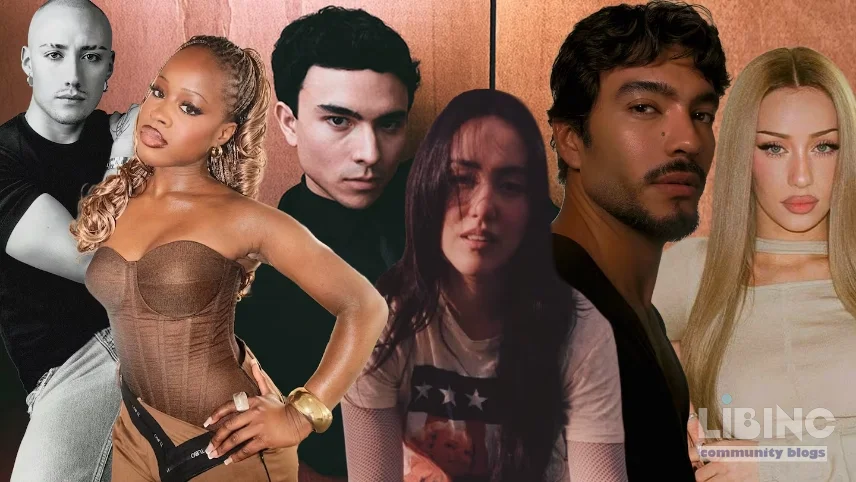
Take, for example, Marcelo Gutierrez, who parlayed an early trajectory in fashion shoots into a lasting collaboration network with figures like Petra Collins, Renell Medrano, and Aidan Zamiri. His throughline—subcultures after dark, a preference for personality over polish, and a habit of treating makeup as a moment rather than a finished product—maps onto a broader pattern: those who foreground narrative and context tend to attract projects that demand elaborate storytelling and a strong visual memory. His elevation to creative director roles and brand partnerships demonstrates how editorial instincts can translate into strategic leadership within a cosmetic house.
Chelsea Uchenna’s path, grounded in practicality and a rapid rise through social media demonstrations of flawless skin and bold details, highlights how the democratization of visibility translates into experiences that range from music videos to high-profile gala events. Her work with Doechii and her aspirations for book-length collections illustrate a career that moves fluidly between performance makeup and the studio’s craft, blending commercial demand with personal ambition. This cross-pollination is increasingly common as artists negotiate multiple revenue streams while refining a signature approach that remains adaptable across genres and formats.
Sam Visser’s career underscores how early exposure to high-stakes projects—doing Kris Jenner’s makeup at a young age—can fuse a high-contact network with a strong sense of branding. His evolution into a global ambassador role for L’Oréal’s YSL Beauty and his ability to orchestrate a complete visual frame for shows like Demna’s Gucci collection demonstrate how a holistic approach to beauty, fashion, and media creates a durable platform for growth. The pattern is not luck but an integrated practice of sculpture, storytelling, and collaboration across the commercial ecosystem.
Ana Takahashi embodies how editorial demand in the indie and art-pop scenes can drive a distinctive aesthetic into broader publishing and brand work. Her collaborations with Caroline Polachek, Beabadoobee, and Charli XCX reveal a talent for translating experimental makeup into accessible, visually arresting editorials. Her role as a beauty editor at Dazed and as a consultant for Carolina Herrera Beauty shows how editorial authority translates into real-world influence. In this calendar of projects, the ability to innovate under pressure becomes the currency of sustained relevance.
Sophia Sinot’s roaming between London and New York highlights how mobility and risk-taking anchor a modern makeup artist’s career. Her approach—airbrushed eyes, gemstone formations, and a fluidity with pop-star aesthetics—proves that the most successful artists can navigate tours, video shoots, and magazine shoots with equal ease. The finish line is less a fixed endpoint than a living portfolio that grows more ambitious as clients seek a stronger, more unpredictable visual language for global audiences.
Expert reconstruction: trajectories, risks, and the road ahead
To reconstruct the trajectory of makeup artistry in the social era, consider four core dynamics: technique, narrative, platform alignment, and governance of creative control. The first dynamic—technique—remains foundational: precision in texture, color theory, and skin chemistry underpins the ability to realize complex looks across lighting conditions and cameras. The second dynamic—narrative—requires artists to conceive looks as stories. This means developing a language that editors, brands, and audiences recognize and respond to with immediacy. The third dynamic—platform alignment—means codifying a look that travels across fashion weeks, music videos, editorial pages, and social feeds. The final dynamic—creative governance—addresses how much control an artist maintains when collaborating with large houses, directors, or product teams.
From an expert’s vantage point, the next decade will hinge on three strategic moves. First, the cultivation of a cross-functional portfolio that blends editorial excellence with commercial savvy; second, the deliberate building of a brand voice that remains coherent across formats without sacrificing experimentation; third, the ethical stewardship of collaboration, including transparency about product partnerships and a commitment to inclusivity in beauty narratives. These moves are not optional luxuries but conditions for long-term relevance in a market that values both craft and character.
Looking ahead, four trends shape the sustainability of makeup artistry as a career: global mobility with cultural fluency, the ascent of artist-led product development, the merging of makeup with other art forms (music, cinema, and fashion), and a continued emphasis on storytelling as a core delivery mechanism. Artists who master these trends will be better positioned to translate studio-level skills into enduring brand influence, editorial authority, and audience trust. In other words, makeup artistry will increasingly operate as a strategic function in cultural production, not merely as a set of cosmetic applications.
Ultimately, the field will reward those who balance rigorous technique with discernment about when to push boundaries and when to honor tradition. The most durable successes will emerge from artists who can co-create with brands while protecting a personal lens that viewers come to expect across platforms. In the end, makeup artistry becomes a language for contemporary self-expression—one spoken fluently by a generation that treats makeup as both craft and culture. The new era is not about chasing trends alone; it is about shaping culture through disciplined, imaginative practice.
Conclusion: a poised future for makeup artistry
The backstage origins are still legible in today’s styles, but the stage has grown broader and brighter. The makeup artist who survives—and thrives—will be the one who can navigate editorial discipline, brand collaboration, and audience dialogue with equal ease. The field’s evolution matters because it reflects a larger truth about how beauty operates in the modern world: as a form of storytelling that can travel across every medium, every market, and every community, while remaining anchored in technical mastery and personal vision. The coming years promise new voices, bolder narratives, and an expanded role for makeup artistry in shaping culture itself.
As the industry observes these shifts, it becomes clear that the future belongs to artists who think beyond individual assignments and toward scalable storytelling with lasting impact. Whether they align with a house or blaze their own path, the strongest voices in makeup artistry will be those who can harmonize technique, narrative, and platform into a coherent, influential practice. In that sense, this era is less about a single breakthrough and more about a durable ecosystem where craft, commerce, and culture co-create the next generation of beauty.
Practical framework for sustained impact in the social era
Although the piece maps opportunities, many rising artists lack a concise, action-ready framework that merges editorial craft with commercial savvy and inclusive storytelling. A compact, repeatable blueprint translates ideas into consistent growth without diluting artistry.
Cross-platform career blueprint
| Aspect | Old Path | New Path | Impact |
|---|---|---|---|
| Discovery | Editorials & agencies | Social-first portfolios | Faster visibility |
| Voice | Signature look | Narrative persona | Stronger differentiation |
| Control | Limited brand edits | Co-created visuals | More partnerships |
Key steps include building a portable dossier, staging short tests, and documenting outcomes. A disciplined rhythm—test, publish, pitch—keeps momentum while preserving creative boundaries.
Impact snapshot
Case in point: a rising makeup artist paired a micro-documentary with a product launch, boosting media attention and social engagement within days. This demonstrates how narrative and format choice can magnify impact without expensive campaigns.
Five-step roadmap to brand-aligned storytelling
- Define a personal language that travels across formats
- Document outcomes from each collaboration to refine the portfolio
- Establish transparent partnership guidelines
- Schedule a cross-platform calendar for shoots, tours, and editorials
- Track engagement metrics to guide future decisions
With disciplined practice, makeup artists translate studio craft into lasting cultural influence, creating a durable ecosystem for brands, editors, and audiences alike.
Frequently asked questions
How has social media changed makeup artistry career paths?
Social media has transformed makeup artistry from a primarily studio-centric pursuit to a global, audience-facing practice. It enables artists to showcase technique, mood, and process to a worldwide audience in real time, accelerating discovery and reducing traditional gatekeeping. Brands increasingly scout talent from feeds rather than solely from runways, granting artists leverage to negotiate collaborations and revenue through education, product partnerships, and direct-to-consumer activities. This shift also invites talents to experiment with formats (short tutorials, reels, live sessions) that broaden reach while demanding consistent storytelling across channels.
Editors and brands now weigh narrative cohesion and audience engagement as much as flawless brushwork. The result is a more fluid career path where a single post can lead to a campaign, a mentorship, or a product collaboration that expands influence beyond a single shoot.
What skills matter most for editors and brands today?
Key skills include editorial literacy, cross-platform storytelling, lighting awareness, and color theory, plus the ability to translate looks across video, stills, and social formats. Strong communication, a clear personal language, and the capacity to integrate product narratives without diluting artistic vision also matter. Practically, editors look for a consistent language, reliable collaboration, and visible aptitude for evolving aesthetics that travel across markets and format types.
How can a rising artist build a cross-platform portfolio effectively?
Start with a core editorial concept and a few test shoots that demonstrate storytelling, skin chemistry, and texture across formats. Publish regularly on the artist’s own channels, then syndicate to magazines or platforms that align with the concept. Maintain a compact archive of outcomes, credit collaborators clearly, and use audience feedback to refine visual language. Over time, assemble a portfolio that shows versatility—couture, beauty, music, and film—while preserving a recognizable signature style.
What are common risks and how to manage creative governance?
Risks include overextension, conflicting brand demands, and a dilution of personal language. Manage governance with transparent disclosures about partnerships, clear briefs, and careful product testing before campaigns. Establish a preferred process for approvals, ensure credit is accurate, and protect core aesthetics by negotiating terms that allow experimentation within defined creative boundaries. Regularly reassess collaborations to keep alignment with long-term vision.
How do inclusivity and authenticity influence brand narratives?
Inclusive narratives broaden audience trust and unlock new markets. Authenticity comes from consistent values, transparent partnerships, and representation that reflects diverse skin tones, ages, and cultures. Brands that prioritize genuine storytelling—rather than performative inclusivity—tend to earn long-term loyalty and gain credibility across global audiences, especially on social platforms where audiences expect real voices and lived experiences.
What does the future hold for makeup artistry in the social era?
The future blends editorial excellence with cross-disciplinary collaboration and artist-led product development. Governance that protects creativity while enabling co-creation will be essential. Artists who combine technical mastery with compelling storytelling and platform fluency will shape culture across fashion, film, music, and publishing, while promoting inclusive and credible beauty narratives.



Add a comment
To comment, you need to register and authorize
Comments