

Moray Coast as Odyssey Landscape: Myth, Cinema, and Living Memory on Scotland's North-East Shore
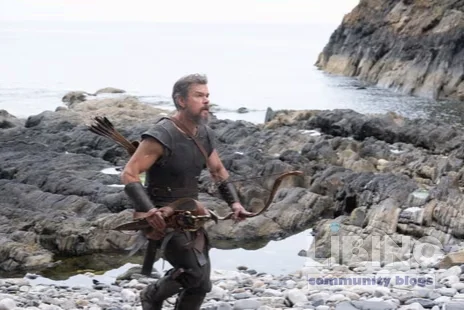
On the Moray coast, the incoming tide carves a labyrinth across Culbin Sands, where rivulets meet mudflats and the shoreline constantly redefines itself under the North Sea breeze. My walk loops inland toward pine forests, back toward the surf, skirting tidal pools and scrambling over dunes reshaped by salt and spray. It feels less like a map and more like a stage set where epic drama could unfold at any moment. Christopher Nolan’s The Odyssey used these shores to anchor a modern myth, but the real material lies in memory, myth, and the stubborn intimacy of place that shapes what a voyage should return to—home. This landscape asks not only what Odysseus sought, but what the coast itself remembers about arrival and return.
Table of contents
- Analytics: Reading a coastline as theatre and archive
- Contrast: Odyssey map vs Moray coast realities
- Cause-and-effect relationships: How place shapes myth and memory
- Expert reconstruction: Local storytellers sustain living myths
Analytics: Reading a coastline as theatre and archive
The Moray coast is not merely scenery; it is a dynamic archive of weathering, sediment transport, and human occupation. Dunes shift with every season, tidal channels rearrange the mudflats, and the shoreline changes its mood with the wind. Analyzing the coast means treating the geography as a chronology—the land remembers where ships landed, where villages rose and vanished, and where currents preserved or erased traces of conflict. The space invites a particular kind of inquiry: one that treats the sea as time, not simply as a backdrop for drama. In such a frame, Moray becomes both theatre and archive, a place where cinematic memory and material history reinforce each other and demand a cautious interpretive eye.
Local legends mingle with physical evidence to complicate any straightforward reading of the shoreline. The absence of crowds and development gives filmmakers room to breathe, to let light trace the edge of a cliff or a wind sculpt a dune into a sculpture. The landscape becomes a laboratory for meaning, where shots of surf, rock, and salt become data points that anchor larger questions about journey, risk, and return. The coast’s very texture—sand, shingle, rock, and water—offers a vocabulary for narrative tension that cinema often attempts with dialogue alone.
- The terrain as dynamic archive: sediment shifts record movement over generations
- Coastal ecosystems as narrative devices: tides, pools, and gullies shape suspense
- Film-friendly emptiness: low populations permit grand visual pacing and longer takes
The analytic payoff is not a single answer but a method: read the coast as a layered source, where geology, ecology, and memory intersect to produce meaning. The Moray coast does not simply host a myth; it constitutes a living manuscript in which the past is legible in the present, and the present, in turn, invites future readings. In this sense the site behaves like a palimpsest, with new inscriptions layered over old ones, each telling us something about how communities understand voyage, homecoming, and the value of place.
Contrast: Odyssey map vs Moray coast realities
The Odyssey maps Odysseus through the Mediterranean: Sicily, Morocco, the Peloponnese—the familiar theater of ancient epic. The Moray coast presents a counter-map, a northern shoreline forged by North Sea weather, not a warm sea crossing. The first contrast is climatic: the Mediterranean offers predictable seasonal patterns; Moray’s storms arrive with uncompromising force, sculpting coves, caves, and cliff faces that become stages for peril as well as spectacle. The second contrast is cultural: the mythic geography of Homer relies on a shared Mediterranean imagination, while Moray’s stories stem from Gaelic memory, Norse and Pictish history, and a lineage of seafaring communities whose survival depended on reading the sea more than romanticizing it.
The isolation that marks Moray’s coastline is not simply a feature; it is a functional element of its mythic life. The coast’s emptiness creates a sense of agency for the viewer: without a crowd, the eye focuses on a single gesture—Duncan-like silhouette of a fisherman waving at the horizon, a whale skimming the bay, a shorebird tracking the last light. Such moments invite a different kind of epic: not the triumph over distance, but the intimate return to a place that recognizes the traveler in search of kin, not conquest. The seanchaidhean remind us that isolation can sharpen memory as well as peril; it is where lessons survive through storytelling as much as through relics in the dunes.
In this juxtaposition, Culbin Sands emerges as a hinge between myth and reality. The Atlantis of the North, as locals call it, sits at the boundary of legend and archaeology: a village buried by a freak storm in 1694, later reframed by folk rumor into a mythic catastrophe. The coast’s gatekeeping role—deciding who belongs in the story and who must be left out—has a functional purpose: it preserves a moral geography that helps communities interpret risk, hospitality, and the limits of human power over nature.
Cause-and-effect relationships: How place shapes myth and memory
Landscape and legend feed one another in a continuous loop. The coastline’s topography influences which figures arise in local memory, and those figures, in turn, direct how the land is read by outsiders. The wind-carved caves, the flat glare of a summer sea, and the shadowed recesses of Bow Fiddle Rock all become catalysts for storytelling, not just scenery. The effect is a network of associations: the sea as a guardian, the dunes as a refuge, and the rocks as sentinels that mark where a journey begins, and where a homecoming might end. The result is a mythic ecology that treats the coast as a mentor, not a backdrop.
The relationship between memory and place is not passive. When the threat of the North Sea becomes a symbol of danger, it also yields a social ethic: the fishwives who kept village economies afloat, the crews who navigated by stars and wind, and the families who watched for familiar sails from the clifftop. This is the kind of causal logic that a coastal culture uses to teach survival, resilience, and solidarity. The narrative does not end with a hero’s return; it ends with a community’s continuity—where memory informs practice, and practice preserves memory, generating a self-renewing culture of belonging that is as important as any odyssey of the soul.
- Geography shapes memory: movement along the shore creates recurring motifs in storytelling
- Memory informs practice: local trades, routes, and responses to sea conditions persist across generations
- Return as social project: homecomings reinforce communal identity and shared history
Expert reconstruction: Local storytellers sustain living myths
Moray’s coastline has its own chorus of interpreters who keep these parallels with classical myth vibrant. Moray-based author and classicist VJ Randle notes how Homeric motifs echo through the region’s landscape and legends, providing contemporary readers with a way to connect ancient thought to modern experience. Her work, like that of Otherworldly Tales’ Michelle van den Hout, demonstrates how a living tradition can translate myth into guided experiences that feel both educational and immediate. The languages of myth, landscape, and memory converge in a way that makes the coast a classroom for both myth and science, where geology, archaeology, and folklore illuminate each other.
Van den Hout’s walking tours introduce figures with striking parallels to classical mythology—the Scottish creator goddess Cailleach, and Ceasg, the siren-like sea-woman who lures sailors to watery graves. The point is not mere mimicry but a reconfirmation that myths arise from place, and place becomes legend because people tell stories about it. Seanchaidhean—the Gaelic oral historians—play a crucial role here, preserving heroic battles and clan genealogies while adapting them to new audiences. Their work keeps the coast legible for those who come after, balancing cautionary tales with a sense of wonder.
On a practical level, these living myths shape how visitors experience the coast. The Odyssey’s glamour translates into an ethical invitation: respect the land, honor the sea, and listen to the local voices that know the shore’s rough edges and gentle coves alike. In Cullen and Burghead, where film crews once anchored a 35-meter Viking-style longship and where wartime fortifications punctuate the sand, the coast remains a living laboratory for understanding how myth endures in contemporary life. For travelers, the lesson is simple: follow the story, but read the geography closely, and you may discover not just a tale of heroes, but a community’s way of sustaining itself through change.
Where to stay and how to visit are practical questions that the coast answers with local hospitality rather than cinematic bravado. The Seafield Arms in Cullen served as a production hub and remains a touchstone for visitors seeking a taste of film history amid Gaelic lore. Bow Cottage, the studio’s guest residence, is a curated nod to the Odyssey myth with Greek-inspired touches and a trove of movie memorabilia for fans who want to linger where myth and memory meet. For readers and listeners, the coast offers a path to folklore-rich shelves in Beinn Books, a place to explore Scottish folklore and a translation of Homer that frames the journey in a modern key.
Getting there follows a practical logic: national rail lines connect to Inverness and Aberdeen, and a car provides the flexibility to explore remote beaches, castles, and walking trails that define the Moray coast’s character. The journey is not simply about distance but about the cadence of discovery—a rhythm that mirrors Odysseus’s own wandering and the coast’s enduring invitation to come home again.
A short conclusion: the Moray coast does not replace Homer; it amplifies him by offering a living, breathing context in which the epic can be read anew. The landscape teaches patience, resilience, and the value of memory, which is why the Odyssey still feels relevant here—because the shore keeps returning the traveler to where home begins.
Practical Pathways for Reading Myth on the Moray Coast
To translate memory into movement, a reader can move from scene to sequence—start at Cullen, follow the shoreline toward Bow Fiddle Rock, then circle Culbin Sands. The sea's mood dictates tempo, and every dune holds a story about climate, history, and Gaelic folklore that anchors the myth in tangible geography. A day planned with tide charts, local lore, and respectful observation turns epic longing into a usable itinerary—one that reveals how the coast teaches resilience, kinship, and return.
| Route segment | Distance (km) | Terrain | Estimated time | Mythic touch |
|---|---|---|---|---|
| Cullen Beach start | 0.0 | Sandy shore | 0.5 h | Gateway to legends |
| Bow Fiddle Rock lookout | 2.2 | Cliffs, steps | 1.0 h | Sentinel of stories |
| Culbin Sands edge | 3.8 | Dunes, mudflats | 1.5 h | Archive in motion |
| Return via forest track | 5.0 | Mixed trail | 1.0 h | Homeward breath |
Practical notes: check sea state, wear sturdy footwear, and respect posted closures near unstable cliffs. This loop is approachable for walkers with moderate fitness and invites pauses to read the land like a script—waves rehearsing, gulls delivering lines, and dunes changing their shape with every wind gust.
For seasonal nuance, align your visit with Gaelic folklore festivals in Cullen and Beinn Books readings; spring and autumn offer softer light for photography and longer shadows that dramatize the coast's memory. This approach grounds Homeric resonance in local rhythms—homecoming as practiced memory, not merely a plot beat.
| Season | Wind/Light | Best time to read the myth | Accessibility notes |
|---|---|---|---|
| Spring | Atlantic breeze | Golden hours | Coast paths slick with spring thaw |
| Autumn | Calmer seas | Evening silhouettes | Shorter days, plan lighting |
| Winter | Storm watch | Weather as drama | Limit access to dunes; safety first |
These practical frames translate myth into mindful travel, letting visitors read the coast as a living archive—where Gaelic folklore, Culbin Sands, and Beinn Books meet screen memory and coastal science.
What is the connection between the Odyssey and Moray coast?
The Odyssey provides a lens to read memory, landscape, and myth along the Moray coast. The voyage becomes a framework for understanding how place shapes travel and homecoming, while the coast offers a living stage for memory and storytelling. This pairing invites readers to see the shore as a teacher of resilience and belonging, not merely a backdrop for drama.
In practice, readers map narrative beats to landscape features—stages of arrival, trials by sea, and the return to kin—turning epic resonance into a local, lived experience.
How does the Moray coast function as theatre and archive?
The coast is both a dynamic archive of sediment, weather, and human history, and a stage where light, wind, and tides choreograph memory. Emptiness permits longer takes, while dunes and coves become narrative devices that anchor myth in material reality. The sea acts as time itself, recording change while inviting new readings.
Local narrators and historians help translate these layers into accessible stories that blend geology with Gaelic folklore and archaeology.
What practical steps can a visitor take to experience the myth on the shore?
Plan a daylight loop that starts at Cullen Beach, includes Bow Fiddle Rock, and loops through Culbin Sands with tide-aware timing. Bring sturdy footwear, a map, and a light for dusk reading. Pause at key landmarks to reflect on how land, sea, and memory interact to shape belonging and return.
This approach turns memory into movement, yielding a mindful coastal walk rather than a passive scenic drive.
Which local storytellers or guides offer tours?
Local seanchaidhean and authors—such as Moray-based writers and walking guides connected to Cullen’s literary networks—offer guided readings that fuse myth with landscape. Beinn Books and community venues host readings and folklore-inspired discussions that deepen the experience beyond sightseeing.
With a curated route, visitors can sample Gaelic lore alongside coastal science to understand how myth persists as a living tradition.
What safety considerations should visitors have when hiking Culbin Sands and Bow Fiddle Rock?
Check weather and tide tables; avoid dune edges near unstable cliffs; wear robust footwear; stay on marked paths, and avoid closed areas. Dunes can shift after storms, and cliff edges may be unstable. Planning for daylight hours and carrying a charged phone helps ensure a safe, reflective excursion.
These precautions protect the landscape and keep storytelling focused on memory and return instead of risk.






Add a comment
To comment, you need to register and authorize
Comments