

Table of Contents
The world seems to want to believe, and it looks toward the skies to find that belief. The current UFO craze spills over from screen to gallery, from the White House to fashion runways, turning the unknown into a media ecology that mirrors back at us our own anxieties about control, truth, and belonging. Spielberg's Disclosure Day (2026) is cast as a centerpiece, yet the surrounding cultural orbit—museum installations, public demonstrations, and viral discourse—reveals a broader pattern: belief operates as a social practice as much as a cognitive belief. This is not merely a genre trend; it is a diagnostic of how contemporary culture negotiates uncertainty. The lead question is not what aliens look like, but how our institutions shape what we think is possible.
We begin with the premise that the UFO craze is a lens for examining power, perception, and memory. The stakes are not only whether we are alone, but how public narratives are assembled, who gets to perform disclosure, and what counts as credible evidence in a post-digital society. A hidden conflict lingers beneath the spectacle: the tension between open curiosity and instrumentalized fear, between curiosity as epistemic ascent and fear as social control. The direction of this analysis is to map the terrain—its actors, its signals, and its consequences—so we can assess what the current moment portends for future encounters, whether extraterrestrial or otherwise.
Analytics Lens
In this first block, the UFO craze is treated as a complex system rather than a single phenomenon. We trace how different media ecosystems co-create belief trajectories and how aesthetic forms translate speculative content into social behavior. The central claim is that the craze sustains its momentum through a continuous feedback loop: media narratives provoke public fascination, which in turn fuels institutional responses and commercial opportunities. This loop matters because it redefines what counts as evidence, what counts as truth, and what counts as legitimate inquiry in a culture saturated by screens and quick consumption.
Key drivers of the UFO craze include high-profile cinematic events, gallery debates, and political signaling that blends declassification discourse with sensational storytelling. In cinema, Steven Spielberg’s Disclosure Day channels a tradition of reverent inquiry tempered by cinematic spectacle; in art, galleries stage interventions that question language, perception, and the limits of representation; in policy, political actors test the boundaries of transparency and accountability through publicly accessible declassified files and controlled narratives. These channels reinforce one another, turning the unknown into a shared cultural project rather than a private mystery. This dynamic matters because it reframes belief as a social practice that can be marshaled by institutions, brands, and public offices alike.
- Media convergence turns speculative content into cross-platform engagement, heightening shared expectations about what constitutes proof.
- Artistic mediation reframes the alien as a symbol rather than a creature, inviting viewers to project meanings onto form and color.
- Policy signaling uses declassified files as a rhetoric of transparency, while simultaneously weaponizing fear of the Other to justify enforcement actions.
Why this matters: when speculation becomes an industry, credibility must be earned through disciplined inquiry, not sensational capture. The UFO craze, thus, reveals a broader pattern in which contemporary society negotiates uncertainty through a blend of spectacle, symbolism, and state signaling. This is not a retreat from skepticism; it is an evolution of how skepticism is performed and shared in the public sphere.
LSI note: public perception, extraterrestrial life, media ecosystem, belief formation, symbol systems.
Contrasts Across Scenes
The second block pivots from a single narrative to cross-scene contrasts that illuminate how different geographies, institutions, and genres shape the same fascination. In Manhattan and beyond, the UFO craze enters three distinct theatres: cinema, contemporary art, and political theater. Each theatre tunes the same core phenomenon to its own resonant frequencies, creating a multi-voiced chorus rather than a monologue of certainty. The result is a kaleidoscopic portrait of belief that refuses to settle into a single storyline.
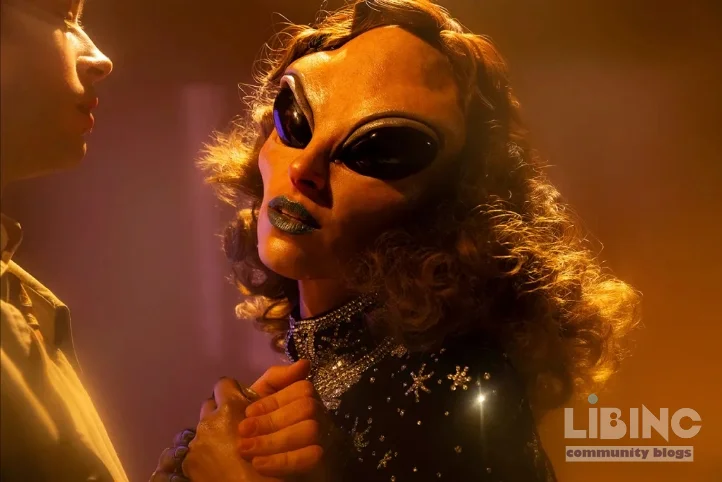
In cinema, Spielberg’s Disclosure Day offers a cautious, awe-struck gaze at contact, juxtaposing the terror of hidden knowledge with the legitimacy of expert interpretation. Emily Blunt’s Kansas City news anchor delivers a pointed, practical counter-message that grounds the fantasy in lived public life, making the unknown legible through accessible language. The effect is to invite audiences to weigh evidence without surrendering wonder—a balance that sustains engagement while preserving epistemic humility. This contrasts with the gallery scene, where the material becomes a field of inquiry rather than a narrative of revelation. Karla Knight’s paintings in Andrew Edlin Gallery, for example, decode language as a barrier to perception; her canvases unfold like operating rooms for the mind, inviting viewers to reflect on how we encode experience when we cannot articulate what we sense.
In Basel Basel H. Geiger, Chloe Wise’s UFO-themed video expands the conversation into video art, blending celebrity presence with a mythic register that destabilizes primacy of any one source. Prada’s immersive exhibition, curated with Nicolas Winding Refn and Hideo Kojima, relocates the encounter to space, sound, and interactive spectacle, turning the room into a stochastic environment where the audience becomes actor and witness in a shared dream of contact. In public space, a Tribeca sidewalk becomes a stage for protest fantasies—signs bearing aliens and slogans that frame the unknown as a political demand rather than a mere rumor. The result across these contrasts is a richer, more contested cultural field where belief is not a private conviction but a public project with multiple authors and permissions.
Why it matters: the juxtaposition of media forms reveals how different infrastructures discipline, test, and perform belief. The same question—are we alone?—emerges in cinema, painting, video, and street protest, but each medium negotiates the boundary between wonder and doubt in its own way. This pluralism pushes back against the idea of a single, authoritative truth about contact, proving that contemporary culture treats the Other as a site of interpretation rather than a final destination for discovery.
LSI note: public discourse, contemporary art, symbolic interpretation, cross-cultural reception, media diversity.
Causes and Effects
The third block traces causal chains that connect historical mythmaking with contemporary media. The UFO craze does not arise from a vacuum; it feeds on a long arc of Roswell archetypes, Cold War anxieties, and the digital age’s appetite for rapid, shareable narratives. In this frame, the current moment amounts to an accelerated ritual of belief formation where each deployment of the unknown functions to calibrate social trust, civic participation, and political legitimacy. The cause-and-effect architecture becomes a map of influence: what we see in art and cinema conditions public appetite for policy signals, and those signals in turn shape cultural production, tightening the feedback loop that sustains the craze.
One critical social mechanism is the co-dependence between spectacle and governance. The White House’s Aliens.gov initiative—launched amid a swirl of declassified files and speculative media—frames transparency as a political product while simultaneously stoking fear of uncontrolled border politics. The juxtaposition of declassification with immigration enforcement exposes a paradox: the public is asked to trust official disclosures about otherworldly phenomena even as the state demonstrates tight control over human borders. This paradox intensifies the sense that truth is a curated inventory rather than an objective reality, making the extraordinary seem precariously proximal to everyday policy. The risk here is that contact with the unknown becomes a tool for political persuasion, rather than a genuine pursuit of knowledge.
On the cultural side, the African UFOlogy narratives in Dr. Thandi Loewenson’s storefront installation complicate the universalist impulse that often accompanies the term UFO. White Zimbabwean narrators describe encounters through global clichés of post-Roswell phenomena, while Black Zimbabweans recount ancestral hauntings—ghostly presences rather than robotic visitors. The divergence is revealing: it shows how the same phenomenon can map onto radically different cosmologies depending on historical memory and social position. The cause here is not a single conspiracy, but a spectrum of interpretive frameworks that compete for legitimacy, each leaning on different kinds of evidence and different kinds of authority. The effect is a pluralization of what counts as an encounter, complicating any attempt to declare a definitive version of the truth.
- Signal-to-noise imbalance grows as media channels amplify speculative content faster than verifiable data can be gathered.
- Narrative co-authorship emerges as artists, journalists, and policymakers negotiate the meaning of contact in real time.
- Cultural memory effects reframe old myths to fit new forms of evidence, mutating the definition of proof across generations.
Why it matters: the causes and effects converge on a critical insight—the UFO craze operates as a test of epistemic resilience. If belief travels faster than verification, society risks equating perceived plausibility with truth, a confusion that can reshape civic discourse and cultural life for years to come.
LSI note: conspiracy theories, public policy, declassification, memory politics, evidence standards.
Expert Reconstruction
The final block reconstructs the phenomenon from the vantage points of practiced insiders—the curator, the critic, and the policy analyst. The aim is not to rehearse predictions but to compose a plausible, informed scenario of how the UFO craze might develop as a persistent cultural regime. Reconstruction draws on concrete elements from the material: Spielberg’s film as a spark, the German-Basel art interplays, and the political theater of Aliens.gov as test cases for how societies choreograph belief under pressure.
From a curator’s perspective, the UFO motif becomes a methodological instrument. It permits the artwork to speak through absence—placed gaps, silhouettes, blurred orbs—that force viewers to attend to process rather than to finished products. Karla Knight’s Watching for the Planets and Eliza Douglas’s Ghosts participate in a shared project: to map the limit of perception while acknowledging that language itself may fail to capture the full magnitude of contact. In this reconstruction, the artistic frame reframes the unknown as a shared concern rather than a private fantasy, inviting audiences to participate in a disciplined contemplation rather than a passive consumption of spectacle.
From a journalism and press studies angle, the discourse around Disclosure Day demonstrates how media form can stabilize or destabilize belief. The film’s critical reception matters because it sets a template for how audiences parse the truth value of a narrative about hidden knowledge. The journalist’s role, personified by Emily Blunt’s on-screen weather anchor, becomes a model of responsible skepticism—speaking with awe while tracing the epistemic steps that lead from data to inference. This reconstruction emphasizes accountability, not cynicism: it is possible to remain curious, demand evidence, and resist surrendering to sensationalism at the same time.
From a policy and governance lens, the Aliens.gov initiative offers a cautionary template for how transparency can be deployed. The political incentives for signaling disclosure must be weighed against potential erosion of public trust if the disclosures outpace institutions’ capacity to verify them. The expert reconstruction here suggests a governance path that pairs incremental transparency with rigorous review, so that public discourse about the unknown advances without collapsing into panic or credulity. The overarching takeaway is that the UFO craze will persist as long as culture treats the unknown as a shared project rather than a private fantasy to be gated by experts alone.
- Interdisciplinary collaboration between science, art, journalism, and policy strengthens the public’s capacity to engage with uncertainty.
- Public participation in interpretation should be structured to avoid misinformation while sustaining wonder.
- Future-proofed transparency combines data, narrative craft, and institutional trust to foster credible discourse about the unknown.
The synthesis across these expert reconstructions yields a practical direction: treat the UFO craze as a social-technological phenomenon that tests how societies balance curiosity with caution. The true value lies in understanding how to cultivate epistemic virtue across media, policy, and artistic practice—so that contact, whenever it arrives, can be interpreted with rigor, humility, and civic responsibility.
Final reflection: the craze is not simply a question of whether we are alone; it is a test of how we organize knowledge, authority, and imagination in a world saturated by signals. The path forward requires disciplined curiosity, transparent governance, and artworks that challenge our language for the unfamiliar without surrendering to cynicism or fear. In that sense, the UFO conversation becomes a mirror for our own capacities to listen, learn, and adapt.
LSI note: epistemic virtue, interdisciplinary collaboration, public discourse, governance of knowledge, art as inquiry.
Keywords and themes converge on the central inquiry: how do we sustain a robust, thoughtful engagement with the unknown as it migrates across media, borders, and beliefs?
Conclusion: the current UFO craze functions as a boundary experiment for 21st-century culture, testing the limits of evidence, imagination, and collective trust. As long as we treat the Other as a problem to solve, the conversation will stay active; when we treat it as a question to enlarge, we may learn something essential about ourselves.
Expanded Engagement Protocols for Unknown Contact
The essential missing piece in the current discussion is a practical path for audiences, galleries, and policymakers to engage with uncertain claims without surrendering rigor or wonder. A compact protocol—rooted in clear steps and real-world examples—helps translate curiosity into credible practice and keeps public discourse robust across media forms. By applying four axes—Verify, Contextualize, Communicate, Collaborate—any viewer or consumer of cultural production can calibrate trust in a method that respects both evidence and imagination.
- Verify: seek verifiable data, resist hype, and cross-check sources.
- Contextualize: place claims within historical memory, disciplinary standards, and cultural perspective.
- Communicate: explain reasoning and limits in accessible language, not just headlines.
- Collaborate: invite multiple voices from art, journalism, and policy to test interpretations.
To operationalize this framework, museums might pair declassified documents with public-facing explainers; newsrooms could publish a data trail showing how a claim evolved from file to story; policymakers could release staged, incremental disclosures that invite comment rather than shock. The approach aligns with LSI signals such as public discourse, evidence standards, and transparency, while keeping space for imaginative exploration in art and media.
| Evidence Type | Typical Data | Credibility | Verification Steps |
|---|---|---|---|
| Documentary | Declassified files, transcripts | Moderate | Cross-check with independent sources |
| Eyewitness | Statements, testimonies | Variable | Evaluate consistency, corroboration |
| Artistic | Visual metaphors, installations | Contextual | Interpretative clarity, process notes |
In practice, the four-axis protocol fosters epistemic humility and public trust. It helps audiences distinguish between spectacle and substantiated insight, guiding cross-media conversations from cinema to studio to senate chamber. The result is a more resilient culture where belief travels with accountability, not credulity.
Evidence strength, transparency of data, and clarity of reasoning together determine public credibility across media contexts.
From galleries to government briefings, this approach instruments a shared standard that respects both wonder and verification. It reframes the unknown as a collaborative inquiry rather than a private thrill, and it keeps the conversation open to diverse voices and disciplines.
- Public
- Engage with multiple sources and compare claims
- Ask for visible data and methodological notes
- Media
- Publish data trails and verification steps
- Explain uncertainty without sensationalism
- Institutions
- Release incremental disclosures with context
- Invite public comment and expert review
In sum, the path forward is a disciplined curiosity: keep the door open to surprise while grounding it in accountable practice.
Conclusion
The current moment invites a sustained discipline of inquiry across media, borders, and institutions. By aligning curiosity with transparent methods and inclusive discourse, the UFO conversation can mature into a durable culture of epistemic virtue that honors both the unknown and the human capacity to understand it.
What core idea does this analysis propose about the UFO craze?
From a broad vantage, the central idea is that the UFO conversation functions as a public ritual that tests how societies balance curiosity with caution. It shows how media, art, and policy co-create boundary objects shaping belief, trust, and action. The pathway from intrigue to accountable inquiry depends on signals of transparency, methodological restraint, and inclusive dialogue across communities. The result is a public that learns to distinguish spectacle from evidence by following transparent reasoning and checking sources across platforms, while still allowing imagination to inform interpretation.
Analytically, this means belief becomes a social practice whose strength rests on clarity of data, openness about limits, and proactive collaboration among diverse actors.
How can audiences assess credibility when encounters are described as ambiguous?
Credibility emerges when claims are anchored to verifiable data, traceable reasoning, and visible processes that connect data to conclusions, while clearly acknowledging uncertainty. Audiences should seek corroboration from independent sources, demand access to underlying data or documentation, and compare competing explanations. In practice, credibility grows when the reasoning path is laid out in plain language, not only in technical jargon or sensational framing. This approach enables informed judgment without eliminating wonder.
Depth comes from evaluating the consistency of narratives across platforms and considering the historical and cultural context that informs each claim.
What role do museums and galleries play in shaping public interpretation?
Museums and galleries act as public laboratories where interpretation is tested, not just displayed. They can pair speculative narratives with robust documentation, invite community commentary, and demonstrate how meaning shifts with context. For example, a gallery might show a series of installations that challenge linguistic barriers in describing contact, accompanied by notes on the limits of perception. This practice invites visitors to participate in disciplined inquiry rather than passively consuming spectacle.
Art institutions thus shape a culture where interpretation is collaborative, not hierarchical.
How does declassification discourse influence public trust in official disclosures?
Declassification discourse blends transparency with political signaling, which can either strengthen or erode trust depending on how disclosures are framed. Clear data, accessible summaries, and explicit limitations foster trust, while selective releases paired with fear-based rhetoric can erode it. Responsible coverage demonstrates the sequence from data to inference, highlights uncertainties, and invites public critique. In this way, official discourse becomes part of a constructive dialogue rather than a monologue of control.
What practical steps can journalists take to avoid sensationalism while covering unknowns?
Journalists should publish the data trail, verify claims with independent sources, and label uncertainty honestly. They can present competing explanations, explain what would count as strong evidence, and avoid language that presumes outcomes. A newsroom workflow that includes a transparent checklist—data provenance, expert rebuttals, and follow-up reporting—helps maintain curiosity without surrendering accuracy.
What future trends can we expect in the interplay of art, policy, and media around the Unknown?
Expect ongoing cross-pollination: art installations that make policy ideas tangible, policy briefings that borrow narrative techniques from cinema and theater, and media practices that foreground citizen-informed scrutiny. The trend favors governance models that balance incremental transparency with critical public discourse, ensuring that the unknown remains a shared, improvable frontier rather than a closed episode. This trajectory supports resilient civic culture capable of handling contact with care and imagination.





Add a comment
To comment, you need to register and authorize
Comments