


Anti-Muslim hate crime in the UK: analytics of Edinburgh attacks, fear, and policy gaps
Table of contents
- Analytics of the Edinburgh attacks and the climate in Britain
- Contrast: narratives versus data
- Cause and effect: policy gaps and social dynamics
- Expert reconstruction and forward steps
Analytics of the Edinburgh attacks and the climate in Britain
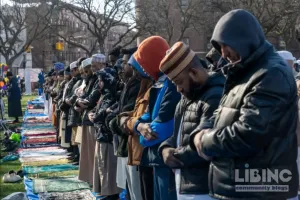
The weekend assault in Edinburgh, which left five men injured and included two victims targeted as they exited a mosque, sits at the nexus of personal violence and extremist rhetoric. A suspect now faces five counts of attempted murder with an alleged terrorist connection, a framing that connects street crime to broader ideological violence. Yet the significance extends beyond the courtroom. Across Britain and Europe, anti-Muslim hate crimes have risen to levels that alarm researchers, community leaders, and policy makers. The incident is therefore not an isolated anomaly but a data point in a broader trajectory of Islamophobia that shapes how safe people feel in public spaces, workplaces, and religious settings.
- Five men were injured in the Edinburgh weekend attack.
- Two victims were targeted as they left a mosque.
- A suspect faces five counts of attempted murder with alleged terrorist ties.
- The case sits within a rising pattern of anti-Muslim incidents in the UK and Europe.
- Data from watchdogs and monitoring projects illuminate a broader climate of Islamophobia.
To understand this incident, it helps to triangulate legal charges with sentiment and victimization data. Anti-Muslim hate crime is not merely a binary of assault vs. insult; it encompasses a spectrum that includes intimidation, harassment, and property crime tied to religious identity. In the Edinburgh case, the fusion of street violence with a claimed terrorist motive demonstrates how extremist narratives can intensify fear within Muslim communities while complicating law enforcement responses. This dynamic invites a deeper look at how hate crime data is collected, interpreted, and translated into protective measures on the ground.
Data streams from the UK provide a broader context for what this attack implies about safety and normalization. The Tell MAMA project tallies, for 2024, thousands of anti-Muslim hate incidents, underscoring that individual events accumulate into a climate of fear. Meanwhile, the government’s official monitoring framework and allied organizations show a concentration of risk in places where Muslims congregate or visibly express faith. Taken together, these sources reveal a pattern: violence is selective but the fear it generates travels across communities through everyday interactions, online discourse, and media framing. This is not merely a matter of crime statistics; it is a question of societal resilience and the capacity of institutions to respond robustly to a persistent risk environment.
Beyond the UK, intellectual and policy debates on Islamophobia in Europe emphasise how normalization operates at the political level. The European Islamophobia Report has warned of a disturbing normalization of anti-Muslim racism, with a quarter of voters across Europe supporting far-right parties. A UK-facing parallel is the Runnymede Trust critique that Muslims are increasingly portrayed as a societal threat, a narrative that justifies securitized approaches and narrows the political space for inclusive solutions. These dynamics matter because they influence how authorities allocate resources, how civil society frames risk, and how ordinary citizens interpret suspicious or hostile behavior around Muslim communities. The Edinburgh case becomes a test case for whether political rhetoric aligns with, or undermines, effective protections against hate crime.
LSI note: Islamophobia, anti-Muslim hate crime, hate crime data, Muslim communities, and political rhetoric intersect here to shape risk perception, reporting behaviors, and policy priorities. The question is not only what happened, but how the data and narratives converge to create or mitigate fear among Muslims in Britain and across Europe.
The data landscape reveals gaps that matter for prevention. Official reporting systems have structural limits, and NGO-led monitoring often fills in critical gaps about how threats are perceived and managed. In this sense, the Edinburgh incident becomes a lens through which to examine the adequacy of current hate crime strategies, including how threats to mosques are anticipated, how incidents are recorded, and how the longer arc of anti-Muslim sentiment informs day-to-day security decisions. What is clear is not only that violence exists, but that fear compounds as communities await timely, credible responses from institutions that must protect them in public life, schools, and religious spaces.
Contrast: narratives versus data
The public conversation around such incidents often diverges sharply from what the data reveal. Politicians, media commentators, and social media actors frequently frame Muslims in limited, securitized terms, sometimes as a monolithic threat, sometimes as a target for empathy-deficit language. In contrast, the data show a more nuanced picture: violence may target individuals for multiple reasons including perceived ethnicity or religious appearance, and a single incident can shape perceptions far beyond its immediate victims. This divergence matters because it influences how communities respond and how authorities design safety measures. When narratives oversimplify the threats Muslims face, policy tends to react defensively rather than adaptively, limiting the effectiveness of prevention and protection efforts across communities and public spaces.
Case studies from Europe echo this tension. Independent reports warn that centrist politicians can adopt exclusionary rhetoric under pressure from volatile political climates, thereby legitimizing a securitized frame of reference that risks normalizing anti-Muslim sentiment. The UK data, including 2024 hate crime tallies, confirm that Muslims bear a disproportionate share of religiously motivated hostility, even as most incidents remain underreported or misclassified. The friction between rhetoric and data drives a critical question for policy: how to align public discourse with empirical evidence in ways that reduce harm rather than escalate fear. This alignment requires transparent data practices, robust hate crime citations, and a willingness to repurpose spending toward preventative risk assessments in schools, mosques, and community centers.
In this dynamic, the Edinburgh attack becomes a case for policy recalibration rather than mere condemnation. If the objective is to reduce harm and bolster resilience, authorities must translate data into actionable interventions—improved reporting channels for Muslims, targeted community safety programs, and tests of new forms of collaborative security between police and civil society. The data suggest that fear is not a standalone phenomenon; it is a response to perceived and real gaps in protection, accountability, and inclusive political leadership. As far as public safety is concerned, the contrast between narrative clusters and actual crime data should push for more precise, evidence-based policies that address both the risk and the lived experience of Muslims in Britain and beyond.
LSI: Islamophobia and anti-Muslim hate crime shape policy responses, which in turn influence community safety and reporting behavior. The tension between public narratives and data underscores the need for measured, data-driven approaches to reducing fear while strengthening civil liberties and community cohesion.
The next section turns to what causes these dynamics in the first place, tracing policy gaps, political incentives, and social dynamics that sustain anti-Muslim sentiment and the associated harm to communities.
Cause and effect: policy gaps and social dynamics
The persistence of anti-Muslim hostility cannot be understood without examining the causal ecosystem that sustains it. A constellation of forces—far-right extremism, anti-migrant sentiment, and the mainstreaming of securitized rhetoric—intersects with structural factors such as funding models for hate crime prevention and gaps in online regulation. Analysts note that a quarter of European voters support far-right parties, and their success often translates into political incentives to portray Muslims as the source of social strain. In the UK context, such dynamics feed a climate where Muslims are more likely to be perceived as public-order problems, which in turn justifies heavy policing or extra scrutiny of religious spaces. This causal chain helps explain why even well-intentioned policies can fail to protect communities if they neglect the underlying social narratives and economic drivers that sustain prejudice.
Policy gaps compound the problem by limiting proactive protections. The current approach to hate crime funding often hinges on proving prior risk, a requirement that discourages pre-emptive measures for mosques or schools where threats are anticipated but not yet realized. Such a design creates a lag between risk recognition and protective action, leaving vulnerable spaces exposed. Beyond funding, there is a broader need for coordinated, cross-sector strategies that integrate education, community outreach, and counter-disinformation campaigns. Without this, Muslims repeatedly find themselves reacting to incidents after the fact rather than receiving timely support that could preempt harm and reduce fear across the wider society.
Disinformation campaigns and online radicalization processes fuel the cycle of fear and division. The role of social media platforms in amplifying biased stereotypes and misreporting incidents must be addressed through stronger regulation, clear accountability, and targeted digital-literacy initiatives. In this framework, the Edinburgh attack illustrates a familiar pattern: violent acts are reinforced by online narratives that cast Muslims as perpetual outsiders. The preventive logic, therefore, requires a two-pronged approach—hardening physical protections for vulnerable sites and soft-power interventions to curb harmful online content that legitimizes intolerance and aggression.
LSI: anti-Muslim hate crime, Islamophobia, disinformation, social media regulation, and far-right extremism interact to produce risk and fear. Understanding these causal links is essential for crafting interventions that reduce harm and strengthen community resilience.
What follows is an expert reconstruction that translates these causal insights into concrete policy and practice recommendations for security, civil society, and governance structures.
Expert reconstruction and forward steps
Experts point to a multi-level approach to reduce anti-Muslim hate crime and the fear it engenders. At the policy level, a new hate crime strategy should be complemented by a broader plan that centers on community protection, early risk detection, and inclusive responses. Critics argue that the current approach has diluted focus, missing opportunities to coordinate with schools, mosques, and youth organizations that can inoculate communities against extremist narratives. The consensus among researchers and practitioners is that condemnation of hate crime remains the bare minimum; it must be accompanied by proactive measures that deter aggression, support victims, and address the social roots of prejudice through long-term social cohesion programs and constructive public discourse.
Practical steps include revising funding criteria to prioritize risk-based protections for places of worship and education, expanding community-led safety audits, and enabling rapid reporting channels that connect individuals with local authorities. Given the rise in online disinformation, regulators should pursue targeted interventions that reduce exposure to dangerous propaganda while preserving legitimate expression. This requires collaboration among policymakers, platform companies, and civil society groups to create a more resilient information environment that discourages dehumanizing stereotypes and violent responses toward Muslims.
Experts also emphasize the importance of international learning and local adaptation. The European Islamophobia Report and the work of the Runnymede Trust provide benchmarks for measuring progress, particularly around media narratives, public perception, and policy credibility. In the UK, translating these insights into tangible protections—such as mosque safety drills, community education, and transparent hate crime statistics—will require sustained political will and robust funding. The Edinburgh incident thus becomes a testbed for evaluating whether the state can reconcile security imperatives with the rights and dignity of Muslim communities, turning fear into informed resilience rather than paralyzing suspicion.
LSI: disinformation, Islamophobia, hate crime policy, mosque safety, and community resilience constitute the core levers for reducing anti-Muslim hate crime and rebuilding trust between Muslim communities and the state. Effective reconstruction depends on data-driven governance, cross-sector partnerships, and a renewed commitment to inclusive security that protects rights while preventing harm.
In sum, the Edinburgh weekend attacks reflect a broader, systemic challenge: how to translate alarm into accountable action without inflaming division. The path forward requires clear data-to-policy translation, explicit protections for vulnerable spaces, and a political environment capable of sustaining long-term, values-based responses to anti-Muslim prejudice. If these elements cohere, communities can move from fear toward durable resilience, even amid the ongoing pressures of global political rhetoric and online misinformation.
Proactive protection: turning data into pre-emptive safety measures
Despite broader monitoring, a practical gap remains: how to translate insight into pre-emptive protections for spaces where Muslims gather. A concrete response links risk-based funding, community safety audits, and rapid reporting to decisive action. Consider scenarios: a mosque with weekly prayers and youth programs; a school with a visible Muslim student body; a community center hosting events after hours. In each case, authorities and civil society collaborate to curb threats before they escalate through targeted safety checks, staff training, controlled entry, and a direct reporting loop that connects to local police, faith leaders, and safeguarding teams.
| Space | Action | Lead Partner | Timeline |
|---|---|---|---|
| Mosques | Safety drills and secure entrances | Police and mosque committees | Q3 |
| Schools | Safer entrances and staff training | Local education authority | Q4 |
| Community centers | After-hours monitoring | Community safety groups | Q2 |
| Online spaces | Digital literacy and reporting | NGOs and platforms | Ongoing |
Implementation hinges on clear roles, rapid reporting, and continuous learning. Practically, a mosque safety plan could include a visitor log and a direct line to police; a school could host annual safeguarding and hate crime awareness training; a youth club could run dialogue sessions with local authorities to identify risk signals early.
- Risk-based funding
- On-site safety audits
- Rapid reporting pathways
- Cross-sector collaboration
Caption: How the plan works in practice
The plan translates data into concrete steps that protect people in daily life, not just in crisis moments.
With this approach, communities see tangible improvements and trust in public safety grows as risk signals yield timely protective actions rather than lingering uncertainty.
Q1: What does the Edinburgh incident reveal about protective measures for Muslim communities in the UK?
Edinburgh highlights that reporting alone does not prevent harm; proactive protections for places where Muslims gather require sustained partnerships, clear funding, and rapid, trusted reporting loops. The practical takeaway is that risk signals must translate into on-the-ground actions—such as safety drills, joined safety audits, and pre-emptive coordination between faith groups, schools, and local authorities—so communities feel safeguarded rather than observed. In daily life, this means visible protections and open lines of communication that enable timely responses to emerging threats.
Q2: How can local authorities improve reporting channels for hate crime?
The core idea is to provide accessible, multilingual, and trusted pathways for reporting, with reliable follow-up and transparent statistics. The long-form view shows that faster, clearer feedback strengthens data quality and trust, encouraging more victims and bystanders to come forward. Practical steps include dedicated hotlines, online forms with language options, and regular public dashboards that demonstrate how reports lead to action, thereby reinforcing community confidence and prevention.
Q3: What role do mosques and schools play in preventive safety?
They serve as frontline hubs where risk signals emerge and local norms of safeguarding can be reinforced. Ready readiness combines drills, safeguarding training, and ongoing dialogue with police and safeguarding teams. Real-world examples include annual safety rehearsals, visitor management systems, and reporting channels that connect to local authorities while respecting civil liberties and community trust.
Q4: How does online disinformation contribute to anti-Muslim hostility?
Disinformation can warp perceptions and fuel real-world bias. Addressing it requires media literacy, clear platform accountability, and rapid, credible counterspeech in trusted outlets. Strengthening dialogue between platforms, schools, and civil society reduces the appeal and spread of harmful narratives, limiting their influence on offline behavior and reducing incidents driven by online rumors.
Q5: What funding changes are recommended to strengthen protections?
Funding should prioritize risk-based protections for worship spaces and education sites, with independent reviews and ongoing evaluation. The practical effect is that resources follow risk, delivering improvements such as better lighting, controlled access, staff training, and faster coordination with authorities. Regular evaluations ensure programs stay aligned with evolving threats and community needs, building durable resilience over time.
Q6: How can communities build resilience against Islamophobia?
Resilience grows from inclusive education, dialogue, and accountable leadership. The focus is on creating spaces where people learn to recognize bias, report harms, and support victims, while authorities demonstrate consistent accountability. Actions include school and mosque partnerships, youth mentorship, and public dashboards that track progress, demonstrating steady, visible commitment to reducing prejudice and protecting rights.






Add a comment
To comment, you need to register and authorize
Comments