

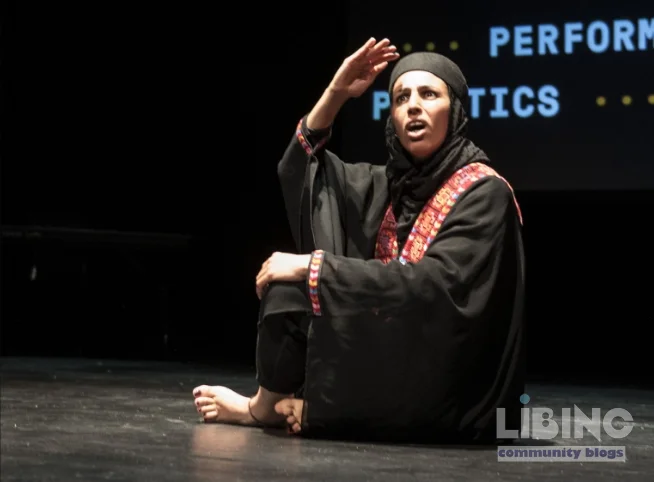
Storytelling as Seeds: An Analytical Thesis on Narrative Resilience, Survivance, and Cultural Sovereignty
Lead
Storytelling is more than artful narration; it is a cultural technology that preserves memory, transmits values, and seeds future action. When material power threatens a people, stories become the soil in which identity, strategy, and hope take root. The stake is not merely cultural survival but the capacity to imagine alternatives strong enough to mobilize collective effort. Yet the terrain is fraught: stories can heal or harm, seed brightness or repression, depending on who tends them and with what intention. This article follows a spring 2025 dialogue between Dovie Thomason and Fidaa Ataya to examine how stories—carried and shaped by communities—function as seeds, not just narratives. Storytelling here is examined as a living practice, not a fixed artifact. The speakers insist that the power of a story rests in its delivery, its audience, and the social ecosystem that sustains it. In their hands, a tiny tale becomes a wind gust capable of moving a crowd, a policy debate, or a cultural awakening. The lead question remains: how can communities harness storytelling to strengthen resilience, resist erasure, and cultivate a future rooted in justice and imagination?
Analytics: Storytelling as Cultural Technology
Storytelling operates as a complex system—a cultural technology that encodes memory, pedagogy, and social contract into accessible forms. It is not passive; it directs perception, frames priorities, and prescribes responses to crisis. When analyzed, the practice reveals several essential mechanisms that fuel collective action and cultural continuity.
- Memory architecture: stories organize past events into usable schemas, enabling communities to recall strategies that worked and avoid repeats of mistakes. This is how generations transfer tacit knowledge—techniques for survival, negotiation, and principled resistance.
- Narrative sovereignty: communities insist on the right to tell, shape, and translate their own stories rather than have outsiders define them. Language choice, terminology, and framing become frontline acts of cultural governance.
- Imaginative inoculation: stories cultivate future-oriented thinking, offering maps for political experimentation, social reform, and communal healing. Imagination becomes a counterweight to despair and fragmentation.
- Relational contagion: stories travel through networks, weaving audiences into shared identities and coordinated action. The social spread of a powerful tale can outpace formal institutions in mobilizing support.
In this analytic frame, a story is not a singular message but a program of cultural work. The same narrative can catalyze solidarity or factionalism, depending on the intent behind its telling and the ecosystem in which it circulates. The ethical burden falls on those who tell and curate stories: the seeds must be tended with care to ensure they feed, not poison, the future.
Contrast: Diverse Contexts of Storytelling
Consider how storytelling functions in markedly different political ecologies. In Palestine, storytelling becomes a mode of living under siege, where the act of narrating sustains both collective memory and moral resistance. The practice is inseparable from daily life—rituals, language stewardship, and the reclamation of naming are political acts that resist erasure and dehumanization. By reframing terms, storytellers challenge the boundaries that external powers impose and reassert a sense of place and belonging.
In Indigenous North American contexts, the ethic of storytelling often centers on survivance—a refusal to be reduced to mere survival. The female lineage of storytelling, previously undervalued by formal institutions, functions as custodianship of seeds, language, and ceremonial knowledge. Here, the act of telling is a practice of future-making: seeds planted today become the trees that sustain communities tomorrow, and the storyteller becomes a gardener who ensures the continuity of cultural memory.
Across these contexts, the same questions arise: who owns a story, who controls its distribution, and who bears responsibility for its effects? The contrast clarifies a broader point: stories are not neutral. They are instruments that can either stabilize power or destabilize domination. In societies where language itself is contested, the way we name places, people, and events becomes a political technology—capable of recharting borders in the mind as well as on the map.
These contrasts illuminate a core tension in contemporary storytelling: the tension between protection and dissemination. While local communities seek to shield their narratives from exploitation, the global reach of modern media demands formats and channels that can spread healing and resistance beyond borders. The dialogue between Thomason and Ataya foregrounds this paradox, showing how the same practice can anchor a community and unsettle others depending on who curates the narrative and for whom it is crafted.
Cause-and-Effect: Seeds, Imagination, and the Future
The metaphor of seeds is not merely decorative; it anchors a causality chain that explains how storytelling translates into tangible futures. A seed, once planted, undergoes germination, growth, and fruiting—stages that map onto social processes in meaningful ways.
- Germination as intention: stories seed collective intention, aligning diverse actors around shared values and urgent goals. The initial narrative acts as a catalyst for coalition-building and resource mobilization.
- Growth as resilience: through repetition and adaptation, stories become resilient archives that outlive political cycles, ensuring continuity of practice even when institutions falter.
- Fruiting as transformation: the harvest materializes as policy changes, community-led programs, and new cultural norms that persist across generations.
However, the seed must be chosen with care. The same metaphor allows for a warning: when stories are weaponized or commodified, the resulting harvest feeds hatred, fear, or division. The discourse around naming—such as reframeings of borders, regions, and identities—illustrates how language becomes fertilizer. If misused, it can distort reality and legitimize coercive action. The dialogue emphasizes a disciplined approach to storytelling: choose seeds that nourish life, autonomy, and ecological as well as cultural health.
Imagination plays a pivotal causal role in this dynamic. The ability to imagine alternative futures is not frivolous; it is a strategic resource for marginalized communities facing existential threats. The discourse repeatedly returns to a simple truth: you can only mobilize around a future you can conceive. When stories enable that envisioning, they convert memory into motive and motive into organized, sustained action.
Moreover, the social ecology surrounding storytelling matters. The environment—legal rights, language policy, media access, and educational infrastructure—either constrains or amplifies the seeds. A robust ecosystem provides safeguarding structures for storytellers, ensuring they can work without fear of reprisal while maintaining accuracy and accountability. Without such safeguards, even well-intentioned stories can become tools of coercion or cultural erosion.
Expert Reconstruction: Frameworks for Ethical Storytelling
From this analysis emerges a set of practical frameworks for ethical storytelling that respects communities, honors memory, and fosters transformative possibility. These principles translate into concrete practices for researchers, educators, artists, and community organizers who work with stories in high-stakes contexts.
- Storyteller sovereignty: communities retain control over who tells their stories, how they are translated, and where they are disseminated. This requires explicit consent, participatory storytelling processes, and equitable benefit-sharing.
- Narrative integrity: factual veracity and respect for competing memories must be balanced with the emotional truth and symbolic potency of stories. The aim is accurate representation without sensationalism or exotification.
- Language stewardship: terminology should reflect communities’ self-designations and cultural grammars. Small linguistic choices—names, places, and terms—carry large political weight and influence perception and policy.
- Ethical amplification: platforms and intermediaries should avoid amplifying narratives that promote hatred, dehumanization, or violence. Instead, they should elevate stories that build resilience, mutual understanding, and actionable solidarity.
- Imagined futures as shared projects: the seeds must be intended to benefit the broader ecosystem, not just the storytellers. Imaginative scenarios should invite collaboration across communities and disciplines, expanding the circle of stewardship.
- Gardening as method: storytelling becomes a sustained practice of cultivation—regular dialogues, community rehearsals, and rituals of listening that nurture trust and continuity.
Implementing these principles requires concrete steps: training programs that emphasize cross-cultural listening, safeguards for vulnerable storytellers, and policy advocacy to protect linguistic and cultural rights. It also requires a shift in attitudes among scholars and media professionals: from extracting narratives as data to cultivating them as living processes that shape lives. The aim is not to extract a single truth but to steward a living web of meanings that sustains communities through crisis and beyond.
Conclusion
Storytelling operates as a powerful, double-edged instrument. When treated as seeds, narratives plant futures—cultures that endure, alliances that endure, and imaginations capable of redirecting history toward justice. When misused, stories weaponize fear, distort memory, and erode legitimacy. The dialogue between Dovie Thomason and Fidaa Ataya illuminates a path forward: treat stories as living ecosystems, cultivate them with intention, and align them with the long arc of human dignity. To tell a story is to plant a seed; to tell it well is to water it for generations. The field of ethical storytelling must be practiced as an act of care, responsibility, and courageous imagination—an ongoing project that keeps cultures strong and futures open.
Operationalizing Ethical Storytelling: Practice and Metrics
While theory frames storytelling as seeds, practitioners need concrete methods to ensure practice aligns with community aims. This section translates the core insights into field-ready steps that teams can adopt across diverse contexts, balancing memory, sovereignty, and future-making.
To translate theory into practice, the following framework maps stages to outcomes.
| Stage | Intent | Accountability | Example |
|---|---|---|---|
| Discovery | Clarify community goals and boundaries | Co-created governance token; consent logs | Community workshops define topics and languages |
| Co-creation | Build narratives with participants | Shared authorship; benefit-sharing plan | Story groups draft and vet translations |
| Translation & Framing | Preserve meaning across contexts | Independent review by community stewards | Local terms kept; symbols retained |
| Amplification | Disseminate responsibly | Platform selection aligned with ethics | Co-published pieces; multi-language outputs |
| Evaluation | Assess impact and course-correct | Feedback loops; public accountability | Community-led surveys and reflective cycles |
Analysis: The table translates abstract values into actionable steps, clarifying who holds authority, how decisions are made, and how benefits are shared. It provides a practical blueprint for teams operating in volatile environments where memory and identity are at stake.
The highlight demonstrates how concrete cues—authors’ names, language choices, and culturally specific terms—drive perceived authenticity and legitimacy, which in turn boosts engagement and protective governance.
Reading the ecosystem: a quick checklist
- Involve community members from the outset in shaping goals and success metrics.
- Use participatory design sessions to set measurable outcomes.
- Guard language rights and culturally specific terms; document preferred names and spellings.
- Ensure transparent benefit-sharing and public accountability mechanisms.
- Choose amplification channels that align with community norms and safety needs.
By following the checklist, teams maintain a steady rhythm of governance, learning, and frontline accountability, ensuring narratives remain living processes rather than fixed artifacts.
As this section concludes, the emphasis shifts from what stories are to how they function within living systems—how they seed relationships, resilience, and justice across generations.
Frequently Asked Questions
What is narrative sovereignty?
Narrative sovereignty means that a community maintains the right to tell, shape, and share its own stories on its terms, including who participates, which languages and symbols are used, and where the stories appear; it requires explicit consent, clear governance over distribution, and fair benefit-sharing to prevent outsiders from redefining memory or identity. Real practice includes co-created outputs, community-led vetting of translations, and enforceable agreements on data use and long‑term access. This governance preserves autonomy while inviting collaboration under agreed rules.
Analytically, narrative sovereignty reduces the risk of external co‑option and enhances trust, enabling more accurate and respectful storytelling that aligns with community values and long-term wellbeing.
How can communities measure the impact of storytelling efforts?
Impact can be measured through mixed methods: qualitative narratives capturing changes in perception, and quantitative indicators like participation rates, language retention, and policy shifts; combining surveys, focus groups, and outcome tracking helps connect storytelling to concrete changes in resilience and social cohesion. The goal is to detect both short-term shifts and enduring cultural health, not just immediate visibility.
Analytically, triangulating data from multiple sources provides a robust view of whether stories are advancing resilience and autonomy over time.
Why is language stewardship important in ethical storytelling?
Language stewardship protects how communities name themselves, places, and experiences, avoiding misrepresentation and symbolic violence. It requires prioritizing community-designated terms, maintaining original spellings, and resisting outsider framing that exoticizes or simplifies complexity. Language choices influence policy interpretation and social perceptions, so they must be negotiated with care and documented for accountability.
Practically, a language-first approach reduces miscommunication and strengthens trust between storytellers and audiences, increasing the likelihood of constructive engagement and durable memory.
What steps help storytelling contribute to resilience against erasure?
Steps include codifying memory through participatory archives, linking stories to tangible community projects, and ensuring replication across generations via schools and cultural institutions. Regular community rehearsals and co-authored outputs keep narratives alive, while safeguarding rights prevents coercive appropriation. The goal is to embed stories within ongoing cultural and political practice, not just as isolated artifacts.
Analytically, embedding narratives in social structures creates redundancy against erasure, so communities can draw on memory as a resource during crises and transitions.
How can storytellers avoid reproducing harm while amplifying resilience?
Ethical amplification requires screening for dehumanization, violence, and sensationalism; amplifiers should prioritize voices that build understanding, mutual aid, and actionable solidarity. Co-creation processes should include safeguards for vulnerable participants and mechanisms to halt distribution if harm emerges. Transparency about funding and intention further minimizes risk.
From a practical standpoint, ongoing feedback loops and audience testing help detect unintended effects early and adjust narratives to preserve integrity and safety.
How should researchers collaborate with communities without extraction?
Researchers should adopt a participatory research model that places community leadership at the center, with explicit consent, co-authored outputs, and equitable sharing of benefits, including data ownership and rights to publish. Capacity building, local co‑investigator roles, and long-term commitments beyond a single project reduce extractive dynamics and deepen trust. Documentation should reflect community-defined outcomes and ensure reusability within local institutions.
Analytically, collaborative models shift power dynamics, turning research into a shared enterprise that strengthens both knowledge production and community autonomy.








Add a comment
To comment, you need to register and authorize
Comments