

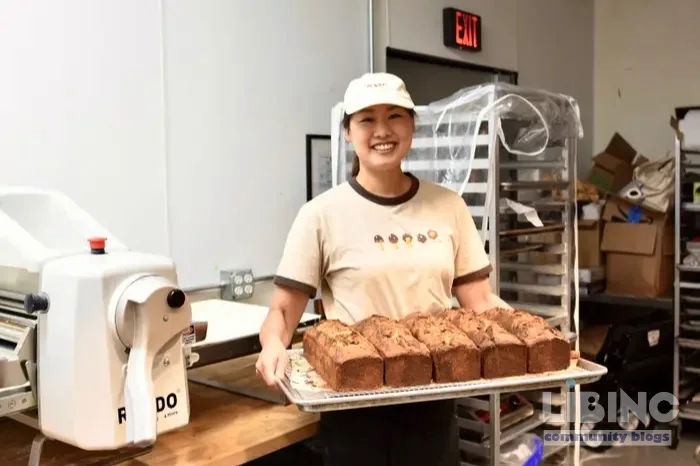
Career Pivot in Practice: How a Stanford graduate left corporate life to build a San Francisco microbakery
The question is not always simple: why walk away from a path that looks right on paper? For Hali Mo, founder of Hali Home Bakes, the answer lay beyond prestige and salary. The core issue was a mismatch between daily joy and corporate predictability. This is a story about a career pivot that began with discontent and ended in craft, community, and a business built from a kitchen counter and a kitchen-scale dream. It frames a real, repeatable pattern: you pivot not just to chase a paycheck but to reclaim time, agency, and meaning.
The stakes of this choice extend beyond personal happiness. A career pivot can redefine life rhythms, financial planning, and professional identity. For someone trained to optimize for efficiency and hierarchy, choosing a path that prioritizes curiosity, hands-on learning, and edges of risk can feel impractical. The hidden conflict is structural: society rewards return on conventional metrics while inner satisfaction often requires recalibrating those metrics. This article traces four analytical lenses—analytics, contrast, cause and effect, and expert reconstruction—to illuminate what a deliberate career pivot looks like in practice.
Across these sections, the focus remains the same: how does a person translate a deeply held aspiration into a durable, scalable venture? The central thread is a career pivot that begins with self-knowledge and ends with a product, a brand, and a schedule that reflect a new life. The reader will encounter a narrative that is at once intimate and rigorous, a founder’s diary reframed as a framework for disciplined experimentation in a real market.
Table of contents
- Pivot through analytics: a data-driven look at a career pivot
- Contrast: corporate life versus bakery reality
- Cause and effect: decisions and outcomes
- Expert reconstruction: lessons from a founder story
Pivot through analytics: a data-driven look at a career pivot
From McKinsey to a product management role, the outward indicators of success were compelling: a high salary, clear progression, and prestigious names on a resume. Yet the internal signal was different. Every morning began with a creeping dread, a warning that the day ahead would be spent performing something misaligned with core interests. The data here is not only financial; it is behavioral and aspirational. A career pivot gains traction when the internal metrics align with long-run goals, not only quarterly performance. For Hali, the move was less about leaving a role than about reconfiguring what work could be, and how it could be learned in public, in real time, with risk managed through experimentation. This is entrepreneurial resilience in action, a readiness to reallocate time and energy toward growth paths that feel honest rather than optimal by convention.
The numbers in a pivot matter, but they do not tell the whole story. Runway, savings, and liquidity are essential, yet intangible assets — identity, community, and the ability to learn quickly in front of an audience — become differentiators when the clock is ticking. This is market validation for a life, a testable hypothesis about what to trade stability for: more time with the craft, closer proximity to customer feedback, and the autonomy to shape a business around a tangible skill. The takeaway is precise: a career pivot gains legitimacy when the testing ground reveals not only viability but value to others, especially customers who become your initial advocates in a cottage-industry stage.
Where many pivots stall is not in capability but in alignment. If incentives in the previous career persist as the dominant reward, the pivot risks becoming a dalliance rather than a commitment. In this frame, it helps to surface a clear, repeatable decision rule: if the experiment fails to improve the core measure of satisfaction within a defined horizon, pivot again or adjust the approach. This is the discipline that underpins creative entrepreneurship and helps a founder avoid floating in suspect limbo. The data can point to opportunities, but it is the ability to reinterpret stories, iterate quickly, and stay focused on a concrete product that ultimately determines success.
To operationalize this, Hali treated pastry as a product that requires early-market feedback, not an afterthought or a hobby. The pivot emerged as a sequence of tests, each designed to confirm or refute a hypothesis about what customers want and how the business can scale. The analytics are not just counts of pastries sold; they are indicators of learning velocity, customer willingness to repeat, and the adaptability of the offering to new channels. In practical terms, the pivot then translates into a plan for capitalizing on small wins: a consistent bake schedule, visible proof of craftsmanship, and a storytelling cadence that invites customers to participate in the journey. This is entrepreneurial resilience translated into a repeatable playbook for growth.
Contrast: corporate life versus bakery reality
Outwardly, the arc looked orderly: a Stanford education, a path through McKinsey, a pivot into product management, and a startup aura. In practice, the daily life of a founder involves a different kind of labor — one where decisions carry direct consequences for cash flow, customer trust, and schedule discipline. The contrast is not simply about freedom versus risk; it is about the kinds of risks that actually matter in daily operations. The corporate world often defers risk into risk management frameworks and fixed timelines. A microbakery, by contrast, requires a constant tug between quality, capacity, and the unpredictability of demand. This is where lifestyle design becomes a predictor of success: not only choosing what you do, but choosing how you live while you do it. The opportunity is real, but it comes with the burden of self-insurance and the obligation to create a culture that sustains a small business in a volatile market. This is a practical form of financial resilience that many founders learn only through direct experience.
In corporate environments, structures and hierarchies shepherd work toward incremental improvements and predictable yields. In founder-led kitchens, every decision is a signal to customers and suppliers: the pace of production, the texture of a laminated pastry, the openness of a brand narrative. The culture is different: it favors immediacy, feedback, and the ability to pivot based on what the market reveals in real time. Yet the contrast exposes a fundamental truth about identity: the work you do must be recoverable as part of a coherent sense of self. The founder’s life reconstructs itself around what sustains that self in the presence of uncertainty, rather than what status and salary might imply in a corporate ladder. This is not a rejection of corporate life but a recalibration of what work can mean when owned fully by the individual.
This section has shown that a career pivot is not a single moment of boldness but a sustained reorientation of daily practices, decision rules, and personal commitments. It is also a reminder that the strongest pivots open new channels for learning, not merely new positions. The strategic takeaway is simple: align the new work with a lived sense of purpose, maintain a disciplined approach to risk, and ensure you can translate passion into a product people genuinely desire. The pivot is only as strong as the systems you build to sustain it and the stories you tell to invite others in.
Cause and effect: decisions and outcomes
The decision to reorganize life around a craft follows a chain reaction. Breakups, relocations, and a return to a familiar city created a clean slate that made it easier to rewrite the narrative around what counted as success. The quantitative constraints — weekly pastry output, a tight budget, and the need to convert curiosity into customers — forced a sharper focus on what would actually move the business forward. This is where the cause-and-effect logic of a pivot becomes visible: invest in learning, test in public, and scale only when the unit economics prove viable. The immediate effects were modest: a few dozen pastries sold at a time, a handful of repeat customers, and growing social media attention. The longer effect, however, was a stronger sense of direction and a more resilient self-concept as a founder.
Finite runway is a practical constraint that sharpens decisions. No paid time off, self-funded insurance, and the absence of employer contributions to retirement accounts mean that every expenditure must be justified against the next boundary: profitability or continued learning. In the early months, the focus is on building a reproducible process that produces a reliable product, not on diversification or a dramatic scale-up. The trade-off is real: growth is exponential only if these early units sell consistently and word-of-mouth becomes a meaningful catalyst. When growth hinges on visible proof of quality and reliability, the business model needs a low-friction path to repeat orders, a dependable supply chain for laminated dough, and a cadence of new offerings that keeps customers returning. This is the essence of cause and effect in a pivot: the initial constraints shape the experiments that determine whether a dream becomes durable business reality.
The most consequential move in this phase was reframing risk as a feature, not a flaw. Rather than fearing uncertainty, the founder treated it as a source of learning and market feedback. Each new attempt to post a pop-up, each slight variation in a recipe, and each experiment with a new channel provided information that could be translated into action. The pivot then becomes a loop: test, measure, adjust, and escalate. The practical outcome is the formation of a business cadence that prioritizes customer feedback and speed to learn. The baked goods themselves become a kind of data set — the more customers respond, the more clearly the product-market fit emerges. This is the practical application of market validation in the context of a small-batch pastry operation, where every pastry is a data point about what people actually want to eat and be seen with in public.
As the bakery settled into a rhythm, the owner began to see the trajectory with more confidence. The shift from a flexible schedule to a disciplined routine did not erode creativity; it amplified it by providing a framework within which craft, service, and brand could grow together. The cause-and-effect chain in this pivot is not just about surviving a transition; it is about building a structure that makes future pivots less daunting. When you can predict the reactions of a small but meaningful customer base, you gain a kind of compass for subsequent decisions—what to invest in, when to hire help, and how to scale responsibly without sacrificing quality. That is the essence of turning an initial spark into a sustainable, growing venture.
Expert reconstruction: lessons from a founder story
The founder’s narrative is rarely a straight line, and the most useful lessons emerge when we reconstruct the reasoning behind each decision. The pivot was not a rejection of a corporate life; it was a redefinition of what a career can look like when work is anchored in craft, community, and continuous learning. The key insight is to treat the pivot as a structured experiment with clear milestones, not a leap of faith with blind trust in luck. The emphasis on patience, test cycles, and a direct relationship with customers creates a practical framework for others who consider a similar path. The founder’s story is a blueprint for translating aspiration into action and then into a scalable, repeatable proposition.
For readers contemplating a pivot, four pillars matter most: a realistic runway and financial plan, a testable product with clear feedback loops, a go-to-market approach that prioritizes visibility and trust, and a credible narrative that explains why the pivot is meaningful to both the maker and the customer. Market validation is not a one-off check; it is an ongoing discipline that informs both product development and brand building. The journey is as much about mindset as method. A founder must cultivate entrepreneurial resilience, persevere through slow weeks, and maintain a level of humility that invites customers to participate in a shared story. These elements convert a dream into a durable business.
The conclusion drawn from this founder’s experience is not that quitting a corporate job guarantees happiness, but that deliberate, disciplined career pivots can align personal joy with professional impact. The most robust pivots create a cadence of learning and growth that scales gracefully, even as the market and life circumstances change. The founder’s joy today is not merely a byproduct of success; it is the result of choosing a path that honors curiosity, craftsmanship, and the responsibility to customers who value quality and connection. This is not a moral about quitting; it is a practical invitation to design work that sustains both heart and livelihood.
In the end, the story affirms a simple, powerful idea: life is too short to wake up every morning with dread. A career pivot is not an act of rebellion against the past but a deliberate movement toward a future where work and joy align. The journey from Stanford to a San Francisco microbakery shows how a well-structured pivot, grounded in market feedback and disciplined experimentation, can redefine what success looks like — and how it can be built, step by step, with honesty, patience, and craft. The result is a life that feels less like a risk and more like a chosen path, walked with confidence and care.
And so the final thought sits quietly before the next chapter begins: a lifestyle design that respects limits while expanding possibilities, and a self-directed career path that remains tethered to the simple truth that happiness can be engineered — one pastry, one decision, one customer at a time.
Practical playbook for a deliberate pivot
Beyond narrative, a compact plan closes the loop between aspiration and a durable business. The strongest moves center on three axes: clear product definition, prudent runway, and repeatable learning from customers. In Hali's journey, pastry becomes a product with price, packaging, and a short feedback cycle that shapes the next offering.
Table: unit economics helps compare early experiments with real needs. The following table traces a simple ladder from prototype to small-scale production and shows how revenue, cost, and margin evolve with scope. If the numbers remain favorable, the path is scalable; if margins compress, more efficient sourcing or pricing must follow.
| Stage | Weekly Output | Price per Pastry | Revenue | Cost per Pastry | Margin |
|---|---|---|---|---|---|
| Prototype | 50 | $5 | $250 | $2 | 60% |
| Pop-up test | 120 | $5 | $600 | $2 | 60% |
| Online preorder | 180 | $5 | $900 | $2 | 60% |
| Full microbakery | 400 | $5 | $2,000 | $2 | 60% |
| Scale/partnerships | 800 | $4.50 | $3,600 | $2.20 | ~51% |
Analysis: The progression shows that clean unit economics at each stage enable growth, but margins tighten if costs rise or price pressure increases. A practical plan combines rhythm, cost control, and channel diversification to sustain profitability while expanding reach.
Go-to-market cadence
- Pop-ups and farmers markets
- Online store and local delivery
- Local collaborations with cafes
- Subscription boxes and pre-orders
- Wholesale partnerships
| Stage | Focus | Timeframe | Success metric |
|---|---|---|---|
| Product definition | Clarify core offerings and pricing | 1–2 weeks | 0% negative feedback; >50 orders |
| Channel tests | Pop-ups, online orders | 2–4 weeks | 100 distinct customers |
| Branding and packaging | Packaging, story, visuals | 2–3 weeks | 80% positive brand perception |
| Scale readiness | Ops, supply chain | 4–6 weeks | Breakeven revenue target met |
As the data accumulates, the plan can be tuned to either accelerate by increasing channels or protect the brand by tightening the core product.
How did a corporate career pivot into a microbakery begin in practical terms?
Starting a career pivot from a corporate path to a microbakery begins with a reality-grounded plan that separates wishful thinking from achievable steps: define the smallest viable product you can bake consistently, establish a personal runway that covers 6 to 12 weeks of living expenses, test the concept in public through pop-ups or online orders, and invite real customers to provide feedback that directly informs recipes, packaging, pricing, and messaging. This approach keeps the focus on learning, not luck, and creates a measurable path from craft to product. Over time, document learnings and iterate using small, transparent experiments that customers can witness and influence.
Analytically, the trajectory hinges on learning velocity, price realism, and repeatability. The faster you validate assumptions about demand and willingness to pay, the sooner you can widen distribution while preserving quality. Real-world indicators include stable order frequency, positive customer reviews, and a clear route to profitability. The approach blends discipline with curiosity and avoids overcommitting before the model proves itself.
What financial steps are essential before launching a microbakery?
Financial steps start with a conservative runway, then move to a simple cost model and price strategy that supports steady cash flow. Begin with a 6–12 week personal buffer and a one-page budget covering ingredients, packaging, rent or space, insurance, and basic marketing. Establish pricing that covers variable costs and leaves room for small fixed costs as volume grows; plan for incremental cost reductions through supplier negotiations or higher yield packaging. Finally, create a weekly cash-flow log to project shortages or surpluses and align production with demand signals rather than chance.
From a strategic perspective, pairing cash planning with product testing accelerates confidence in scaling. Early customer feedback informs not only flavor but also packaging and delivery methods, which in turn affect costs and revenue. The key is to maintain liquidity while learning what drives repeat purchases.
How can a new bakery validate its product with customers before scaling?
The most reliable validation uses real buyers in authentic settings: pop-ups, farmer markets, and a lean online storefront where orders can be fulfilled promptly. Track orders per week, repeat customers, and qualitative feedback on taste, texture, and presentation. Treat each bake as a test: adjust one variable (flavor, price, packaging) and observe the impact on demand. This iterative loop, combined with a straightforward survey or comment method, clarifies whether customers value your offering enough to pay a premium or to seek it out again. Validation should inform both product and narrative—why this pastry, for whom, and where it should be found.
What channels help a microbakery reach customers effectively?
Effective channels include a mix of direct-to-consumer and community-based venues: weekly pop-ups, a simple online store with local delivery, collaborations with nearby cafes, and subscription models for regulars. Each channel provides different data points: pop-ups reveal in-person reactions, online orders show conversion and delivery reliability, and subscriptions reveal long-term loyalty. Diversification lowers risk and accelerates learning, while keeping a close eye on unit economics to avoid overexpansion.
What early indicators signal viable unit economics for pastries?
Early indicators include stable weekly orders, an acceptable gross margin after ingredient and packaging costs, and positive feedback on value at the chosen price. A viable path shows growing frequency of repeat purchases and manageable customer acquisition costs through word-of-mouth. The most robust proof comes from a sequence of controlled tests where a defined product, price, and channel combination consistently meets or exceeds break-even thresholds inside a realistic runway.
How should one handle risk and maintain quality during growth?
Handling risk starts with a disciplined testing cadence and transparent processes. Maintain quality by standardizing recipes, documenting steps, and using a simple quality checklist that can be followed by any helper. Treat risk as information: each failed experiment reveals a constraint to address, whether it is shelf-life, supply reliability, or demand volatility. Growth should be paced to preserve craft and customer trust, with clear milestones and a plan to pause and reassess if metrics deteriorate.







Add a comment
To comment, you need to register and authorize
Comments