

Colobus congoensis and the Preservation Frontier: An Analytical Look at a New Congo Basin Primate
Table of contents
- Analytics-driven appraisal of Colobus congoensis
- Contrast: LikwelI versus close relatives
- Cause-and-effect: threats, range limits, and population dynamics
- Expert reconstruction: research priorities and conservation action
Hidden biodiversity within the Congo Basin continues to surprise, even as forests face escalating pressures. The description of Colobus congoensis, a new colobus monkey named LikwelI by local communities, marks the fifth new monkey species described in the last 75 years. The discovery emerges from a decade of fieldwork, involving 52 villages and an acoustically distinct roar that corroborates genetic and morphological distinctness. Yet the finds come with a sobering warning: a narrow 1,700 square kilometer range, ongoing hunting, and habitat loss from agricultural expansion threaten its survival. This article interrogates how the discovery reshapes primate taxonomy, what the evidence implies for its conservation status, and which steps—from community engagement to habitat protection—are needed to prevent another extinction in a living forest laboratory.
Analytics-driven appraisal of Colobus congoensis
The initial 2008 sighting, though blurry, catalyzed a chain of analytic steps that culminated in a formally described species. The ability to differentiate Colobus congoensis rests on a combination of morphological characteristics, genetic divergence, and distinctive vocal signatures. These lines of evidence converge to a robust taxonomic placement: a new genetic lineage within the Colobus genus that refuses to be subsumed under Colobus angolensis or Piliocolobus parmentieri. The analytical architecture here is not merely descriptive; it tests the hypothesis that a long-isolated canopy-dwelling population can accumulate diagnostic traits, even when conspicuous field marks are subtle from a ground view in dense forest.
From a methodological standpoint, the researchers triangulated evidence across field observations, local ecological knowledge, and acoustics. This triangulation strengthens the case for species status by demonstrating reproductive isolation signals, ecological niche separation, and non-overlapping rostrum and dentition patterns when compared to close relatives. The Lomami River corridor and adjacent forest fragments function as a landscape-scale natural experiment in speciation processes within the Congo Basin, revealing how allopatric divergence plays out in a region with high biodiversity but limited sampling coverage. The insight here is that discovery can hinge on patient, cross-disciplinary work rather than a single field photograph or expedition moment.
Shading the analytics is a warning about representativeness. With a range restricted to roughly 1,700 square kilometers and a tendency for the species to roost high in the canopy, any single survey window risks underestimating population size and distribution. The study’s 114 field observations between 2018 and 2022 provide a meaningful sample, yet the cryptic nature of canopy primates invites bias. The central question becomes: how many individuals remain hidden in late-successional forests, and what does this imply for demographic resilience? The answer, informed by population genetics and habitat modeling, points toward a small, vulnerable population that warrants cautious IUCN assessment. This is not speculation; it follows from the data’s spatially explicit constraints and lineage-specific adaptations.
Contrast: LikwelI versus close relatives
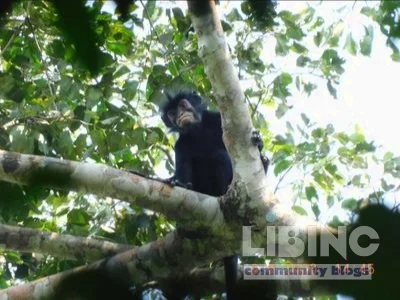
Colobus congoensis is visually striking yet deceptively similar to nearby congeners. Its glossy black pelage, long tail, and facial mask-like orange-and-white fur around the mouth create a silhouette that can be mistaken for other black-and-white forms at distance. The decisive distinctions lie in micromorphology, genetic markers, and roar acoustics, which together separate LikwelI from the Angola colobus (Colobus angolensis) and Lomami red colobus (Piliocolobus parmentieri). The morphology shows a facial pattern that, when paired with genetic sequencing, resolves into an independent lineage diverging millions of years ago. The result is not mere diversity for its own sake but an evidence-backed reconfiguration of the primate family tree in the Congo Basin.
Field observations during joint surveys with the Lukuru Foundation reveal that LikwelI often co-occupies habitats with Angolan colobus and Lomami red colobus. The coexistence is not incidental; instead, it signals niche partitioning in a shared forest canopy. Such spatial overlap raises questions about interspecific interactions, competition for arboreal feeding resources, and potential hybridization risk in degraded habitats. Contrastive analyses of roars further distinguish LikwelI from its close relatives, with acoustic features that project at different frequencies and cadence, enabling remote identification by researchers and local monitors. The net takeaway is that both morphology and behavior contribute to a credible species boundary that resists simplistic lumping into existing taxa.
The comparison also highlights a broader issue in Congo Basin primatology: under-sampling of nocturnal or nocturnal-leaning behavior and canopy-dwelling ecologies. If similar gaps exist for other black-furred colobines, the region may host additional, cryptic diversity awaiting genetic and acoustic confirmation. The contrast underscores the necessity of a combined approach—ground truthing, vocalization profiling, and genomic data—to prevent taxonomic inflation or misclassification in a region renowned for its speciation potential. This is a strategic imperative; taxonomy is not a static catalog but a dynamic inference that responds to new evidence and analytical methods.
Cause-and-effect: threats, range limits, and population dynamics
The geographic range of Colobus congoensis is not just small; it aligns with an area of forest undergoing intense anthropogenic pressure. The 1,700 square kilometer canopy corridor sits between the Lomami and Lilo rivers, in a landscape where agricultural expansion, logging, and settlement intrusion compress habitat quality. The causal chain is straightforward in principle: habitat loss reduces food resources and shelter, which then elevates mortality or suppresses recruitment. As populations shrink, demographic stochasticity intensifies, increasing the odds of local extirpation. In the absence of rapid habitat protection and hunting controls, the LikwelI lineage loses its resilience at a rate that outpaces recovery.
Hunting pressure compounds habitat fragmentation, transforming an ecological problem into a conservation emergency. Local human communities, who are essential stakeholders in this discovery, are also stewards and potential threats depending on enforcement, livelihoods, and access to forest resources. The tension between subsistence needs and wildlife protection becomes a critical hinge for the species’ survival. The researchers’ conclusion that Colobus congoensis merits endangered status by the IUCN is grounded in the species’ narrow distribution, small population estimates, and foreseeable threats to its habitat. This is not merely a formal listing; it is a bid to mobilize targeted protections, funding, and community-collaborative management that can alter the trajectory of decline.
Beyond immediate threats, climate variability and forest degradation alter fruiting cycles and canopy structure, affecting LikwelI’s food webs. Acoustic surveys indicate that roars function as long-range signals that traverse the dense canopy, yet such signals do not mitigate habitat-induced isolation. If the forest matrix continues to fragment, genetic exchange with neighboring populations may wane, increasing inbreeding risk and reducing adaptive potential. The causal logic thus extends from ecosystem health to genetic diversity, from local hunting patterns to national conservation policy. The outcome is clear: protective measures must be implemented strategically where habitat integrity is strongest and where human communities can share benefits from forest stewardship.
Expert reconstruction: research priorities and conservation action
What follows are a set of interlocking steps designed to stabilize and expand knowledge about Colobus congoensis while translating findings into concrete protections. First, more systematic transect surveys are needed to refine population estimates and to map fine-scale range limits. The integration of acoustic monitoring with camera traps and DNA sampling will sharpen detection probabilities and reduce uncertainties about age structure and connectivity. The short interval between 2018 and 2022 field observations demonstrates both feasibility and urgency for sustained monitoring, with annual or biannual cycles that track responses to habitat changes and hunting pressure.
Second, conservation planning should leverage community-based management. The LikwelI discovery underscores the value of local knowledge, as 8 of 52 villages could describe the monkey or its distribution with accuracy. Co-production of conservation strategies—combining ecological data with livelihood considerations—can create incentives for forest protection that endure beyond donor cycles. This means supporting sustainable income streams, such as ecotourism or community-managed buffer zones, that align conservation with daily life.
Third, habitat protection should prioritize the forest tracts offering the strongest refugia and connectivity. Landscape-scale planning that preserves core habitat plus corridors will reduce isolation and promote gene flow with any nearby relatives, preserving adaptive potential. In parallel, engaging national agencies to formalize protective statuses for critical sites in and around Lomami National Park will codify long-term stewardship. The convergence of science and policy in this space is not optional; it is the mechanism by which a single discovery becomes durable biodiversity protection.
Finally, the evolutionary significance of Colobus congoensis invites deeper comparative work. The species represents an evolutionary lineage estimated to diverge from its nearest relatives 4–5 million years ago, a timeframe that invites broader phylogenomic analyses within the Congo Basin. This line of inquiry has dual value: it sharpens our understanding of primate diversification in central Africa and clarifies priorities for preserving ancient lineages that may be uniquely vulnerable to rapid habitat change. The research trajectory outlined here is not a luxury; it is the prerequisite for avoiding a future where the planet’s rarest primates vanish without a trace.
In the end, the Colobus congoensis discovery is both a triumph of field science and a sobering reminder that many forest floor and canopy species exist on the knife-edge of extinction. The pathway to better outcomes lies in rigorous analytics, respectful collaboration with local communities, and policies that translate scientific insight into protected landscapes. If these elements are stitched together, LikwelI can stand as a testament to Congo Basin resilience rather than a cautionary epitaph for a vanished species.
Notes: The primary publication detailing Colobus congoensis appears in PLOS ONE, underscoring the peer-reviewed basis for the taxonomic recognition and conservation framing presented here. The local name LikwelI anchors cultural relevance to the scientific narrative and the broader biodiversity story of the Democratic Republic of the Congo.
Actionable monitoring and community-based conservation plan
Despite progress in describing Colobus congoensis, a field-ready framework for ongoing monitoring is missing. A practical program links ecological indicators to local benefits, ensuring long-term stewardship and sustainable funding. Core signals—population trends, habitat integrity, and hunting pressure—must be tracked with transparent reporting and cross-checked by community observers.
| Aspect | Current status | Needed action | Timeframe | Stakeholders |
|---|---|---|---|---|
| Population estimates | Uncertain; small range | Standardized transects + DNA sampling | 2–4 years | Field teams, local communities |
| Habitat protection | Fragmented corridor | Protect core habitat; establish canopy linkages | 5 years | Government, NGOs, communities |
| Hunting pressure | Ongoing | Community-based patrols; income alternatives | 3 years | Communities, park authorities |
| Monitoring cadence | Infrequent | Acoustic monitoring + camera traps | yearly | Researchers, rangers |
Proactive steps hinge on co-management that links forest protection to tangible benefits. Examples include revenue-sharing from community-based ecotourism, local employment in patrols, and school outreach that builds habitat literacy. Concrete actions must combine ecological data with livelihood needs, so communities see value in conserving canopy habitats rather than converting them to farmland. In parallel, capacity-building, independent review, and clear data-sharing protocols ensure accountability and adaptability as new findings emerge.
estimated individuals
range area
By integrating acoustic monitoring, camera-trap data, and DNA sampling, managers can track age structure and connectivity while adjusting protection levels. This approach supports adaptive management, improves genetic diversity, and strengthens long-term resilience in a forest that values both science and community well-being.
How was Colobus congoensis identified as a distinct species?
Colobus congoensis was identified as a distinct species through a careful triangulation of evidence: morphology, genome-wide genetic divergence, and distinctive vocal signatures captured in acoustic surveys. Field observations across multiple villages, combined with local ecological knowledge, showed non-overlapping ecological niches with Colobus angolensis and Piliocolobus parmentieri. Subtle but consistent differences in facial patterns and dentition reinforced the boundary, while roosting behavior and distribution along the Lomami corridor supported reproductive isolation signals. Together, these data streams align to a robust taxonomic decision.
Analyses cross-validate across independent data streams, strengthening confidence in a new genetic lineage within the Congo Basin.
What are the main threats to LikwelI today?
LikwelI faces hunting, habitat loss from agricultural expansion, and canopy fragmentation that reduces food resources and shelter. Climate variability may shift fruiting cycles, increasing pressure during lean seasons. The small geographic range concentrates risk, while ongoing forest disturbance lowers recruitment and raises local extinction risk.
These threats combine to create an urgent need for targeted protections and community-inclusive action.
How can local communities participate in conservation?
Communities can participate through co-management agreements, benefit-sharing from ecotourism, and capacity-building programs. Local monitors trained in acoustic and visual detection contribute data, while revenue from sustainable forest use aligns livelihoods with protection goals. Education, transparent data-sharing, and joint decision-making with park authorities help sustain effort beyond donor cycles.
In practice, village-level patrols, community-managed buffers, and school partnerships create durable stewardship.
Why is habitat connectivity important for genetic diversity?
Connectivity preserves gene flow between fragments, reducing inbreeding and maintaining adaptive potential. Canopy corridors enable dispersal, support age structure stability, and allow recolonization after local disturbances. When corridors are protected, related populations stay genetically connected, increasing resilience to climate change and disease.
Fragmentation today means higher long-term risk, making mobility corridors a critical priority for conservation planning.
What monitoring approaches are recommended for ongoing assessment?
Recommended methods combine acoustic monitoring, camera traps, transect surveys, and non-invasive DNA sampling. Community observers complement technical teams, providing cost-effective coverage across villages. Regular, transparent reporting supports adaptive management and timely enforcement of hunting controls. Data-sharing platforms with local stakeholders amplify impact.
These integrated approaches improve detection probabilities and inform policy decisions.
What is the IUCN status likely for Colobus congoensis?
Experts advocate placing Colobus congoensis on the endangered list due to its narrow range and mounting threats. The assessment considers range limits, population trends, and habitat loss, with the expectation of urgent protection measures and targeted funding. A formal IUCN listing would clarify priorities and mobilize resources for habitat protection and community-led conservation.
Timely action can stabilize the lineage before further decline.






Add a comment
To comment, you need to register and authorize
Comments
Beyond taxonomy, the LikwelI narrative raises questions about sampling strategies and representation. The paper notes that canopy primates are easily missed by ground surveys and that the sampling window can bias abundance estimates. This invites discussion about occupancy and abundance modeling under observational bias, and about how to combine acoustics, camera trapping, and genetics to construct a credible population estimate. It also prompts reflection on the Lomami River corridor as a natural experiment in speciation. If this region is indeed a cradle for lineage diversification, then safeguarding the corridor may yield outsized conservation returns not just for LikwelI but for other cryptic taxa as well. A final thought for conversation is the relationship between naming a species and the policy tools that protect it. Should a new species name hasten protection or risk bureaucratic delays if the local name gains traction in communities that are essential stewards? How can we ensure that naming exercises translate into durable habitat protection rather than becoming a scholarly milestone that is not sustained by budgets and enforcement?
In short, this case is a call to design integrative research that is long term, community rooted, and policy ready. It invites researchers, local monitors, park authorities, and funding agencies to ask how many more LikwelIs might be hiding in the canopy and what it would take to bring them into a conservation future that respects both science and local livelihoods.