

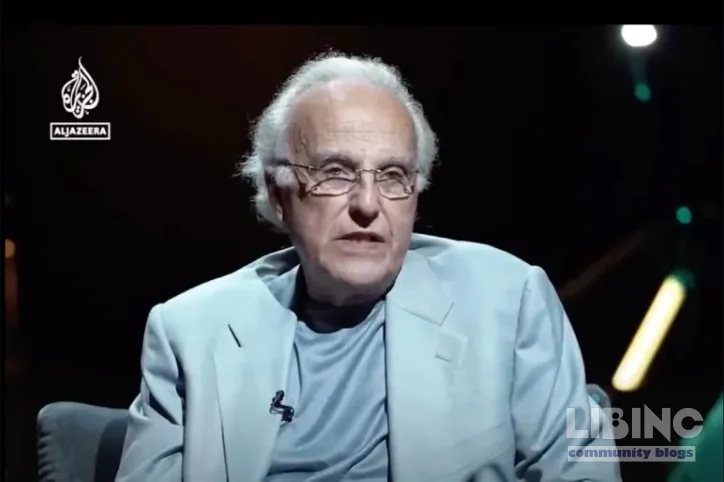
John L. Esposito: A Life Shaping Islam-West Relations and the Modern Study of Islam
Lead
John L. Esposito’s death closes a distinct chapter in the global conversation about Islam, religion, and international affairs. His career unfolded at a moment when Western institutions treated Islam as a peripheral or problematic variable in statecraft and policy debates. Esposito rejected that marginalization, insisting that religion, and especially Islam, must be understood as a constitutive dimension of politics, culture, and social life. The stakes were high: misreading Islam risks mismanaging foreign policy, alienating communities, and normalizing stereotypes that undermine human rights and democratic norms. A hidden conflict shaped his work—the tension between idealized narratives about modernization and the lived realities of diverse Muslim societies. This article traces Esposito’s contribution through four analytic lenses, revealing a disciplined, increasingly influential, and often controversial intellectual program.
What follows is not a tribute that glosses over disagreement. It is a reconstruction of a scholarly project that altered how scholars, policymakers, and journalists think about religion in global politics. The aim is to illuminate why Esposito’s bottom‑up approach—grounded in history, sociology, and lived religious experience—mattered when the world faced transformative moments after 1979 and again after 9/11. It is also a test of whether his insights still illuminate current debates about Islam, democracy, and international order.
Through analytics
Esposito’s core analytic move was to place religious vocabularies and religious actors at the center of political life, rather than treat religion as an afterthought or a decorative complement to secular politics. He challenged the entrenched secular bias that framed modernization as a linear arc in which religion inevitably recedes. Why was that necessary? Because missing the religious dimension distorts cause-and-effect reasoning about legitimacy, authority, and social mobilization in Muslim-majority contexts. He insisted that political outcomes emerge from the interaction of religious legitimacy with state power, economic conditions, and social aspirations. This reframing yields several consequential insights:
- Religion as political force, not a private sentiment. Esposito treated religious identity as a source of public legitimacy, mobilization, and contestation over governance. In practice, this means looking at how sermon networks, charitable associations, and mosques shape policy preferences, not merely how leaders deploy secular rhetoric.
- Normative ideals under critique. He reframed Islam not as a monolith pressing for Sharia per se, but as a constellation of normative ideals—dignity, justice, self-determination, resistance to external domination—that motivate diverse social movements across the Muslim world.
- Interpreting modernity from the inside out. Rather than interpret Islamic modernities by Western standards, Esposito urged scholars to analyze the ways in which Muslim peoples articulate modern life through religious vocabularies, legal traditions, and civil society practices.
- Contextual pluralism within Islam. His work highlighted the plurality of political and social structures within Muslim-majority societies, from monarchies to republics to informal networks, and showed how these structures intersect with religious identity in ways that Western theories often overlook.
These analytic commitments yielded a robust skepticism toward universal claims about religion’s decline in the modern era. Esposito demonstrated that religious frames can be both conservative and reformist, sustaining long-standing social orders while enabling reformist currents. The why is essential: without an inside-out analytic stance, researchers reproduce stereotypes that simplify both Islam and Muslim societies, producing policy prescriptions that misread local incentives and aspirations. In this sense, Esposito’s method was as much a corrective to conventional social science as a tool for more accurate policy analysis.
Beyond methodological corrections, Esposito advanced a practical diagnostic: to understand political Islam’s appeal, study its social underpinnings—economic grievances, status anxieties, and aspirations for self-determination. He linked the appeal of political Islam not to a single doctrine but to a tapestry of grievances and opportunities that cut across national borders. This was not a romanticized portrait of Islam; it was an insistence that religious motive must be weighed alongside economic and political drivers. The result is a more nuanced map of why certain movements resonate differently in different places, at different times, and under varying state configurations.
Through contrast
Esposito’s approach stood in deliberate contrast to two influential Western narratives that shaped policy and public opinion in the late 20th and early 21st centuries. The first is Bernard Lewis’s account of the Islamic world’s supposed civilizational rift with the West, which framed modernity as a crisis of cultural compatibility. The second is Samuel Huntington’s Clash of Civilizations, which cast post–Cold War conflicts as a structural confrontation of civilizations rather than a spectrum of local and global power struggles. Esposito did not deny the presence of tensions; he challenged their essentialization. The contrast matters for several reasons:
- The problem of essentialization. Lewis and Huntington often treated Islam as a coherent, monolithic political actor. Esposito insisted on internal diversity and the role of local grievances in shaping political incentives. Without this differentiation, policy prescriptions risk stereotyping entire populations and foreclosing alternative policy options.
- The scope of agency. While the Western narratives amplified conflict as an ontological feature of Islam, Esposito highlighted agency within Muslim societies—the multiple actors, from reformist scholars to civil society organizations, who interpret religion in ways compatible with democracy, rule of law, and human rights.
- Policy implications. The Western frames often justified security-centric strategies. Esposito argued that recognizing internal pluralism and legitimate religious aspirations could produce more effective, rights-based policies that reduce anti-Western backlash and build durable intercommunal trust.
The contrast also illuminates the intellectual risk Esposito assumed: advocating for a more complex, less sensationalized picture of Islam invites scrutiny from both sides of the debate. Critics accused him of relativism or of downplaying the threats posed by extremism. Supporters praised his insistence on empirical detail and historical context. In either case, the debate sharpened scholarly rules of evidence and broadened the conversation about Islam’s role in contemporary governance. This is not merely a history lesson; it is a reminder that analytical choices in the study of religion and politics condition the range of possible policy responses and public narratives.
Through cause-and-effect relationships
Esposito’s work precipitated tangible shifts in how universities structure Islamic studies, how think tanks frame research questions, and how governments consult scholars on religion, rights, and policy. The cause-and-effect logic of his project can be traced in four overlapping trajectories:
- Institutional reform in the academy. Esposito helped legitimize the integration of religion into international affairs curricula. He championed interdisciplinary programs that fused political science, sociology, history, and religious studies. This shift increased student demand for rigorous, cross-disciplinary analyses of Islam and Muslim societies and redefined what counts as credible evidence in this field.
- Policy discourse recalibration. By reframing Islam as a set of lived practices embedded in social movements, his work influenced policy communities to interrogate the roots of political legitimacy, social justice, and civil society development rather than relying solely on security-centric narratives.
- Media and public discourse. Esposito’s frequent media engagement helped shift public understanding away from monolithic portrayals of Muslims toward appreciation for diversity, pluralism, and historical context. This mattered for journalism, diplomacy, and public education about Islam and the Muslim world.
- Scholarly collaboration and critique. His insistence on historical depth and sociological nuance invited ongoing critique, which, in turn, produced more robust debates about modernization, secularism, and religious politics. His work became a touchstone for debates on the compatibility—or friction—between religious norms and liberal democracy.
The long arc of these causative effects is not linear. In some circles, Esposito’s framework reduced certain kinds of policy inertia, while in others it provoked resistance from scholars and policymakers bonded to older models. Yet the central claim endures: to grasp the political life of Islam today, researchers must account for religious ideas as living, shaping influences—not as mere footnotes to political action. Emerging scholars who follow his path confront ongoing questions about sovereignty, human rights, and the global distribution of power in a world where religious identities remain deeply political.
Expert reconstruction
Looking ahead, the path forward for scholarship and public understanding of Islam relies on reconstructing Esposito’s core commitments with fresh empirical precision and methodological innovation. The reconstruction strategy has four strands:
- From bottom up to systems thinking. Esposito’s bottom‑up orientation should be integrated with systems thinking to explain how micro-level religious practices generate macro-level political dynamics, especially in fragile states and diasporic communities.
- Normative pluralism without relativism. The aim is to appreciate Islam’s normative debates—dignity, justice, self-determination—while maintaining rigorous standards for human rights and secular governance. Researchers must balance respect for religious plurality with scrutiny of coercive or undemocratic practices.
- Interdisciplinary synthesis. The next generation should fuse historical sociology, political theory, and international law to analyze religious politics within global order. Esposito’s framework benefits from computational social science, big data, and comparative case studies across regions.
- Policy-scholarly dialogue. Building enduring bridges between scholars and policymakers requires transparent, evidence-based assessments of how religious movements affect governance, security, and development. Esposito’s habit of engaging in public discourse offers a model for responsible, rigorous exchange.
Despite the high regard for his contributions, it is essential to acknowledge critiques. Some observers argued that Esposito’s emphasis on pluralism risked underestimating the threats posed by political extremism or failed to account for the variance across political cultures. Others cautioned that Western scholars should avoid romanticizing Muslim-majority contexts or assuming uniform pro-democracy sentiments. These debates are not contradictions; they are a sign that the field has matured. Esposito’s framework—rooted in empirical depth, historical memory, and morally serious inquiry—remains a living instrument for navigating these tensions.
In sum, Esposito’s intellectual project invites a continuous rethinking of how religion and politics intertwine. He showed that the most productive scholarship treats Islam as a global conversation—in which scholars, policymakers, religious leaders, and citizens collectively shape conundrums of dignity, justice, and self-determination. The lasting value of his work lies not merely in the facts he compiled, but in the methodological reflexes he championed: insistence on evidence, willingness to challenge comfortable narratives, and an unwavering commitment to understanding across difference. His legacy endures in the generations of scholars who now ask deeper questions about how Islam lives in the modern world—and what the modern world must learn from Islam’s plural voices.
Closing reflections
John L. Esposito’s life and work offer a disciplined template for analyzing religion in international affairs. He confronted comfortable narratives, pressed for a more accurate and humane understanding of Islam, and demonstrated the political relevance of religious thought without surrendering to overclaim or cynicism. The four analytic angles—internal analysis of religious legitimacy, critical contrasts with prevailing theories, causal mapping of policy and discourse, and expert reconstruction for future scholarship—together furnish a coherent account of why his contributions matter today. As scholars and policymakers continue to negotiate Islam-West relations in a rapidly evolving world, Esposito’s insistence on empirical depth, historical context, and ethical seriousness remains not only informative but necessary. His life invites ongoing dialogue about how best to render complex religious realities intelligible to diverse audiences without losing sight of human rights, dignity, and the quest for a just international order.
Engaging religious vocabularies early in policy discussions aligns governance with local values and reduces backlash, a pattern visible across diverse Muslim-majority contexts.
To operationalize these insights, consider concrete settings where religious voices intersect governance, education, and civil society.
- 1979–90s: religious networks gain legitimacy in governance discourse.
- Post-9/11: rights-based policy debates rise in prominence.
- Today: pluralism informs partnerships with civil society and reformers.
| Analytic Lens | Core Claim | Policy Implication |
|---|---|---|
| Internal legitimacy | Religious vocabularies shape public consent, not just private beliefs. | Include religious actors in dialogue and design. |
| Normative pluralism | Islamic ideals vary and can support dignity and rights. | Anchor governance in rights-based, pluralistic reasoning. |
| Contextual diversity | Islamic political life differs by state, era, and class. | Policy adapts to local contexts, not universal templates. |
| Modernity from inside | Muslims articulate modern life through faith, law, and civil society. | Avoid Western-centric modernization models. |
| Agency of reformers | Reformist voices seek democratic norms within tradition. | Engage reformists as partners for legitimacy and reform. |
- Embed religious literacy in curricula and policy dialogues.
- Balance respect for pluralism with clear human rights standards.
- Foster ongoing collaboration between academics, religious leaders, and officials.
These elements together sharpen how Esposito’s work translates into actionable guidance for current Islam-West relations.
How did Esposito redefine the study of Islam in international affairs?
Esposito reframed the study of Islam in international affairs by insisting that religious vocabularies and actors occupy the center of political life, not as private beliefs but as public sources of legitimacy, mobilization, and contestation; he argued that modernization should be read from the inside, through religious legal traditions, civil society networks, and everyday practices, rather than from Western templates, which often produce distortions about authority, rights, and reform.
This shift moved scholarship toward empirical depth, historical memory, and a more nuanced map of how religion intersects governance, economy, and social movements in the Muslim world.
Why is religious legitimacy central to modern governance?
Religious legitimacy functions as a public currency that mobilizes consent, shapes policy preferences, and constrains or enables state action; recognizing it helps explain why certain governance models gain traction beyond formal institutions, particularly in contexts where religious identities are deeply embedded in social life.
Analysts thus advocate for inclusive dialogue with religious actors to design policies that are legitimate locally and durable over time.
What are the practical policy implications of Esposito’s approach?
Practical implications include integrating religious literacy into policy analysis, engaging civil society and reformist religious actors in rule-making, and designing rights-based frameworks that respect pluralism without tolerating coercion; such approaches reduce backlash and improve governance legitimacy.
In practice, this means multi-stakeholder forums, transparent scrutiny of religious arguments in policy debates, and explicit metrics for rights and accountability.
How has Esposito influenced academic programs and curricula?
Esposito encouraged interdisciplinary programs that blend political science, religious studies, history, and sociology, creating curricula that study religion as a dynamic variable in international relations; this catalyzed new research centers, fellowships, and courses on religion, rights, and global order.
Students learn to analyze religious movements as social actors with real-world policy impact.
What are common critiques of Esposito’s framework?
Critiques focus on concerns about relativism, potential underestimation of security threats, and debates over whether plurality can exist alongside universal human rights standards; defenders respond that empirical nuance and ethical commitments strengthen rather than weaken governance legitimacy.
Ongoing critique stimulates methodological rigor and broader engagement across disciplines.
How can analysts apply Esposito's ideas today in Islam-West relations?
Analysts should foreground lived religious experience, map the social bases of legitimacy, and pursue dialogue with reformist voices; applying these ideas means tailoring policies to local religious ecologies while upholding universal rights and democratic norms.
In practical terms, this translates into targeted diplomacy, inclusive education programs, and civil society partnerships that respect religious diversity.





Add a comment
To comment, you need to register and authorize
Comments