

Rethinking the Late Bronze Age Collapse: Drought Cycles, Climate Variability, and Civilizational Thresholds
Table of contents
- Analytical view: drought dynamics and the Late Bronze Age collapse
- Contrasting regimes: long-term drying vs short-term fluctuations
- Cause-and-effect pathways: climate to society in the Eastern Mediterranean
- Expert reconstruction: weaving climate signals with archaeological memory
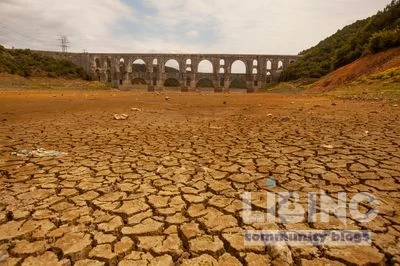
Across the Mediterranean, the Late Bronze Age collapse reshaped civilizations as drought tightened grain belts and urban networks faltered. The echo of this era lives in Homeric tales, yet the physics of the crisis point to climate as an active agent rather than a mere backdrop. The new synthesis argues that hunger and war cascaded when long-term drying, driven by slow orbital cycles, intersected with faster Atlantic and atmospheric fluctuations. Using the EC-Earth 3.3.1 climate model, researchers traced the regional climate back 8,000 years and found three multi-century dry spells that line up with the Late Bronze Age collapse. The result is not doom-lore, but a test case for how climate variability can reorganize societies in the face of finite grain supplies—an issue even today in the Mediterranean basin.
Analytical view: drought dynamics and the Late Bronze Age collapse
The EC-Earth 3.3.1 climate model runs, extended 8,000 years into the past, reveal a gradual drying trend across the Eastern Mediterranean, steered by slow changes in the Earth’s orbit. Civilizations could adapt to slow shifts in precipitation and storage strategies for grain, provided water supplies stayed above a critical threshold. Yet the problem emerges when shorter, sharper fluctuations amplify the baseline dryness, producing irregular harvests even in relatively favorable years. In this frame, the Late Bronze Age collapse arises not from a single drought but from the convergence of long-term forcing with shorter-term ocean-atmosphere variability that pushes regional water budgets toward a hydroclimatic threshold. The analysis foregrounds timing: accrual of dryness over centuries erodes resilience, while abrupt shifts test adaptive capacity.
"Rather than being caused by a single climatic event, we found that the most extreme droughts emerged when natural climate cycles operating over different timescales coincided," Power notes. Our access to the model's output aligns with proxy evidence—stalactites and other archives—that show how rainfall fell in ways that align with ocean-atmosphere rhythms. The convergence of slow orbital forcing with Atlantic cycles created windows of vulnerability, where a modest drought could cascade into food insecurity and social stress.
Power and Qiong Zhang used EC-Earth 3.3.1 to reconstruct shifts in rainfall and temperature, finding that gradual drying persisted for millennia, superimposed by Atlantic variability and atmospheric fluctuations. The multi-century cycles sometimes synchronized across broad swaths of the eastern basin, expanding the geographic footprint of drought. Three dry spells of a multi-century scale punctuated the later third and second millennium BCE, the most recent of which aligns with the LBA collapse. However, not every century-long drought impacted every polity equally; local hydrology, trade networks, and technological choices shaped vulnerability and resilience.
For archaeologists and historians, the model explains how a long dry era the magnitude of which surpassed later events may have faded from collective memory, while the closer-term droughts left lasting scars on memory and material culture. The stalemate of reduced rainfall with persistent demand for imported grain can explain why Greek city-states, Egyptian polities, and Levantine towns faced simultaneous stress, even if the precise dates differ by region. Proxy records from stalactites indicate rainfall declines of roughly 15–30 percent during peak drought intervals, underscoring the severity of the stress. The result is a coherent narrative in which climate stress primes social vulnerability, setting the stage for cascading crises across the eastern Mediterranean.
Contrasting regimes: long-term drying vs short-term fluctuations
In the long view, orbital forcing nudges the climate toward aridity over thousands of years, a pace that civilizations can sense and adapt to. In the short view, Atlantic variability and Mediterranean salinity shifts unleash abrupt droughts that communities misread as singular catastrophes. The same geography that nurtured Bronze Age complexity becomes precarious when cyclical dryness multiplies with rising populations, intensifying competition for scarce water and staples. The result is not a linear decline but a pattern where resilience hinges on timing, geography, and trade flexibility, especially for urban networks that depend on long-distance grain flows. The Late Bronze Age collapse emerges from this mismatch between slow climatic drift and fast-moving social stress.
- Long-term drying: gradual shifts in rainfall tied to orbital parameters; slow adaptation but persistent pressure.
- Short-term fluctuations: abrupt droughts driven by AMOC and atmospheric circulation; rapid stress on harvests.
- Geographic mosaic: some regions show offsetting trends, others align with regional droughts, shaping local vulnerability.
- Memory and myth: communities encode hardship in monuments and narratives, yet memory fades for distant events, complicating historical correlation.
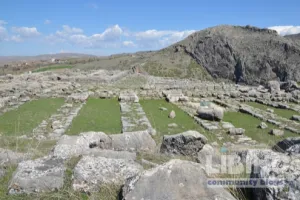
The confluence of drought and social response helps explain why Homer’s age of heroes appears to be a memory of resilience interwoven with hardship. The major burning at the site near the Dardanelles around 1180 BCE aligns with the period historians identify as the Trojan War’s mythic echo, but the climatic signal runs earlier and broader, affecting Greece, Egypt, and the Balkans. Sea-route disruptions and the pressure to secure grain could drive raiding and state reconfiguration, not solely because pirates arrived but because underlying economies could no longer sustain protection costs. In this view, the LBA collapse is a systems failure rooted in climate, trade, and political complexity rather than a single act of aggression.
Cause-and-effect pathways: climate to society in the Eastern Mediterranean
The chain from climate to collapse begins with orbital forcing setting a slow, inexorable drying trend, which reduces water availability across farming zones. It is not enough to know that rainfall declined; the critical question is how water scarcity translates into economic and political vulnerability. The Eastern Mediterranean communities relied on cereals and pulses tied to riverine and coastal waters. When yields fall, households cut consumption, urban markets destabilize, and state capacity wavers, releasing pressure for external disruption. In this cascade, climate acts as a multiplier of existing fragilities rather than a sole trigger.
- Hydrological threshold crossing: when moisture demand and supply diverge, ecosystems respond nonlinearly, shifting vegetation and yields sharply.
- Food-security dynamics: crop failures translate into grain import dependence and price shocks, tightening fiscal margins for states and cities.
- Societal vulnerability: political institutions, debt cycles, and mercantile networks struggle to adapt to drought shocks.
- Conflict and exchange: resource stress accelerates raiding, migration, and state reconfiguration, sometimes culminating in Sea Peoples' movements.
Proxy records provide the climatic context for these social dynamics. Stalactites and other paleoclimate archives show rainfall reductions in the 15–30 percent range during the most intense drought windows, aligning with the windows of social strain. The integration of climate signals with archaeological sequences suggests that the LBA collapse did not erase Bronze Age complexity; rather, it reset many socio-political trajectories, sending ripple effects that took generations to resolve. The asymmetry of response—where droughts of similar intensity produce different outcomes across polities—reflects local endowments, governance, and trade networks as much as climate.
Expert reconstruction: weaving climate signals with archaeological memory
Experts reconstruct the LBA collapse as a climate-enabled reorganization of societies rather than a fatal singular event. The interpretation blends climate model outputs, proxy data, and archaeological chronology to produce a causal narrative that respects both environmental physics and human agency. The Mediterranean’s climate is a hotspot for the convergence of natural variability and anthropogenic warming, a pattern that makes historical resilience fragile and learning slow. In this frame, the collapse emerges where water budgets and social systems operate near critical thresholds, so modest shifts reshape entire political landscapes.
As studies advance, the timeline of destruction around 1180 BCE gains clarity, but the broader process remains multi-scalar. Across the Balkans, Aegean, Levant, and Egypt, communities respond with a mix of adaptation and withdrawal—retooling technologies, rerouting trade, and redefining alliances. The evidence hints that disruptions in supply chains, rather than sheer military force, often precipitated strategic decisions such as state consolidation or territorial retreat. The new synthesis reframes the Sea Peoples not as mere raiders, but as actors whose movements were shaped by climate-induced pressures at home and abroad.
The Mediterranean remains a climate change hotspot, and the new synthesis cautions that future drought risk will depend on how natural fluctuations in the Atlantic interact with long-term warming. If today’s human-induced trends align with the natural cycles described by EC-Earth 3.3.1, regions around the Levant and Balkans could face intensified water stress. The open-access Science Advances study underscores that the patterns observed in the Bronze Age still have relevance: vulnerability compounds when water is scarce, governance is constrained, and trade networks are stressed. The path forward lies in aligning climate projections with archaeological and historical records to anticipate where thresholds may be crossed next.
In sum, the LBA collapse emerges from the interaction of long-term climate trends with shorter-term variability, a dynamic that reduces water security and reshapes societies beyond a single cause. The lesson for modern climate risk is clear: resilience depends on recognizing threshold behavior, diversifying food systems, and maintaining flexible governance. By integrating climate science with archaeology, we build a more robust understanding of how drought, economy, and empire co-evolve in the face of environmental stress.
Enhancing climate-society linkages: thresholds, governance, and resilience
Despite progress, readers benefit from a tighter map between climate signals and social outcomes. A clearer linkage helps interpret the archaeological record and shows how the same climate pattern can yield very different social results depending on storage, trade, and governance.
Three practical scenarios illustrate how rainfall decline translates into stress levels. Scenario A: gradual drying with robust grain networks and flexible markets; Scenario B: abrupt drought amid brittle fiscal structures; Scenario C: diversified supply lines and adaptive leadership that dampen shocks. Proxy data (stalactites, lake cores) provide timing, while archaeological layers show where households reallocate storage, reroute trade, or reinforce fortifications. The Late Bronze Age emerges as a dynamic where climate acts as a catalyst, not a single trigger.
| Driver | Mechanism | Regional impact |
|---|---|---|
| Orbital forcing | Long-term drying trend reduces base moisture | Widespread pressure on cereals |
| Atlantic variability | Short-term droughts align with ocean-atmosphere cycles | Patchy failures, urban stress |
| Hydroclimatic thresholds | Water budgets cross resilience limits | Regionally variable vulnerability |
This table anchors the argument by linking physical drivers to stress markers in the record.
To operationalize this view, consider thresholds: rainfall declines of 15–30% over major basins tend to strain storage; multi-basin declines amplify urban risk; grain import disruption across seasons accelerates fiscal stress and policy shifts.
The diagram helps translate climate physics into social symptoms: storage stress, market stress, and political adjustments appear in different polities’ records.
Proxy records corroborate the intensity of stress; resilience hinges on storage, trade, and governance flexibility.
In sum, climate acts as a dynamic driver that reshapes resilience and governance across polities, offering lessons for modern risk management: diversify food sources, reinforce storage, and keep trade networks adaptable to evolving drought patterns.
What evidence ties drought to the Late Bronze Age Collapse?
Across the Eastern Mediterranean, proxy data such as stalactites, lake sediments, and dendrochronology indicate multi-century drought periods with rainfall declines in the double-digit range. When those signals align with model reconstructions (for example EC-Earth outputs) showing concurrent long-term drying and shorter-term Atlantic-driven fluctuations, the correlation with societal stress becomes statistically plausible. The combined signal—environmental pressure coinciding with grain dependence on imports—helps explain failures in urban networks and state capacity. This interpretation reframes the collapse as climate-enabled reorganization rather than a single catastrophe.
Analytically, the strength lies in triangulating physical proxies with archaeological sequences. The social events cluster around windows where water supply drops intersect with economic fragility, suggesting a causative chain rather than mere coincidence.
How do long-term drying and shorter-term fluctuations interact to threaten regions?
Long-term drying gradually erodes water budgets and storage resilience, creating a depleted baseline that makes communities more sensitive to shocks. Shorter-term fluctuations, such as Atlantic-driven droughts, act as acute stress tests that push already strained systems past adaptive thresholds. The combined effect is non-linear: a series of modest droughts can produce a disproportionate impact if trade routes, storage, and governance are not flexible. The LBA record shows such nonlinearity, with different polities exhibiting varying outcomes based on local infrastructure and political choices.
Thus, climate variability operates as a multiplier, not a sole trigger, emphasizing the importance of diversified food sources and adaptable institutions for resilience.
Which regions were most affected by drought during the LBA?
Regions across the Eastern Mediterranean—Greece, the Levant, Egypt, and parts of the Balkans—experience drought signals that converge with social stress markers. Coastal cities dependent on grain imports and inland polities reliant on riverine and canal networks faced intensified pressure as water scarcity and rising prices curtailed storage and trade, forcing reconfigurations of alliances and routes. The geographic mosaic means some polities faced earlier reforms while others endured longer periods of vulnerability, underscoring local governance and market structures as critical mediators of climate risk.
Overall, the regional pattern supports a multi-scalar view: climate sets the stage, but human systems determine the script.
What role did Sea Peoples play in this climate narrative?
Sea Peoples emerge as actors whose movements reflect push-pull dynamics tied to drought and resource scarcity. When drought drives food insecurity and taxation pressures on coastal polities, external raiding and migration become more likely as strategic responses. The climate message is that maritime routes and coastal settlements, already stressed by reduced imports, faced compounded risks. The Sea Peoples’ actions thus fit within a broader climate-linked restructuring: they are not only attackers but participants in a system where regional instability pushed populations to seek new settlements or federations.
This framing helps avoid attributing collapse to a single wave of invaders, instead viewing warfare as one symptom among several climate-influenced adaptive choices.
How can this historical case inform modern drought risk management?
Two practical lessons translate directly to today: first, diversify and secure food supply chains to prevent single points of failure; second, maintain flexible governance with modular budgets and diversified trade partners so cities can reallocate resources quickly under stress. The Bronze Age case also highlights the value of monitoring hydroclimate thresholds and maintaining storage and redundancy ahead of projected drying trends. In practice, this means investing in regional grain reserves, resilient agricultural practices, and scalable transport networks that can adapt to shifting climate patterns while keeping markets stable.
How reliable are climate proxies and model reconstructions for the LBA?
Proxy data capture regional climate signals with varying precision, yet when cross-validated with multi-model ensembles and long chronologies, they offer credible reconstructions of broad drying trends and their timing. Model products, such as EC-Earth 3.3.1, provide mechanistic explanations for observed proxies, helping to test hypotheses about how different climate components interact. While uncertainties remain—dating, regional biases, and proxy resolution—the convergence of multiple data streams strengthens confidence that climate variability was a meaningful driver of LBA dynamics rather than a background condition.





Add a comment
To comment, you need to register and authorize
Comments