

Rural water, sanitation and energy for food security: Empowering women-led households in South Africa
- Analytics through data and patterns
- Contrast across contexts
- Causes and effects: Water, sanitation and energy pathways
- Expert reconstruction: policy design and implementation
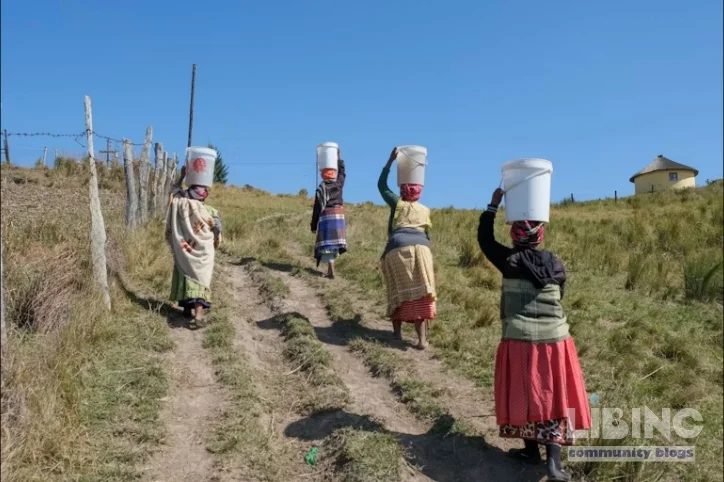
Rural households headed by women in South Africa confront persistent deficits in water, sanitation and energy. Without reliable electrical grids, flush toilets, or piped water, these families struggle to grow, cook, and store food. Such gaps threaten daily nutrition and resilience to climate shocks. Using the 2022 General Household Survey data from 2,369 female-headed households in the Eastern Cape and Limpopo, we trace how water, sanitation, and energy gaps amplify food insecurity and interact with gendered labor. Interventions that target infrastructure in isolation often miss the linkages to agricultural productivity and household livelihoods. The analysis below integrates evidence from multiple lenses to show how improving water access, sanitation, and reliable energy differently affect food production, processing, and storage, and what policy pathways may yield durable change.
Analytics through data and patterns
The statistical modelling across Eastern Cape and Limpopo reveals a clear gradient: households with stable water supplies report higher agricultural yields, more diverse diets, and better capacity to water crops. The link is strongest for on-farm production, where water access directly expands planting windows and crop choices. The data also show that water interruptions, even when water is technically available, disrupt routine farming cycles and funnel labour toward securing basic supply rather than improving productivity.
From a food security perspective, this is not a single-resource story; it is a system where water insecurity cascades into disease risk, labour burdens, and disrupted food preparation. Improved water sources correlate with fewer waterborne illnesses, enabling women to allocate time to farming and storage rather than queuing for supply or tending sick relatives. Such resilience is a core component of climate resilience in rural contexts. The analysis also highlights how water quality and reliability interact with crop variety choices and seasonal risk management, shaping overall production and household diets.
Sanitation access emerges as a parallel driver of throughput for food security. The study finds that households with ventilated improved pit latrines or flush toilets exhibit lower diarrheal incidence, translating into steadier farming routines and safer food handling. When communal or poorly maintained facilities are common, disease risks rise and time lost to caregiving increases. This sanitation-health nexus matters as much for small-scale farming as for daily domestic nutrition, because illness disrupts both care work and field labor, reducing overall productivity.
Energy access acts as a multiplier in the water–sanitation loop. Households with electricity can run refrigeration for perishables, operate pumps or purification equipment, and extend cooking hours during cooler seasons. Frequent outages undermine these gains by spoiling stored foods and forcing reliance on less safe cooking methods. In effect, energy reliability strengthens the entire value chain from field to fork, boosting food security outcomes and enabling women to diversify income through small-scale processing or value-added activities.
Contrast across contexts
Comparing households with stable water and sanitation to those facing interruptions reveals sharp divergences in food security outcomes. In the former group, stronger planting calendars, better crop diversity, and safer food handling translate into steadier meals and reduced nutrient gaps. The latter group experiences higher time poverty as women must travel longer distances to fetch water, often from unprotected sources, thereby truncating farming windows and constraining food processing opportunities.
Sanitation location and quality also modulate productivity. Homes with on-site, ventilated facilities see fewer interruptions to daily routines, including schooling for children and preparation of meals, which in turn supports more reliable agricultural work. Conversely, poorly located or shared facilities can pollute irrigation water and complicate crop management, undermining both health and yields. These contrasts underscore the need for spatially aware sanitation planning that considers farming plots and domestic spaces together.
Energy access compounds these differences. Electrified households experience lower spoilage and higher retained energy for extending storage life of perishables, enabling more stable food-securing practices. In contrast, households facing intermittent or expensive energy face a direct constraint on cooking, cooling, and preserving food, which can push families toward cheaper, less nutritious options. The contrast highlights how integrated service delivery—electricity, clean water, and hygienic sanitation—produces compounding benefits for rural livelihoods.
Causes and effects: Water, sanitation and energy pathways to food security
The causal logic is multi-layered. Water access supports farming on small plots, enabling irrigation, input use, and post-harvest handling. Sanitation affects health, reducing disease-related absenteeism and enabling more consistent work in farming and food processing. Energy access enables refrigeration, safe storage, and efficient cooking, which in turn reduces spoilage and supports value-added activities. The combined effect strengthens resilience to climate variability and market price shocks.
Climate shocks and seasonal variability intensify water stress, driving up the value of reliable irrigation and water purification. These pressures intersect with energy costs and policy environments; when energy is expensive or unreliable, households curtail storage and processing, shrinking both production and household nutrition. The data suggest that when water security is improved alongside sanitation and energy reliability, agricultural productivity rises, and dietary diversity expands, creating a positive feedback loop for community resilience and well-being.
Nonetheless, fragmentation of interventions remains a core risk. If water, sanitation and energy upgrades occur in silos—focusing only on wells or toilets or electricity grids—gains to food security may be limited. Integrated management, with attention to soil conservation, crop diversification, and local governance, yields more durable improvements. This points to a governance challenge: how to align multiple sectors, funding streams, and community voices to deliver cohesive WSE outcomes.
In sum, the pathways from water, sanitation and energy to food security are real and layered. The evidence supports a design logic in which each domain reinforces the others, enhancing agricultural productivity, health, and household resilience through shared investments and coordinated planning. The result is a stronger, more food-secure rural landscape for women-led households and their communities.
Expert reconstruction: policy design and implementation
To translate these insights into durable outcomes, a set of integrated policy actions is required, guided by gender-sensitive governance and climate resilience considerations. The following framework outlines concrete steps and priorities for stakeholders.
- Stable water supply by drilling and maintaining boreholes, expanding communal taps, and deploying home water treatment where feasible. Ensure water quality through regular testing and timely maintenance so that water security supports both home needs and farm irrigation.
- Sanitation upgrades near homes, in schools and clinics, and the elimination of open defecation. Prioritize ventilation and privacy to support women’s safety and health, and place facilities where farming activity is feasible to minimize walking time and disease exposure.
- Water management on farms and communal croplands, including soil conservation and crop diversification. Integrate water, sanitation and energy investments with agricultural productivity programs to build resilience against drought and floods.
- Clean and reliable household energy expansion through financing for liquefied petroleum gas, biogas, or solar-hybrid packages. Provide subsidies or micro-finance options to ensure affordability for women-headed households and rural microenterprises.
- Training and governance in safe water handling, hygienic food processing and storage, and climate-smart agricultural practices. Establish formal roles for women in local water, sanitation and energy governance to ensure inclusive decision-making and knowledge exchange networks.
- Partnerships and financing among local government, utilities, NGOs and private providers to deliver and maintain services. Create a dedicated fund in support of rural women-headed households to cover WSE improvements and related food storage solutions, with transparent reporting.
- Monitoring and accountability with simple metrics: distance to facilities, reliability of water and energy supply, and quality of diets. Track progress to keep programs adaptive and responsive to on-the-ground needs.
- Resilience planning to protect food supplies from outages by adopting backup energy systems and sharing lessons from South Africa’s power interruptions. Embed knowledge transfer across communities to reduce learning curves for new technologies.
Embedded in these recommendations is a practical emphasis on gender-sensitive capacity-building. The goal is to empower women with leadership roles in rural governance and knowledge networks so that WSE interventions reflect local realities and aspirations. The G20 can accelerate this trajectory by funding dedicated rural WSE programs and facilitating Africa-focused water, sanitation and energy solutions that connect to agricultural productivity and food security. Integrated funding streams, governance reforms, and technology transfer are essential to move from pilot successes to scalable impact, especially in the Eastern Cape and Limpopo where needs are acute.
As a closing note, the evidence points to a clear policy path: invest in coordinated WSE systems, anchor programs in climate-smart agriculture, and ensure women’s voices shape project design and governance. By aligning infrastructure, finance, and community leadership, South Africa can strengthen food security for rural, women-led households while contributing to global development goals. The challenge is not only building assets but catalyzing continuous, inclusive management that lasts beyond project cycles.
In summary, the pathways from water, sanitation and energy to food security are real and layered. The evidence supports a design logic in which each domain reinforces the others, boosting agricultural productivity, health, and household resilience through coordinated investments, governance, and knowledge exchange. The G20 and other development partners can catalyze this shift by underpinning dedicated funds, capacity-building, and multi-stakeholder cooperation that centers women’s leadership in rural governance.
Ultimately, the challenge is less about installing assets and more about sustaining coordinated WSE services with gender-responsive governance. When water reliability, sanitation quality, and energy access are designed together with agricultural productivity and climate resilience, rural women-headed households gain not only of reliable nourishment but of agency to shape their communities’ futures.
Keywords to guide future work include rural water, sanitation and energy, food security, women-headed households, and climate-smart agricultural practices. Actionable outcomes require cross-sector collaboration, transparent evaluation, and long-term financing that prioritizes those most affected by current gaps in WSE and food security.
Integrated governance to close the WSE gap
Despite the clear links, the most critical gap is practical governance that aligns water, sanitation, and energy investments with farm-level realities and women-led households. A shared framework with measurable, community-led indicators is essential to scale up from pilots to durable change.
| Domain | Current Access | Target Access | Practical Example |
|---|---|---|---|
| Water | Unreliable supply; dispersed boreholes | Reliable in-home taps and community taps | Community-managed borehole with basic water treatment training |
| Sanitation | Open defecation or shared facilities | Ventilated on-site latrines | Private latrine located near plots for safety and hygiene |
| Energy | Frequent outages; limited appliances | Reliable electricity | Solar-powered irrigation pump plus fridge for perishables |
| Storage/Processing | Limited cold storage; high post-harvest losses | Cold chain at farm gate | Solar fridge supporting harvest storage |
| Governance | Low female leadership in WSE forums | Active women leadership in local governance | Women-led WSE committee coordinating investments and training |
To operationalize, consider joint procurement, cross-cutting metrics, and shared budgets. Example: a village co-funds boreholes and a fridge for perishables, with women-led cooperatives managing operations.
- Water reliability
- Regular testing
- Maintenance funds
- Sanitation upgrades
- Ventilation and privacy
- School clinics
- Energy access
- Solar-hybrid kits
- Battery storage
These steps create a loop where water enables storage and processing, energy powers cooling and cooking, and sanitation protects health, all anchored by women’s governance.
How does reliable water access affect agricultural productivity in rural South Africa?
Reliable water access reshapes farming calendars and crop choices. In plain terms, it reduces drought risk, expands irrigation windows, and supports better input timing, which can lift yields and diversify harvests. The long-term effect is greater household resilience, improved diet diversity, and steadier income from surplus produce. Practically, communities with dependable water see fewer crop losses during dry spells, enabling more consistent post-harvest processing and storage. This stability also lowers time spent on water collection, freeing women for farming and value-added activities.
Beyond yields, water reliability lowers disease risk and improves hygiene in food handling, reinforcing overall food security. In turn, this creates a positive feedback loop where better nutrition supports labor capacity and school attendance, reinforcing community stability. In summary, steady water access is a cornerstone for transforming rural livelihoods and nutrition outcomes.
Why is energy reliability essential for food storage?
Energy reliability underpins refrigeration, processing, and extended cooking windows. A predictable power supply reduces spoilage of perishable foods, enables safer storage of seeds and harvests, and supports small-scale processing that adds value locally. The first sentence here emphasizes that energy is not just a service; it is a productivity multiplier that directly affects post-harvest losses. When energy is dependable, households can keep produce fresh longer, sell more, and invest in cooling equipment for home or community use.
In practice, solar-hybrid or mini-grid solutions paired with affordable storage devices empower women-led enterprises and household food security. Intermittent power often forces cheaper, less nutritious options; steady energy shifts choices toward fresher, diverse foods and improves household resilience to climate shocks.
How can sanitation improvements reduce disease and support farming?
Sanitation improvements cut diarrheal disease and other infection risks that cause absenteeism for both caregivers and farm workers. The first sentence underscores that clean facilities near homes and farming plots reduce time lost to illness and caregiving, thereby stabilizing production cycles and post-harvest handling. Better sanitation also supports safer food preparation and storage, protecting stored crops from contamination and extending market-ready shelf life.
In practical terms, ventilated on-site latrines and private facilities close to plots minimize travel time and exposure to heat or unsanitary conditions. Healthier households can invest more energy into farming and processing rather than medical care, which reinforces productivity and improves diet quality for children and adults alike.
What governance structures support women-led households?
Governance structures that elevate women in WSE decision-making foster inclusive design and accountability. The first sentence highlights that women’s leadership drives program relevance, uptake, and trust within communities. When women chair committees, set priorities, and co-design training, programs better reflect local needs, such as seasonality, water sources, and crop choices. These structures reduce barriers to service access and ensure sustained community engagement.
Practically, establishing formal women-led WSE committees, training, and transparent budgeting helps secure community buy-in and cross-sector collaboration with utilities and local government. This approach also builds social capital that supports climate resilience and sustainable improvements in water, sanitation, and energy services.
What immediate actions can communities take now?
The first sentence provides a concise roadmap: build a local WSE task force, map networks of water points and energy access, and pilot small, co-funded upgrades. This accelerates learning and demonstrates early wins. The following sentences expand on concrete steps: perform a quick water quality check, install a shared solar-powered pump for irrigation, and upgrade one school or clinic latrine to ventilated design. These actions create momentum and build confidence for scaling up with external support.
In practice, prioritize actions that require modest finance but yield tangible gains, such as community-led maintenance funds, solar lighting for markets, and training on safe food handling. These steps lay the groundwork for larger, integrated investments that combine water, sanitation, and energy improvements with agricultural productivity programs.
How should programs measure success?
The first sentence stresses simple, repeatable indicators: water reliability, energy availability, and sanitation quality as direct inputs to farm work and food processing. An expanded approach adds dietary diversity, crop yields, and post-harvest losses as outcomes, with a gender lens on participation and leadership. Tracking these metrics over time reveals whether integrated WSE investments translate into better nutrition and livelihoods for women-headed households.
Practically, establish a dashboard with quarterly updates on facility uptime, water quality, refrigeration uptime, and school meals stability. Use community scorecards to capture beneficiary experiences, ensuring accountability and adaptive learning for ongoing program refinement.





Add a comment
To comment, you need to register and authorize
Comments